Crap on the Barrel; or
Sometimes It Doesn’t Pay to Be an Organ Donor
(a recap by Will Kaiser)
Title: The Inheritance
Airdate: February 6, 1978
Written by Arthur Heinemann
Directed by William F. Claxton
SUMMARY IN A NUTSHELL: Charles and Caroline stupidly spend an unexpected windfall before they even receive it.
RECAP: I hate this story. Let’s do it!
We open on ducks. Ducks! Have we ever had a duck on this show? I don’t think so. And let’s face it, I’d probably know.

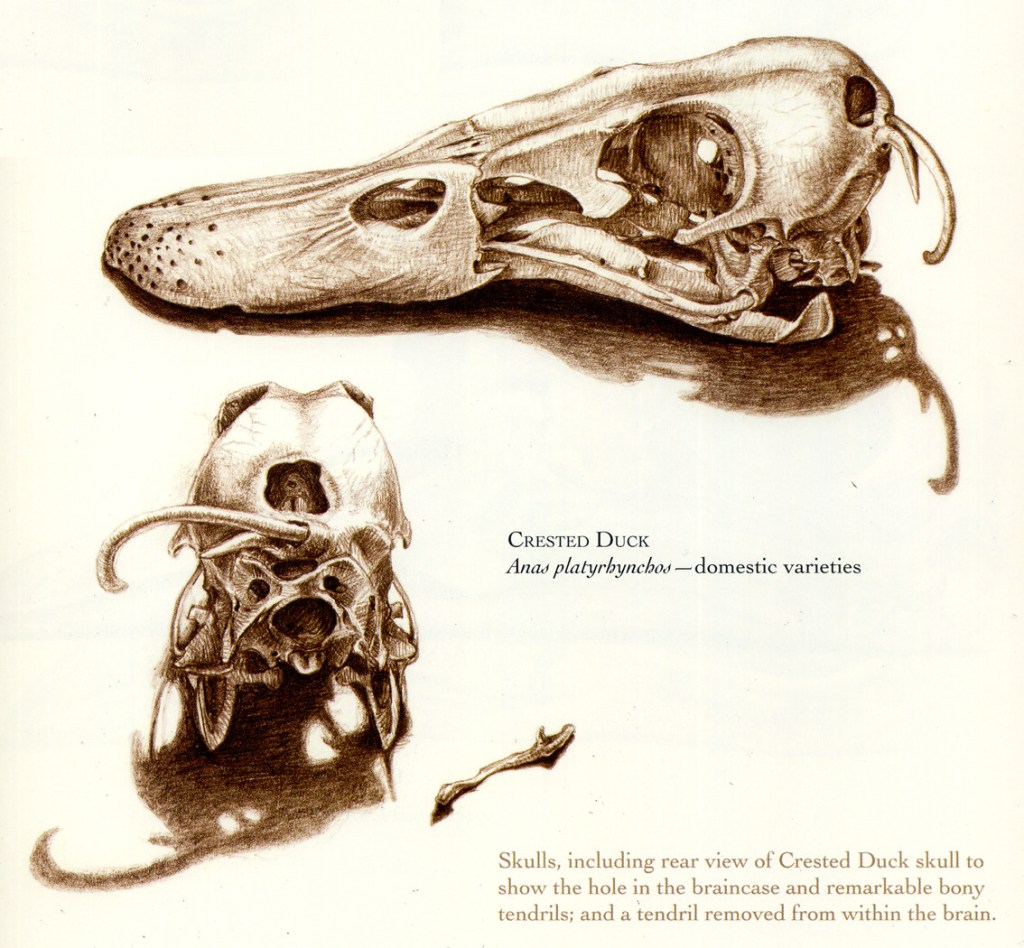
These ducks, presumably swimming in Plum Creek, are mallards – some regular, and some with a strange poofed-out bunch of feathers at the back of their heads.
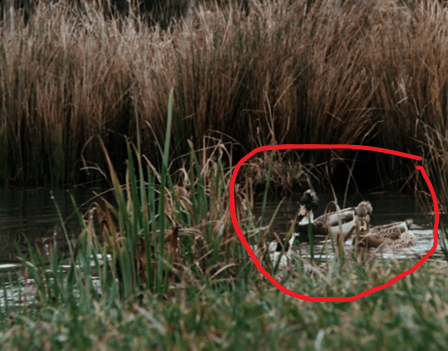
They’re cute, but apparently the feathery “wig” indicates a horrible inbred deformity.
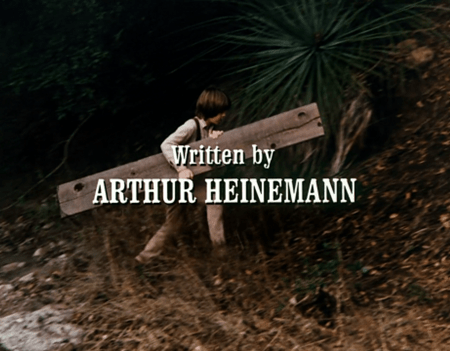
Unaware of this, David Rose gives us a joyous waltz as we see Andrew Garvey carrying a board. (Arthur Heinemann wrote this one, and Clax is back as director.)
I’m pretty sure some of the plants in this shot are not actually found in our cold Minnesota climate.
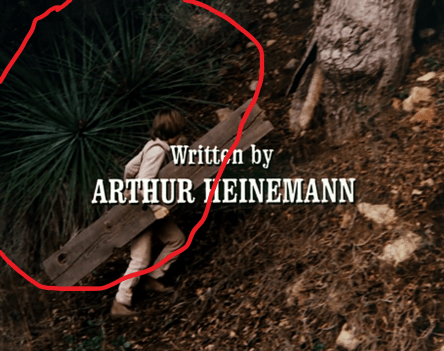
Andy and Laura are building a clubhouse. They agree their club will have no members apart from themselves, and Andy tells Laura how much he values her friendship. I wonder what Jimmy Hill makes of this? There’s been no sign of him since “Apple Boobs” four stories ago, but then again we haven’t had any school scenes since then either.


Meanwhile at the Little House, Carrie is standing on a chair whilst Ma measures her for a dress or some shit.

Carrie’s hair is pinned back in an unusual style.
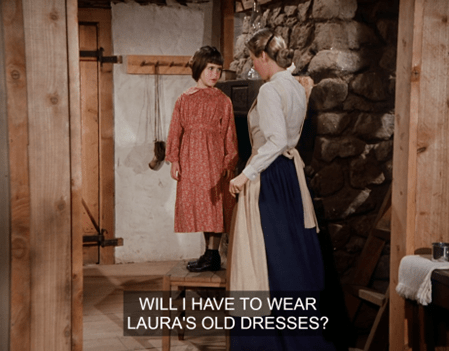
Pa comes in with a bloody hand, having injured it on a piece of equipment. He’s quite cheerful, though, telling Carrie he bit one of his own fingers off. Ha!
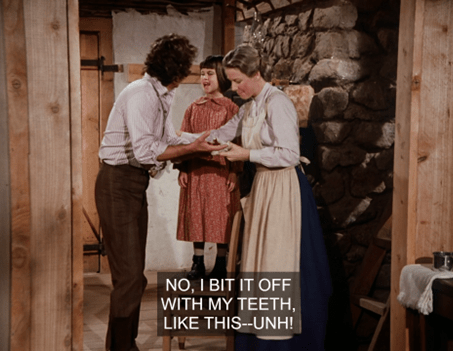
Jonathan Garvey arrives at the door, bearing a telegram for Charles. He also expresses concern about Charles’s hand.
AMELIA: Why are they all freaking out about his hand?
OLIVE: Because he’s gonna have to cut it off. It’s Little House.

The telegram reads:
If you’re the son of Lansford and Laura Ingalls, a matter of utmost importance to you. Reply soonest.
The telegram is from a lawyer called Roger Whitehead in St. Louis.
Ever the doomsayer, Ma predicts bad news.

Time passes, then – we can tell because Pa’s hand has healed – and we see him at work up in the hayloft.

A man in a chalkstripe suit and a derby arrives, introducing himself as Whitehead, the lawyer.
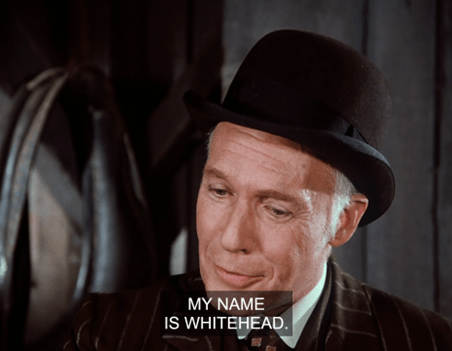
Mr. Whitehead offers Charles condolences upon the death of his uncle, an Edward Warren Ingalls of St. Louis.
Charles says he never heard of such a person. Neither does Whitehead’s suggestion that E.W. Ingalls went by “Uncle Ned” trigger his memory.
Now, Charles’s father Lansford Whiting Ingalls had an astonishing thirteen siblings, all but one of whom survived childhood. However, none of them were named Edward or Ned.
But perhaps Uncle Ned is actually Lansford’s uncle – Charles’s great-uncle? History does not record whether his dad had any paternal uncles, though more is known about Lansford’s mother’s side of the family. (She was a Delano, of the same line as Franklin Delano Roosevelt.)
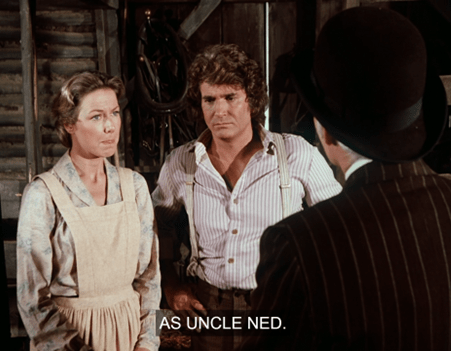
They head inside, and suddenly Charles remembers a relative he visited when he was five years old who had a huge house with a great chandelier. Whitehead says that would be Uncle Ned.

Those of you hoping for a reenactment of this scene with Matthew Labyorteaux as Young Charles will be disappointed.
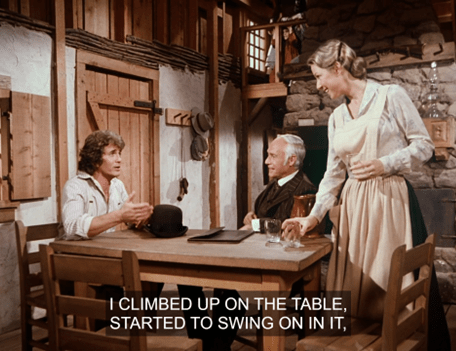
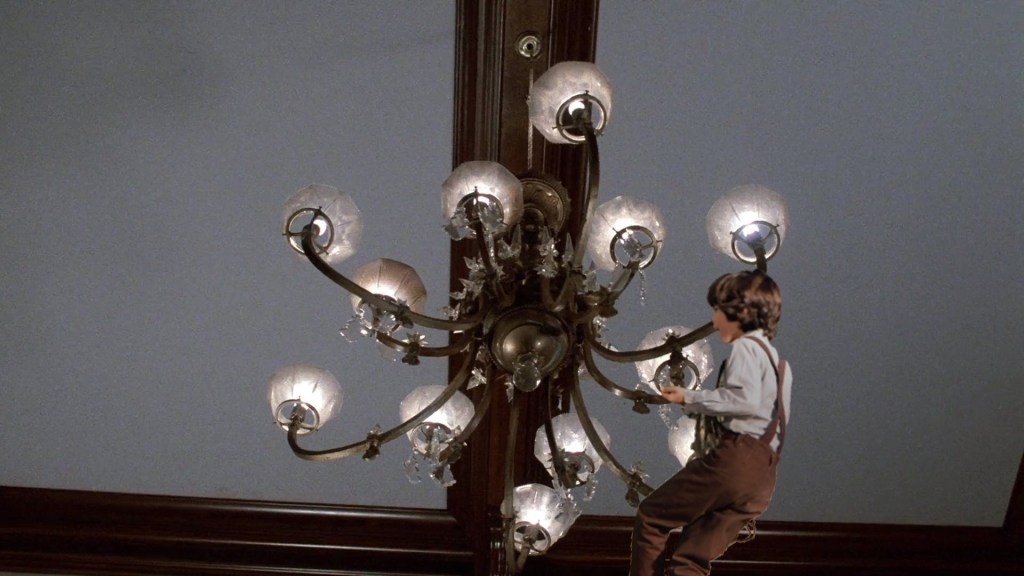
In real life, Charles Ingalls’s family left New York for Illinois when he was a boy. I couldn’t find anything suggesting they visited Missouri around that time.
Whitehead, who has an unplaceable accent (New England? Georgia?), stuns the family by telling them Charles has been left Uncle Ned’s estate.
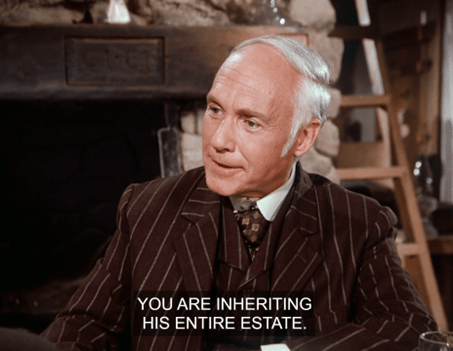
He says Ned Ingalls was an eccentric and irascible man who gave no explanation for his decision to make Charles his heir. (Convenient.)
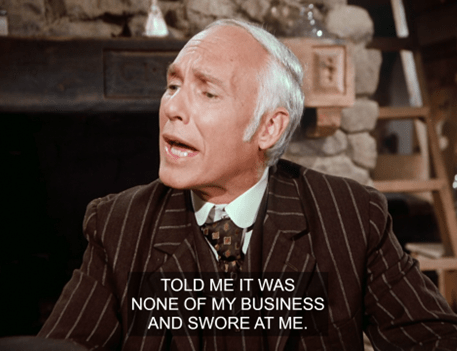
When Caroline asks what the estate consists of, Whitehead brings them outside and shows them a name plate on his buggy, which he notes he rented right here in Walnut Grove. It reads Ingalls Carriage Company.
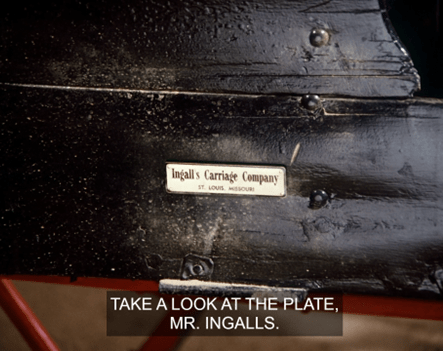
Well, the funny thing is, you can tell they accidentally had it made saying Ingall’s Carriage Company, then realized that was wrong and painted over the apostrophe.

Ma says they’re familiar with the brand, and Mr. Whitehead tells Charles he now owns the company.
AMELIA: I love Ma’s face there.
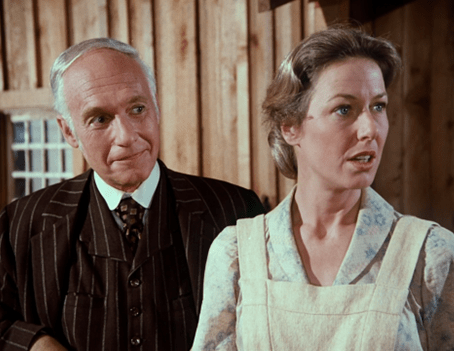
(The actor playing Whitehead, Michael Prince, was in Three Days of the Condor and on Dallas and Columbo.)

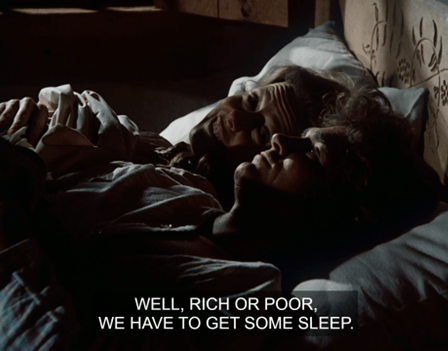
That night, Charles and Caroline lie in bed recalling all the extravagances they’ve never been able to afford over the years.
Then they kiss and say goodnight.
OLIVE: No popcorn? That’s surprising. They’re celebrating.
AMELIA: So do they get rich and live happily ever after?
WILL: Yep. This is the series finale.
The next day they have an unexpected visitor: Mrs. Oleson.
Her behavior is unexpected, too – she bursts in, smiling and laughing and screaming, addresses Caroline by her Christian name, and then hugs her.
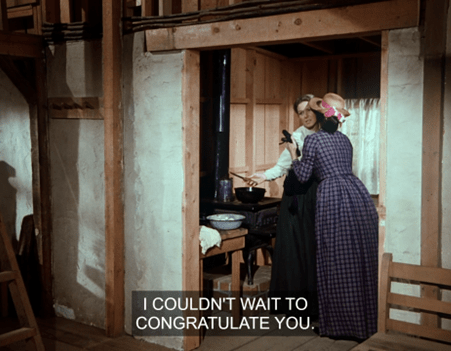
She calls Charles “Charles” too, and congratulates them both on their windfall.
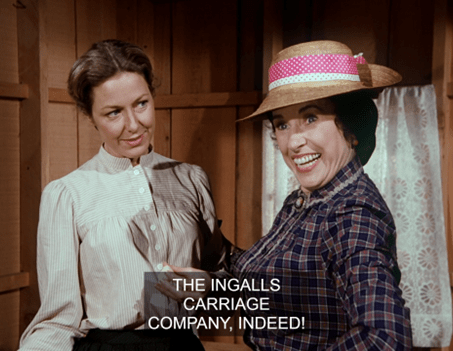
She knows all about it, and insists they call her “Harriet” from now on.
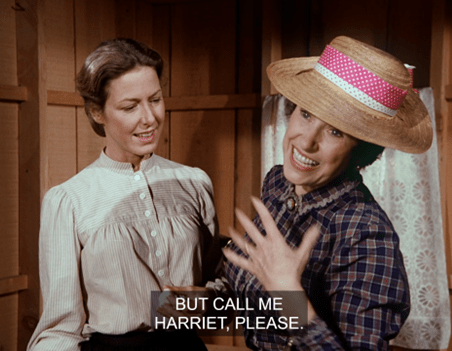
ALL: [cackling at Katherine MacGregor]
She says she expects Charles will quit his job soon, and then invites herself to coffee with Caroline. Ma is not thrilled.
AMELIA: Her faces are so perfect in this one.
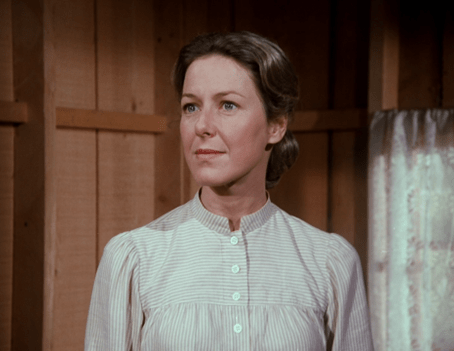
Mrs. Oleson also mistakenly refers to Uncle Ned as “Uncle Rich.” (That’s about as witty as this one gets, folks. Not Heinemann’s finest hour.)
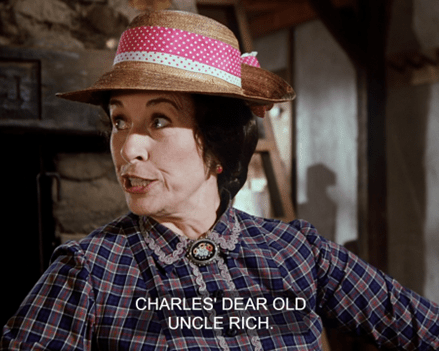
(MacG is truly great, though.)

Charles arrives at work, where Mr. Hanson greets him by saying “I am not accepting your resignation until this yob is done.”
Sharles reassures him he has no intention of quitting.
Hanson immediately takes Sharles, as a fellow wealthy person, into his confidence, then he offers to sell him the Mill!
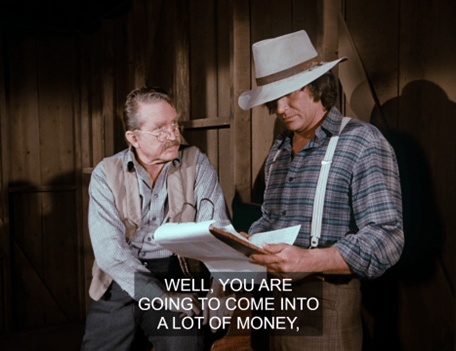
Sharles leaves, and Hanson then tells Yonathan Garvey he should persuade Sharles to accept, because then Sharles could be his boss and he’d get a promotion.
Garvey doesn’t seem all that enthused. And as someone whose friend once became his boss, I can tell you it’s not always a great development.

To school then, with the Ing-Gals, Nellie and Willie, the Non-Binary Kid, the Kid with Very Red Hair, the Gelfling Boy, Not-Linda Hunt, some AEKs and Nondescript Helens, and the Midsommar Kid all in attendance.
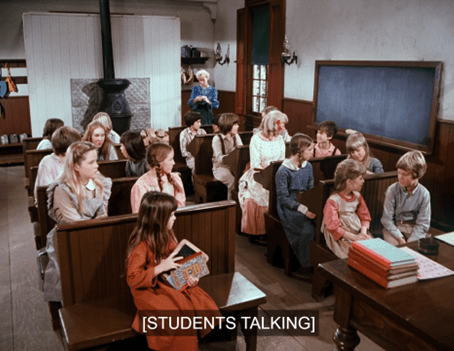
No Jimmy Hill. Hardly surprising by this point.
I also wonder if we’ve seen the last of Not-Joni Mitchell (who last appeared in “The Election”), Pigtail Helen (ditto), Mona Lisa Helen (“The Aftermath”) and Cloud City Princess Leia (“The Creeper of Walnut Grove”). I suppose they were all older girls and may have graduated (or married).
As we’re nearing the end of what’s generally considered the “School Days” era of this show (aka “The Beadlemania Years”), and seeing as this is a relatively short recap, perhaps now is a good time to count down the top ten most frequently recurring schoolkids to this point?
#10 (18 appearances) – Not-Carl Sanderson
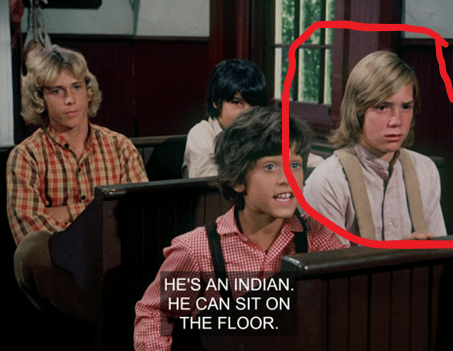
#9 (19 appearances) – The Kid With Very Red Hair (Mean One)

#8 (20 appearances) – Mona Lisa Helen
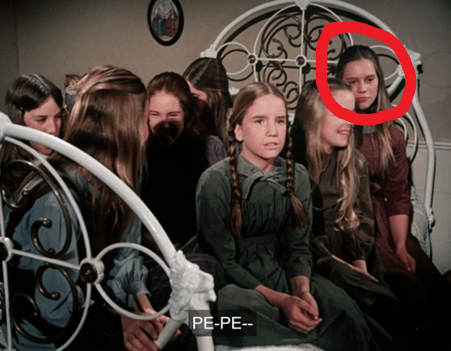
#7 (21 appearances) – The Non-Binary Kid

#6 (22 appearances) – Pigtail Helen

#5 (23 appearances) – Not-Joni Mitchell
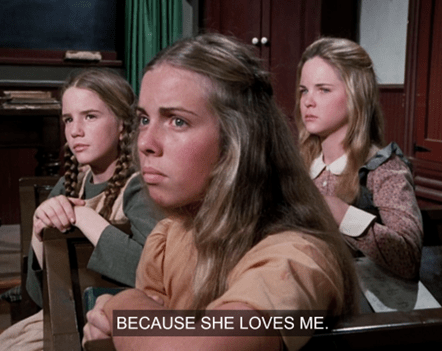
#4 (24 appearances) – Not-Linda Hunt
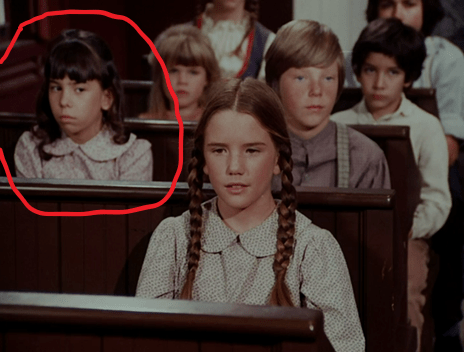
#3 (30 appearances) – The Midsommar Kid

#2 (35 appearances) – Cloud City Princess Leia

And finally, the number one most frequently appearing kid(s) on Little House on the Prairie as of February of 1978 is/are . . .
#1 (42 appearances) – The Ambiguously Ethnic Kids (AEKs)
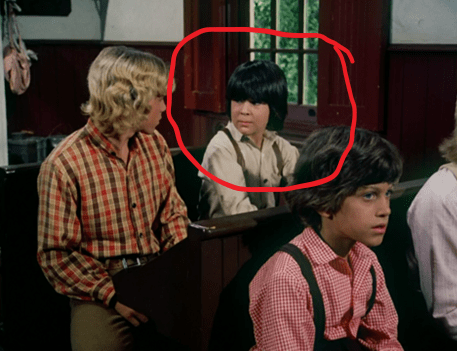
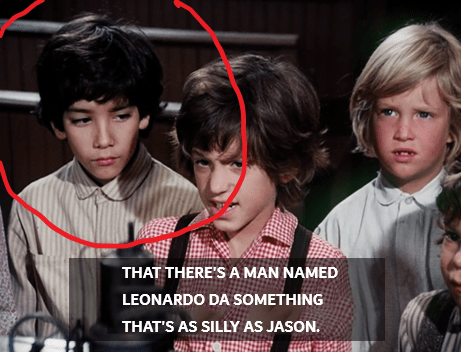
(I know I should count those two separately, but they usually appear as a pair.)
I’m gonna miss some of those kids!
Anyways, Mrs. Simms comes in and says it’s time for the annual book drive, for which phenomenon they need a student chairperson for some reason.
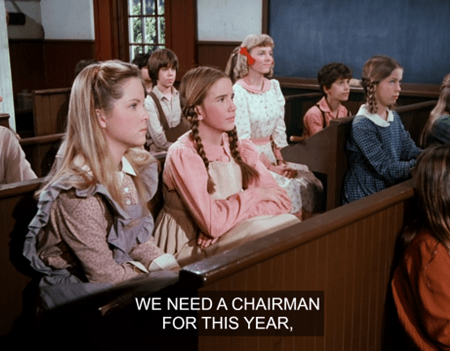
Nellie, chairperson emerita, rises and nominates “my dearest friend – Laura Ingalls.”
The Kid with Very Red Hair and Not-Linda Hunt react with shock.
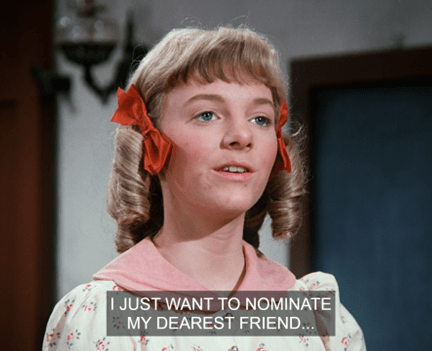
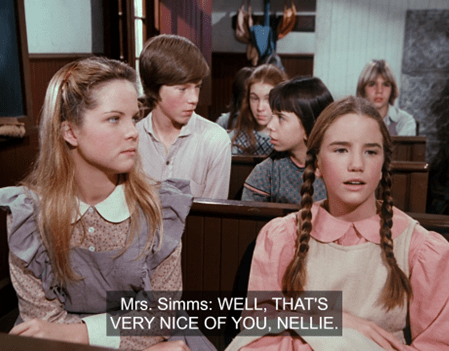
Then Nellie says she expects with the family’s new wealth, they could just donate the books to the school.
I don’t know why people think this way. I mean, I know they do, but I don’t know why. I remember a few months back Alyssa Milano got a bunch of crap because she shared a fundraising link for her kid’s little league trip or something, and everyone started screaming at her that she should just pay for everyone. I have no idea how large a donation she did or didn’t make, but “the richest parent pays for everyone” isn’t usually how school trips get funded in my experience.

Of course, last time this school had a book drive, the books were all donated by Ebenezer “Asswipe” Sprague, but since he abandoned all his friends in their hour of need there’s fat chance of that.
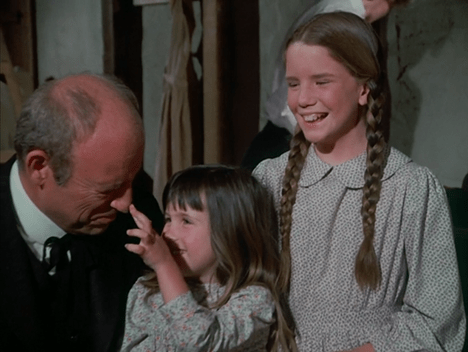

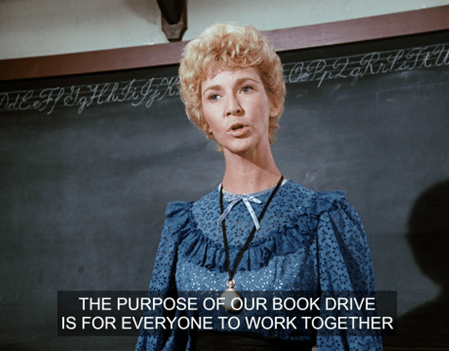
Getting steamed, the Bead tells Nellie to shut it, and then angrily lectures the class about, well, exactly what I just said in the preceding paragraph.
She’s right, obviously, but there’s no need to be angry at everybody when it was just Nellie’s suggestion.
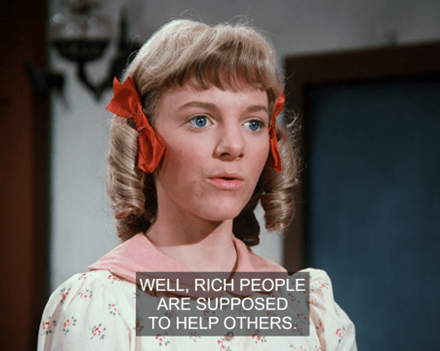
Nellie, who we’ve seen in the past is not afraid to challenge authority figures, sasses the Bead back and gets sent to the corner.
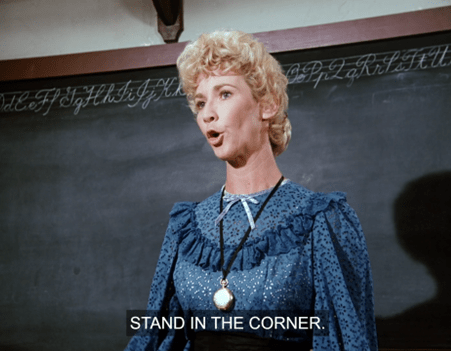
Willie, who appears to have had his hair cut recently, joins her there, out of force of habit.
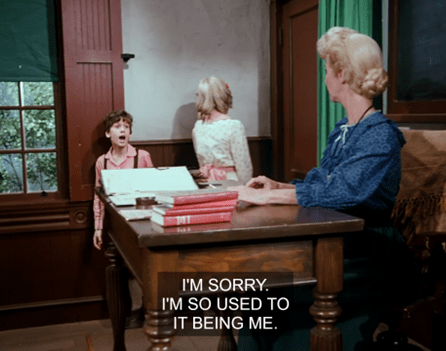
But then the Bead suggests Laura accept the nomination anyway, and she does.
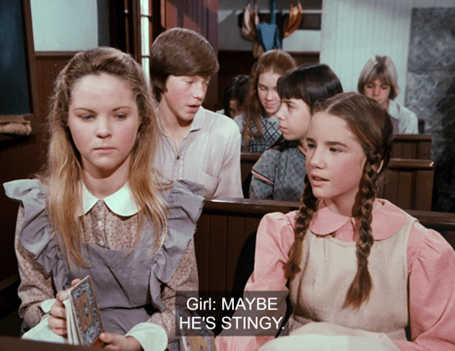
And then, in an unprecedented moment, we’re privy to a side conversation between the Kid with Very Red Hair and Not-Linda Hunt about how rich and greedy the Ingallses are. We probably don’t have to guess how they would feel about Alyssa Milano.

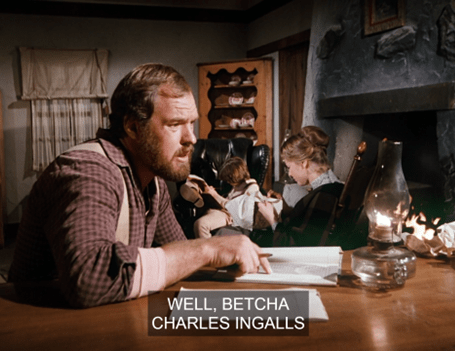
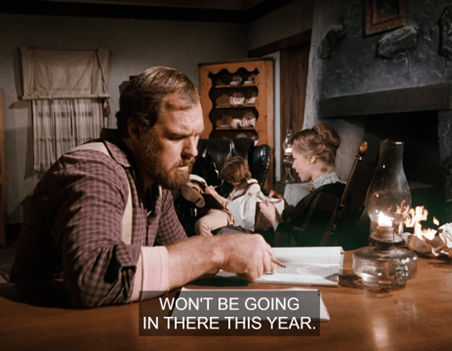
That night at the Old Sanderson Place, Jonathan Garvey is doing the family budget, and is frustrated that they’re so poor. We never did find out how well they did on Alice’s sole income, but since that was about seven years ago in Little House Universal Time (LHUT) it’s a moot point now.

Alice says they can always get a loan at the bank. (Yeah! In Springfield! Damn you, Sprague!)
Then Garvey starts backbiting Charles, resentful of his luck.
But Alice simmers him down, which is nice.
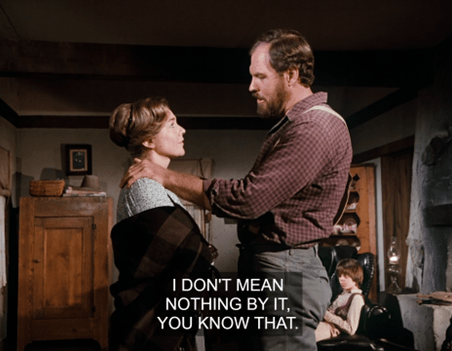
WILL: Is that chair upholstered with garbage bags? It’s been bothering me lately.
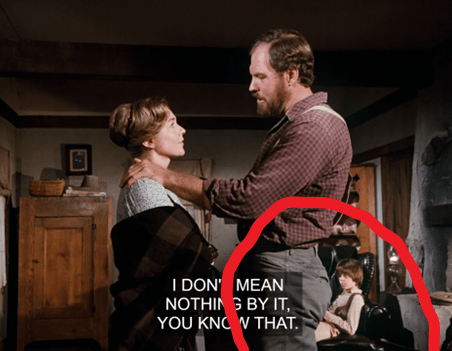
It actually reminds me of the killer chair in the Doctor Who story “Terror of the Autons.”
Garvey leaves.
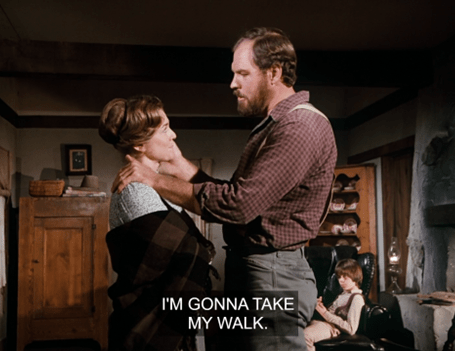
AMELIA: What was that little slap on the face he gave her? That’s nice.
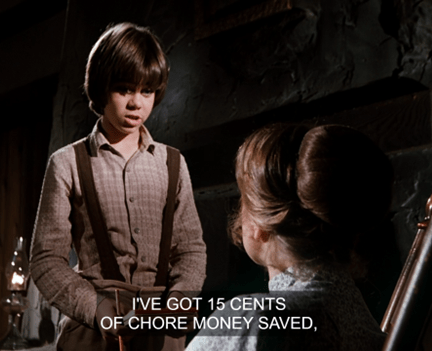
Andrew tells his mom he plans to donate fifteen cents of his own money to the book drive. (About five dollars today – aw.)
Then we cut to Caroline sharing how Mrs. Oleson had her over for fancy tea. Even though they had coffee together the same morning? I suppose it’s possible.
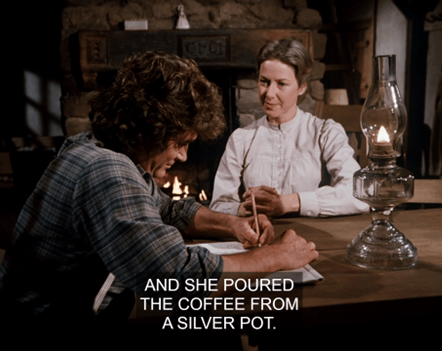
Caroline scoffs about the visit to the Olesons’, but I’m not sure she really would. Every girl who’s invited over there is stunned speechless at how fancy everything is in their private quarters. Why would Caroline be immune to that?
Then we hear a strange voice bellow from outside.
OLIVE: Oh, is Mr. Edwards back?
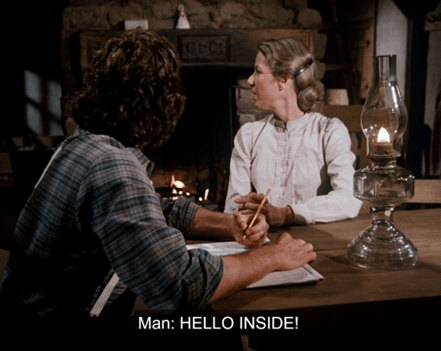
But it’s the Reverend Alden. He says he’s identified them as prospective donors . . . and he was right to.
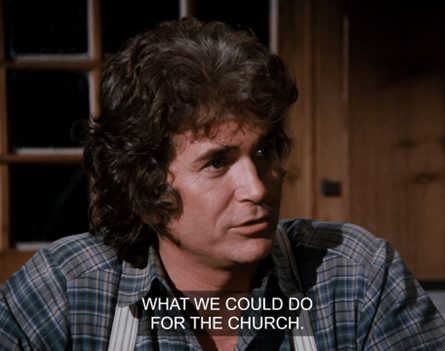
Alden says their gift will be applied to a fund to build a pipe organ in the church. Where on earth would they put it? It’s a one-room building that’s packed to the rafters at services every week. And those things are enormous.
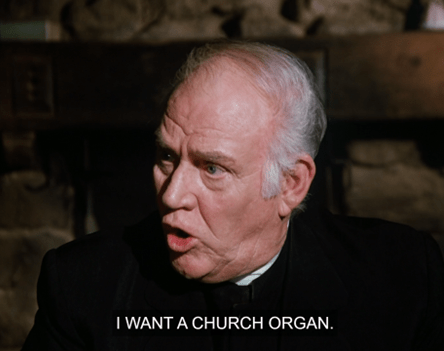

WILL: So . . . Charles is an organ donor. Get it?
AMELIA: [snaps]
But whatever. Aldi quivers with gratitude.
OLIVE: I don’t like Reverend Alden.
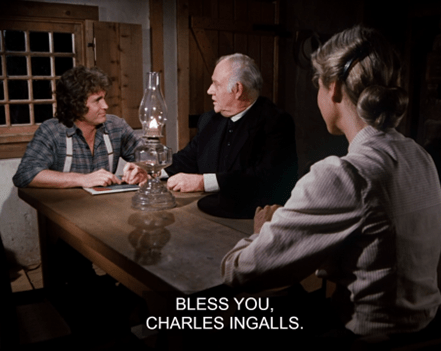
The next day, Laura, Mary and Carrie approach Charles in the barn, asking him to buy all the books for the book drive.
Stupid Chuck, of course, promises them he will.
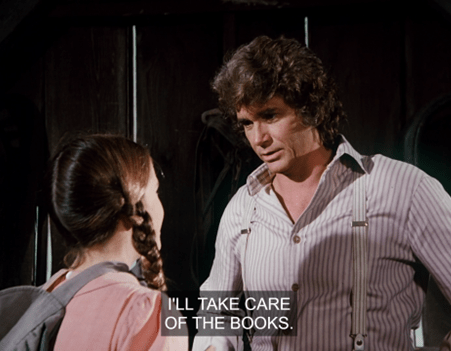
Next we see Charles and Caroline arriving at the Mercantile to do some extravagant shopping. (Caroline is wearing Boo Berry for the first time in a while.)
But Mrs. Oleson surprises them by materializing with some sort of runty fuzzheaded guy, whom she introduces as “Mr. Otto Ripley of the [fictional] St. Louis Eagle.”
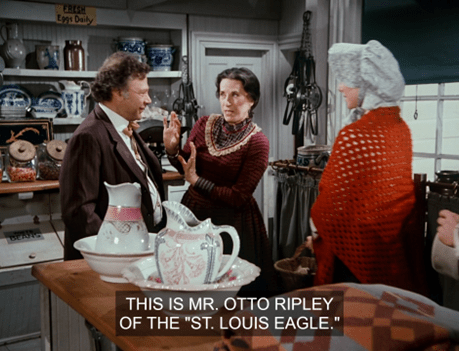
The runty Ripley is a familiar face indeed: Allan Rich, who appeared on shows including Kojak, Alice, Barney Miller, Hill Street Blues, Trapper John, M.D., Gimme a Break!, Night Court, The Golden Girls, The Nanny, House, Curb Your Enthusiasm, and many, many others.
At the movies, he was in Serpico, The Happy Hooker and Eating Raoul (worth watching).
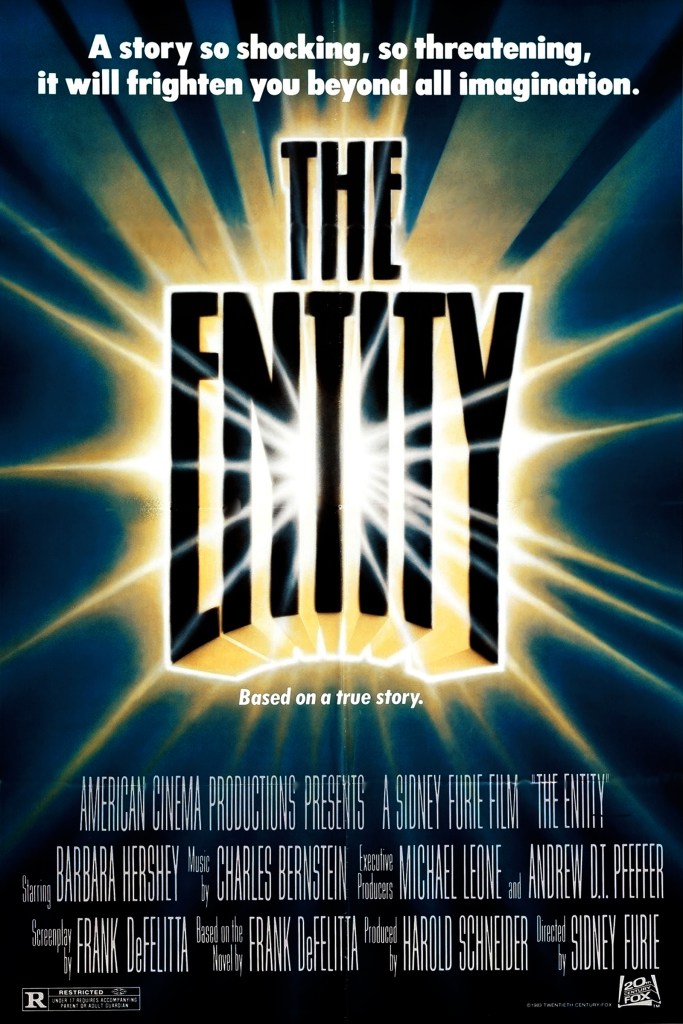
Finally, he was in The Entity, a very scary but prurient horror film from the eighties that I believe has been banned from all streaming sources.
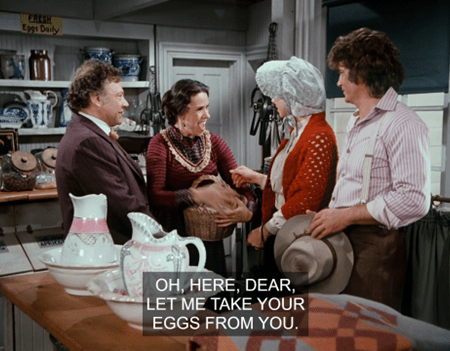
Anyways, Mrs. O sweetly takes Caroline’s eggs and says Ripley has been searching for them so he can profile them in the paper. (Searching for the Ingallses, not Caroline’s eggs.)
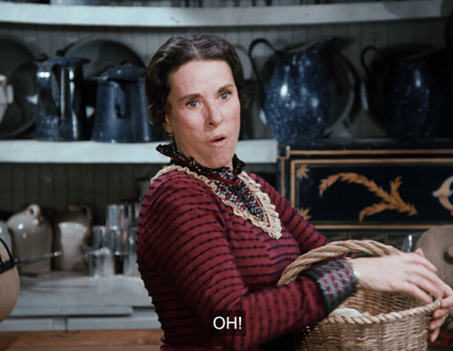
Ripley tells them the “size of the fortune you’ve inherited” is vast.
Mrs. O creams her pantaloons at the very thought.
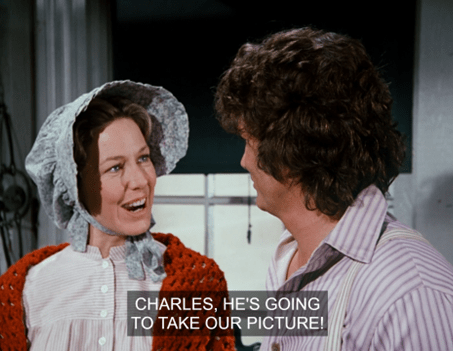
Ripley, who fawns over Ma and Pa and has a gassy laugh, says he’ll come out to the Little House to interview them the next day. “I hear you only live three miles down the road,” he says. (The real Little House was two miles from town, and that’s what we’ve been using for our estimates to date. We shall assume he misspoke.)

He exits. Caroline is very excited to have her photograph taken for the paper. Charles notes she’s had her picture taken before. Attentive readers will recall that last week I doubted the Ingallses could afford to have photographs taken. Well, there’s a lot of “expert” lip-flappin’ on the internet about this, but it does seem by the 1870s photographs were not as expensive as they once had been. I found estimates suggesting that formal photo prices were in the range of $3 to $6 ($90 to $180), but that cheap fairground-type photos could be had for as little as 25 cents ($7.50). Presumably Charles is referring to the latter rather than the former here.
Mrs. Oleson insists that they pick out new outfits for the photo from the Mercantile stock. Charles says they don’t have any of their inheritance yet, but Mrs. O says, rather hilariously, “You know that your credit’s always been good with us, Charles!”
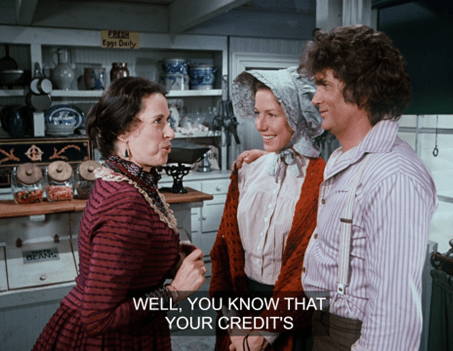
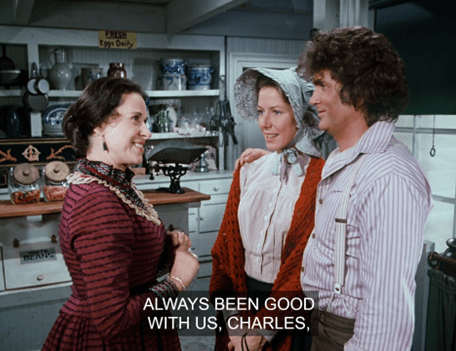
Charles shrugs and assents, then Harriet sweeps Caroline away to try on dresses.
OLIVE: Does this one turn out to be a dream?
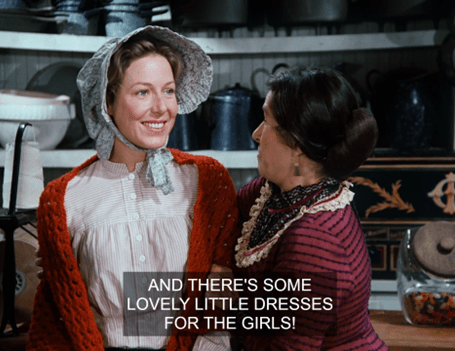
Meanwhile, at school, Andrew Garvey makes one of his “groovy faces” and raises his hand eagerly to tell the Bead about his donation.
OLIVE: Did they give him blue contact lenses for this one?

But when the Bead first announces the Ingalls family will be buying all the books, he says never mind. It’s a sad moment. Patrick Labyorteaux is quite good in the part.
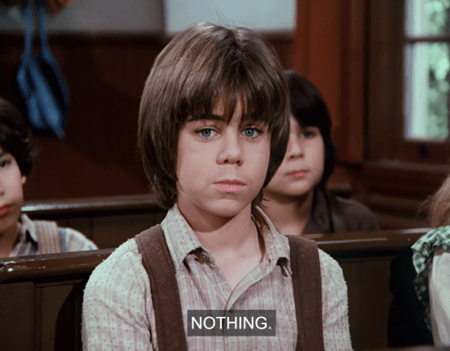
Andy’s getting a mustache, by the way.

Back at the Mercantile, Nels is helping Charles pick out a suit for his pictures.
Charles is uncomfortable dressed so formally, though certainly we’ve seen him wearing suits before.
AMELIA: That’s not a great suit for Charles.
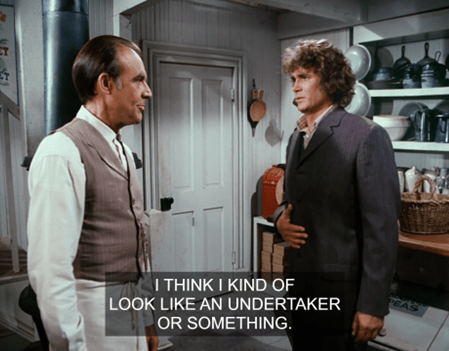
Nels points out that both Mr. Hanson and “the banker” have similar suits. Since Sprague left town eighteen stories ago, this seems an odd reference. Could he mean somebody else?
Caroline comes out in a green satin dress, apparently one in a line of many she’s tried on.
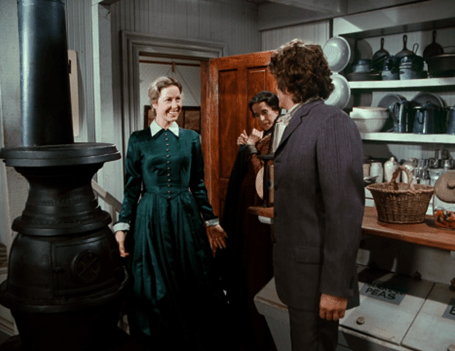
AMELIA: I don’t like that dress, either.
OLIVE: No. It looks like Christmas wrapping paper. All it needs is a candy-cane bow.
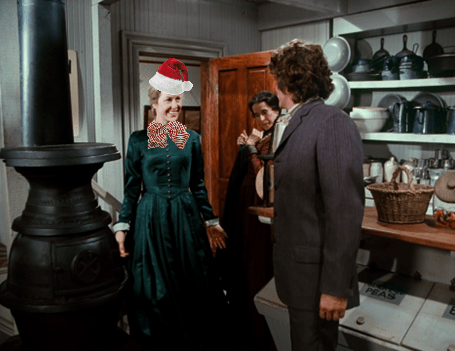
[UPDATE: Reader Cassie writes that the dress is of taffetta, not satin. Walnut Groovy regrets the error.]
Nels then tells Charles Rev. Alden told him about the organ donation, and he submitted the order to have one delivered. Charles protests that he doesn’t actually have the money, but Nels says he doesn’t need the cash up front.
Charles says okay. Then he orders the schoolbooks, as well as a watch brooch for Caroline – something she’s always wished for.
Cut to Carrie in a nice burgundy dress, twirling and slurping, “Isn’t it beautiful? I like being rich!”
AMELIA: Seriously, what happens? Does Pa decide to give all the money away and stay poor?

Carrie is on a covered bridge – a thing we’ve never seen on this show.
OLIVE: Where the hell is this? This is supposed to be on their way home?

I don’t know why we’ve never seen this bridge before, but according to our map there is a point where the road from Walnut Grove crosses Plum Creek on the way out to the Little House, so I’ll just add it.
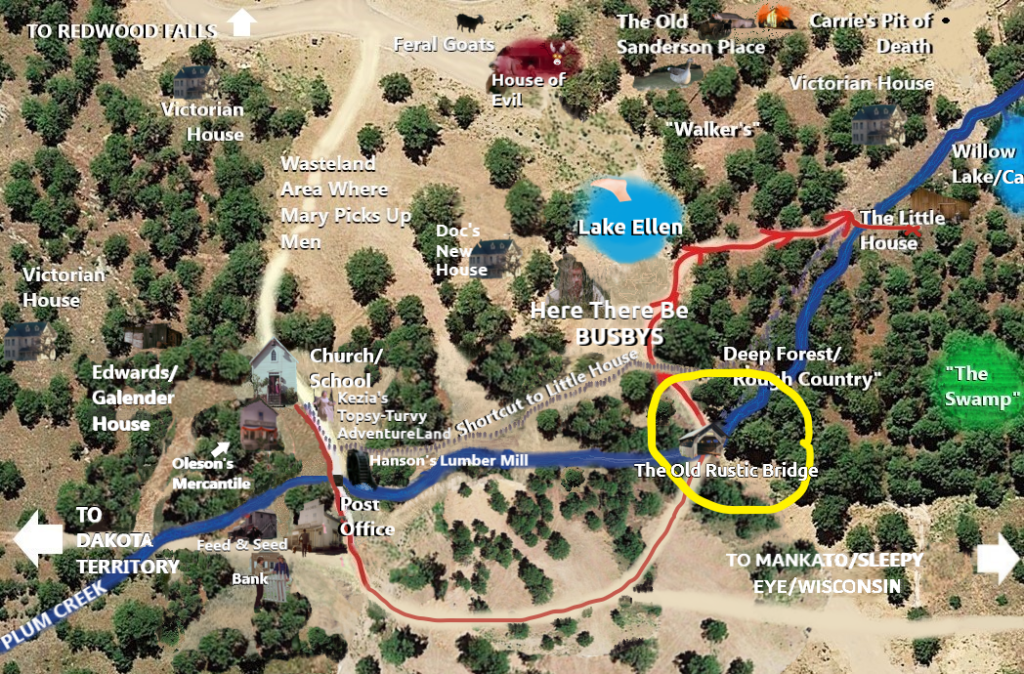
[UPDATE: Eagle-eyed reader Ben writes:
The bridge/pond is from the town where Ma was supposed to meet them after the pig buying when she cut her leg in season two. The Inheritance must have been filmed during a wildfire threat to Big Sky, because none of it’s shot there. Did you notice how when they went outside to look at the carriage, they stayed right up by the house, because they were in the studio? They’ll try to convince you the bridge has always been in Walnut Grove over the next few episodes, though. The bridge/pond is Golden Ponds, owned by Disney also for shooting period pieces.
Thanks, Ben!]
Carrie is followed by Laura and Mary (also in new dresses) and by Tartan Nellie, who apparently helped pick them out.
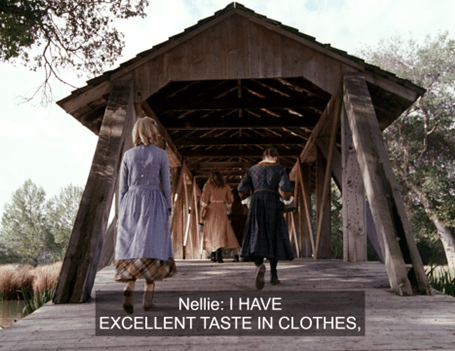
Laura calls Nellie out for only liking her now because she’s rich, but when she sees Andrew Garvey fishing and asks him to work on the clubhouse with her, he essentially tells her to stay with her own kind. “You look like Nellie Oleson,” he says.
AMELIA: Ouch.
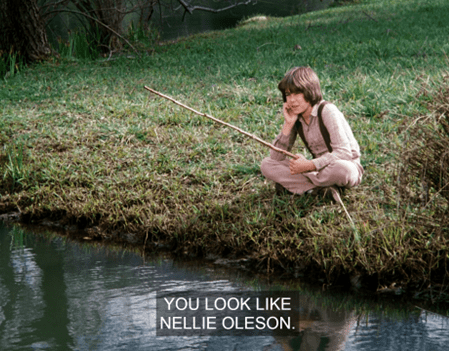
As for Nellie, since she had been walking along with the group up to this point, you’d think she’d overhear this conversation. But she’s disappeared.
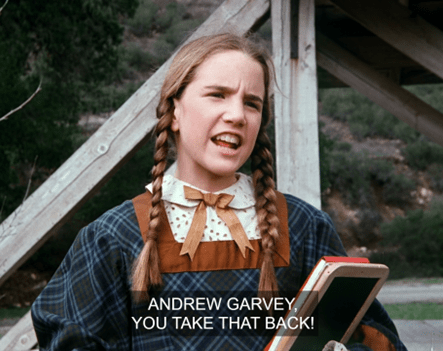
Back at home, Caroline is tut-tutting Charles for trying to peek under the wrapping of a brown paper package tied up with string.
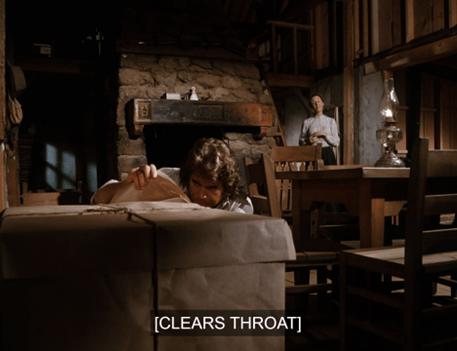
Caroline tells him the box is a birthday present for him, and he points out his birthday isn’t for “another three weeks.”
Now, in real life Charles Ingalls was born on January 10, 1836. However, in the Little House TV Universe, we’ve dated his birthday to September or early October. (You’ll recall the family was celebrating it in “To Live With Fear,” Part One, when Mary had to ruin the fun by getting kicked by a horse.)

Since he says now we’re three weeks out from the occasion, and since school’s already in session, I guess that means we’re probably in September of 1878-G, not spring?

Then Charles produces his own wrapped present for Caroline, laughing that she’ll have to wait three months to open it on her own birthday.
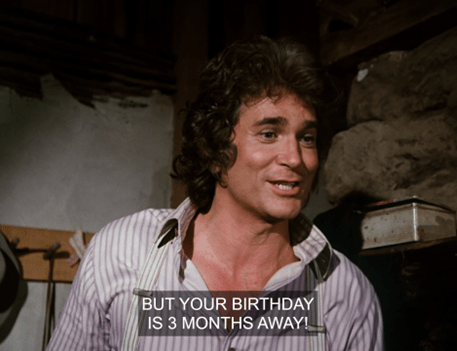
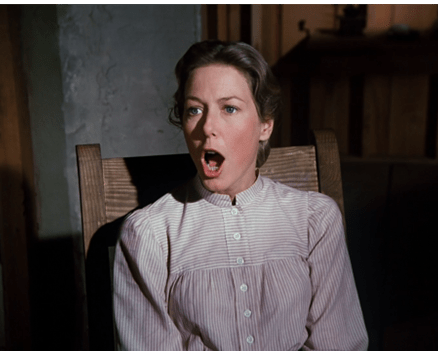
Unfortunately, there’s no way to reconcile this either with history or in-universe continuity. In real life, Caroline’s birthday was December 12th – eleven months out from Charles’s – and on the series we dated her birthday to October, based on a calendar that appeared in the Post Office in “The Long Road Home.”

Perhaps Charles meant his own birthday was three days out, and Caroline’s was three weeks away? That would work.
Whatever the date, both of them are annoying gift-grubbers in this scene, and they decide not to wait and just to open their presents now.
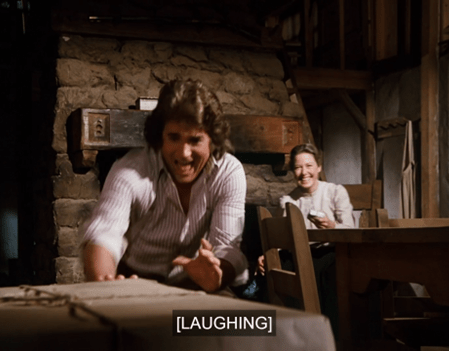
The watch gets an “oh, oh, oh CHARLES!” from Caroline, and Pa’s present from her is a set of new tools, which he earlier told her he coveted.
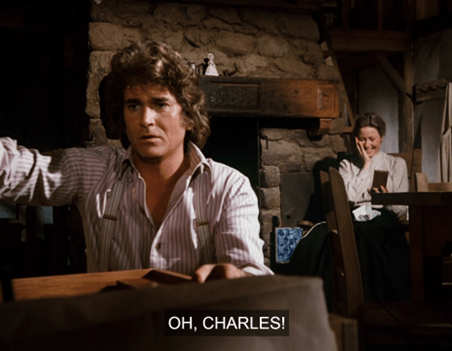
The next morning, Ripley the runty reporter arrives at the Little House. His friendly demeanor is now gone, and he screams at them for dressing “like city people” and ruining the rags-to-riches framework of his story. (Charles actually says “rags to riches,” but the saying probably didn’t originate till a little later.)
AMELIA: His acting’s a little much.
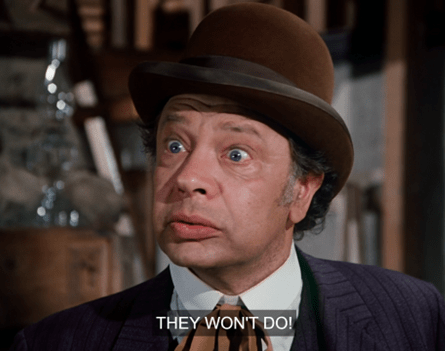
Annoyed by Ripley’s bullshit, Charles literally throws him out.
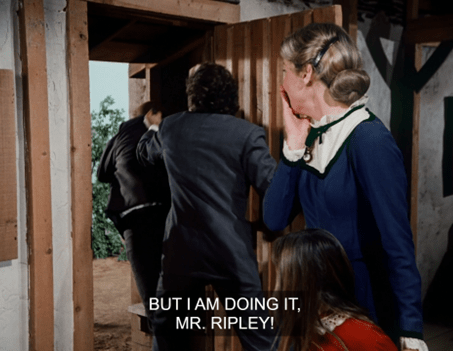
Then we see Charles and Jonathan Garvey working together at the Mill, and Garvey surprises Charles by saying he’s asked someone named “Fred Wilson” to help him clear fields, despite previously asking Charles for help.

Garvey says he thought Charles would be beneath such work now. Angry Chuck snaps “Next time let me do my own thinkin’” and marches out.
OLIVE: So the moral of this story is “Feel Sorry for Rich People”? What kind of propaganda is this?

After a commercial break, Charles encounters Mrs. Oleson on the road to town. She says she has some business to discuss with him if he could stop by at his convenience.
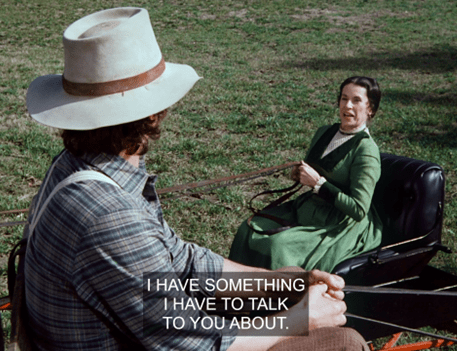
When he does, we learn some time has passed (how much?), and Mrs. O tells Charles all the companies they purchased his stuff from are now expecting payment.
Charles says he’s been trying to settle his uncle’s estate with Mr. Whitehead, but he’s been hard to reach, and Harriet shocks him by producing a lien on his property for him to sign. I don’t understand – it seems to me most of the items Charles bought would be returnable, though perhaps not for a full refund. The books, certainly; the clothes, the watch, the tools; and the organ purchase could be canceled, unless it’s already been installed. (Which it hasn’t, as we’ll see in the next church scene we get.)
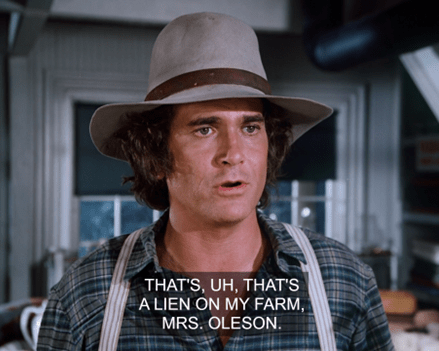
Mrs. Oleson says it’s just “standard,” and points out it’ll silence the creditors. “You can check with the banker,” she adds. (Hmm. . . .)
Others may disagree, but I think Mrs. O is actually quite nice about it, for her, and he signs.
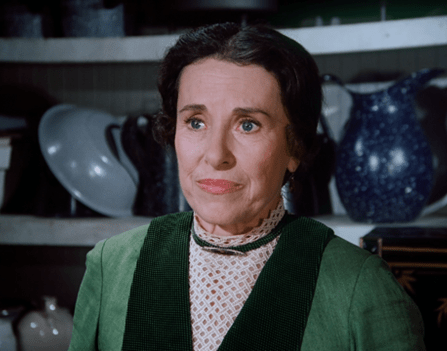
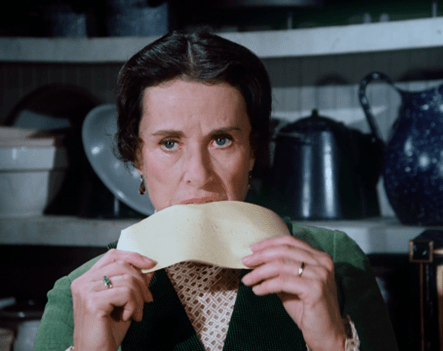
When he leaves, Harriet actually bites the lien.
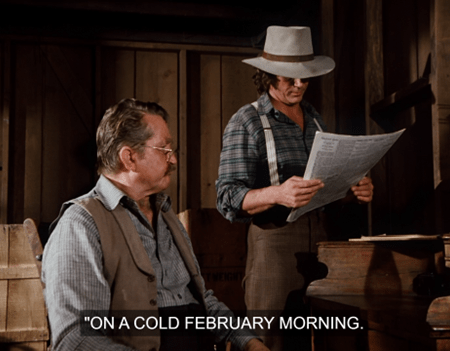
At the Mill, Mr. Hanson hands Sharles the Mankato newspaper (the Clarion, you’ll recall), which contains Ripley’s falsified account of his rags-to-riches story. (If enough time has passed that creditors are hounding him, you’d think the story would have run a long time ago.)
It even contains a fake picture, which unfortunately we don’t get to see.

Sharles reads aloud from the story, which mentions the interview as having taken place “on a cold February morning.” This is proving to be the most difficult story to fit into the timeline to date. Again, we’ll assume this is more dramatic license from the reporter, since everything else in the story is a lie, but if we’re late in the year (at least November, if the bills are overdue?), it’s unclear why he would set the conversation in February.
Then Hanson starts needling him about buying the Mill again, and Sharles actually shoves his clipboard at him.

“Sharles!” exclaims Hanson in shock. “Where are you going?”
Very bitterly, Sharles says, “I’m going home. I don’t have to work anymore. Haven’t you heard? I’m rich.”
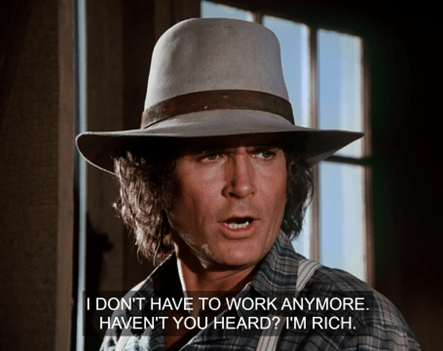
Next, Whitehead finally reappears at the Little House door, saying the estate has been settled.
Caroline asks how much they’re getting, and he says they’ll have to discuss that.
Then we jump to the middle of their conversation, with Whitehead saying Uncle Ned was a diehard Confederate who “kept the Stars and Bars flying until the day of his death.” No comment on the flag, but it’s unclear how any of Lansford Ingalls’s people – New Yorkers who traced their lineage to the Mayflower – became a Confederate sympathizer.
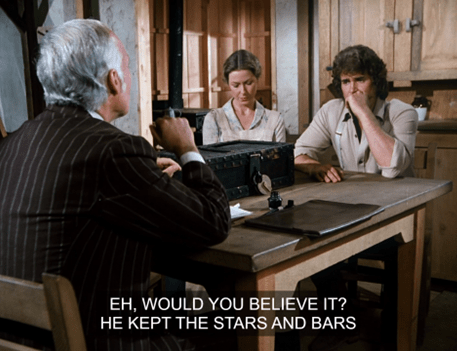
Then again, Mary became one, so I guess anything’s possible.

Uncle Ned actually took it a little further than Mary (unless there’s a deleted scene out there), dancing nude around the house whilst singing “Dixie.”
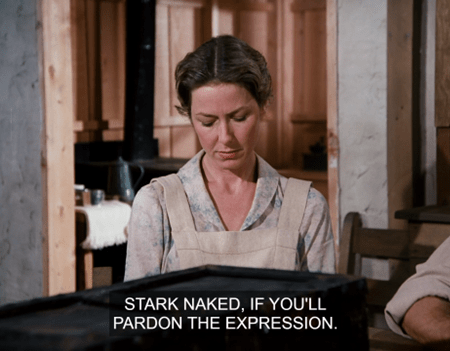
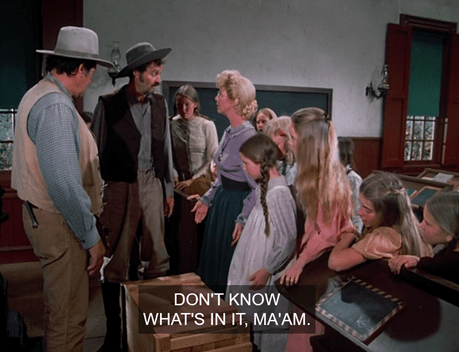
Then Whitehead tells them Ned had so many debts, there’s nothing left from his estate except one box, contents unknown.
So, the implication is that the carriage company has been sold to pay the debts, though oddly Whitehead never says that. Now, I think Whitehead is the real villain in this story, culpable ethically if not legally for everything that happens. Why on Earth would he come all the way to Minnesota to tell the Ingallses they’ve inherited the company without verifying it? As Ned’s personal lawyer, surely he must have had some idea what he was or wasn’t worth in actuality. He certainly knew how crazy he was.

Whitehead then slickly assures them his own legal fees weren’t the cause of their ruin, since he gave them a discount rate. He gives Charles some paperwork and says, “The figures are all there. Your banker can check them for you.” (Again with this phantom banker!)
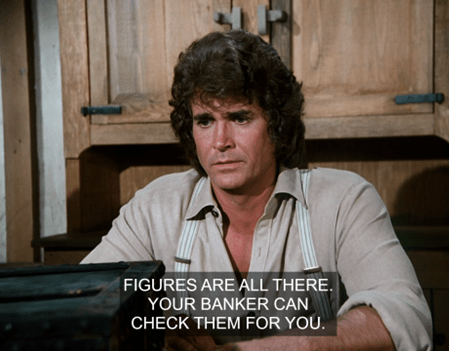
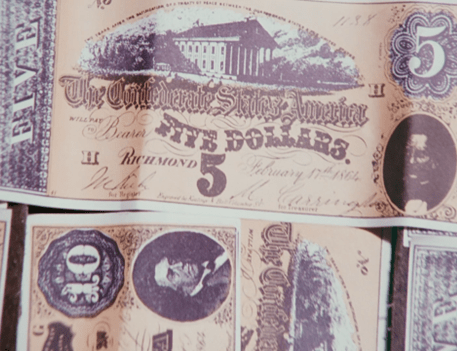
They open the box, and Caroline screams with joy when she sees it contains money – but Charles wearily points out it’s Confederate money and therefore worthless. (This is one story I actually remember watching as a child, and I remember thinking at the time that “Confederate” must be a synonym for “counterfeit.”)

Charles starts ranting then, and Whitehead apologizes, but says he can’t be of further help to them.
After a break, somber music conveys us to the Mercantile, where Mustache Man is driving by, very close to the camera, in fact.
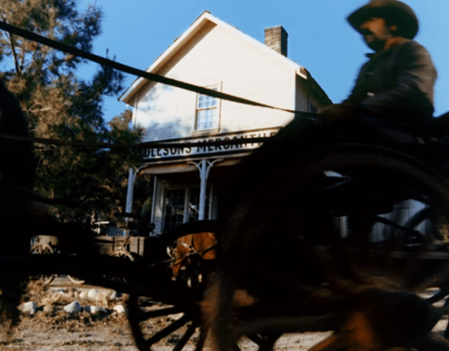
Inside, Mrs. Oleson is arranging with Charles the logistics for auctioning off his property. Nels shouts angrily at her, but as usual she makes the business decision. (It’s the Smart Businesswoman version of Harriet we get in this story.)
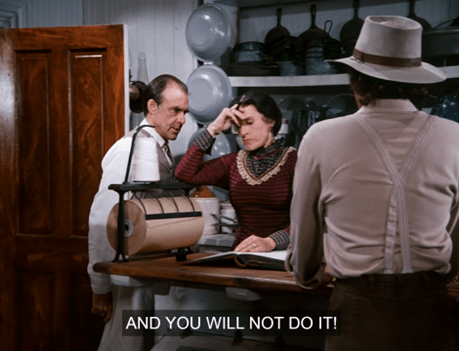
Charles pleads with her to let him work off the debt, but she says he owes so much the payments can’t wait. Her manner could be worse, though she does take the opportunity to lecture him about buying things on credit.
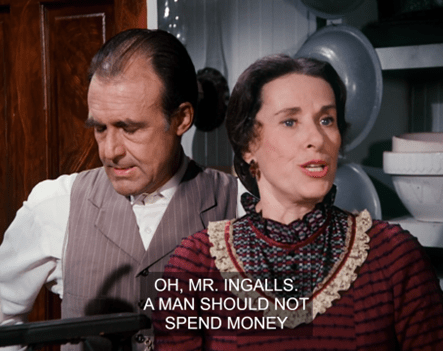
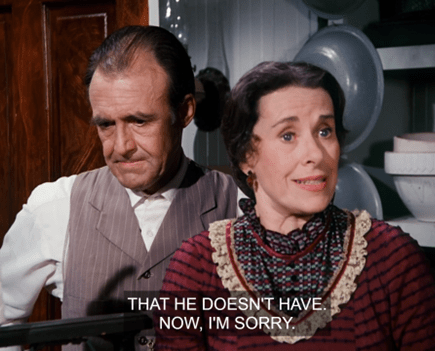
Charles flees, and when Nels glares at Harriet she snaps that the situation is as much his fault as it is hers.
“God forgive me,” he says.
OLIVE: “God forgive me”? Oh, is he going to get his sword and cut off her head?
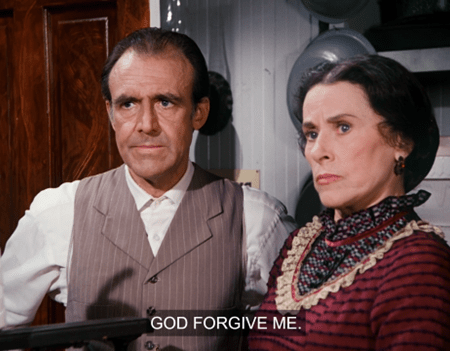

But actually, he’s just agreeing with her.
Cut to Caroline moping in the barn. A sign outside advertises the auction, which is to be conducted by a Harvey B. Woods.
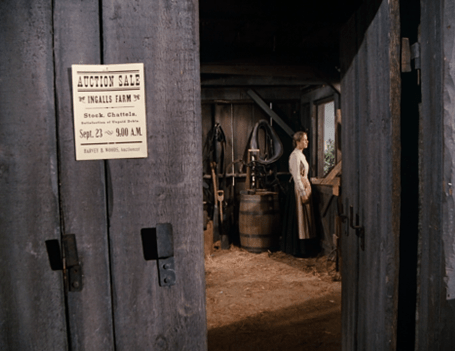
And the date of the auction, according to the flyer, is September 23rd. Aargh! This story is so exasperating! So, let’s see if we can square this by working backwards to create a workable timeline:
- September 23rd – the auction
- Week of September 7th – auction flyers circulated
- Week of September 1st – Ripley’s article appears in print, stating the Ingallses were interviewed in February; Whitehead returns with bad news
- Week of August 28th – Charles signs Mrs. Oleson’s lien
- July – August – The overdue invoices pile up
- Week of June 1st – Ripley the reporter arrives from Missouri; Ma and Pa exchange birthday presents, “three weeks” in advance of Charles’s birthday (January or September?) and “three months” in advance of Caroline’s (December or October?)
- May 15th – 31st – Whitehead visits Walnut Grove; the Bead announces the book drive; Charles and Caroline make a series of extravagant purchases
- Week of May 1st – Charles injures his hand and receives Whitehead’s telegram
It certainly makes sense that these events would take place over four or five months, but Ma and Pa’s birthdays, either real-life or in-universe, simply do not fit, since according to this Pa’s would be in June and Ma’s in September. Nor does the February reference in the newspaper.
Nevertheless, we shall have to accept this.
Anyways, Caroline is saddened to see the tools she gave Charles amongst the auction items. Charles says they have to sell them, adding that it was too nice a gift for a “poor dirt farmer from Wisconsin” to begin with. (As we discussed in the recap for “‘I Remember, I Remember,’” Charles was about seventeen when he came to Wisconsin – a grown man for the time – so his identifying as “from” the state is questionable. Then again, in that story he’s presented as being eleven or twelve, so maybe.)

Sadly, Ma and Pa head to the house so they won’t have to witness the carnage when the auction party arrives.
Flash forward a little, and we see Harvey B. Woods, auctioneer, bickering with Mrs. Oleson about whether to start the auction.
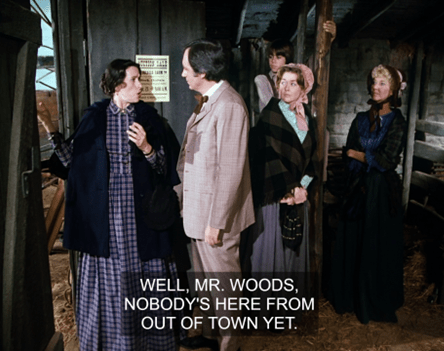
Mrs. Oleson is surprised and upset that the only attendees are the core players: Hanson and Doc, Aldi, the Bead, and the Garveys.
Woods begins with the toolbox, asking $10 ($300) for it. But Mr. Hanson starts the bidding at one penny ($3), and Jonathan Garvey raises it to two cents ($6).
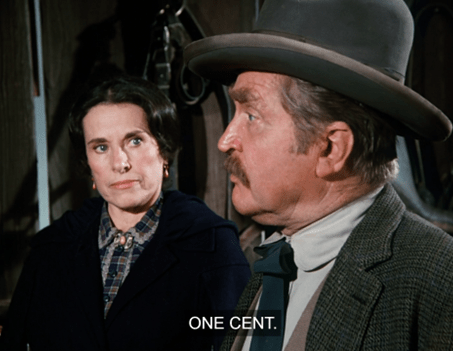
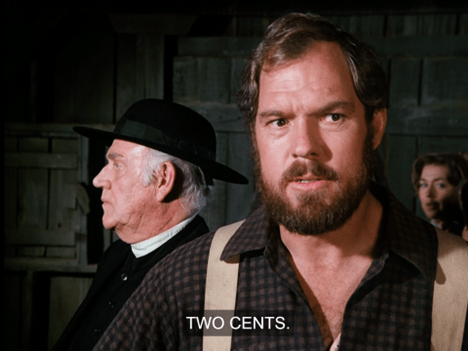
Woods scoffs at the low bids. The actor, Michael Flanagan, was on Hill Street Blues and Santa Barbara, and (interestingly) directed Rescue from Gilligan’s Island.


What happens here was actually a real phenomenon: the “penny auction,” in which the bids are controlled and kept tiny so as to force the bank or lienholder to essentially give back the foreclosed property to the original owner. Apparently they sometimes happened during the Great Depression, especially in rural communities, though if the strategy was used earlier than that it’s news to me.
Next up, the Chonkies, whom Woods values at $100 ($3,000). But the same thing happens.
Annoyed, Woods skips to the biggest lot: the farm itself. When Doc bids a penny, Mrs. Oleson herself shouts “four hundred dollars!” ($12,000). But Woods reminds her as the lienholder, she herself is not allowed to buy anything, since she’s the one selling.

Afterwards, the Grovesters head in to the Little House to share the news. Well, first Garvey lets Charles think he’s taking his farm away from him, which is kind of mean.
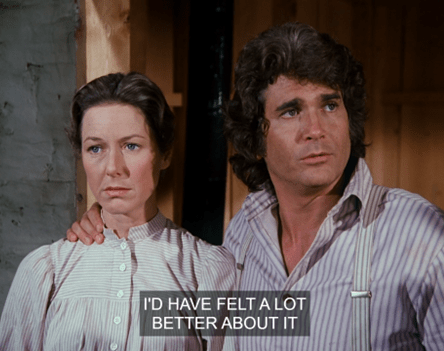
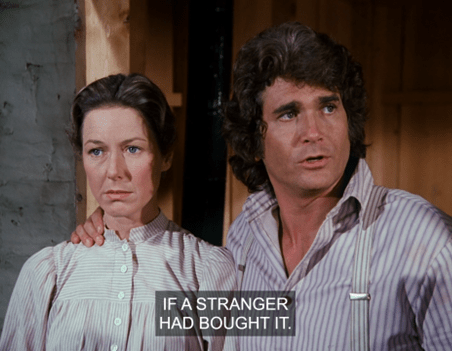
But then they reveal the gag, and tell him he can buy all his property back from them for six cents. Apparently Nels himself stood in the road driving people away from the auction. (All four roads into town? I suppose maybe he had help.)
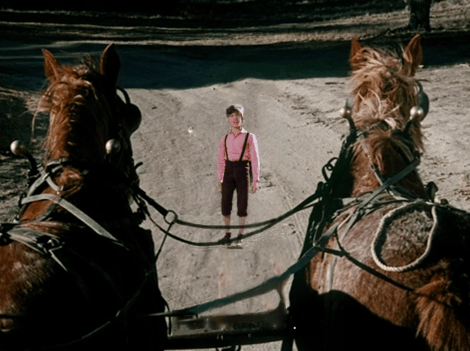

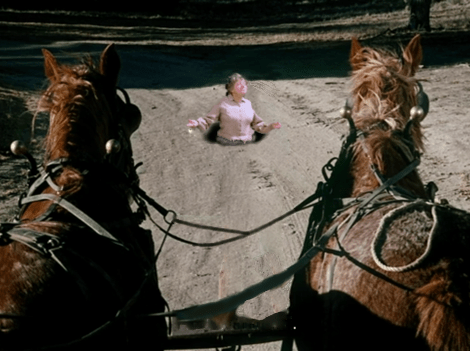
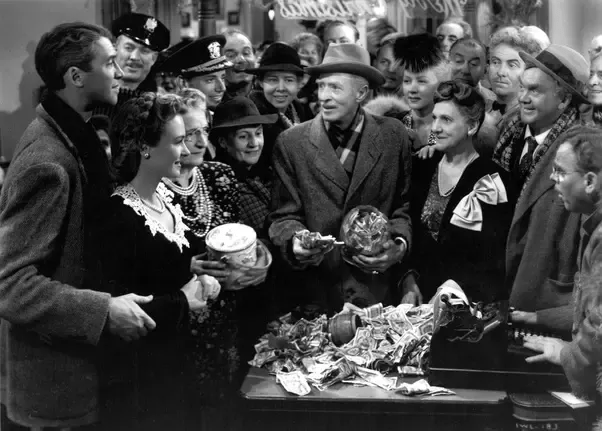
Aldi says he’ll just put pressure on the other Grovesters to pay for the organ, and Hanson said the school board has enough to cover the books.
AMELIA: This is just It’s a Wonderful Life.
The Ingallses all sob (well, not Carrie), and the townsfolk apologize for asking so much of them in the first place.
Crying, hugging, quivering, etc.
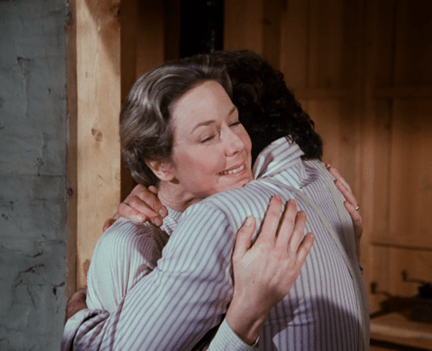
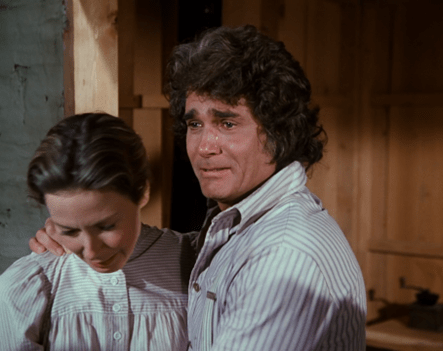

OLIVE: Reverend Alden – yuck.

Then we see more deformed ducks swimming by as Laura and Andrew Garvey resume work on their clubhouse. (Five months later?)

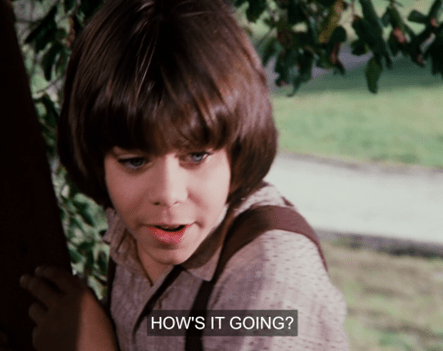
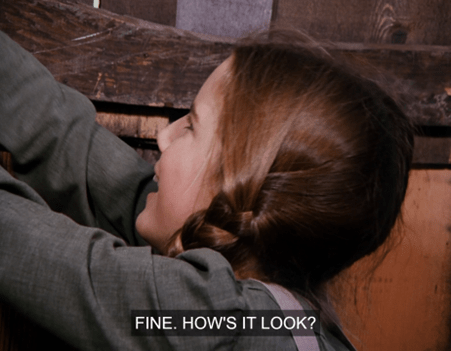
We see they’ve used Uncle Ned’s Confederate currency as wallpaper. The end. Bum-Bum-Ba-Dum.
STYLE WATCH: Charles appears to go commando again.
THE VERDICT: Aspiring for O. Henry-style greatness, this one is really just a dull vehicle for an obvious message, “Don’t Count Your Chickens.” Grassle, Landon, and especially MacGregor all shine, though.
UP NEXT: The Stranger
 Walnut Groovy
–The bridge/pond is from the town where Ma was supposed to meet them after the pig buying when she cut her leg in season two. The Inheritance must have been filmed during a wildfire threat to Big Sky, because none of it’s shot there. Did you notice how when they went outside to look at the carriage, they stayed right up by the house, because they were in the studio? They’ll try to convince you the bridge has always been in Walnut Grove over the next few episodes, though. The bridge/pond is Golden Ponds, owned by Disney also for shooting period pieces.
–A character named Ned, although we never see him. “Ned” was apparently not considered a good movie or TV character name, as Nancy Drew’s boyfriend Ned Nickerson almost never got to be named Ned in dramatized versions. He’s Ted in the thirties and Nick in the latest TV show…what’s wrong with “Ned”?
–I, too, thought Confederate=counterfeit the first time I watched this one.
LikeLiked by 2 people
Thanks, Ben! I have updated the post.
LikeLike
Not a favorite episode for me but I love Mrs. O’s pink straw hat. I’m trying to remember if she ever wore it in any other episode. 👒
LikeLiked by 1 person
I think it is new!
LikeLike
Reading this recap (and really, all of them) is like a cold drink of water on a hot day. So satisfying! This episode is bonkers and not in a fun way, like The Monster of Walnut Grove or something. Everything is underdeveloped (Andy and Laura’s quarrel and make up is unearned, will Pa ever reflect on his compulsion to break his cash on the barrel rule at every turn?) or way overplayed (that newspaper guy, come on). And yes, it’s totally the lawyer’s fault!! Why would you tell them they own everything when the estate is far from settled. Also, hints of Adam’s father…
But I love the Garvey era, and so here I am.
Quick note about the scene with Carrie and Ma and the dress fitting: I think through the dialogue were are meant to understand that Ma is making over (altering) one of Laura’s outgrown dresses for Carrie. Hence Carrie asking if she’ll still be wearing Laura’s old clothes when she is grown. I wore a lot of hand-me-downs growing up, so I get it. Also, I think the dress Carrie is wearing is very similar, if not the same, as the Running Down That Hill opening/ending credits dress. And Melissa Gilbert now has that dress framed in her home, which is too sweet.
Anyway, hi! I really enjoy your project as I thought I was the only cynical person who loves this show with their whole heart.
LikeLiked by 1 person
Thanks so much for this lovely comment, Megan. Of course you’re right about the dress alteration – I think my distaste for this story caused me to rush through a bit. (Also the knowledge that I’m three years into this project, not even half done, and need to kick it in the ass a bit.) I agree 100 percent about this one – there are so many episodes of this show that are stupid AND fun, but this one’s just unpleasant. (Mrs. Oleson’s great, though.) Welcome and thanks for reading. 🙂
LikeLike
I watched this episode once midway through and then kept avoiding it because I never liked this kind of plot: character thinks they’re getting rich, becomes a frivolous spendthrift and/or alienates friends with their acquired snobbery and at the end, finds that there was no fortune after all, something anyone even remotely genre-savvy can see coming from a mile. This episode has a small difference in that it’s just the alleged new rich that has to handle the situation, but the Ingalls’ friends and neighbors, who sort of pushed them to absorb big expenses like donating for an organ and the school books along with buying the mill, so the end where they sabotage the auction and make sure the Ingalls get a chance to work off the debt to get their property back wasn’t just a case of typical extreme generosity seen in Walnut Grove, but rather a mean of atonement for pushing Charles even farther off his “cash on the barrel” than he usually stays, and that’s saying a lot. So, the first and only time I watched it, I missed out the end where the townsfolk save the Ingalls, which I think is a nice touch compared to most times this plot is made where it’s always the fake rich that has to learn something and face consequences, but this time the friends have to atone for their opportunism and jealousy; just not enough to make up for an otherwise threadbare premise.
I think the organ they were intending to purchase might be a small one the same size as a piano. I remember when there was Willie and Rachel’s wedding in one of the final episodes, and there was what I thought sounded like organ music during the ceremony as an older woman played what looked like a piano but I think it could be a small organ like the one they intended to purchase here. It seems there are examples in all kinds of sizes, ranging from a cubic meter to five floors, and some are even portable.
Interestingly, although Mrs. Oleson had opportunistic motives to get in the Ingallses’ good graces and insist on a first-name basis, this marks the beggining of the phase where she starts calling Charles and Caroline by the first name and it’ll stick from next season forward, though she occasionally alternates back to Mr./Mrs. Ingalls when she ‘s trying to be more formal.
LikeLiked by 1 person
Oh yes, that did occur to me about the organ, though a small pump organ of that type would hardly require a millionaire donor to purchase it! It’s also possible Aldi is referring to a “chamber organ,” which was a small(ish) pipe organ that was freestanding and operated with a bellows. (Organs were quite complex before they became electricity-powered.) But I loved the visual idea of a great big one in that little schoolhouse. 🙂
LikeLike
Speaking of the unnamed banker who seems to have replaced Sprague, there’ll be one Bill Anderson assuming the bank in Season 6, but it’s not clear whether that’s supposed to be him here already or another banker who took over the bank after Sprague left until the town went bankrupt at the end of S4.
It also reminded me of another doubt involving the town’s blacksmith: Hans Dorfler makes his final appearances in S6, then in “Sylvia” there’s a new blacksmith, Irv Hartwig and, well, I think everyone knows what happened. Then subsequent episodes never show another blacksmith until John Carter takes the position when he moves to WG in Season 9 and buys the Ingalls land after they moved to Burr Oak. It’s unclear whether there was another blacksmith(s) between Hartwig and John, though it’d be unlikely for the position to remain open for 2-3 years in-between, but to make things more complicated, Hartwig’s name can be seen at the Blacksmith shop in episodes after “Sylvia”! So either someone in the production forgot that he shouldn’t be there anymore, or after the events of “Sylvia”, the townsfolk left the shop abandoned and untouched, maybe feeling that the place could be cursed after learning about what kind of man Hartwig was.
LikeLiked by 1 person
Thanks for another great recap! I enjoyed quite a bit of this episode and can certainly see that the Ingalls getting ahead of themselves and all caught up in the money would be very much in their character. (I do this to myself all the time!) I did not like the townspeople being so pushy.
LikeLiked by 1 person
Thanks, Cindy!
LikeLike
I know you’ve since reposted your thoughts on this one, Megan, but I just wanted to let you know I wasn’t ignoring this one! It got filtered as spam for whatever reason, and I only just found it. Hopefully you’re on the safe list now. Thanks again for reading!
LikeLike
I’m so sorry! I thought the browser bonked on me or something. I should know better. You can delete this and hide my shame like a poor Anna Mears in the woods.
LikeLike
Will do! ☺️
LikeLike
For some reason, my favorite part of this somewhat dull episode is seeing the girls (and Ma) in fancy clothes.
I believe this is maybe the first time Harriet is in the Little House… and I got to wondering… Does Willy ever set foot in the Ingalls’ house? I cannot picture it, if he does. (Of course Nels and Nellie visit in S1).
Also, in one of the books I think it’s mentioned that the Ingallses buy an organ for Mary after she goes blind. Perhaps that’s what Rev. Alden had in mind for the church– a smallish organ for the corner of the Fourth Wall.
(I also thought “counterfeit” and “Confederate” were the same thing when I first saw this episode.)
LikeLiked by 1 person
It is the first time Mrs. O comes inside, though she has been to the property a few times. The Walnut Grove School Board dragged her there to witness them apologizing to Ma for the Dumb Abel fiasco, and she caught Laura hiding Bunny when she drove out (ostensibly) to thank Charles for making (or fixing?) Nellie’s wheelchair. And of course she and Willie both were there to pick the Ingallses up for their camping expedition. But you’re right, they didn’t go inside.
LikeLike
Caroline’s green dress is made of taffeta, not satin. Accuracy matters.
LikeLiked by 1 person
Oh, sorry! Accuracy is hardly my strong suit, but I appreciate the correction!
LikeLike
I enjoyed this episode!
When Caroline said she wanted a watch brooch like the one she had seen before, I knew immediately where she had seen it: in “To Live with Fear,” a nurse wore one. It stuck with me because I keep wondering how you wear this brooch. If the 12 is at the top, everyone else can read the time, but you can only see it upside down. If you wear it with the 12 at the bottom, you can read the time yourself—but doesn’t that look strange to others? Either way, people are bound to be staring at your chest all the time.
By the way, I watch the series on DVD and have noticed that the German episodes are shorter! Here in Germany, we sometimes miss a few minutes, and I only realized this after reading Walnut Groovy!
For example, Granville’s war trauma is heavily abridged. Or in “There’s No Place Like Home Part 2,” when the Ingalls and Garveys are sitting on the porch eating—that scene is missing. And in this particular episode, the scene where Garvey is jealous of Charles is missing. In the German version, Charles simply wants help with the harvest and Garvey reacts strangely. You can imagine what he’s thinking, but the scene where he talks to Alice about it isn’t there.
Translated with DeepL.com (free version) – I hope you can understand it! And thank you for this Blog! I am watching this whole Little House on the Prairie thing a lot different now!
LikeLiked by 1 person
Ich liebe diesen Kommentar und freue mich sehr, dass Ihnen Walnut Groovy gefällt! Die DeepL-Übersetzung ist vollkommen klar, daher probiere ich sie auch aus. Ich habe vor langer Zeit Deutsch gelernt, aber vieles davon wieder vergessen. (Ich kann allerdings immer noch Laura Branigans „Gloria” auf Deutsch singen. Ruft er Gloria!)
Ich mag „The Inheritance“ nicht besonders, aber das macht nichts – ich freue mich immer, wenn Leute Little-House-Geschichten mögen, die mir nicht gefallen. Es ist lustig, dass Sie erwähnen, dass die Episoden für die deutschen DVDs gekürzt wurden – ich erinnere mich, dass ich in den 1990er Jahren europäische Sendungen im Kabelfernsehen gesehen habe und später erfahren habe, dass die Sender das Gleiche gemacht haben. (Ich war zum Beispiel begeistert, als ich erfuhr, dass es zusätzliche Szenen von „Two Fat Ladies“ zu entdecken gab!)
Ich bin nicht wirklich die richtige Person, um nach der Brosche zu fragen. Mein Ehering hat Vögel darauf, und ich trage ihn so, dass sie für die Menschen, denen ich gegenüberstehe, richtig herum zu sehen sind. Wenn es jedoch eine Uhr wäre, würde ich sie wohl verkehrt herum tragen, vor allem, wenn ich Krankenschwester wäre und Wehen messen müsste und so weiter! Ich musste laut lachen bei dem Gedanken, dass dann alle auf Nurse Johnsons Brust starren würden. Ich bin mir sicher, dass the Bead das gleiche Problem hatte, aber da sie selbst ziemlich lustvoll war, glaube ich nicht, dass es ihr so viel ausgemacht hat.
Vielen Dank fürs Lesen.
Übersetzt mit DeepL.com (kostenlose Version)
LikeLike
Haha, very cool, thank you very much for the answer in German, I didn’t expect that!
I really had to look up the German version of Gloria, I only knew the original until now. It reminds me of the Schlager radio station my parents like to listen to!
I looked into the question of the shortened versions. According to Wikipedia in English, your episodes of LHOP are 48-49 minutes long. If you switch to Wikipedia in German, they are 45 minutes long – no more and no less. Apparently, German TV networks worked with very precise 45‑minute time slots — so anything that ran longer was simply cut to fit. Let’s call it… efficient scheduling 😀
LikeLiked by 1 person