
Tales From the Crick; or
Just Wait Till Carrie Starts Saying “Cocksucker”
(a recap by Will Kaiser)
Title: Gold Country
Airdate: April 4, 1977
Written by John Hawkins and B.W. Sandefur
Directed by Michael Landon
SUMMARY IN A NUTSHELL: The Ingallses and Edwardses travel to Deadwood (!). Whilst in the Black Hills, they encounter muggers, murderers, con artists, grave-robbers, Italian stereotypes, E.J. André the Eyeless Wonder, and an old lady’s waterlogged corpse. Not as fun as it sounds, though.
RECAP:
First things first – a very heartfelt goodbye and thank-you to the wonderful Hersha Parady, who passed away on August 23rd at the age of 78. We’ll have more about Hersha in our next recap, in which she makes her first appearance on the show. (Or rather, her first appearance on the show as Alice Garvey, since she also played Caroline’s sister in “Journey in the Spring.”)

But first, we must do the Season Three finale. As helpful reader Ben noted last week, while “Gold Country” was split into two halves for reruns, it originally aired on NBC as a two-hour special. So hang on tightly and let’s do it!
DAGNY: You know what I’ve never noticed before?
WILL: What?
DAGNY: Those flowers almost don’t look real.
WILL: They’re not.
DAGNY: . . . What?

DAGNY: I don’t know that I can accept this.

DAGNY: But THOSE are real, right?
WILL: . . .

DAGNY: WHAT?????

Well, as the story goes, they’re actually not. In fact, they say Carrie’s tumble came about when Linz or Sid tripped on a wire that kept them in place.

Hey, truth is just truth, everybody. Sometimes it’s ugly.
We don’t sugarcoat things here at Walnut Groovy.
Just ain’t that kind of Little House on the Prairie blog.
But never mind that now. We open on heavy rain – always bad in the Little House universe (though not as bad as wind).
WILL: April showers make fake flowers.
DAGNY: That’s way too soon!

The rain is really heavy. What at first looks like a dock on Cattail Lake (or whatever) is actually the footbridge over Plum Creek, right in the middle of town.

A man crosses the bridge, not hurrying, as if the weather’s nothing. It’s Charles! I didn’t recognize him – is this a bigger hat than he usually wears?

DAGNY: I love that his boots have little ears.
WILL: Those are the proverbial bootstraps he’s always pulling himself up by. It’s never enough, though, is it.

Cut to Good Old Nels at home. He’s sitting on a settee, divan or the like and reading, like the nice indoor cat he is. (I’m a nice indoor cat myself.)

Charles comes in, and Nels nicely invites him to warm up by the stove.
But Charles is in a hurry. He pays off his bill of $4 (about $120 today).
(I recently “trued up” my conversions for inflation. Obviously if you’re reading this in 2079 or something, you’ll have to redo the numbers yourself.)
Charles says the rain sucks for farming, but he’s been doing repair work for someone called Martindale (a shout-out to Wink?) before same left town.
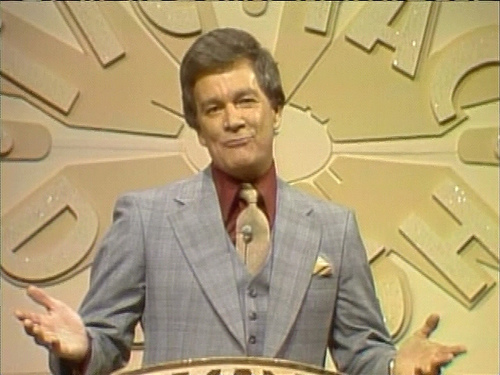
Nels points out Charles means before Martindale skipped town, given he owed the Mercantile $106 (about $3,200).
Apparently all Hero Township’s farmers are leaving, the rainy spring and summer having made planting impossible. (That puts us in 1878-D, presumably.)
DAGNY: You can tell this is a serious situation. They don’t usually talk like this.
WILL: They’re the town leaders. It’s like when Al Swearengen calls business meetings on Deadwood.
DAGNY: Yeah, those peaches meetings.


In the street again, Charles sees a wagon driver dropping Mr. Edwards at the Post Office. (Mustache Man? Hard to tell in the gloom, but probably.)

Mr. Ed wears a classic yellow rain slicker.
DAGNY: Did they really have yellow raincoats back then?
WILL: Well, I looked that up, and yeah, they probably did. I guess they originally waterproofed them with linseed oil, which was yellow.


Charles joins Edwards and Grace inside and they have a good-humored chat about the rain, complete with Noah’s Ark jokes. Charles doesn’t seem all that put out, at least compared to dire weather situations past.


Mr. Edwards is returning from Mankato, where he’d been working some “nuthin’ job” until “the boss’s son-in-law came back.”
Then he invites the Ingallses for dinner and a strategy session for finding work.
When Charles gets home, Caroline bundles up in her wool vest/tartan blankie combo to meet him in the barn.

DAGNY: She looks like Mary there.

Charles has gotten grumpier on his way home. Walking miles in pouring rain will do that, I suppose.
Charles and Caroline discuss how it’s rained continuously for the past two months.
DAGNY: Two months? Where are they, the Amazon?
(Others have noted we don’t really get sustained weather like that here in Minnesota.)
Caroline says they’ve got plenty of food stored up, but Charles counters they are running out of Chonky Chow.
(No talk of eating the horses yet, though.)
“Did ya speak t’Isaiah ’bout goin’ away t’look f’work?” Caroline says in a bizarre Southern drawl. Everyone goes on about Karen Grassle’s theater training, so how come her accent is so inconsistent?

Charles says they can talk about that tonight at the Edwardses’ dinner party. (Looking for work, not Caroline’s accent.)
And hey presto, suddenly we’re at the Old Sanderson Place.
Their table is much bigger than the one we saw previously. I’m sure of it.
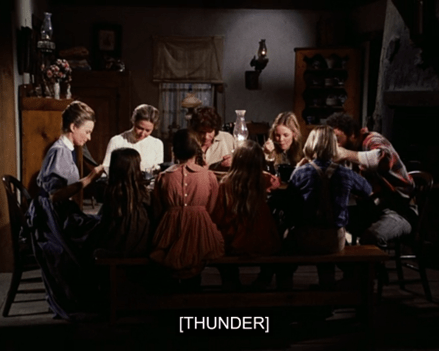

I can accept they’ve put a leaf in it. But did they put a leaf in the benches as well?
Mr. Ed starts telling jolly stories about the homelessness and starvation he saw on his travels, and Grace sends the kids from the room. (Spoilers: Grace the Pill is back in this story.)
Discussing their dilemma, Mr. Edwards produces a newspaper . . . from Deadwood!
Deadwood, South Dakota, is one Wild-West-era town that still has good name recognition.

Deadwood gained a reputation for lawlessness during a brief gold rush in the Black Hills of South Dakota (then the Dakota Territory) in the 1870s.
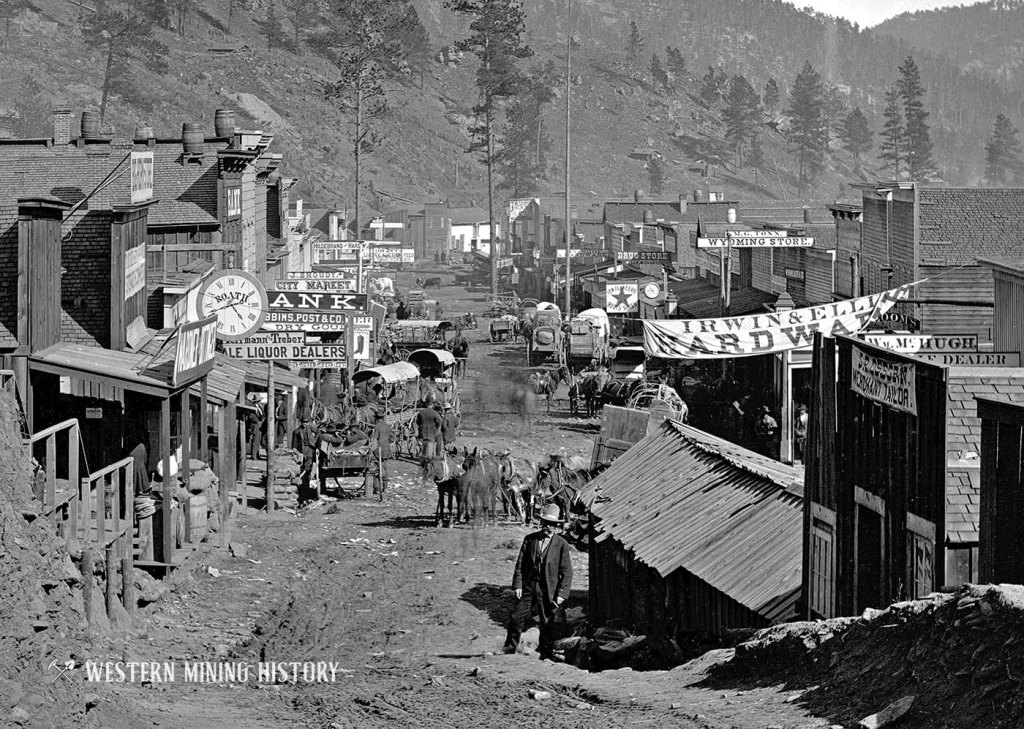
Legendary gunslinger Wild Bill Hickok was killed there during a poker game in 1876, which enhanced the town’s reputation as a hub of villainy. (He was shot in the back.)

Today, Deadwood’s population is just over 1,000 people, but at the time of this story, it was somewhere between 12,000 and 25,000 (depending on your source) – mostly prospectors.
Over the past two decades, the town became known as the setting of the achingly beautiful, scabrously profane, screamingly funny HBO series of the same name, which, while populated by historical figures, bears as much resemblance to real history as, well, Michael Landon’s Little House on the Prairie.
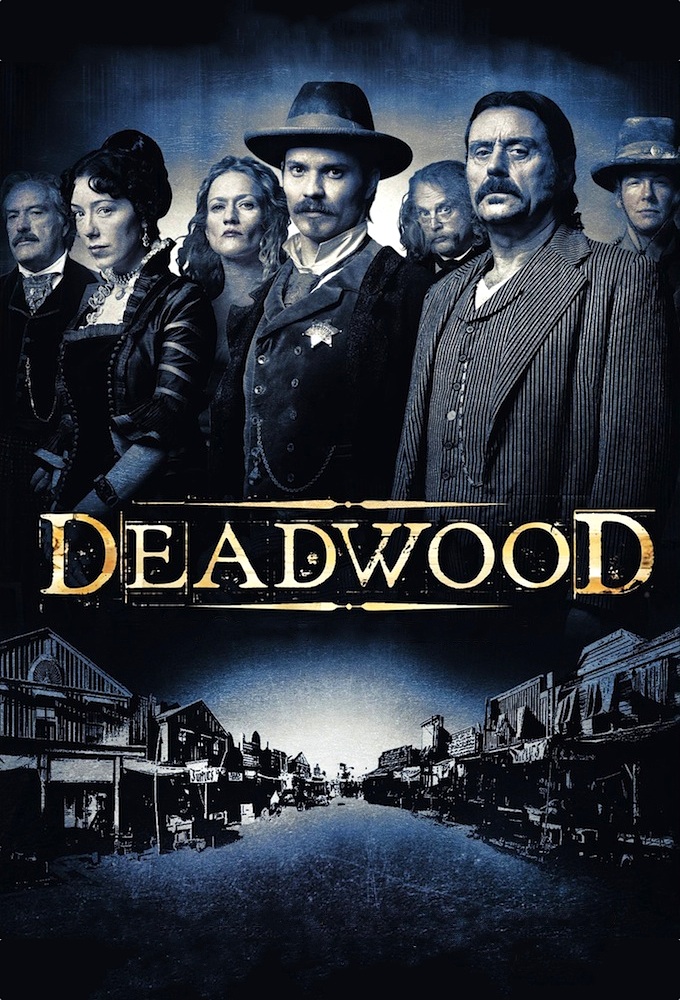
Regular readers know we’re big Deadwood fans in our house. There’s some crossover between Little House and Deadwood viewers, but not much. Or rather I should say not enough! The two shows share a bighearted humanity and a love for dark melodrama.
The foul language, violence, sexuality, racist and sexist characters, and ornate Victorian-pastiche dialogue will be barriers for some; but if you don’t mind such things and haven’t yet given it a try, do.
Even my parents liked it!
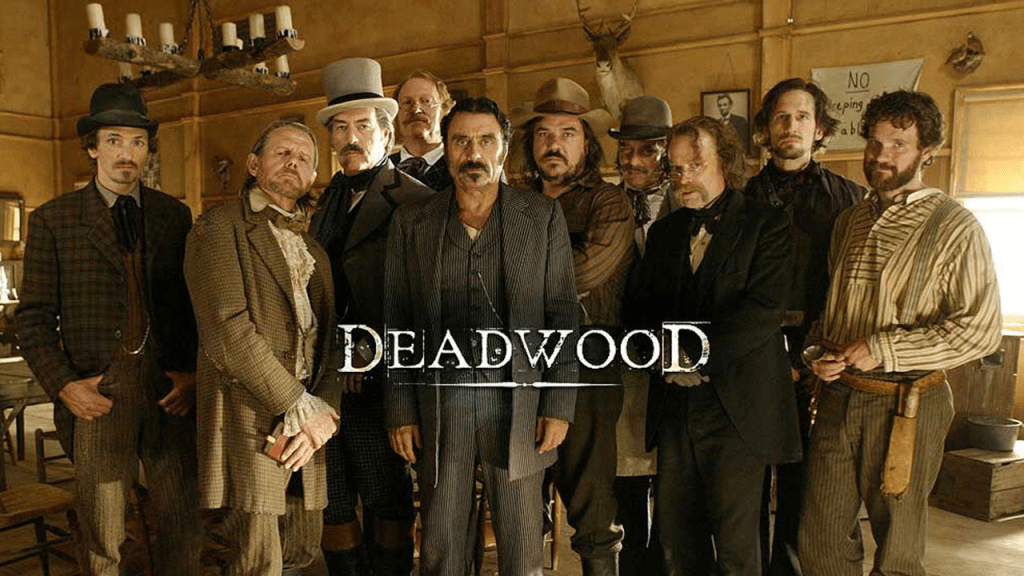
We happened to be watching Deadwood (again) when we began this project, and for better or worse some of its tics wound up coloring Walnut Groovy’s style.
(I’m a terribly unoriginal thinker, you see. And besides, I like to imagine my narration in a voice like Ian McShane’s, not Andy Dick auditioning for a part on Fargo, which is closer to what I really sound like.)
So anyways, as they say on the show, the newspaper Mr. Edwards produces is called the Deadwood Chronicle, though the real name of Deadwood’s paper was the Black Hills Weekly Pioneer. It still exists today.

Mr. Ed excitedly hands it to Charles and directs him to an article on the presence of gold in the Black Hills.
WILL: Notice anything weird about this?
DAGNY: What, that it’s a Deadwood paper?
WILL: No. Why would it be funny for MR. EDWARDS to point out a news article?
DAGNY: Well, because he can’t r- . . . OH MY GOD!
(Yep. And don’t try to tell me John taught him with his fucking McGuffey! That was way back in the A timeline, yet Mr. Ed couldn’t make sense of a simple telegram just four stories ago.)


DAGNY: That’s a horrible mistake. How could they do that? This is so sad. . . . First the flowers, now this!
Speaking of timelines, before we get to the newspaper’s plot significance, we have to deal with a dating controversy, for we see the paper’s big story is TELEPHONE PATENT AWARDED TO ALEXANDER GRAHAM BELL.
And oh dear, as everyone knows, that patent was awarded not in 1878, but in 1876.
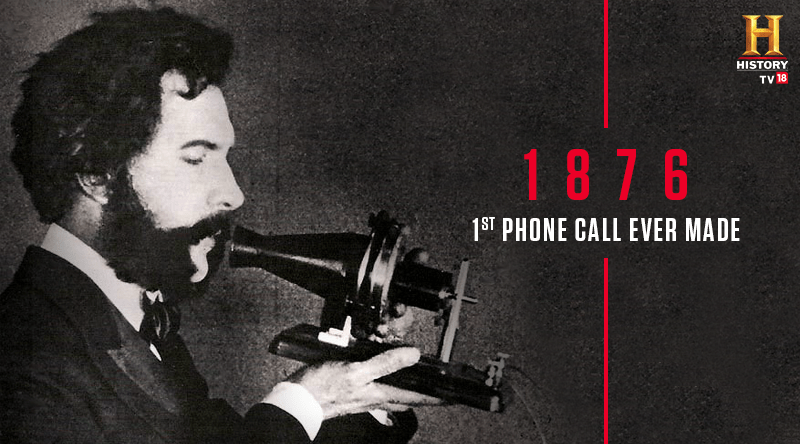
Regular readers are aware that every so often, Little House hits a sort of pothole in time and winds up back in 1876 again, of course without any of the characters noticing.
This happened the first time in Season Two, with a story set around the 1876 centennial, even though previous episodes were dated as late as 1878 (and probably even later).

Timeline B took us through 1880 and beyond, only to drop us back in 1876 again for “The Monster of Walnut Grove” earlier this season. (Okay, that one I deduced based on phases of the moon, but it worked out great if I do say so myself.)

From there, Timeline C covered about five years of Little House Universal Time (LHUT); and yet, by “Little Women,” we were back in 1876 again, since in that story Nels says Tom Sawyer has just been published.

That was six stories ago. Last week’s “Election” was definitely set in 1877, since it takes place in the early fall of the year that followed President Hayes’s election.
But unless Mr. Edwards is using last year’s newspaper to propose uprooting his and Charles’s families, the telephone headline means this story begins in 1876 of Timeline E. (Probably in July or August, since Charles indicates it’s too late to plant anything at this point.)
Well, Grace immediately freaks out about any talk of joining gold-hunters out west.
DAGNY: Her eyes match her bow tie perfectly.
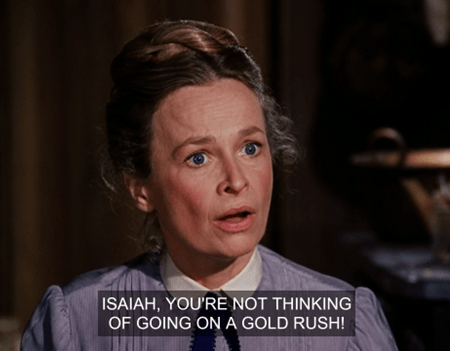
Charles reads that people in the Black Hills are “placer” mining – that is, panning for gold rather than digging it up.

Charles notes the article seems written as an advertisement for gold claims. (Certainly on Deadwood the show, we see powerful people using the news media to manipulate citizens. How fortunate for us those days are over!)
Anyways, Charles tells Mr. Ed he’ll think about it. Meanwhile, Caroline watches this conversation with pooh-pooh face.

Later that night, I think, Charles is re-reading the article in the common room at home.
We see another story in the paper that looks like it has the headline “Girl Heckles Mayor,” but I can’t make out the rest. Deadwood’s first mayor, E.B. Farnum, was elected in August of 1876, so that just about tracks.


Bed-Head Caroline appears.
DAGNY: She should grab the paper and throw it in the fireplace.

But no – long story short, she surprises Charles by saying she’s already decided they will go to Deadwood. I guess I was wrong about the pooh-pooh face.

“Charles Ingalls,” she says, “if you think I’m going to put up with having you underfoot around here for the next six months, you’ve got another think coming.”
(Boy, do I hate this expression, or rather the controversy surrounding it. Or both.)
(Many people – including the Freevee transcriptionist – believe it’s “another thing coming,” even though to me that makes zero sense whatsoever.)

(The original form of the saying used think rather than thing – “if you THINK X, you’ve got another THINK coming” – and it really was in use by this time in the United States. And of course, the phrase sounds exactly the same either way, so it doesn’t matter.)
(So don’t worry, I still like you even if you insist it’s thing. No need for angry cards and letters.)
Charles looks at Caroline with love, and, to his credit, half-heartedly tries to talk her out of it, saying it’ll be a 400-mile trip. Caroline says they traveled farther when they came from Kansas.
It’s true, the distance between Independence, Kansas (where the real Little House on the Prairie was), and Walnut Grove is about 70 miles longer than the route to Deadwood.


(And of course, if you count the family’s wasted trip to Kansas from Wisconsin in the first place, that’s another 625 miles you can tack on.)

Charles finally cracks and admits he’s thrilled. I find this a little disingenuous as a plot device. Having the move be “sort of Caroline’s idea” allows Charles to be modern and un-sexist – “above the patriarchy” if you will – even though the result’s the same as if he’d just made the decision without consulting her. (This one was written by the dynamic duo of Hawkins and Sandefur, so blame them, not me.)
Suddenly there’s a knock on the door.
WILL: In the middle of the night? What is this, Noises Off?

It’s Mr. Ed, who doesn’t seem worried he’s waking anybody.
DAGNY: Well, he’s excited. He probably sang “Old Dan Tucker” the whole way there.

There’s general rejoicing that they’ll all be traveling together.
A little time passes, clearly, and then we see Nels helping Charles load supplies onto the Chonkywagon.
Caroline peeps out in her Boo Berry bonnet, so I guess this is it, the actual move is happening.

Nels and Charles shake hands warmly. I like their “cool guy and dweeb” friendship, which in my experience doesn’t occur in life as often as in fictional entertainments.


Nels tells Charles he’ll watch the Little House for them. I don’t know why either of them would assume the Ingallses are ever coming back.
As for Mrs. Oleson, Nellie and Willie, they don’t even come out, which I don’t buy either. Frenemies they might be, but they’ve been through a lot together at this point.
I suppose it’s probably very early in the morning and the Olesons said their goodbyes previously.
Charles hops into the driver’s seat, and with a “Come on!” this time rather than a “Hyah!” or kissy noise, they’re off.
Cue the Castle Thunder.
Like the Muppets, Charles decides it will be faster to travel by map.

I don’t know why they take the crazy seesawing route they do. Can’t be mountains, because there aren’t any where they are. I suppose maybe Mr. Ed was navigating drunk.
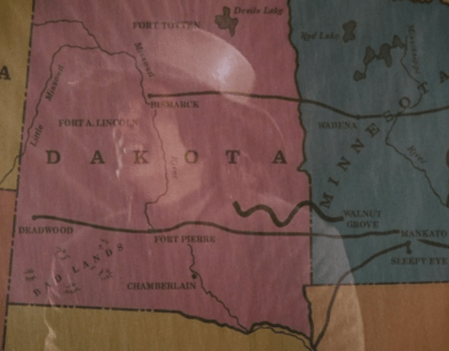
The places we see on the map include Walnut Grove, Mankato, Sleepy Eye and Wadena, Minnesota (settled 1871); Bismarck (1872), Fort Totten (1869) and Fort Abraham Lincoln (1872), North Dakota; Fort Pierre, South Dakota (1867); the Mississippi, Missouri and Little Missouri rivers; Red Lake and Devils Lake (for Pete’s sake); and the Badlands. They’re all real.







There’s also Chamberlain, South Dakota. It’s real, too, but wasn’t founded until 1880.

We see they’ve brought stupid Jack along.

A nice theatrical shot gives us the family eating dinner inside the wagon in the storm. It’s really great – a very deliberate throwback to the Pilot.
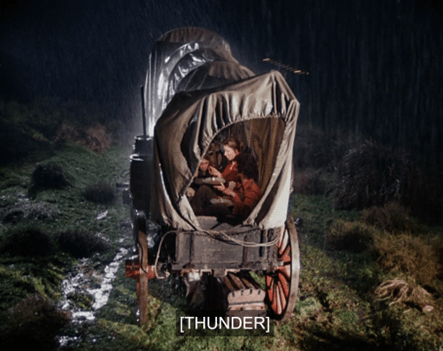
(Once again, Jack isn’t allowed in the wagon for some reason.)

WILL: Where are the poor Chonkies? Do they just stand in the rain all night? Wouldn’t they get sick?
The rain continues as far as Fort Pierre and then quits. Others have pointed out all the water from this two-month-long downpour has already evaporated by the time Charles & Co. notice it’s no longer raining.
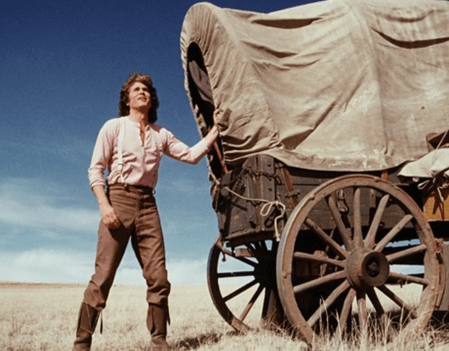
Pa leads a little prayer of thanksgiving. “Amen,” slurps Carrie.
DAGNY: Who directed this one?
WILL: Landon.
DAGNY: Yeah.

Our beloved characters all look awfully clean for being on the road, in bad weather, for about two weeks at this point. I look worse than that after ten minutes on an airplane.

Then off we go again, to some sweeping mock-Copland from the Rose.
DAGNY: This arrangement of the theme is great. This is how it should always be.
WILL: Well, you know, the Little House theme was originally just a background tune from Bonanza. Pretty much this arrangement, if I remember. David turned it into the theme when they made this as a new show.
After a break, we see a train backing up.
This train has the name R.E. Shelton (or R.F.? R.T.?) on the side of it. The conductor’s name?

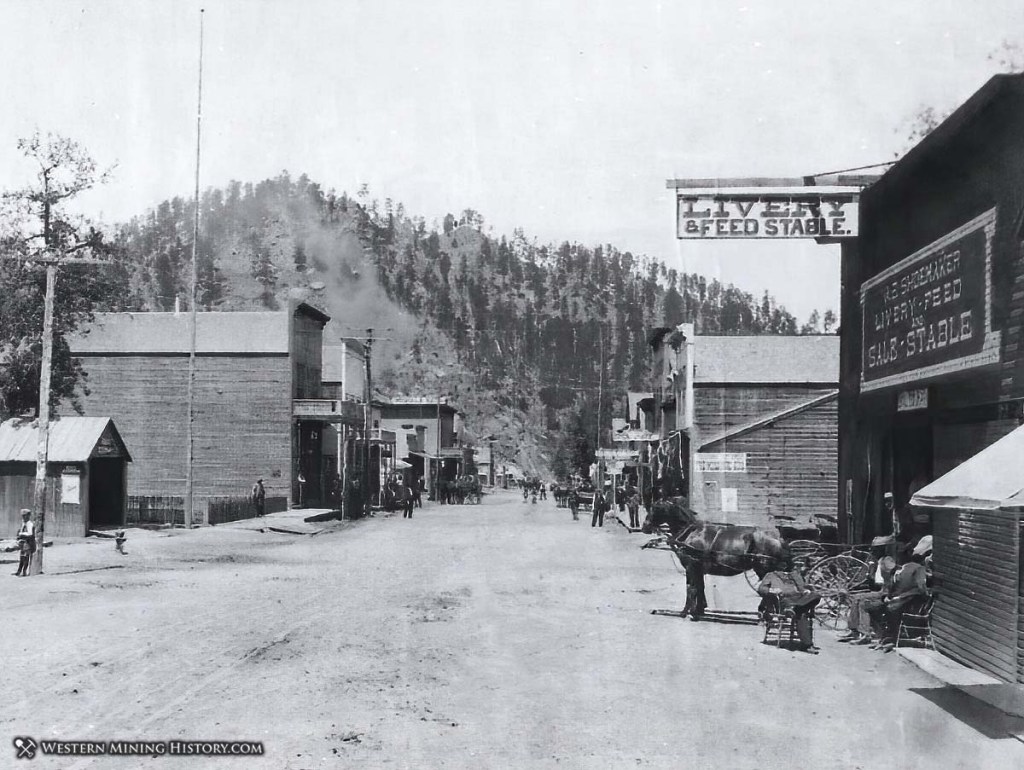
In a fun touch, it backs out of the frame like a curtain rising, and then we see the Grovesters’ wagon train arriving in a town, presumably Deadwood. (No trains went through Deadwood until 1888, though.)

The road through town is full of cattle, but otherwise it doesn’t look so bad. Still, Caroline wrinkles her nose snobbishly.

We hear some (anachronistic) ragtime piano and see a Morgan’s Feed & Fuel store. (Must have been the Pump N Munch of its day.)
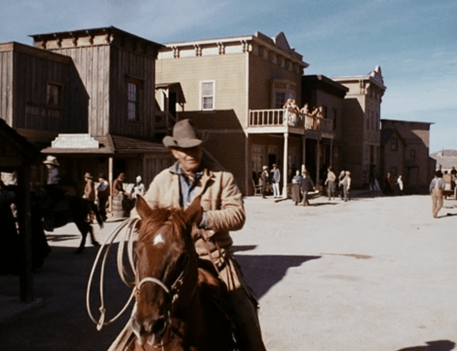

“Isaiah, what kinda place is this?” says Grace.
WILL: Huh? They haven’t seen anything bad yet, unless she’s afraid of cows.
DAGNY: No, you can tell when a place has a bad feel. It’s like when you drive the main strip in downtown Winnipeg.

Grace says this while they’re passing a sheriff’s station, another error – Deadwood had no sheriff till late 1877.
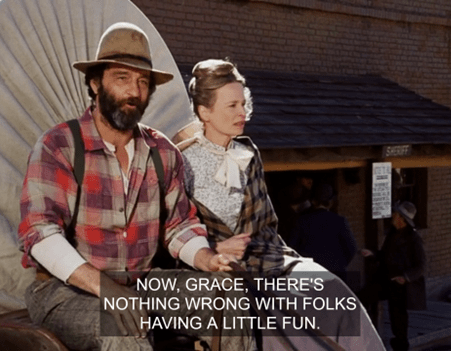
Others have pointed out as the Edwards-Sanderson wagon passes a window, you can see it’s really a modern motorized vehicle.

Things do start getting sketchier then. We see a man exiting a brothel, firing a gun in the air as he does so.

They pass a joint called the Red Dog Cafe, and we see some men drinking beer.

Caroline stares, appalled, at some prostitutes on a balcony and exclaims, “Oh Charles, have we come all this way for this!”
WILL: Just wait till Carrie starts saying “cocksucker,” Ma.

The name of this brothel is the Saloon No. 3, apparently run by brothers named Kellogg.
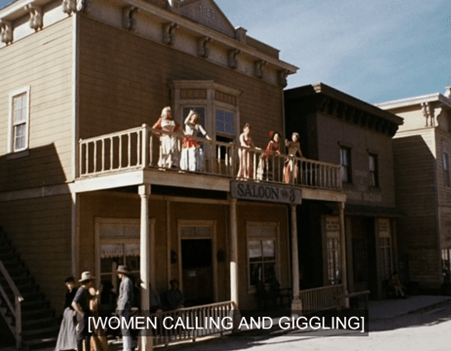
The real Deadwood saloons of the time, several of which are featured on the Deadwood series, included Nuttal & Mann’s – that’s where Hickok was murdered – the Bella Union Saloon, and the Gem Variety Theater.

Speaking of Hickok’s murder, if the Grovesters didn’t leave until August, and their trip took about a month, they won’t meet Wild Bill in this story, since he was shot on August 2, 1876.
Then they pass a marshal’s office. Deadwood really did create a marshal’s position at about this time – in response to the Hickok killing.

In Deadwood, there’s also a Mercantile, a boarding house called Wilson’s, and an Edward & Dunn Clothing Bazaar.
Another building has the date 1865 on the front of it, though it seems in reality there was no white settlement in the Black Hills at that time.

Charles and Mr. Edwards head to the claims office, whilst Caroline and Grace leave the children alone with the wagons and all their property. That seems . . . incredibly stupid, doesn’t it?
The minute the adults are gone, a prostitute who looks a bit like Lizzy Caplan tries to solicit Carl.


WILL: Ha! John would love it here.
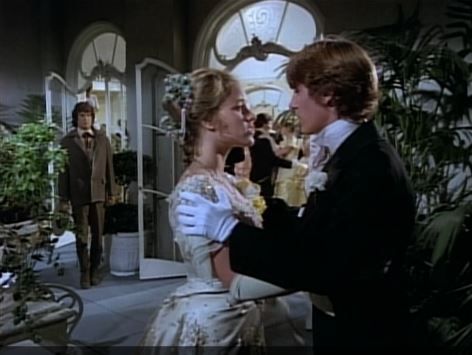
Like his brother, Carl also has an emerging interest in the ladies.

Caroline and Grace go to buy some groceries, but they’re shocked at the high prices.
A friendly storekeeper called Grady Jennings appears. (He’s played by Dick Armstrong, who didn’t act in much else, but who we will see at least three more times in different roles on this show.)

Jennings doesn’t seem a bad sort, but he explains he prices his goods to fit the market. In this case, that means 30 pounds of flour costs $15, or $450 in today’s money.
A glance at Amazon suggests that 30 pounds of flour would put you back roughly $25 today.
The Center for the Study of the Pacific Northwest has an interesting guide to U.S. prices of goods as of 1870, and it says the cost of a 196-lb. barrel of flour in the pioneer days would have been about $3, or less than $75 today.
That’s about 38 cents per pound in 2023 dollars, compared to the $34.61 per pound Jennings is charging.
This really confused us; however, there is in fact historical grounding for it. I couldn’t find much about the Black Hills specifically, but during the California Gold Rush, merchants raised prices so high that a single egg could cost as much as $120 in today’s money!
A worksheet from the California Department of Parks and Recreation shows that in 1851, when the California Gold Rush was at its peak, a single bag of flour (size unknown) cost $13, or over $500 in today’s currency.
Well, Caroline and Grace leave without buying anything.
Meanwhile, at the claims office, Charles and Mr. Edwards find the newspaper’s promise of a land of riches was in fact exaggerated.
“That’s Gold Country, Mr. Edwards,” shrugs the claims agent, identified in the credits as a Mr. Sawyer.
DAGNY: “Mr. Edwards”? Does he know him?
I suppose he might! You’ll recall, in “Mr. Edward’s [sic] Homecoming,” Mr. Ed tells Charles his first wife and daughter Alice died of smallpox while he was working “a Homestake claim.”
Homestake was a goldmine in Lead, Dakota Territory, just a few miles from Deadwood.

The mine wasn’t discovered until 1876, though, and given Mr. Edwards was already widowed when he came to Walnut Grove in 1875(A), it’s a bit of a mystery when he was actually there.
Anyways, the actor playing Mr. Sawyer is named Sparky Watt. If you think it’s a joke name, or that it’s the same Sparky Watts who defeated Hitler during World War II, it isn’t.

Sparky Watt also wasn’t in much else, but he was on two episodes of Father Murphy, the Merlin Olsen vehicle.
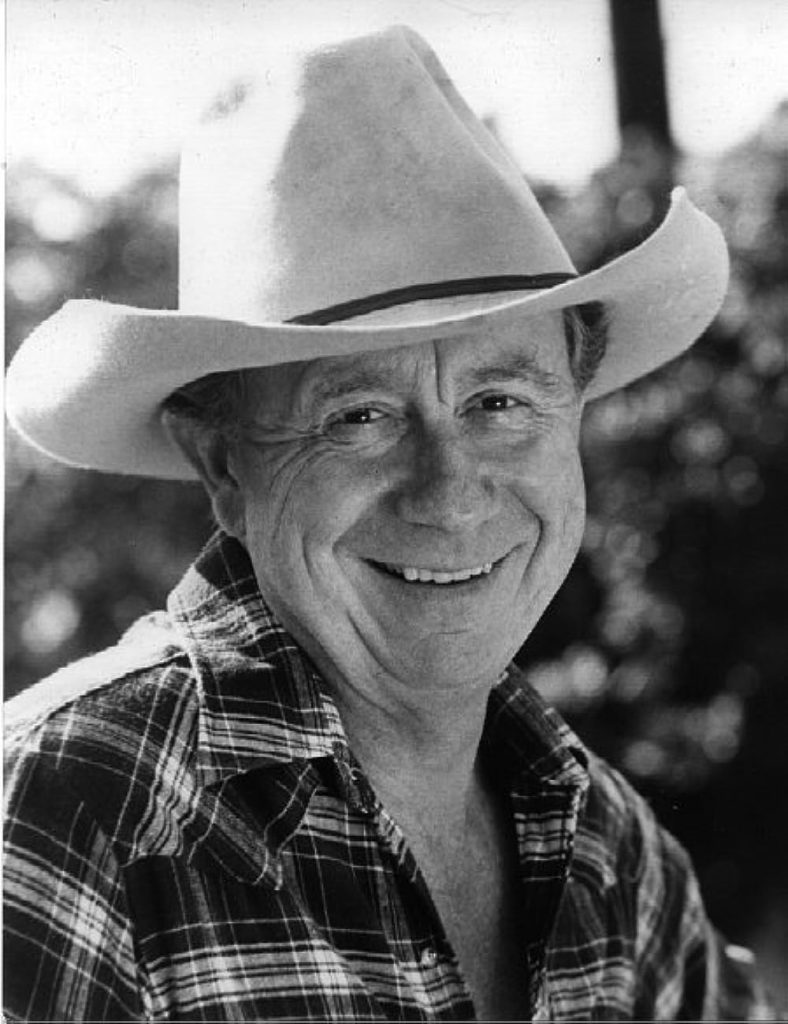
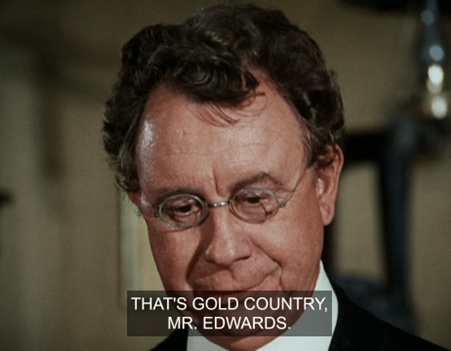
Sawyer tells them gold claims locally are selling in the $10,000-$30,000 range, after inflation.
Charles and Mr. Ed also leave without making a purchase; but the agent stops them and gives them a tip about a little-known area called Newton, “west of here, about fifty miles,” that looks promising for gold panning.
Fifty miles to the west of Deadwood would put them in Wyoming – like the Dakotas, a territory rather than a state at this point in history.
There’s noplace I could find in the area called “Newton,” though there is a Newcastle, Wyoming, whose location just about fits. It wasn’t founded till 1889, though.

Walking back to the wagons, Charles has to stop Edwards from going into a gambling hall and blowing all their money.
Pa threatens to tattle to Grace, then gives Mr. Ed a friendly pat on the back when he decides to skip the casino after all.

Charles tells Caroline they’re pressing on to a further destination, and she sniffs, “I don’t care how far it is, just so long as it’s away from here.”
DAGNY: Don’t be such a bitch, Ma. Where do you think Mary gets it from?

Kissy-noise, then off they go.

DAGNY: This is a hard-hitting episode. There’s real horse pee all over the place.
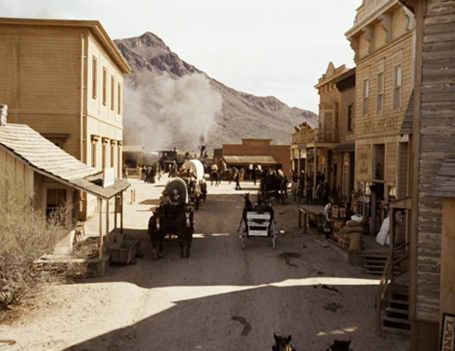
The sun goes down.

DAGNY: That’s a beautiful shot. Neil Diamond should have used it for an album cover.


That night, Grace wakes to the sound of coyotes and realizes Mr. Ed is missing.
She rouses Charles, who heads back to Deadwood to find him.
The camera pushes through swinging doors (nice) to enter a saloon.

DAGNY: I remember this episode. I found this crowded bar very scary. This one’s not really for kids.
WILL: No, it’s not. Although, this is what rural Wisconsin was like when I was growing up there. My parents took us to bars like this all the time. They even had saloony names: the Stage Road Inn, the Brown Jug. . . .

A rather grand middle-aged “hostess” is bilking gamblers at the dice wheel.
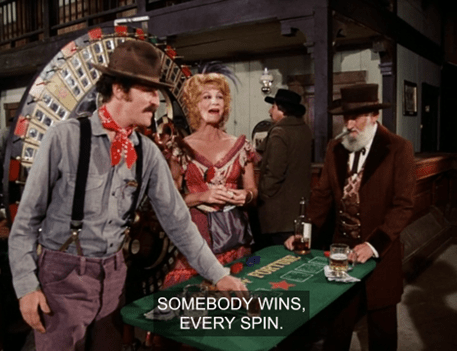
A customer addresses her as “Dolly,” but for whatever reason the IMDb calls her “Nellie” (!), even though she doesn’t appear in the official credits.
The actor is Barbara Cason, who had regular or recurring roles on Trapper John, M.D., and Victor French’s Carter Country.
Later, she played Garry Shandling’s mom on It’s Garry Shandling’s Show.
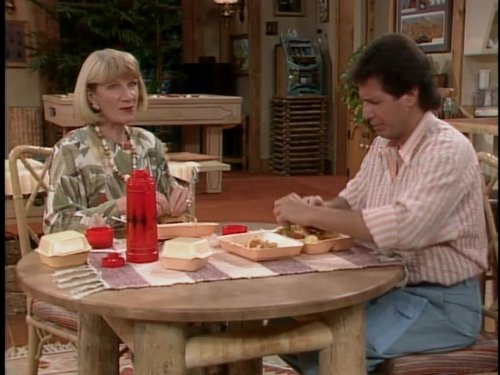
She was also in Exorcist II: The Heretic, but you can skip that one.
As for the gambler she’s cheating, she addresses him as “Darby,” but there’s nobody of that name in the credits.
WILL: He looks like Richardson.


WILL: But overall this is more like the Bella Union than the other Deadwood joints.
DAGNY: Definitely.

DAGNY: Oh my God, bare shoulders!

We find Mr. Ed beating a younger Harrison Ford wannabe at poker.


WILL: Do you think Victor French played cards in real life?
DAGNY: Yes. He’s way too enthusiastic about this scene.

Mr. Edwards cashes out and leaves, laughing heartily at his luck.
Unfortunately, the dealer signals to some thugs, who attack Mr. Ed in the street.
DAGNY: Oh no!
WILL: Bushwhacked!

Charles arrives and hears Edwards moaning from an alley.
WILL: He should be getting a blowjob.
DAGNY: Ha! Charles would be so angry.

But no, he’s just bloody and bruised.
Back at camp, Caroline bandages him up, whilst Grace stares stonily ahead.
Mr. Ed literally crawls up to his wife on the ground, apologizing.
WILL: The cinematography is good in this one. It’s above the usual standard.
DAGNY: Totally.
(It’s Ted.)

Grace and Isaiah make up very quickly.
DAGNY: I don’t like that, and I don’t believe that. She would be pissed for at least a day.

After a break, we get more great western music as the wagons approach a pond where some fellow travelers are camping.
DAGNY: It’s nice that the mountains make sense for once.

They all make friends. The new characters include Ben Griffin, a pleasant-looking man with a mustache, his most unpleasant-looking wife, and their daughter.


The other family are Italian immigrants named Delano, which they pronounce “deh-LAY-no” – husband Vittorio, wife Maria, and son Sam.
Sam says he’s “American – like Uncle Sam!”, which is cute.

They’re very stereotypical, with Papa Delano throwing his arms in the air and saying “Whatsa matta with you wheel?” and Mama Delano screaming “Oh you such nice families!”

It’s odd they picked the name Delano for the Italians, since in the real world the Delanos were a legendary founding family – Dutch/Flemish/Belgian Walloons, not Italians – who came over with the English pilgrims in the Seventeenth Century.
(I’m of Walloon heritage myself. Not from upper-crust society, though.)


Of course, Franklin Delano Roosevelt was a Delano.

But a lesser known fact is, Charles Ingalls was one too! His grandmother was a Margaret Delano, of the same line.

How Charles wound up a Minnesota shitkicker rather than a New York Knickerbocker, I don’t know.

Well, if anybody on the production team knew about Charles’s Delano heritage, it isn’t mentioned. I think it’s too strange to be a coincidence, but perhaps.
Anyways, they all arrive in Newton, where they’re greeted by a friendly if slightly wormy minister.

The reverend says with so many kids in town, they can start a Sunday school.
DAGNY: The kids have shit parts in this one. Have they even had a line yet?

The men head to the store, where they’re delighted to find reasonable rates.
Charles says the prices are “no higher than Walnut Grove,” and Mr. Edwards adds, “Two cents cheaper!”
DAGNY: This town obviously doesn’t have a Mrs. Oleson.


Back at the wagons, Charles says they’ll set up their panning operation at a place called Shadow Creek.
There is a real pacer mining claim called Shadow Creek in the Black Hills – it’s in Pennington County, thirty miles south of Deadwood, not fifty miles west, plus it looks like it wasn’t named that till 2011.
Well, no matter, we’ll assume that’s where they are. It’s on the Dakota side of the border, not the Wyoming side.
Charles asks the reverend to say a prayer for them, and he says he will . . . but for their health, not that they find gold.
WILL: Ministers suck the fun out of everything, don’t they?
But Charles, himself a fun-sucker at times, is fine with this.

Off they go to a rollicking arrangment of “Bum-Bum-Ba-Dum” (not very often used as background music on this show.)
When the families arrive at their claims, they start marking off the boundaries.
As “Old Dan Tucker” plays in the background, Mary and Mr. Ed, those old BFFs, have an interesting conversation where it’s revealed Grace is actually the purchaser and owner of the Edwards claim.
WILL: Is that her old Strawberry Shortcake/Holly Hobby/Mario Mushroom bonnet?


It isn’t surprising that Grace is the purchaser, I suppose, given she can read and write, but it’s not clear where their money actually comes from. Grace’s late husband? Julia and John Sanderson, Senior? It’s not like Mr. Edwards can be much better at earning than Charles. (Also, how much did Mr. Ed lose when he was mugged?)
Speaking of which, who paid for Charles’s claim? The way he’s blown through cash the last few stories, he can’t have had much left in his emergency gold-mining fund.
Then Mr. Ed tells Charles they’d better get started, since other prospectors will be coming soon. “Not if we don’t find color,” says Charles.
Throughout this episode, they’ve talked about finding “color” or “the color,” which was real mining slang for the first glimpse of gold seen.
Deadwood fans perhaps associate the term with Gerald McRaney’s George Hearst, who was chillingly obsessed with finding it.
Soon Delano and Griffin arrive at the camp. Grotesquely, Griffin carries the flayed leg of a deer he’s shot.
But nicely, they invite the Ingallses to join them for a big venison cookout.
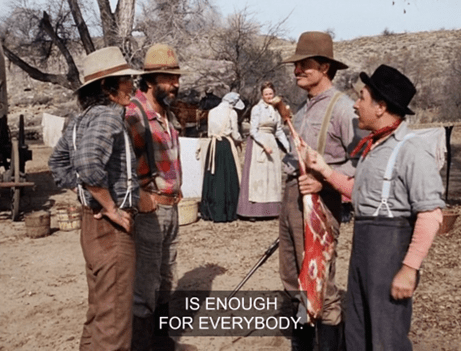
Caroline and Grace rush forward and insist on doing the cooking themselves, so the work can be shared.
Papa Delano says no, no, his wife loves to cook; but Ma and Grace won’t take that for an answer. My God, can you imagine you have an Italian woman ready to cook your dinner . . . and you give the job to Minnesota Congregationalists instead?
And with VENISON, too! So easily ruined by bad cooking.

Though clearly doubtful about this himself, Papa Delano accepts politely, then says, “Hey! Tonight I bring-a the concertina, we have-a food, we have-a vino, and we have-a musica, ha!”
WILL: Un po’ di musica!


Cut to Papa D playing at the party, with the kids all dancing around him.
DAGNY: He could take a few fake-“musica” lessons from Landon.

Papa Delano is played by a (presumably) non-Italian actor named Wil Albert. He was in movies from Private Benjamin to Frost/Nixon, and appeared on many TV shows as well.

Then we see everybody panning in Shadow Creek. Laura and Carl are bored, so they wander off.
“I wish it would rain,” says Laura. (Just after they escaped the monsoons? Sure.)

Her reasoning is even stupider. “Then there’d be a rainbow,” she says. “There’s gold at the end of the rainbow.” Oh, Laura, you know damn well there isn’t. From personal experience you know!


The kids discover an old gold mine. Strangely, Carl doesn’t recognize what it is, even though he was the only person in town who knew about the old mine Carrie fell into in “Little Girl Lost.”


Carl says they shouldn’t go in because it might collapse on them, but Laura laughs this off. This is also idiocy. She’s had enough vicarious experience with cave-ins herself at this point to take them quite seriously.


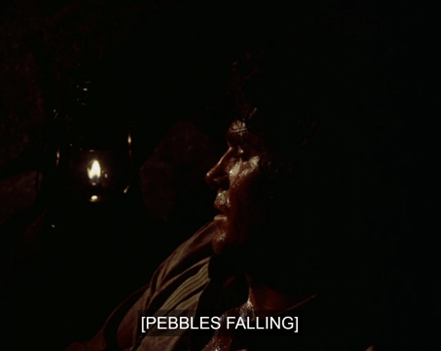
But the point is probably moot, since they then notice a dilapidated cabin across the creek from the mine.

They rush to explore, and we hear monstrous heavy breathing from inside, with Landon actually giving us “serial killer POV” through a window.
DAGNY: Oh come on, Little House. Is that really necessary?
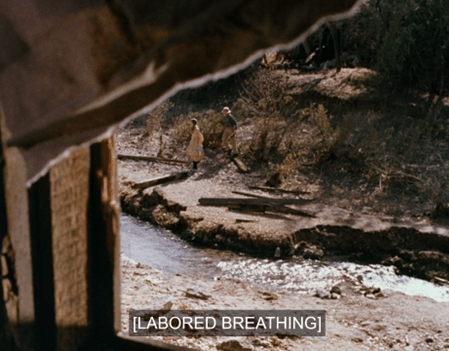
It’s worth pointing out Landon used the heavy-breathing murderer’s-eye technique a year before John Carpenter famously did the same in Halloween.

(However, they both may have stolen it from 1974’s Black Christmas.)

Commercial.
Outside the cabin, Laura and Carl find a basket of apples. (Red Delicious, gag, barf.)
(Note: The apples suggest we could be into October at this point.)
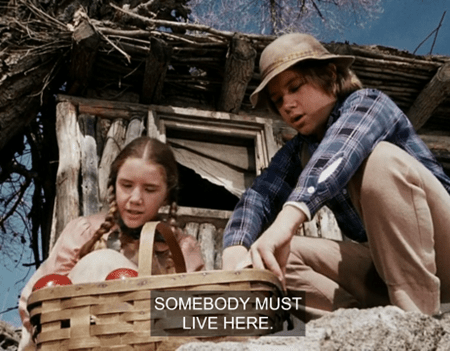
“Won’t hurt to take a few!” says Carl. “There’s plenty!”
This confirms what I suspected about Carl in the past; viz., that he’s descended into full-blown apple addiction and won’t stop till he hits rock bottom.


Without any further warning, E.J. André pops out of the cabin screaming. We screamed too.
DAGNY: Jesus Christ, Little House!!!

André continues snarling and snuffling a long time.
WILL: Is this his Bert Lahr impression?

Idiotically, Laura and Carl start throwing apples at the old man.
DAGNY: It’s like the Cowardly Lion and mean apple tree scenes rolled into one.

Just when you think André can’t get any hammier, he starts laughing hysterically.

Speaking for all of us in the audience, Laura screams, “What’s wrong with you!”
In case you don’t remember him, we’ve met E.J. twice before.
First he was a laconic door-to-door gunsmith in “His Father’s Son.”

Then he played a weird future version of Charles from an alternate universe in “Going Home.”

“Can’t you see what’s funny, you little tadpole!” André screams. “Can’t you see I got my APPLE BACK!!!”
You’re entitled to your own opinion, of course, but I think he’s a horrible actor. Dags likes him, though.
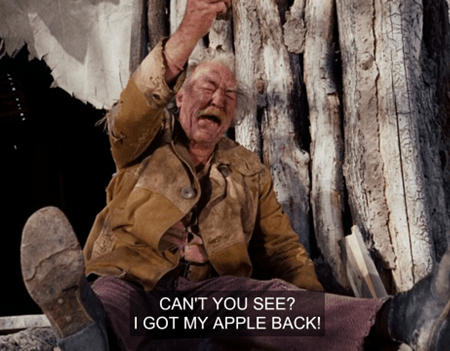
Soon, they’re all laughing and eating apples together.
DAGNY: She really does have a way with old men. She’s an old-man whisperer.

The old man introduces himself as “Zachariah.” (His first name, presumably?)
The kids tell him they’re looking for gold, and he immediately gets a faraway look in his eyes.
WILL: His eyes look a little bigger than on that other episode. Do you think he had an eye transplant, like that woman on Love Boat?


Zachariah rambles on about how “the gold fever” is “starting again.” He says there was a rush “twenty years ago” during which all the gold was dug out of the mines. (Others have noted there was no gold rush in the Black Hills in the 1850s.)
He rambles on and on insanely, talking in riddles at times.
WILL: He kind of reminds me of Aughra.
DAGNY: I think he IS Aughra.


Having had enough of terrifying and/or boring the kids, Zachariah points at the basket and says, “The apples . . . are always here.” (They are? How?)
Then Mary calls Laura and Carl back to the claim, as Pa has struck gold!
Everyone cheers and dances, except Ben Griffin, who looks glum, as he apparently hasn’t had much luck with his own pannin’.
WILL: Now, he kind of looks like Seth Bullock.


Griffin is played by the handsome Larry Pennell, perhaps best known as movie star Dash Riprock on The Beverly Hillbillies.

Back at the claims office, the assayer, Andy Anderson, tells Charles and Co. they appear to have found a good vein of gold, saying Charles’s little baggie of gold is worth $126 (about $4,000).
Papa Delano runs out into the street screaming “He strike it a-rich!” and then Charles comes out and tells the mob the exact location of his claim.
WILL: God, they’re idiots.
DAGNY: Yeah. Especially Charles. What a fucking moron.

Later, back at camp, the ladies make stew whilst David gives us another arrangement of “Bum-Bum-Ba-Dum” on the harmonica – this one quite wistful.
WILL: Listen to David. He’s coming up with arrangements of the main themes we’ve never heard before.

Charles and Mr. Edwards approach, saying they’ve collected three times their original little baggie of gold.
They observe other newcomers arriving, and it occurs to them they may want to shut up about their good fortune.
Mr. Ed says the only thing he had to worry about hiding back home was booze, and Grace gives him a pruney look.

Changing the subject, he asks Charles how he likes his coffee.
WILL [as CHARLES]: “Oh, it’s straight vodka, but it’s great.”

Then Papa Delano comes running up announcing he’s found gold as well.
Delano announces he plans to use his findings to buy a vineyard in California.

WILL: Is he supposed to be Robert Mondavi? Or Ernest and Julio Gallo?
DAGNY: He’s Bartles & Jaymes.

Most of the Italian winemakers in California got their start during Prohibition, but it does seem there was at least one Italian-run vineyard there as early as 1882.

Screaming “Mamma mia!”, Papa runs off into the woods.
WILL: I hate this guy. Does that make me racist?
DAGNY: No. The characterization is racist.

During supper, Laura says, “Dad burn it!” (Actually a pretty coarse expression for the time, being a minced oath for “God damn it.”)

Laura’s frustrated she and Carl can’t have a claim of their own. She says they should ask Old Zachariah if they can pan the creek in front of his shack.
WILL: Didn’t she listen to what he said?
DAGNY: She’s crazy too.

They run back to propose their stupid idea to Zachariah. Of course, he’s pissed prospectors have returned to the area. “People have been moving up and down the crick all day long!” he complains.
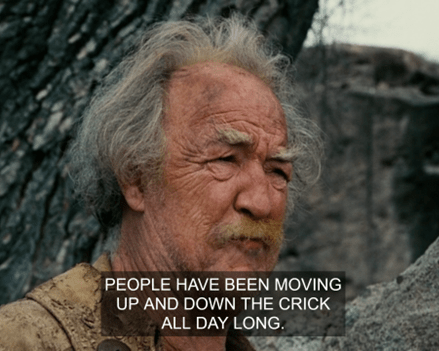
I’m from a part of the country that has a lot of creeks myself, and I will say, when I was growing up, locals did say “crick” pretty much exclusively. It was the tourists from the city who said “creek.”
Then Zachariah takes them over to the water and tells them a hair-raising tale. Apparently back in that earlier gold rush, he and his wife Lorraine came to prospect for gold themselves.
WILL: Those are big buttons. Do you think he got them at JoAnn Fabrics?
DAGNY: No. They’re way too big.

Zachariah apparently was very lucky at finding gold, and he wouldn’t stop even when his wife begged him to.
WILL: Do his clothes have leprosy?

In a preposterous, mawkish monologue, Zachariah says one winter Lorraine up and died.

He was so grief-stricken, he buried both her and the gold in the creek itself. How the hell do you bury somebody in running water? I suppose he weighted her down with stones? Absolutely macabre.
He points out a rock that reads Lorraine.

“How she loved the coolness of the crick,” he groans.

Laura’s tears are obviously glue in this scene. I don’t blame Melissa Gilbert, though. She deserves an Emmy for getting through his speech without laughing, actually.

Late that night, Charles and Caroline sit by the fire, enjoying David’s lovely musica.
DAGNY: What do you think happened to their livestock back home?
WILL: “Livestock”? They had one cow and some chickens.
DAGNY: I guess. Plus I suppose they sold the cow for hamburger to pay Mary’s medical bills.

Not so subtly, Caroline drops the hint that she’s ready to return to Minnesota. She asks if they’ll be leaving by winter. Charles says probably, then abruptly exits without saying goodnight.

The next day, the ladies and the kids return to Newton, which has seen an influx of lowlife.
In fact, they see a guy who’s pretty clearly Mustache Man, picking a fight in the street.

The wormy preacher makes some of his wiffle-wuffle comments.
WILL: He’s as much of a dope as that reverend on Deadwood. And that guy got a pass because he had a brain tumor.


In the minister’s tent, Caroline says she’d like to serve as schoolteacher while they’re here. The reverend is delighted at this.
DAGNY: He totally emits child-molester vibes.

Well, Reverend Phillips – Laura mentions his name in this scene – doesn’t turn out to be child molester. However, the actor, Larry Golden, did play one of a gang of villains on Bonanza who were responsible for the death of Little Joe’s wife in a Very Special Episode.
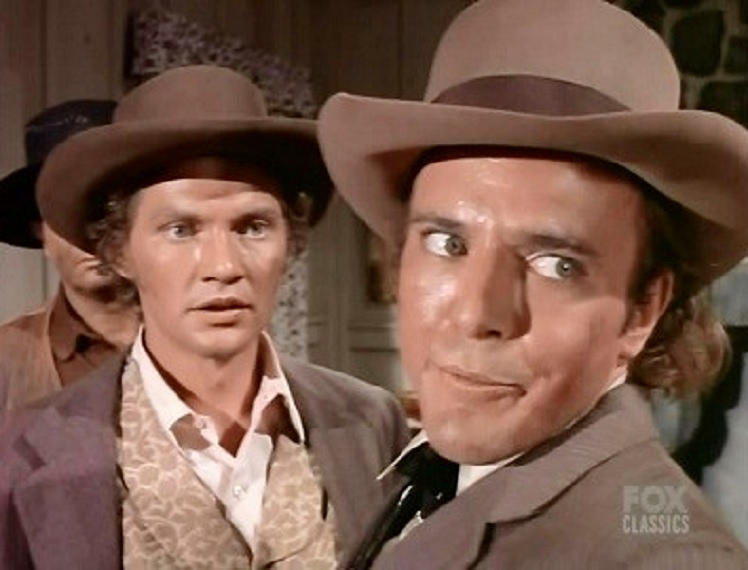
Golden also played the Ciarán Hinds lookalike who wussed out of blastin’ oil duty in “The Long Road Home.”

Out in the street again, Grace tells Caroline the stores’ prices have radically increased since people started finding gold.
At services that Sunday, the minister quotes the Fourth Commandment at the congregation.

As all-over-the-place with his references as a Walnut Groovy recap, he then he cites Matthew 18:20, memorably memorialized in “The Wedding Song.”
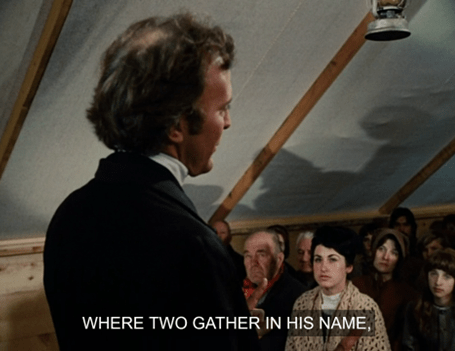
Caroline announces she’s going to start a school, and then Papa Delano boasts about his gold findings. (What’s he doing there? He’s a Roman Catholic, surely.)
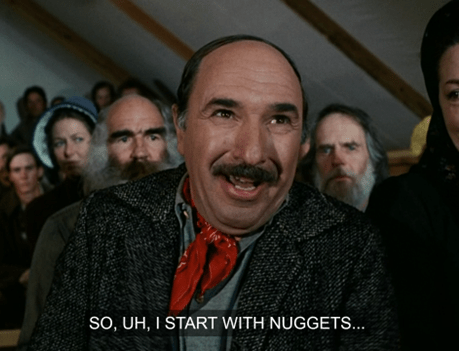
Papa says those who have been lucky should put up the lion’s share of the collection.
The Rev is grateful, and launches into “Rock of Ages” (published 1831).

WILL: They should do “Bringing in the Sheaves” and Reverend Alden busts in like Kool-Aid Man to save the day.
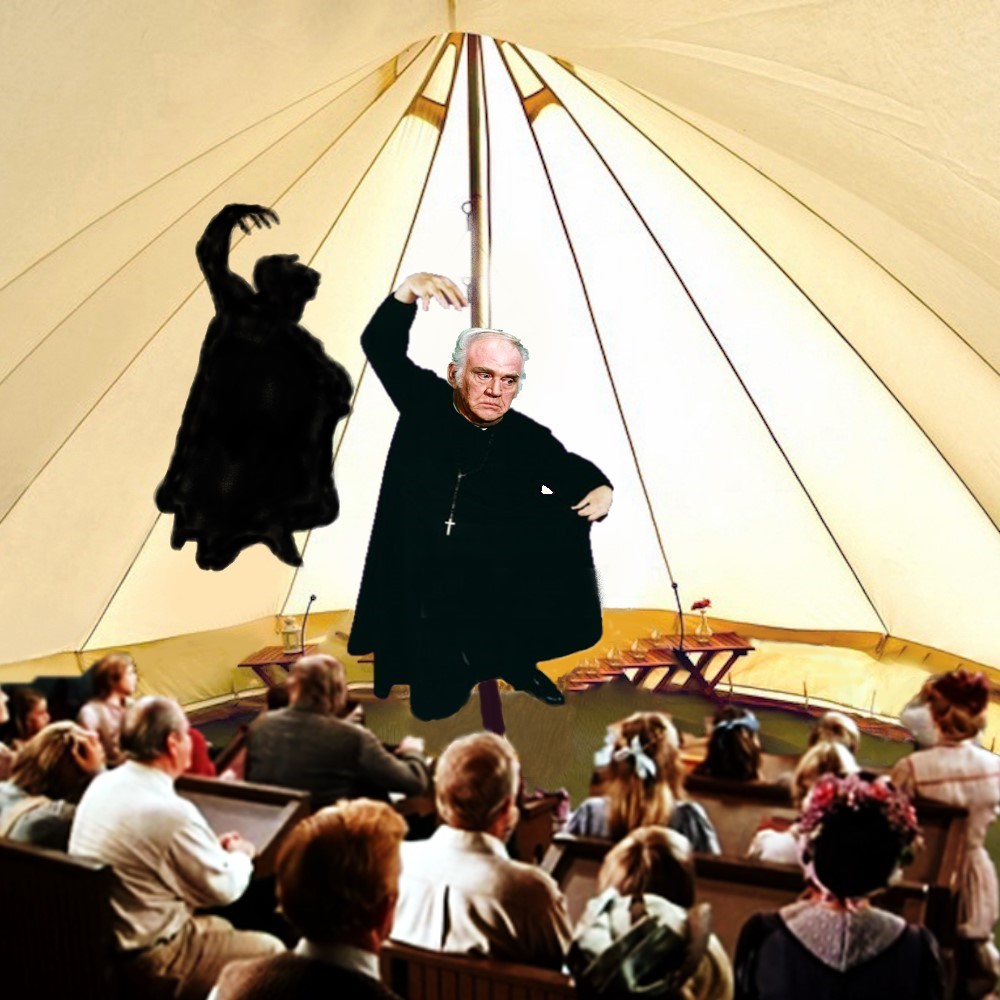
Then, in a blast from the past, we see the kids scurrying around the campsite as “The Bead May Safely Crash” plays on the soundtrack!

WILL: What is this weird dead forest they’re in?
DAGNY: It’s like in True Grit with that bear guy.
But the merriment is interrupted by a gunshot. (“The Bead May Safely Crash” is an evil omen, after all.)
Alicia turns around in terror. (Sorry, Alicia-lovers, that’s it for her part in this episode.)
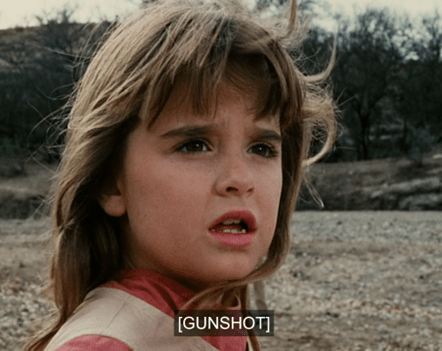
Charles and Mr. Edwards go running. They find Papa Delano lying in a stream, shot, with Mama Delano bending over him screaming “Answer me, Vittorio, Vittorio!”

Charles pulls him out of the stream, but his wound indicates he’s a goner.
WILL: It’s like the end of Cavalleria Rusticana. Hanno ammazzato compare Turridu!
Mama Delano is agonized.
WILL: She even looks like Montserrat Caballé.

Poor Mama is played by Vanna Salviati – a genuine Italian or Italian-American, presumably.
She was in tons of things, including 9 to 5, Bosom Buddies, Hill Street Blues – even Torchwood.

Like an actual opera character, Papa takes a long time to die.

As for Sam, he’s so upset, he literally weeps glue.

Also, I think he’s wearing Elmer Dobkins’s new shirt.

Sam is played by Steve Shaw. Shaw would go on to a regular role on Knots Landing, but sadly, he died in a car accident at the age of 25.

Papa Delano makes Sam promise to open a winery, then expires.
DAGNY: Is this the first murder we’ve had on Little House?
WILL: Um . . . no, because Mustache Man killed Spotted Eagle’s father, remember?
DAGNY: Oh yeah.


WILL: Also, do you count Nels cutting off Harriet’s head?
DAGNY: No, I don’t count that.
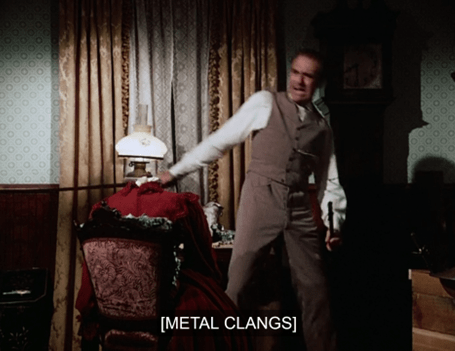
WILL: Then of course there’s poor Freddie. . . .

Later, Charles tells Caroline to start packing, then disappoints her when he says they aren’t going back to Minnesota, he’s just going to rent a room in Newton, for their own safety.
After a commercial, we see them looking at a large rental home. Andy Anderson, assayer, is showing them around.
The Andy actor, Vernon Weddle, was in a lot of interesting things, including Norma Rae, The Waltons, Little House-adjacent properties like Bonanza, Carter Country and Highway to Heaven, Hitchcock’s Family Plot, Short Circuit (you know, of “Who’s Johnny?” fame), some personal faves of mine like Max Headroom and The Parallax View, and a controversial cult film called White Dog about a dog that’s been trained to hate Black people.

Anderson tells them the rent for the place is $100 ($3,000) per month.
Then he sinisterly offers to buy Charles out of his claim.
WILL: My God, it’s like Honest-One Auto!
I won’t tell you the whole story, but an auto mechanic once refused to give my vehicle a diagnosis qualifying it for a class-action settlement, only to sinisterly offer to BUY the vehicle . . . presumably so he could claim the payout himself! Ha! Honest-1 my ass!

Charles refuses, but when Anderson leaves, Caroline asks him to consider the offer. Charles walks out in disgust.
WILL: Well, you made your bed, Ma.
DAGNY: Mm-hm.

Cut to Caroline teaching school. Where did they get the books? There’s a goofy-looking grinning little kid holding a McGuffey.
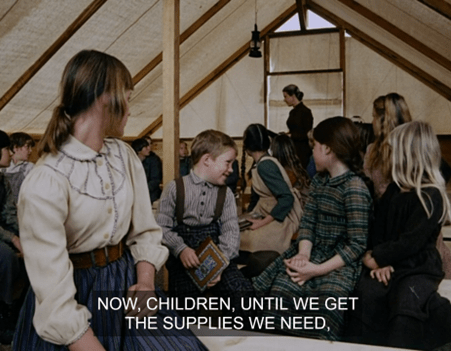
Ma’s lessons are interrupted by gunfire from the street. Just common or garden variety rootin’-tootin’ gunfire this time, not murderous-kind.

(Notice, Ted V. caught the moon in that shot. Very cool.)
Back at the claim, Charles and Mr. Edwards are working the creek.
WILL: Is that a geyser back there?
DAGNY: Yeah, what the hell?

Mr. Ed takes a break and sits down next to a shotgun that’s propped up on a box.
DAGNY: Does he knock it over and shoot Charles in the chest?


Two armed, shadowy strangers riding Bunnies appear.

The first armed, shadowy stranger smiles toothily and asks some menacing questions, but within seconds Mr. Ed grabs the gun and drives them off.


Armed, Shadowy Stranger 1 (called “Jake” in the credits) is played by Brian Libby. He was in a lot of stuff (including Max Headroom, how funny), but probably his best claim to fame is from three Stephen King films directed by Frank Darabont: The Shawshank Redemption, The Green Mile, and The Mist.

When they go, Mr. Edwards tells Charles the gun wasn’t loaded.
That night at the rental house, Charles and Caroline catch up.
WILL: This is like a thousand times nicer than their house. How will they ever go back?

Caroline brings him some stew, but he’s passed out, as he does.

Then we’re back at school again, where the class, including the Goofy-Looking Grinning Little Kid, are scratchin’ on their slates.
WILL: He looks like the kid from Hedwig.
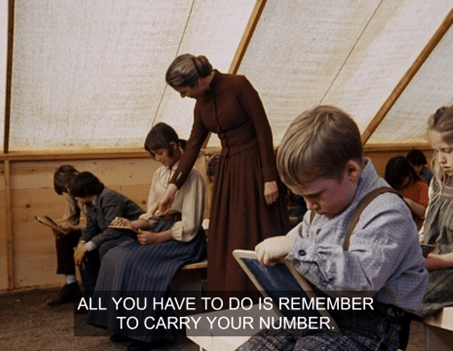

One of the boys is obviously an Ambiguously Ethnic Kid from Walnut Grove who stowed away, Solomon Henry-style, on this adventure.


A disheveled drunk suddenly appears in the tent.
WILL: It’s Con Stapleton.


Whether he wants to assault Ma or what is hard to tell, but Mr. Griffin arrives before he can get too close.
Griffin tells her he finally struck gold after all, so he and his family are going to be heading back where they came from.

The Disheveled Drunk, who despite being disheveled and drunk knows a thing or two about Gold Country, peers at Griffin’s samples and says his gold is obviously mined, not panned.

Very guiltily, Mr. Griffin grabs his daughter and exits.

Realizing where he got the gold, Laura bolts from the “classroom” and heads for Zachariah’s shack. Didn’t they say at the beginning that the claims were five miles from Newton? It would take Laura over an hour to get there on foot.
Well, however long it takes, when Laura gets there she finds a scene of horror: Old Zachariah sits in the cabin, cradling the corpse of his wife! For indeed, Griffin obviously overhead Laura blabbing about her new Old-Man Bestie and decided to cure his bad luck with a little graverobbing.

Now, Zachariah doesn’t say how long ago she died, but if he dug the mines 20 years previously, she’d definitely be a skeleton by now. (We don’t really get a good look, but he may just be holding – part of her.)

At first whispering, then screaming, then finally howling like an animal, Zachariah blasts Laura for revealing his secret.


DAGNY: This is too far for Little House.
WILL: It is pretty far. It’s like “’My Ellen’” far.
DAGNY: It’s way beyond “’My Ellen.’”

DAGNY: Laura’s tears are TERRIBLE in this episode.

WILL: Yeah. Whereas he looks like his whole face is melting off, like in Raiders of the Lost Ark.


WILL: I guess it is more like Creepshow than “’My Ellen.’” Or Tales From the Crypt.
DAGNY: Tales From the Crick!

Laura runs out, and soon Pa finds her bathing in self-recrimination creekside.
Pa tells her what happened isn’t her fault.
DAGNY: No, it is her fault.

WILL: But that’s a good question. Do you think she would EVER get over this? Because of something she did, the corpse of her friend’s wife is desecrated, and he actually screams at her WHILE HOLDING THE SKELETON. I’d have nightmares for the rest of my life!
DAGNY: You would, but she wouldn’t. People were a lot closer to death in those days. It wouldn’t be pleasant, but she wouldn’t find it as traumatic as a modern person.
WILL: I suppose. What you’re saying is, being screamed at by somebody holding a dead loved one was actually pretty common back then.
DAGNY: Exactly.
Pa says he’ll go and investigate, and Laura begs him to apologize to Zachariah for her.
But accompanied by some weird Astor Piazzolla-type music on the accordion (why?), Charles arrives to find Zachariah has burned himself and his wife up by lighting his cabin on fire.

WILL: It’s the first completed suicide on Little House too, unless you count Granville Whipple.
DAGNY: Yeah . . . I don’t know if I do count him.

This must be doubly awful for Charles, since of course his nutty father attempted suicide the same way.

Charles then apparently reburies the remains in the river and carves a new gravestone to say Zachariah.

I don’t know how much time has passed, but it must be a while, since the shack was still in flames when he arrived.
Back in Newton, things get rowdy at night outside an establishment called the Palace Hotel (same name as the place in Mankato, if you recall).

Disgusted at the sight, Charles heads to the tent, where the congregation is singing “Shall We Gather at the River?” (Not anachronistic; but a little on-the-nose, Little House.)

Rev. Phillips said they have services Wednesday nights, so this must be a Wednesday.
Pa lies to Laura, saying he talked to Zachariah, and not only did he forgive Laura, he decided to go live with a nice farm family.

Laura falls for it, baring the gopher fangs in relief.

Ma sees through him, though. Accent aside, Grassle’s quite good in this one.

Then, with absolutely terrible timing, Rev. Phillips asks Charles to stand up and give a guest sermon.
But Chuck loves the limelight, so he jumps up immediately.
He says he’ll try to be heard over the shooting and brawling in the street.
DAGNY: Notice the Grovesters are the only ones laughing at Charles’s stupid jokes.


Charles blither-blathers for what seems like an hour about what’s really important in life.
WILL: This one just seems hokey and phony to me.
DAGNY: Yeah. It’s like a Little House parody.
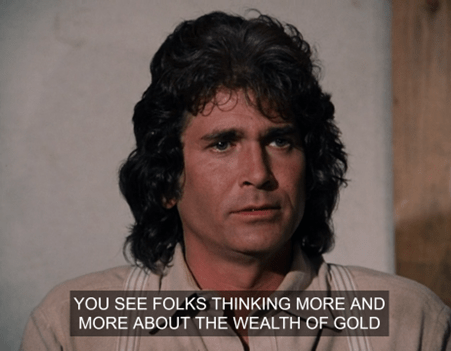
Charles says he’s prayed to God for guidance, and received an answer that it’s time to go home.
Rev. Phillips stares.
WILL: Is he gonna resign because he’s never heard a better sermon than this?
DAGNY: No, he’s gonna pull a gun on Charles. [as REV. PHILLIPS:] “Not so fast, Ingalls. Your wife’s our only teacher.”
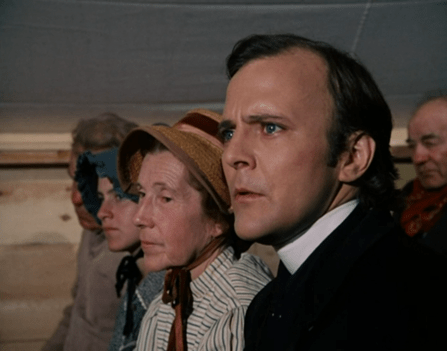
Then, with a stunning D-flat-major chord, we see the wagon train heading back east.

Another wagon stops them to ask for directions.
DAGNY: Oh, a nice gay couple.

But of course they aren’t. I know we’re running out of time, but the man is Alan McRae, notable (to me) for appearing in When Michael Calls, ONE OF THE SCARIEST TV MOVIES I’VE EVER SEEN IN MY LIFE.
Finally, the end! Bum-Bum-Ba-Dum.
STYLE WATCH: One of the thugs who beats up Mr. Edwards wears a rather hippie-ish floral neckerchief.
Charles appears to go commando again.
THE VERDICT: “Gold Country” reaches for greatness, but this one really should be better than it is. It has the most technical and continuity mistakes of any episode so far, an irritating central performance by E.J. André, and very little sparkle.
Dagny liked it, though.
UP NEXT: The 1977 Walnut Groovy Awards!
 Walnut Groovy
😎
LikeLike
You had me laughing at all the puns. I have to admit it’s not one of my more favorite episodes on LHOTP. Just as a little sidenote on our wedding day I walked up the aisle to “the wedding song”. I always liked it. Nice tribute to Hersha Parady, too. (sorry to be a pain, but I’m wondering if you ever got to listen to my most~recent LHOTP podcast.)💁🏻♀️🎧👒
LikeLiked by 1 person
Oh yes, I did! Enjoyed it very much – quite an unusual episode, that one.
LikeLike
It sure is. But I still like it better than this one. Panning for gold episodes are so depressing on LHOTP. guess Landon wanted to show greed but he was rolling in it thanks to all his successful series. 💁🏻♀️📺
LikeLiked by 1 person
(I like it better than this one too. 😁)
LikeLike
Thank you!! I feel so sated.
(Apologies for making you all spend two hours on a dud, though. I guess I always liked the grand guignol of it.)
The error of Mr. Edwards reading is pretty unforgivable, although I do like that he could do rudimentary reading by Little House: A New Beginning. (The only thing I liked about NB? Perhaps.) I also liked how this one adds to Mr. Edwards’ alcoholism arc, which I always think is one of the most impressive things this show was able to pull off, mostly due to Victor French leaving for four seasons. Due to its length, it’s a pretty realistic arc considering it only takes up an episode plus a few moments in episodes.
LikeLiked by 1 person
Ha! No need to apologize. I have fun doing even the ones I don’t like. Sometimes they’re more fun to do, actually. I wouldn’t just sit and WATCH this one for fun, though. In fact, the first half has put me to sleep at least three times when I’ve tried to “give it another chance” in the past. Still, I do like the grotesquerie of the second half, and EJA is fast becoming my all-time favorite bad Little House actor.
Yeah, Mr. Ed’s alcoholism arc is an interesting one for sure, especially since his drinking’s often been played for laughs to this point. (Of course, that’s often the way people react to it in real life too, until they can’t anymore.)
LikeLike
Incidentally, for your planning purposes in case you make it that far, the show didn’t do another two hour episode until May We Make Them Proud in season six–Hersha’s memorable, indeed traumatizing final episode.
LikeLiked by 1 person
. . . “in case you MAKE IT THAT FAR”??? Oh, I’m going all the way, my friend! 😆
LikeLike
This episode was a turning point in my opinion. As of this phase we’ve had onscreen deaths (remember the powder monkey blowing himself up?), mentions of deaths of children and other mature elements, but nothing as graphic as a man dying onscreen from being, grave robbery and of course, succeeded suicide by self-immolation!! From here forawrd, more and more dark episodes would come, with a child drowning and Laura being kidnapped by her grieving mother, a baby dying on a fire, a masked maniac targeting a teenage girl… It seems things got darker after “Gold Country”.
It was also the departure of the Edwards family as regulars, opening space for the introduction of the Garveys. (So odd to think we’lll enter the Garvey phase shortly after saying goodbye to Hersha Parady). At the same time, I’m glad to see we’ll have the Garveys introduction, John’s fall of grace and the unforgettably dark “My Ellen” still this year.
LikeLiked by 1 person
For the record: ever since I saw Deadwood’s Calamity Jane in your mentions to her here, I kept remembering Carrie saying ” oh damn” on Season 5, now I can’t get this image of Calamity holding Carrie in her arms and doting on her off my head. And then I imagine Ma’s reaction to that and the curse words Carrie would learn -_-
LikeLiked by 1 person
Ohmigod, Jane would be the PERFECT babysitter/protector for Carrie. (“That’s another penny I owe you, littl’un.”)
LikeLiked by 1 person
I really enjoyed this recap even though I found the episode hard to watch. The characters were way too trusting and gave up information too easily. What did Charles think would happen when he’s shouting to the whole area where he found the gold – that everyone would share willingly and equally!? Bah! And Laura poking her nose where it didn’t need to be. Very dark and disturbing ending and the acting was too over-the-top for me to really care. I agree that he was just too distracting. No subtlety in this episode at all.
LikeLiked by 2 people
Exactly! I tend to really like the dark Little House stories, but there’s something weird and off about this one. But fortunately, the imperfect episodes are just as fun to pick apart as the good ones. At least, that’s what I keep telling myself whenever I think about someday having to recap Season Nine. . . .
LikeLike
Funny recap !
I watch this episode mostly for the short scenes in “Deadwood” . I always laugh at the “Gee-whiz!!! scene lol . It seems to be a regular thing for prostitutes to hang out on those upper balconies in westerns hey ? Funny I just found Deadwood at thrift store yesterday and its pretty good so far. The Little house version of Deadwood would be more convincing if they had more tents set up other than just the church. I could write alot more here but I’ll end it with the time lapse that bugs me . The Ingalls and Edward’s leave for church and Charles goes to check on Zachariah and the fire scene , fire put out, Zachariah is ” buried ” in the creek and Charles also had time to chisel him a stone to lay in the creek and he STILL makes it to church before it’s over! Good grief lol. Anyway great read 🙂
LikeLiked by 1 person
Thanks Clint! Hope you like Deadwood – stick with it, it gets better and better.
LikeLike
It’s a good thing Carl has a prominent role here, because this is his last appearance in the show; at least as played by Brian Part. He’ll still make one appearance in the episode where Isaiah falls into alcoholism, but played by one David Kauffman, who has little resemblance with Part. Speaking of, I was weirded out by the prostitutes teasing Carl given that I assumed he was the same age as Laura, if not slightly younger, but Brian Part was actually fifteen when he made this final appearance. He’s actually the same age as Melissa Sue Anderson. I wonder if Carl is supposed to be younger.
LikeLiked by 1 person
How interesting! I never would have guessed his age. Poor Brian, it’s a shame he and Bonnie Bartlett and Kyle Richards essentially lost their jobs because Victor F had to go and do Carter Country.
I always liked Carl S. Part had a real sparkle that always made the character’s inclusion seem worthwhile.
LikeLike
About Delano, I expected you to make a comment on him going on to become the Falcon Crest owner a century later. On a side note, how do you happen to know a rural Italian writer of the 19th century? I thought he is not part of a program in your regular American school
LikeLiked by 1 person
Ha! I’m sure you’re right about the Delanos founding the Falcon Crest empire. Do you mean the reference to Cavalleria Rusticana? I know the Mascagni opera – and no, we don’t learn about it in school. It’s just an enthusiasm of mine.
LikeLike
To paraphrase a radio call-in show, long time reader, first time commenter here. I have been reading Walnut Groovy religiously since I started watching the show a few months ago and have laughed at your wit along the way. But you outdid yourself with Neil Diamond: Hooked on the Prairie. I laughed hysterically at “Prairie Songs Sung Blue,” “Winter Kill Old Dan Tucker” and my favorite, “Mary, You’ll Be A Woman Soon.” You even got Neil to cover that time honored standard, “Bringin in the Sheaves!” No album is complete without it. Thank you, thank you for entertaining me often more than the show actually does.
LikeLiked by 1 person
😀 Thanks, Art. I’m so glad you like it!
LikeLike
I just finished listening to Alison Arngrim’s memoir (on audiobook! Delightfully read by Herself!)
She reported the tumble by Carrie was caused by the Greenbush’s mother putting their shoes on the wrong feet and sending a groggy toddler out to run down the hill (allegedly.)
Of course, ML thought this was hilarious and it became iconic (the slide whistle/theremin eventually added to the score by David Rose will add to the hilarity… We here don’t condone violence against children but do find that quite funny as well)
LikeLiked by 1 person
That book is a treasure (and so is she). I find that story far more convincing than what’s generally believed in our house, which is that Carrie One did the falling and Carrie Two gets up from the long grass (so they could get both twins into the credits, you see)! 😀
LikeLike