Mr. Ingalls Goes to Chicago; or
Abyssinia, John Junior
(a recap by Will Kaiser)
Title: Times of Change
Airdate: September 19, 1977
Written by Carole and Michael Raschella
Directed by William F. Claxton
SUMMARY IN A NUTSHELL: In Chicago, John Junior experiences character assassination, which I suppose is better than the real assassination he’ll also experience someday.
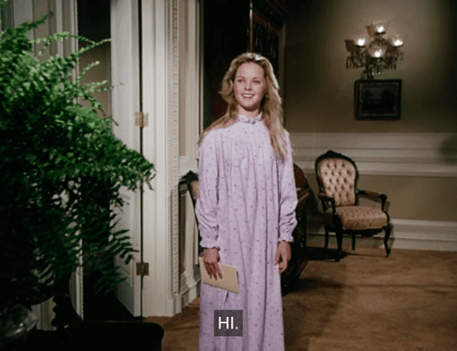
RECAP: First things first! At last, you can get your hands on a copy of Little House Life Hacks, the new book by Friends of Walnut Groovy Angie Bailey and Susie Shubert. (You may know Susie as the cohost of Melissa Gilbert’s Knitty Gritty podcast.)

Little House Life Hacks is a fun and funny look at the Little House phenomenon – show and books – in the context of our modern way of living. No Little House fan’s library will be complete without it.

Now on to our story. For this edition, we’re actually visiting my dear sister Peggy and her husband Bruce . . . in Chicago itself!
This episode is a doozy. You might want to brace yourself with a shot of whiskey or something beforehand.
Okay, you ready? Let’s go.
We begin with the opening credits.
BRUCE: Wait, it’s rated “thirteen-plus”? Little House on the Prairie?
ROMAN: Yeah. Most are just seven-plus, except when the content is really extreme.

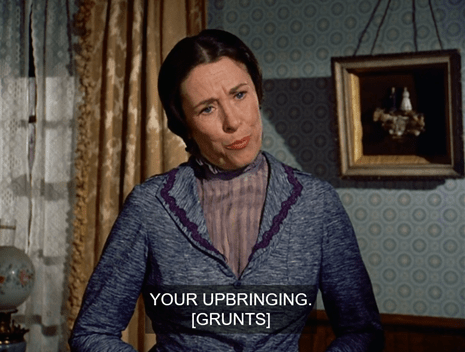
PEGGY: . . . “Sexual content”??? “NUDITY”???
ROMAN: Yeah. Extreme content like that.
Speaking of doing shots, we open on the schoolhouse vomiting out the kids.
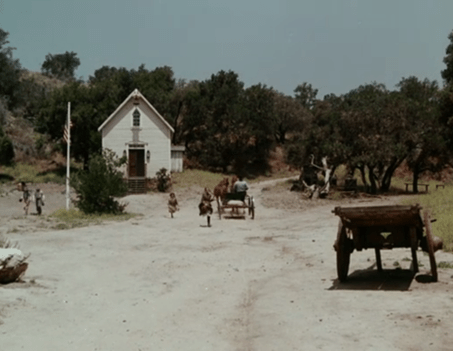
Laura races towards the camera, closely followed by now-school-attending Carrie, who runs better than she talks.
This one was written by Carole and Michael Raschella, a husband-and-wife writing team, like Pip and Jane Baker on Doctor Who.
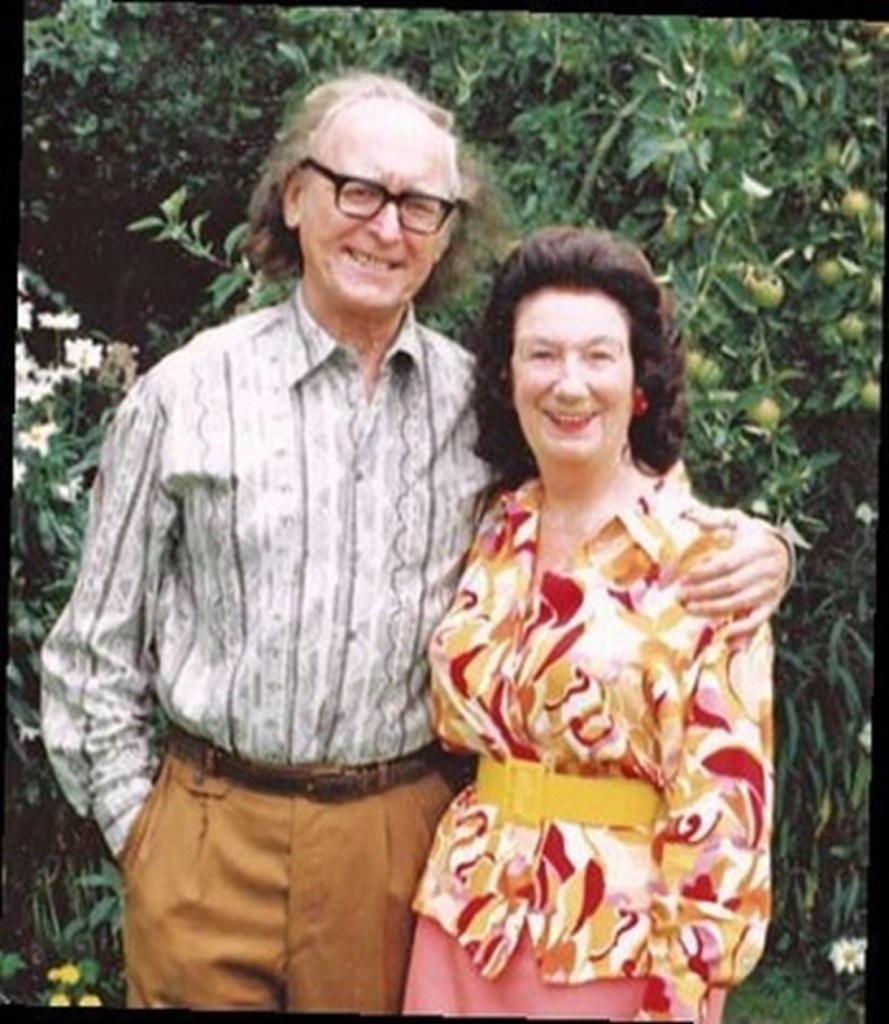
Carole Raschella was British-born, and her Little House experience sounds like a fan’s dream: Apparently she simply sent a script to Michael Landon, who bought it.

She and Michael would continue to write for Little House all the way through Season Eight. (Michael Raschella, not Landon, that is. Well, Landon did too but you take my meaning.)
The Raschellas are both still alive as of fall 2023. In fact, Carole continues to have a successful career as an artist specializing in pencil drawings.
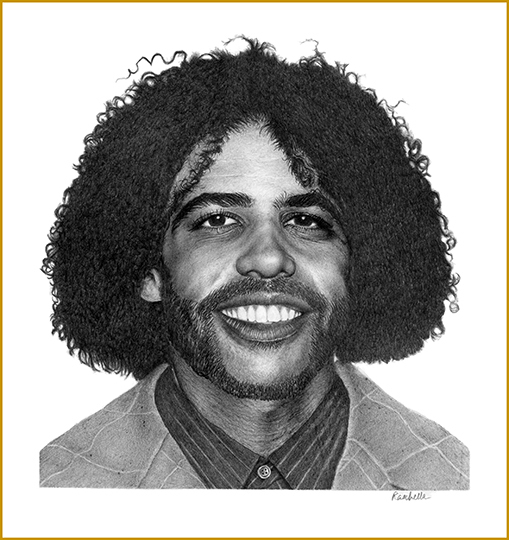
But enough about them. Clax is back as director today.
Anyways, Laura and Carrie take the shortcut. They catch up with Mary, who’s walking VERY slowly.
PEGGY: Doesn’t Half-Pint get a pail?
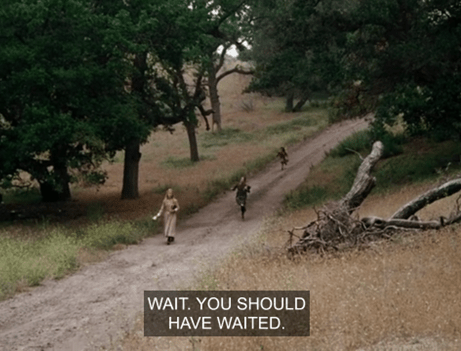
Laura tells Mary she left before Miss Beadle announced the essay contest winner.
DAGNY: Why did Mary leave early? I suppose maybe she was having her period.
WILL: Yeah! I remember girls getting out of gym class for that in high school. I was extremely jealous of it.
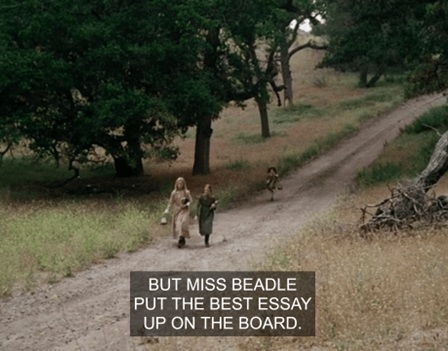
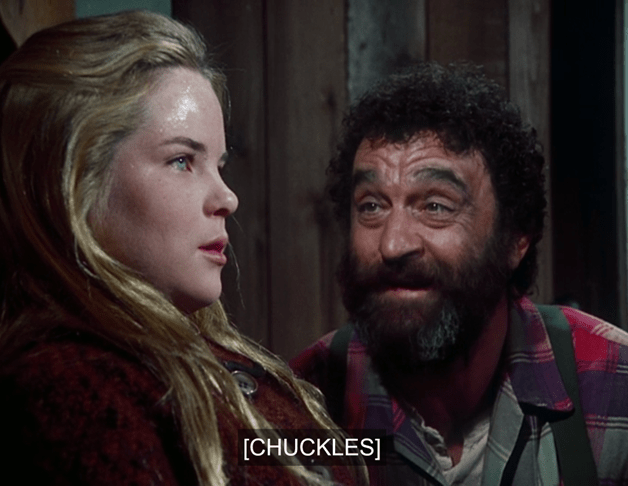
“Oh, yeah,” says Mary, without interest. “Who won?”
“It was you, stupid!” yells Laura. (Paraphrase.)
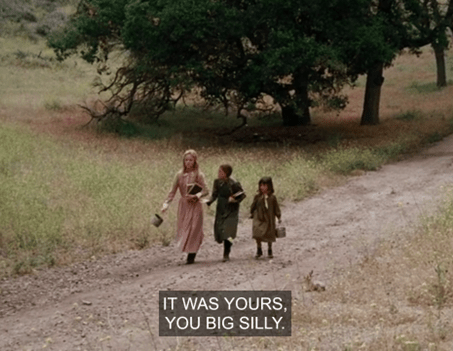
Laura goes on to tell Mary Nellie was pissed about it. But she says she knows for a fact Mrs. Oleson wrote her essay for her.
I remember at my college a fellow student I worked with at the library bragging how her mother wrote all her papers. I could have reported her, but I didn’t. I am not retained by the police to supply their deficiencies!
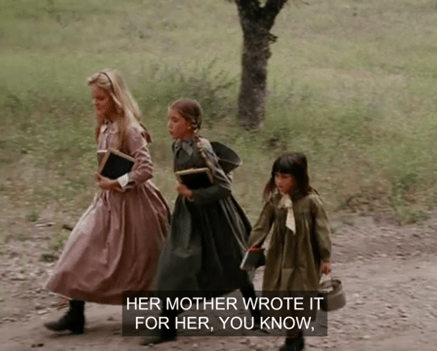
These days, of course, college students’ papers are all written by ChatGPT, so I suppose the fact there was at least some human involvement should count for something.
Incidentally, I recently asked ChatGPT if it could write my Walnut Groovy posts for me, since as you might imagine they do take a long time to make.
I let it read the most recent recap and asked if it could copy the style.
But it seemed to understand this request as asking if it could copy Walnut Groovy content in Kezia’s style. Because here’s what it came up with:
Alright, mate, let’s give this a whirl, shall we?
Kezia, she’s a right character, she is. Late-middle-aged, face as merry and ruddy as a comedian from yesteryear. Dressed all proper for the times, ‘cept for that hat, looks more like it’s for a spot of fishing than a lady’s bonnet, TV’s Vera-style.
And on top of it? Parrot Polly, a live crow, no less.
She’s got this Cockney lilt to her, mind you. You can tell she’s wandered in from across the pond. There she is, sweeping away, chatting to herself or maybe to Polly, who knows.
Out on the Walnut Grove street, you’ve got Mrs. Oleson and Nels heading towards the church, Mustache Man ambling up another way.
Then in pops Ben Slick, and the Gray-Haired Nelson Dude, along with a bloke with a bit of a belly, though we don’t get a good gander at him.
Nothin’ much comes of this little traffic tangle, and as Harriet and Nels get nearer the church, there’s this loud squawk that bellows out, “Good MORNING!”
Now, for a moment, it ain’t clear if it’s the lady or the bird doing the talking. But whether it’s one or t’other, you can see their hobbit hole, or Shakespeare in the Park set-up, right next to Grovester Congregational.
“Beautiful day, ain’t it!” Kezia screeches out, proper Cockney-like.
Well, the Olesons, they stop in their tracks, have a bit of a fumble about. Kezia goes on ’bout how cleanliness is next to godliness, a saying that’s been around since way back in the Eighteenth Century, it has.
Then the crow chimes in, “Amen.” Can’t say for certain, but I’d wager a pound or two that Landon’s the voice behind it.
It doesn’t really sound like me, though the tone seems about right. Well, let me know if you prefer it and I’ll happily hand ChatGPT the reins from now on. It would save me a lot of trouble.

Suddenly, Pa’s voice yells out “Hey, everybody!” and he and the Chonkywagon appear on the shortcut road, going so fast you’re almost sure a death will result.
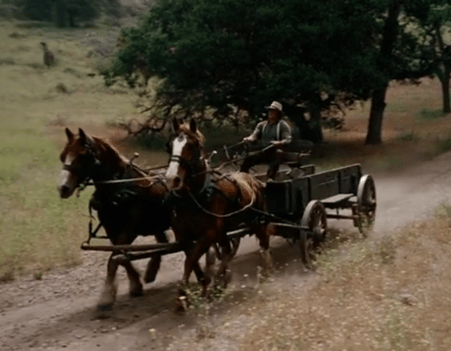
He’s wearing his Christmas shirt, which must be nice for Mary to see.

The kids hop into the wagon, and Pa hands Mary a letter he picked up at the Post Office.
It’s from John Junior, in Chicago.
Laura wants her to read it out loud, but Pa says it’s probably a sex letter. (Paraphrase.)
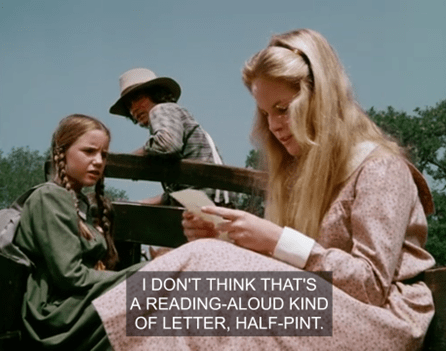
Joking aside, I wrote a lot of “wooing” love letters when I was young. It made me seem romantic and old-fashioned, I hoped, and several girls (and a couple boys) did seem to like it. These days I’d get shunned from society for harassment, of course, and rightly so.
I do remember, though, one former beloved of mine, who, upon our breakup, appeared in my French class with a pile of my letters in her hand, shouted, “This is your garbage, not mine!” and threw them into the trash bin in front of my fellow étudiants. So that’s another good reason never to write anything, young readers.
(She was more a Harriet Oleson- than a Mary-Ingalls-type. We’re okay now, though.)
Anyways, off the Ingallses drive past what appears to be Mr. Edwards’s first house, though that puts it on the wrong side of town from where we established it previously.
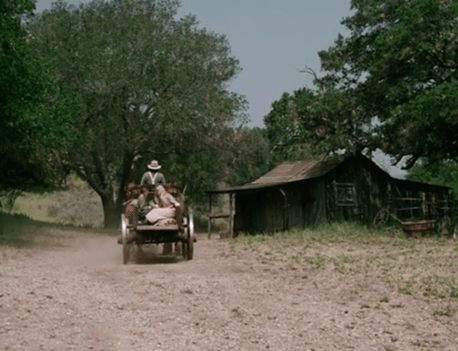
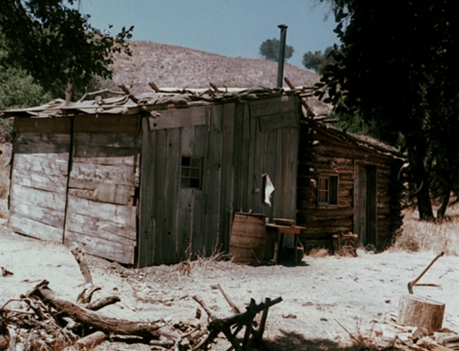
Back at the Little House, Boo-Berry-bonneted Ma’s feeding the chickens. I don’t know how anybody can make throwing chickenfeed look unconvincing, but somehow Karen Grassle manages.
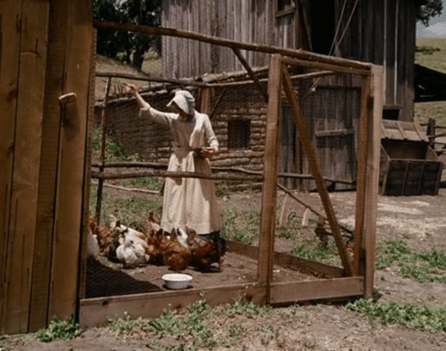
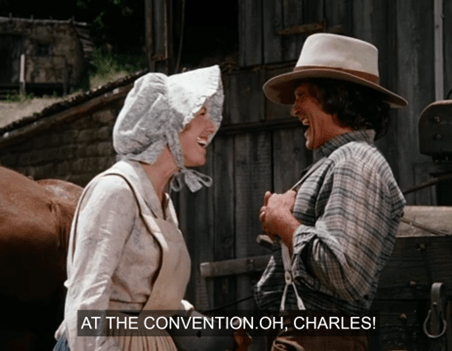
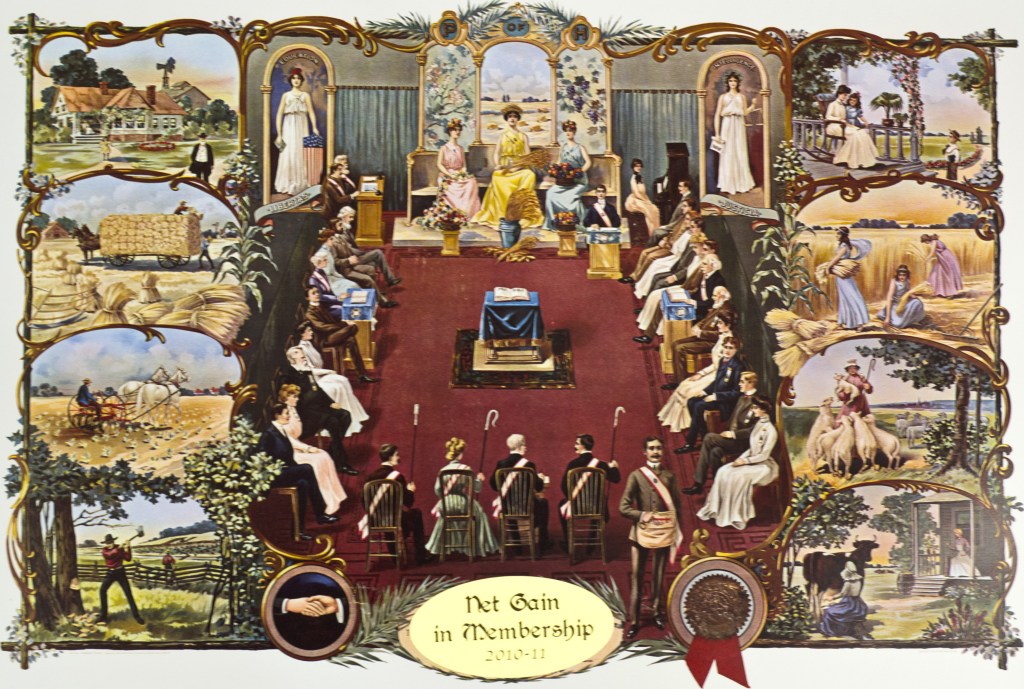
The Chonkywagon pulls in, and Charles tells Caroline “the Grange” is having a big convention “to decide state regulation” in Chicago, and he’s been chosen to replace sick delegate Luther Douglas. (Not a real person, as far as I can tell.)
Caroline is thrilled and screams “Oh CHAAARLES!”, even though it will mean twice the work for her again while he’s gone.
We’ll learn more about the Grange in a bit, but first we cut to the Ing-Gals’ loft apartment at night. The kids aren’t in bed yet.
DAGNY: How old is Carrie now?
WILL: Seven.
DAGNY: Why haven’t they moved her upstairs?
WILL: Kids love sleeping at the foot of their parents’ bed. You know, like Roman sleeps at the foot of ours.
ROMAN: Yeah. I love it.
Ol’ Four Eyes – excuse me, I mean Mary – is finally reading John’s letter to Laura, who’s lying on her back in bed and sticking her feet up into the eaves.
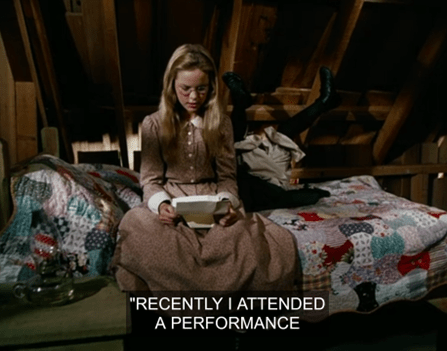
Mary reads: “Recently I attended a performance of Felix Mendelssohn’s Songs Without Words.”
Songs Without Words is a collection of easy-if-you-play-the-piano piano pieces from the first half of the Nineteenth Century.
John goes on to say:
“The lilting melodies of the piano reminded me so much of you, my sweet Mary, and the peaceful surroundings of Walnut Grove. Mendelssohn’s title no longer seemed appropriate, as music brought words flowing into my mind.”
I don’t know the Songs Without Words well enough to know if David Rose is referencing any of them in the score, but it’s a safe bet he is.

I can’t help noting that Mendelssohn had an intense infatuation with Jenny Lind, the soprano and sex symbol of the time whom Horny John himself fantasized about in “‘I’ll Ride the Wind.’”

Mendelssohn died in 1847. Some people say he actually killed himself after being rejected by Lind, but that’s unproven.
It’s unclear how popular his music remained in the U.S. in the 1870s. It continued to be hot stuff in Britain, but fell out of favor in his native Germany (in part because of anti-Semitism; Mendelssohn was of Jewish heritage).
But it seems there was a “Mendelssohn Society” founded in Chicago in 1858. It was defunct by 1865, but the point is I expect some Chicago Mendelssohn fans kept the home-fires burning after that.

(I suppose “keeping the home-fires burning” isn’t the greatest metaphor when talking about 1870s Chicago.)
Anyways, Laura bares the Gopher Fangs and (quite rightly) criticizes John’s nauseating writing style.
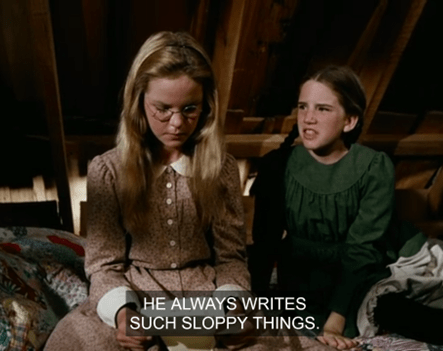
When we spoke to Melissa Gilbert last year, she talked about Laura’s daddy issues, and indeed, now the future Mrs. Manly says, “Falling in love is such a waste of time. I’m gonna stay right here with Pa forever and ever.”
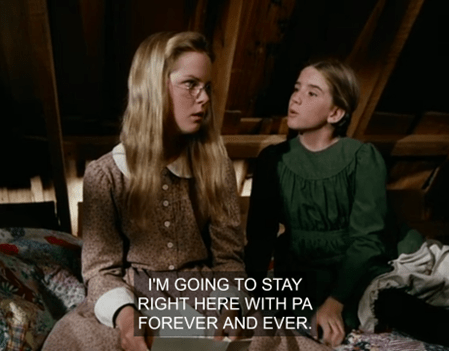
This of course is both on- and off-brand for Laura, since she’s had a handful of love entanglements of her own in the past.


John mentions that his university (which he doesn’t name) will be holding a “cotillion” on “the fourteenth of this month” and says he wishes Mary could be there.
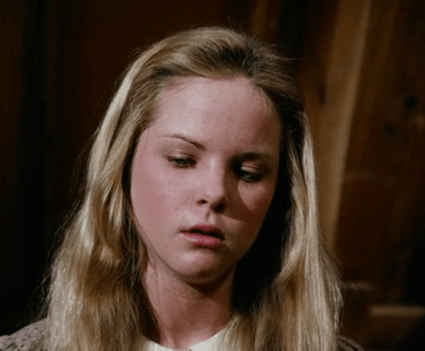
Mary removes her glasses sadly.
PEGGY: Her skin looks bad.
WILL: The Awkward Years.
Now, typically, a cotillion ball is a dance for upper-class debutantes – of high-school age more than college. (Even younger in the South.)
Which brings us to another problem: How old are Mary and John?
Well, in “His Father’s Son,” which was 31 stories ago, John celebrates his fourteenth birthday.

And in the more recent “‘I’ll Ride the Wind,’” Ma and Pa state that Mary is thirteen. In the same episode, Pa tells John he can marry her when she turns fifteen.
Judging from the events that have transpired since those stories, and factoring in the Time Rift, would make Mary seventeen and John about 31; but let’s not overcomplicate things.
Since John and Mary have not yet gotten married, we’ll assume Mary is now fourteen and John is sixteen. Just barely! – since his birthday’s in the spring, the season when cotillions are most often held. That’s awfully young for a college freshman even then, but no matter.
Now, it is my duty, of course, to point out that if it is the spring term of John’s freshman year, that means the mountain fever outbreak, Mary’s illness and multiple surgeries, Charles and Mr. Edward’s tunnel-digging adventures, and the months-long relocation of both their families to Deadwood/Newton all had to take place over a single autumn, whilst still leaving enough room for both Solomon Henry AND Spotted Eagle to come to town (and leave) and for Miss Beadle to organize a school election and a play IN BETWEEN those other events!
(Ha! Fat chance, I say!)
But now, back to our story. (We are less than five minutes in, after all!)
Downstairs, Pa is rolling up his sleeve.
DAGNY: Is he gonna give blood?
ROMAN: They did have odd ideas of fun in the olden days.
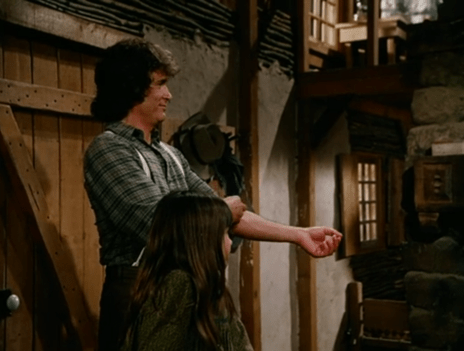
No, of course they aren’t bloodletting here. In Willow Run, maybe.

Pa tells the Gals about the Grange convention, which he says is “next month,” and says Ma will accompany him, since it’s a free vacation.
Carrie stands in for the city slickers in the audience (boy, that’s a hard concept to get my head around) and asks Pa to explain what the Grange is.
So, I’m sure you all know this, but “the Grange” refers to a national association of farmers that does public policy advocacy, lobbying Congress and state legislatures on behalf of agricultural interests throughout the United States.
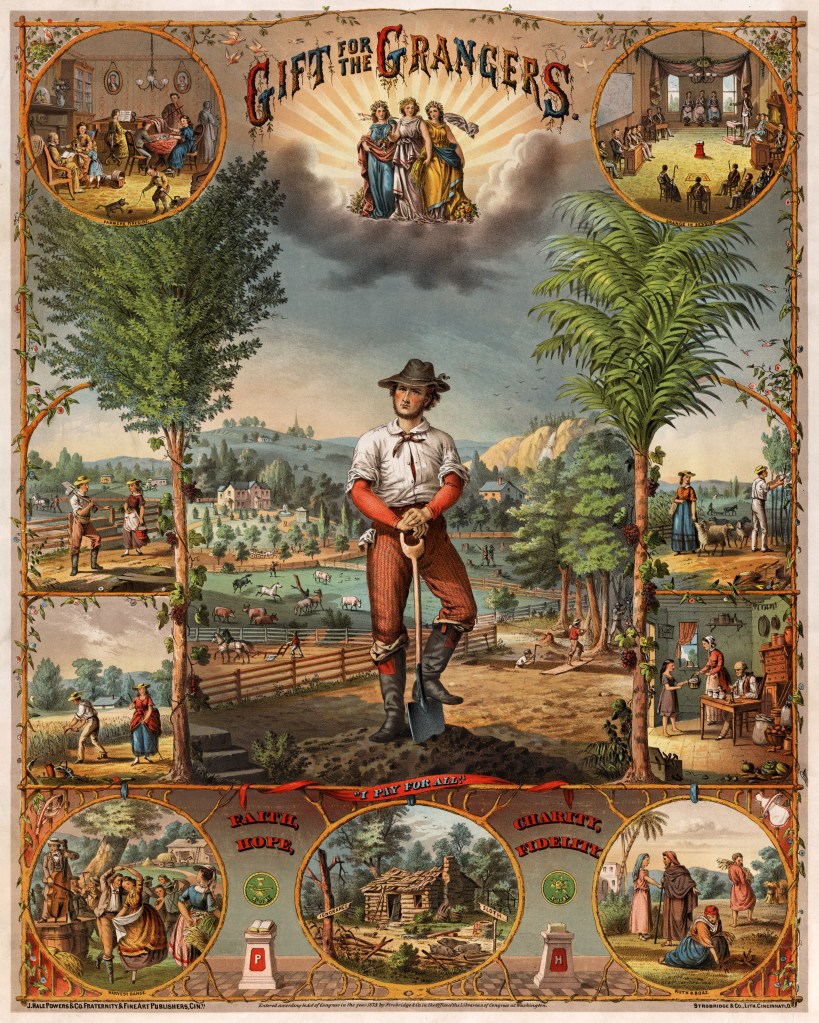
Founded in 1867, and properly known by the old-timey name “The National Grange of the Order of Patrons of Husbandry,” it still exists today.
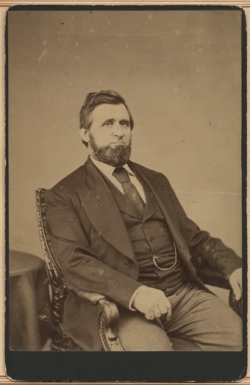
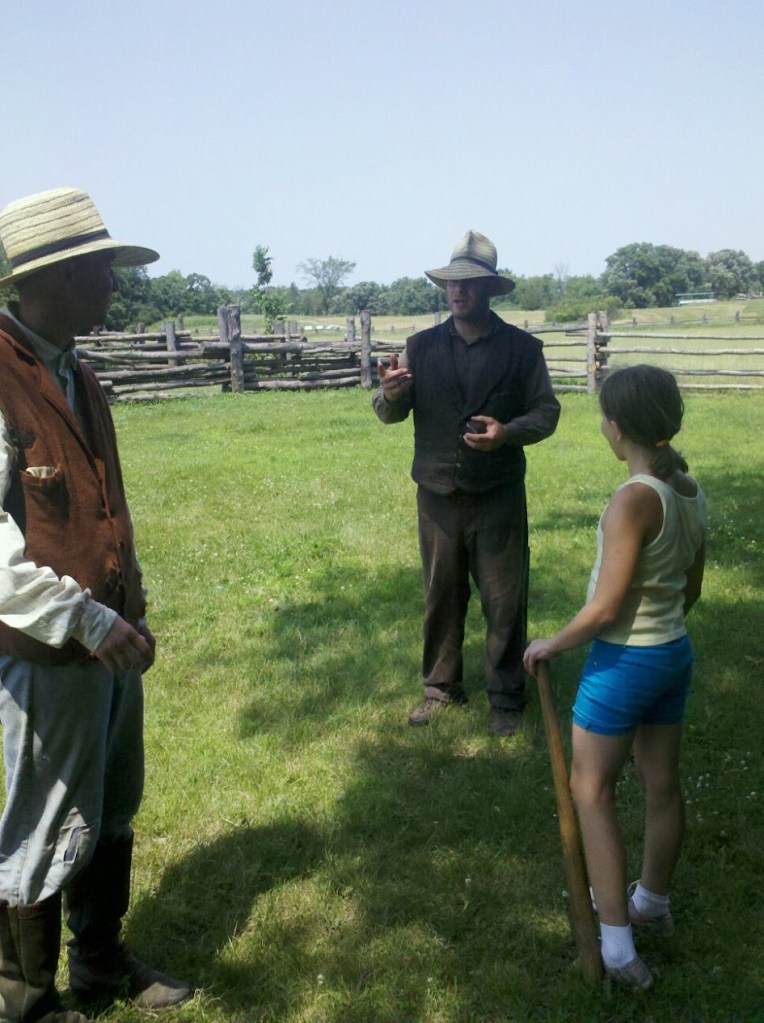
Headquartered in D.C., the Grange was cofounded by a Minnesota farmer named Oliver Kelley, whose property north of Minneapolis has been preserved as a historic working farm. I can attest it’s a very fun place to visit, if you ever get the chance.

Well, then Mary harshens the buzz by boo-hoo-hooing about John.
Pa says since the convention’s in Chicago, they’ll stop by and see John while they’re there. Does he know if the convention is anywhere near the university? I imagine it would be hard to get from place to place in a huge city in those days.
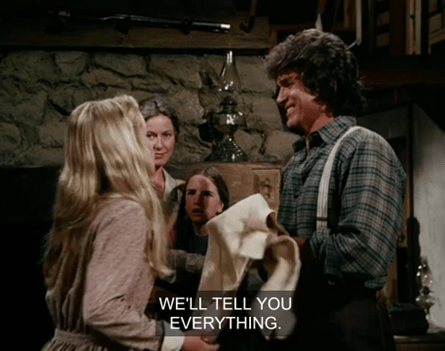
Mary says they’ll have to bring John the shirt she made him for Christmas. Boy, she’s a one-trick pony with Christmas presents, isn’t she.
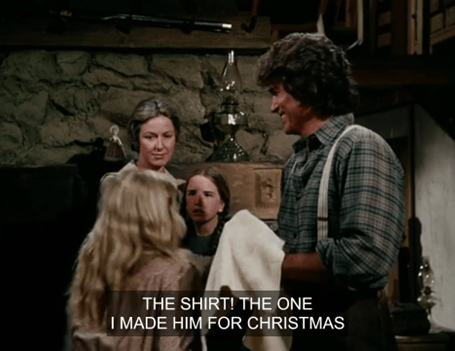
WILL: Little Bo Peep sees where this is going.
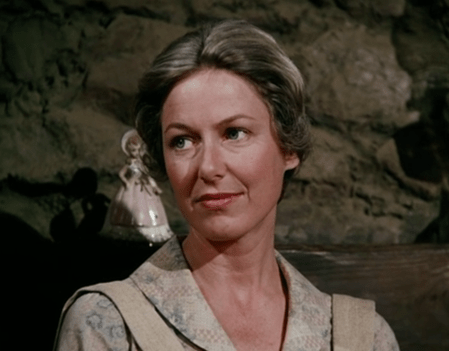
DAGNY: Yes. [as THE LITTLE BO PEEP FIGURINE, whispering sinisterly:] “You don’t DESERVE to go. You don’t DESERVE to have fun.”

Later that night, as Charles smokes up outside, Caroline comes out and says she doesn’t want to go on the trip.
“I don’t want to seem ungrateful,” she says nervously.
Why would she say that? She can’t be afraid he’s going to beat her. He’s Charles Ingalls, not Nels Oleson!

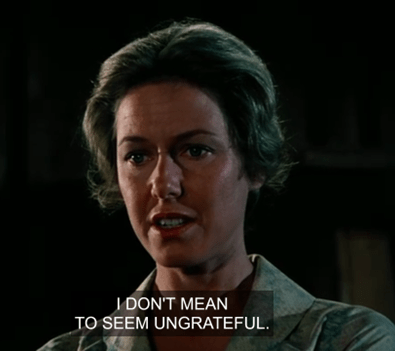
“I want Mary to make the trip – I can see Chicago on a picture postcard,” she says. (Britishly? Southernly?)
Love-face all around, as well as some waist-grabbing, then Caroline runs back and calls Mary.
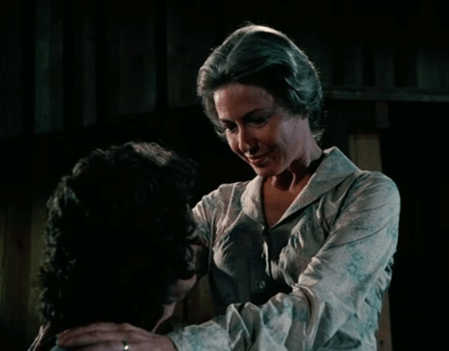
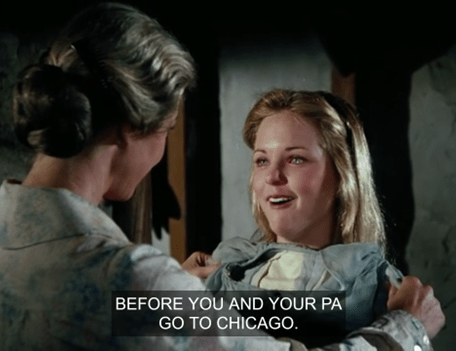
Whilst the latter clomps down the ladder, heh heh, Ma pulls a beautiful fancy dress we’ve never seen before out of a trunk.
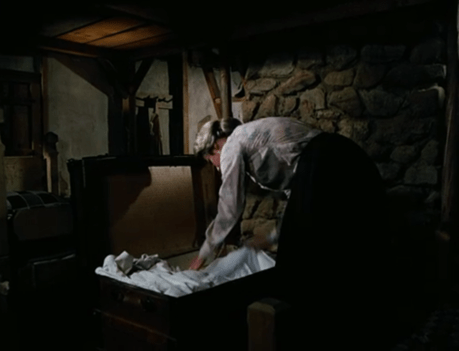
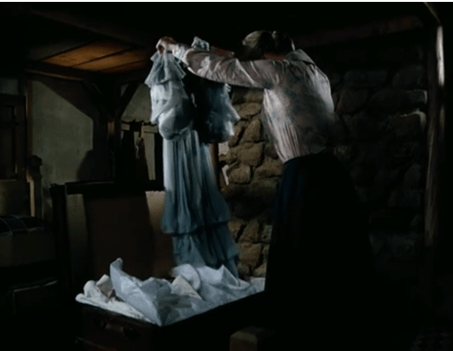
She tells Mary she wore it when she and Pa were courting, then goes into a kind of trance state and says:
CAROLINE: He and Father were standing by the fireplace talking . . . and I came in . . . wearing this dress . . . and he looked at me and said . . .
BRUCE [as YOUNG CHARLES]: “That would look better on my bedroom floor.”
(I’m sure Landon would have liked that joke.)
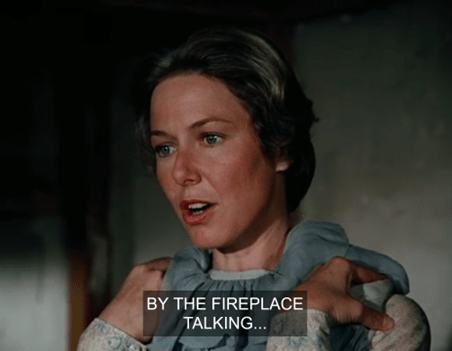
I don’t know if they didn’t have enough content to fill the hour and asked Grassle to tell this story as slowly as possible, but she does. The speech is a snooze.
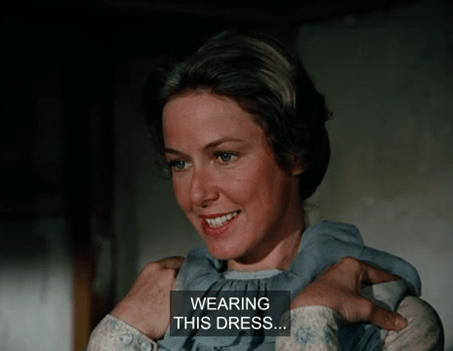
Long story short, she loved Pa, then and now.
Then she shocks Mary by giving her the dress and telling her, a la Cinderella, that she will be going to the ball after all.

PEGGY: She’s really crying.
DAGNY: Mary’s a good crier.
ROMAN: That’s how she got the Emmy nomination.
So, set aside for a moment the coincidence that the Unnamed Chicago University Cotillion and the Grange convention are happening the same weekend.
Because this development raises a number of other interesting questions:
- What month is it? John mentions the dance as being on “the fourteenth of this month,” but Pa says the Grange convention won’t be held until “next month.”
- If the ball truly is on the 14th of “this month,” how on earth are they going to make it to Chicago on time? John could have posted his letter no earlier than the 1st for it to be “this month,” in which case they’d be pretty close to the 14th by now, if not past it already. Mail service from Chicago to Walnut Grove probably would have taken a week or more.
- Cotillions are traditionally held, or thrown, or whatever, on Saturdays in the spring or summer. In 1877, both April and July had a Saturday the 14th, and since the girls had school today, I would assume it would be the former?
- How did Ma know when the Cotillion was? Mary didn’t say. In fact, when she told Ma and Pa about it, she only called it a dance, not a Cotillion.
There are two possible answers to the question about the month. First, it’s possible John knew his letter would take a long time to arrive in Walnut Grove, so he said “this month” rather than “next month” because he presumed the calendar already would have turned over by the time his letter arrived. He’s a writer who chooses his words with care, remember.

However, you and I both know the Mustache Man Express is the fastest mail-delivery service in the Old Upper Midwest, so it’s possible the letter actually did make it there before the end of the month – which would explain John and Pa’s seemingly conflicting statements.
This surely would have confused Brainiac Mare, though. She’s quite literal-minded, after all.

But she doesn’t mention it. Well, I think the most likely explanation is Mary misread John’s letter and it really said “next month,” not “this month.” (If he’s like a lot of writers, he probably has horrible handwriting.)
Well, either way, let’s say this story begins at the end of (a very warm) March, immediately after the events of “Castoffs,” with the convention and the Cotillion to be held the following month on Saturday, April 14, 1877.
Cut to the Ol’ Number Three warming up at the ol’ (Springfield?) station.
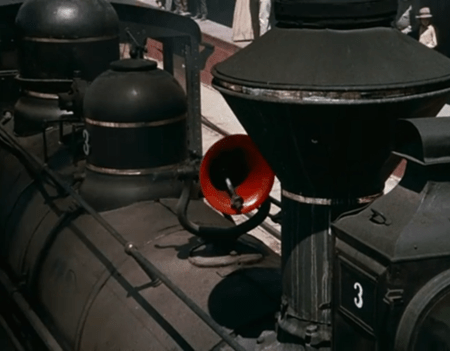
The shot, appropriately enough, is identical to the one used for John’s farewell scene in “‘I’ll Ride the Wind,’” complete with Mustache Man with his blonde Hot Filly. (“‘Ride’” was before MM dumped the HF for the Rather Beautiful Mother.)
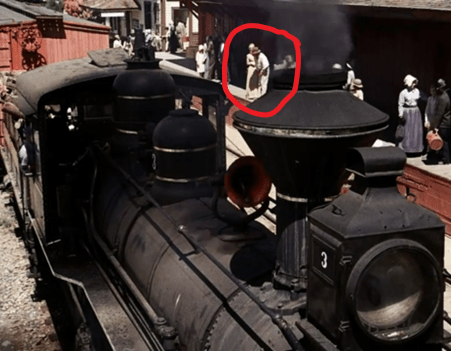
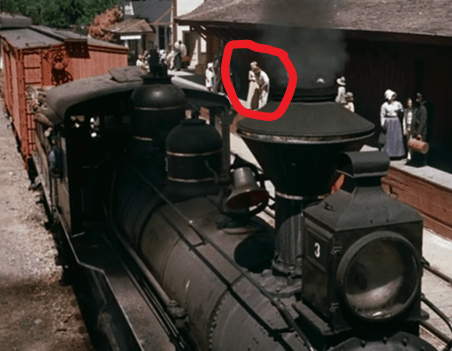
Not-Carl Sanderson and the Even Smaller Not-Carl Sanderson are also there on the platform.
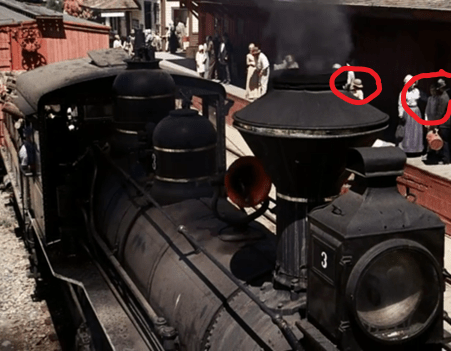
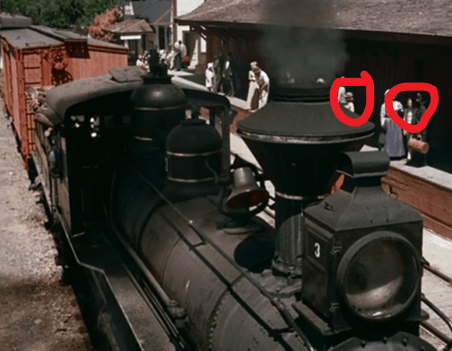
And aboard the train is someone I was sure we’d never see again: the Simply Ancient Lady from “To Live With Fear.”
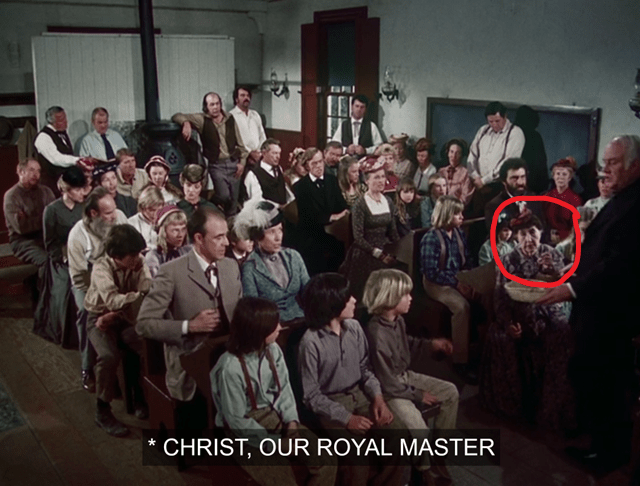
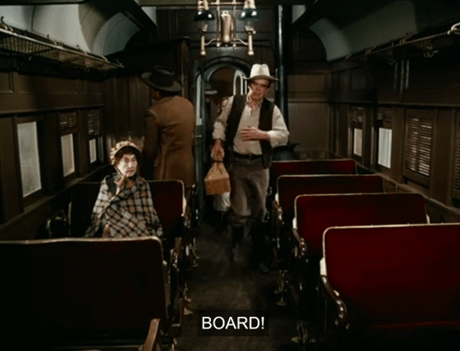
A couple of other gents join her. One resembles Garrison Keillor. Probably the real one’s great-great-grandfather, in fact.


I suppose we can definitively say now that the Ancient Lady isn’t Amy Hearn, which I thought was a possibility in “Fear.” Because now Charles and Mary board, but they don’t greet her.
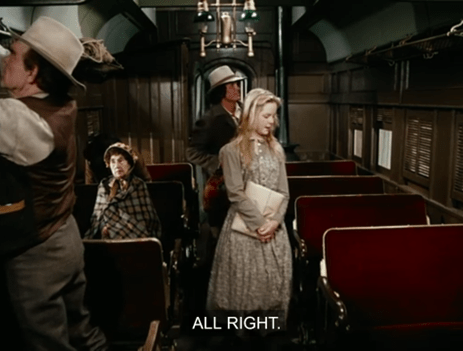
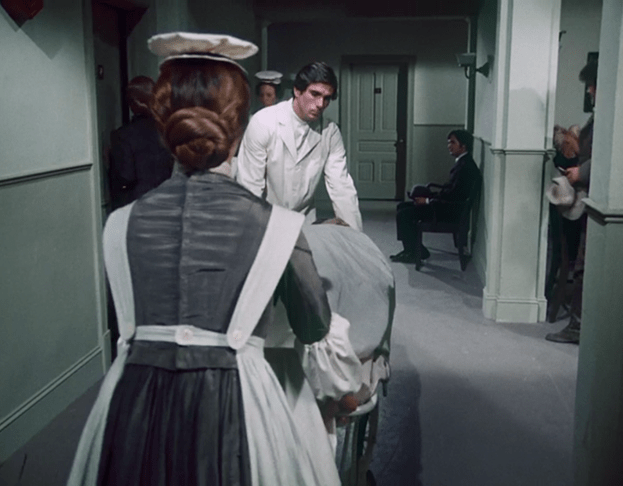
Other passengers include (if I’m not mistaken) the Rather Attractive Male Nurse from the Mayes Clinic. (No doubt returning to Rochester from a family visit.)
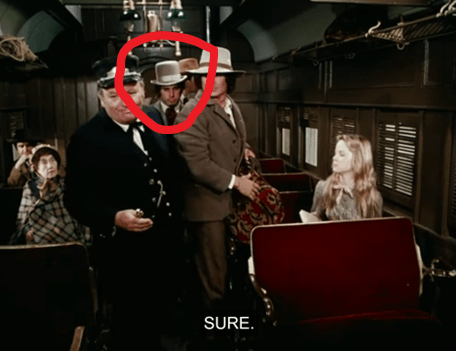
Charles and Mary haven’t even sat down when they’re paged by a conductor who resembles the High Talker from Seinfeld.
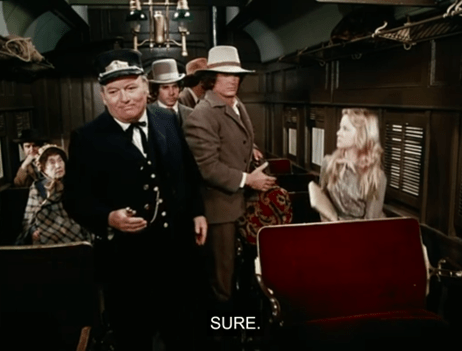
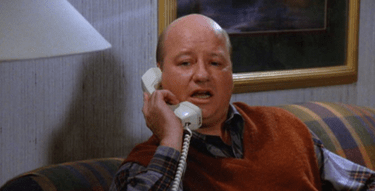
The actor, Bernie Kuby, was not on Seinfeld, but he was on Columbo and St. Elsewhere, as well as appearing in The Karate Kid.
He also wrote a number of songs and musicals that are mostly forgotten now. This is the only one I could find on the internet:
It is what it is, I guess.
Anyways, the conductor shocks Pa by moving them from Coach to a private compartment in First Class – compliments of the Grange.
Olive and I had such a compartment when we traveled to Seattle by Amtrak this summer. (It was a present for her high-school graduation, since she loves train travel.) It does make a big difference.

Anyways, Mary and Pa are both delighted, even more so when a steward brings them a grand lunch.

The steward is Joseph G. Medalis, who did cartoon voices for Scooby-Doo, The Smurfs, and a lot of other eighties junk that has specific meaning for me but that you don’t care about.

He also was on Carter Country once. I wonder if Landon punished him for it.
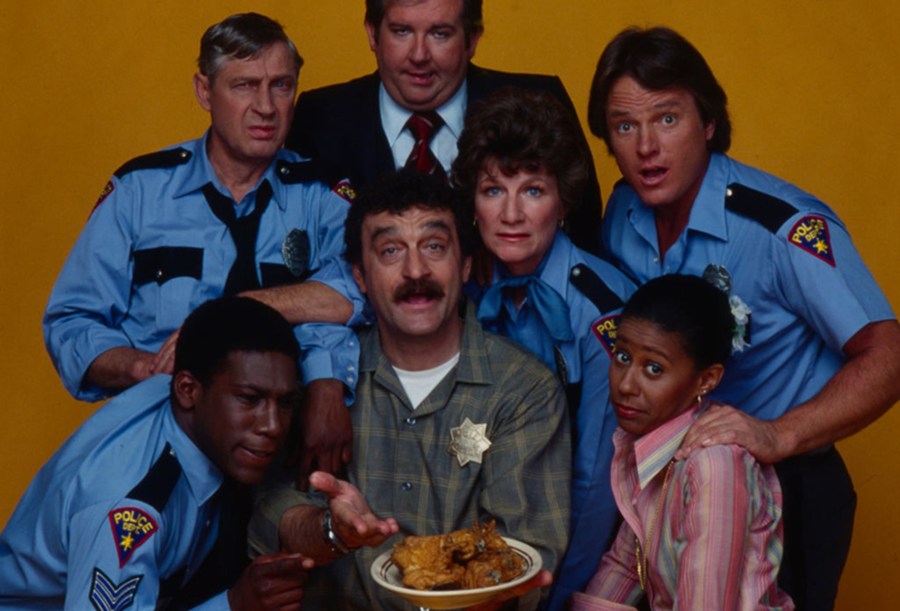
You know, Olive and I had a funny dining experience on the train ourselves. Anyone who’s ever taken Amtrak knows it’s full of odd people, both passengers and crew.
Well, one evening after they had delivered our meal, the attendent came back to our compartment and picked through our food because she thought she lost her ring in it.
I don’t know if I’d recommend Amtrak, exactly, but if you ever take it, I guarantee something very weird will happen, and you’ll remember it for years.
Well, the train chugs along towards Chicago. Now, you’ll recall in “To Live With Fear,” we estimated the Number Three train travels at a speed of about ten miles per hour. Assuming no delays, that means it would take over 48 hours to get from Springfield, Minnesota, to Chicago.
And of course, in that story the train they took was “the night train to Rochester” – an express.

Since it was clearly daytime when Mary and Pa departed, we can assume this is a slower train, so let’s say it takes three full days to get there.
That would have them leaving Walnut Grove on Monday, April 9th, departing from Springfield Tuesday, April 10th, and finally arriving in Chicago the morning of Friday the Thirteenth.
Considering what’s about to happen, that seems fitting, doesn’t it.
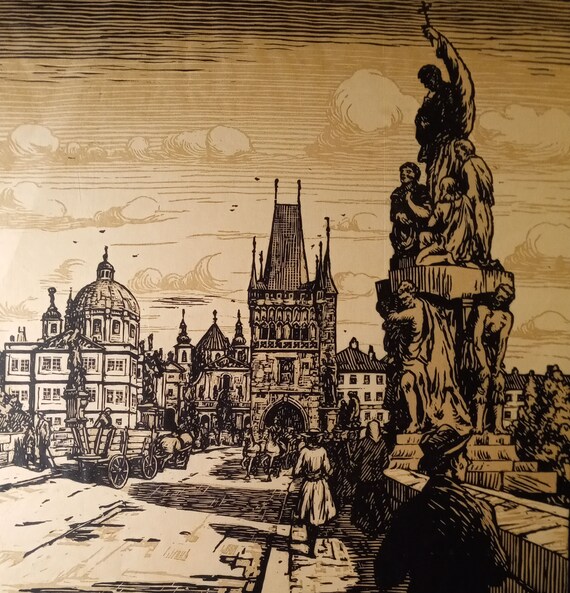
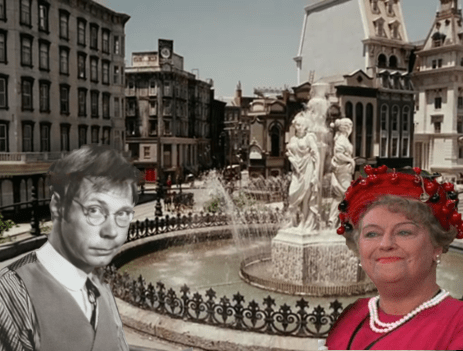
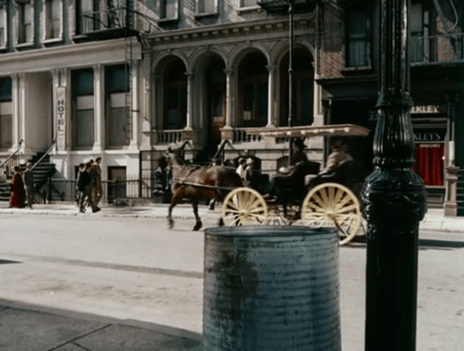
Well, they get there. Chicago is revealed as a metropolis indeed, with tall buildings, carriages, curiously few actual people, and a fountain topped by a sculpture of what appears to be the Three Graces.
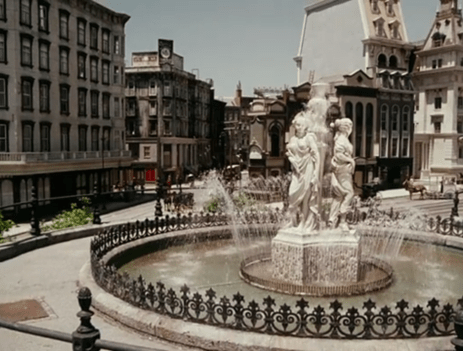
The Three Graces are pagan goddesses who represent attractive womanly qualities. That’s rather funny in the context of this story, isn’t it?
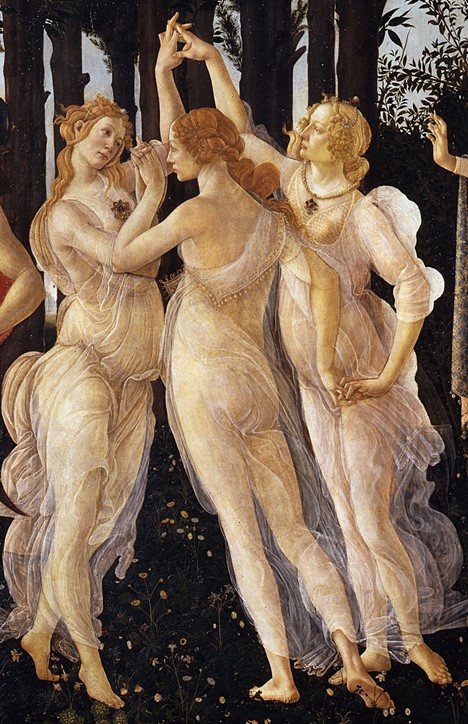
Actually, my researches this week revealed that for whatever reason, the Three Graces are actually the traditional mascots of the Grange.
The number and names of the goddesses have varied over time, but the three traditionally used by the Grange are Pomona, Ceres, and Flora. (Roman names, not Greek.)
Pomona was the goddess of fruit.

Ceres was the goddess of farming and grain, and she figures in a bonkers musical number in Peter Greenaway’s Prospero’s Books, the greatest of all bonkers Shakespeare movies.
And rounding out the trio is Flora, goddess of flowers.

Anyways, as far as I can tell, the real Chicago doesn’t have a Three Graces fountain, but the sculpture is in some ways similar to a famous statue of them in Indianapolis.

And certainly Chicago does have many terrific statues and fountains. Even without the symbolism, I appreciate it as an aesthetic touch.
Not everyone did, though.
PEGGY: That looks nothing like Chicago.
WILL: I don’t know. . . . Couldn’t the lake be on this side of the camera?
BRUCE: It doesn’t look like the Mercantile Exchange, which is where the convention would probably be.
PEGGY: Yeah, come on. That stuff on the right looks like Prague, or something.
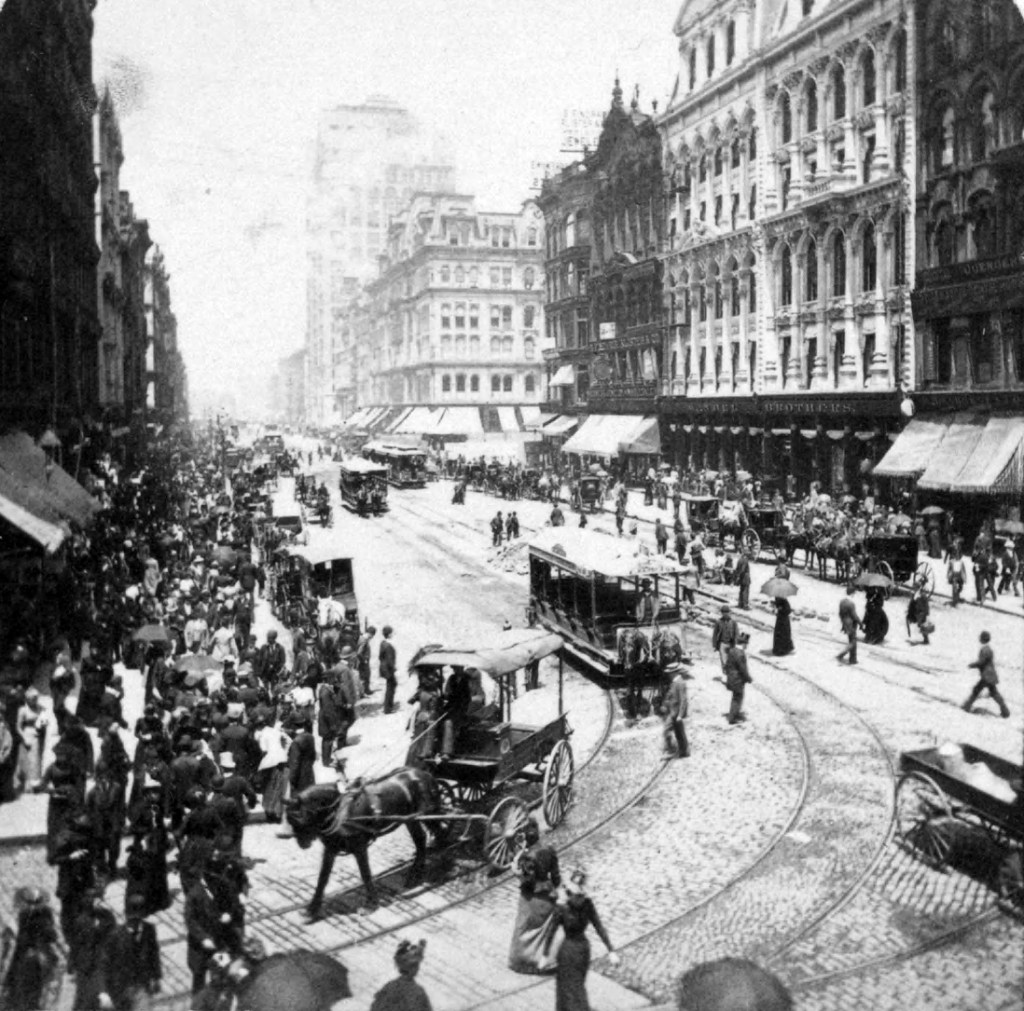
Anyways, a horse-drawn taxi drops Pa and Mary off at their hotel.
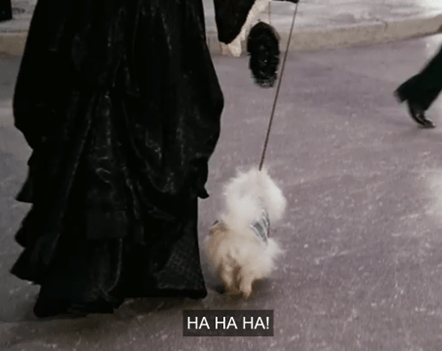
We see an elderly lady with a little pampered dog coming out of the hotel. She’s speaking in a fake British accent.
She calls the dog “Rodney,” which is funny too.

Even funnier, this person is billed as “the Dowager” – dowager being, as I’m sure you know, an old-fashioned term for the widow of an aristocrat.
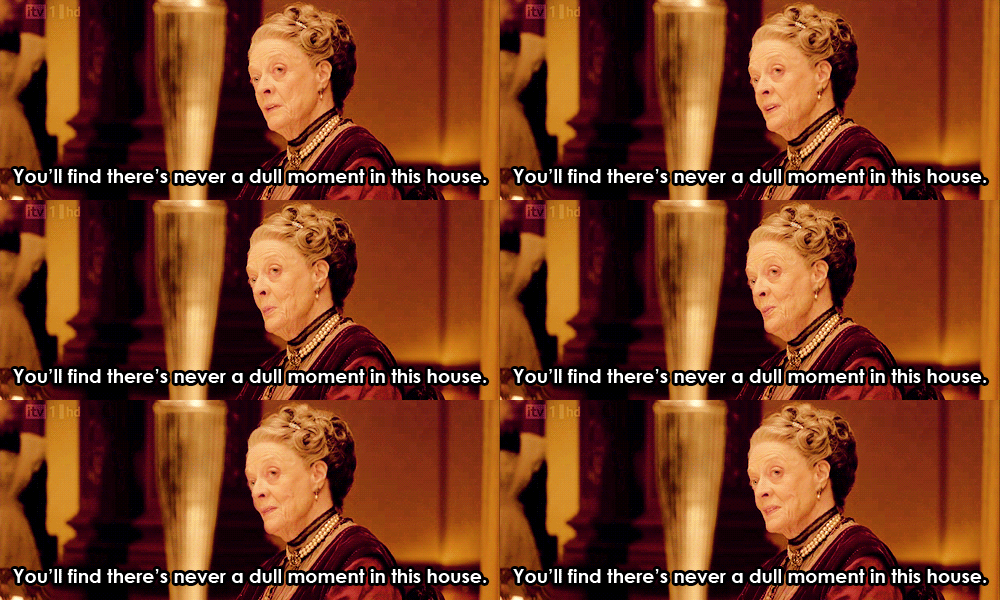
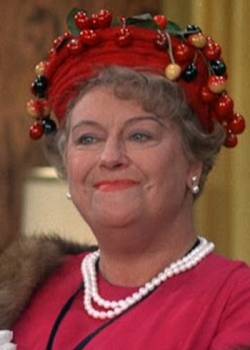
This Dowager played by an actor named Barbara Morrison, who really was English, so that shows what I know.
She was in a zillion movies and shows, including From Here to Eternity, Papillon, My Fair Lady, The Twilight Zone, The Brady Bunch, and many other things. There are so many people in this episode that from here on out I’m going to try to keep my reporting of credits down to a bare minimum from this point. You got in just under the wire, Barbara Morrison.
Mary and Pa laugh because Rodney’s wearing a tartan jacket. I have a tartan jacket, and a coworker of mine laughs at me when I wear it, too.
A doorman comes to take their luggage, but of course Charles doesn’t understand. When they’ve gone in, the doorman rolls his eyes and says, “Another farmer.”
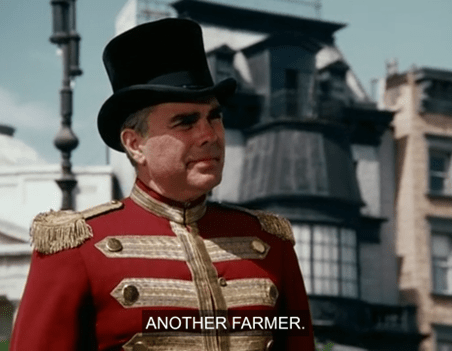
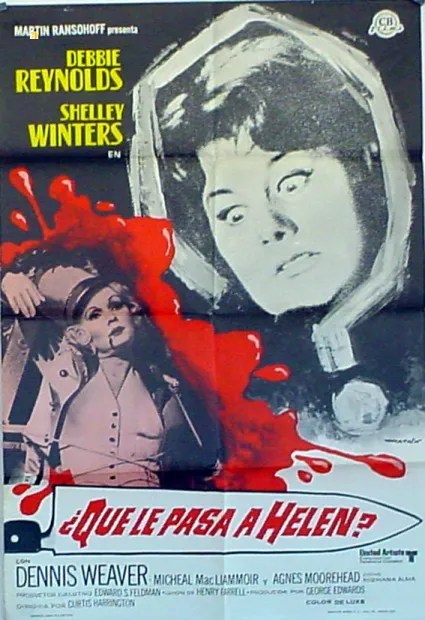
(He’s Murray Pollack, who was an extra in everything, including some personal faves of mine like Hush . . . Hush, Sweet Charlotte and What’s the Matter with Helen?)
Pa checks in with a snooty desk clerk, asking for two rooms. That seems absurd, actually. Doesn’t it? How can they afford it?
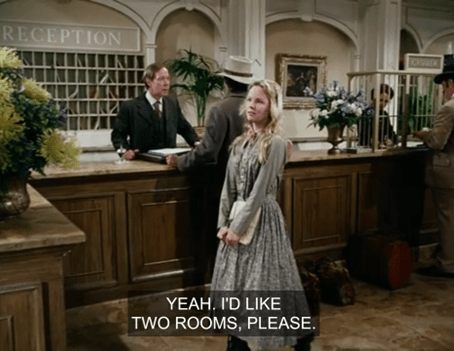
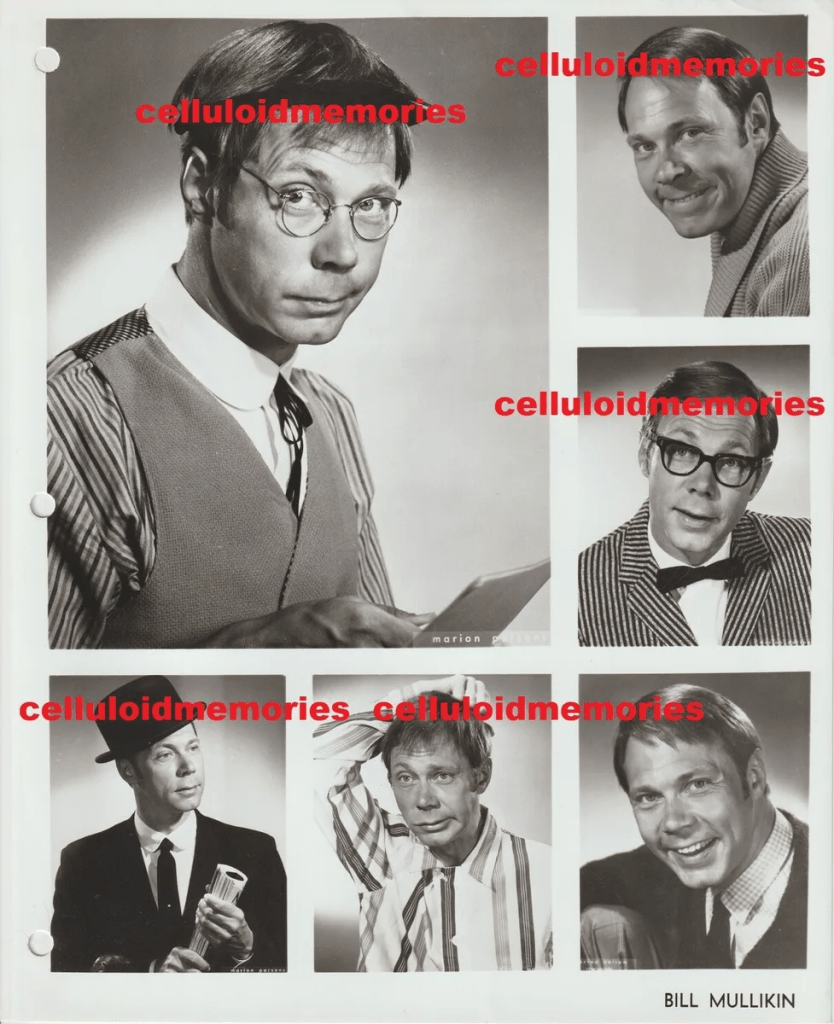
But when the clerk sees Pa sign his name, he turns friendly and tells them their rooms were arranged in advance by the Grange. (The actor is Bill Mullikin – also a Twilight Zone and Brady Bunch vet. I’m sure he and Barbara Morrison exchanged memories about the Brady kids on the set.)
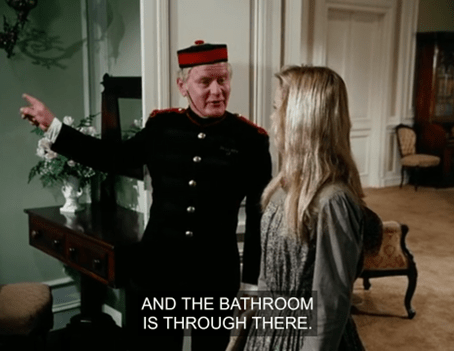
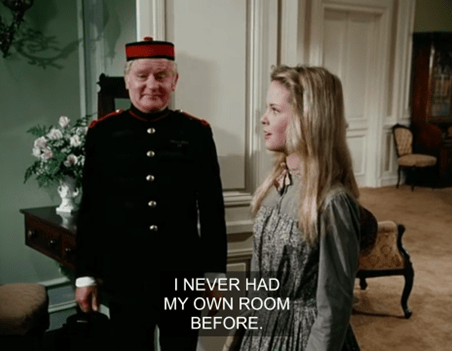
A bellhop takes them to their room, actually an almost impossibly large and luxurious suite with two bedrooms as well as indoor plumbing. (You’d think they’d go gaga over the latter, but they don’t.)
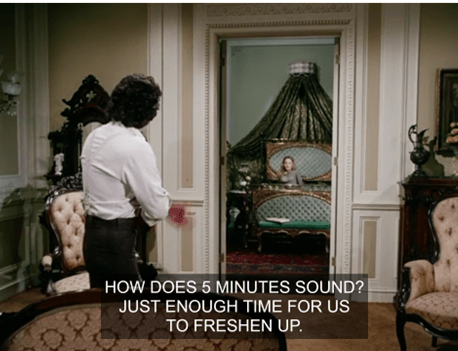
Mary is generally impressed, though, walking around like Country Bette Midler at the Plaza in Big Business.

Dumb Chuck shakes the bellhop’s hand rather than tipping him, haw haw. (The bellhop, Len Lawson, was in WarGames.)
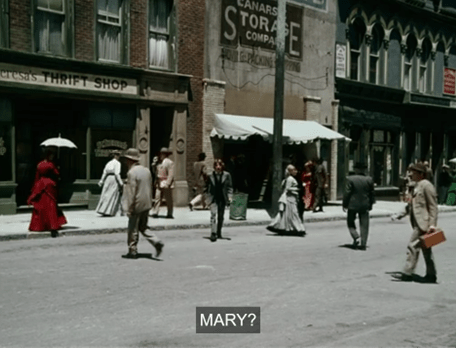
Even with the private compartment, I’m sure they’d be exhausted after three days on a train, but they take off immediately and head to the office of a fictional newspaper, the Chicago Register, where apparently, John has a job.
They encounter John himself in the street. He seems surprised but delighted to see them.
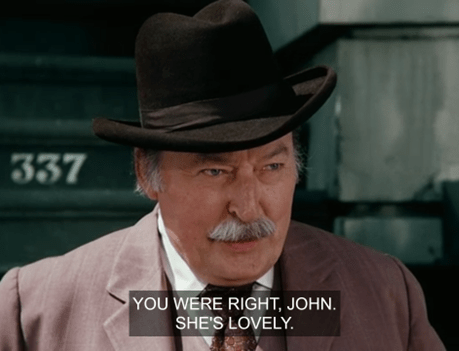
A gray-mustached dude in a homburg appears on the steps and asks why John isn’t out reporting on things. But when John introduces him as Fletcher Hancock, his boss, the guy smiles and says John is always talking fondly about them.
(This actor, Herbert Nelson, was from Minnesota and did some soaps, including Guiding Light and Days. He also looks like Powers Boothe on You Know What.)
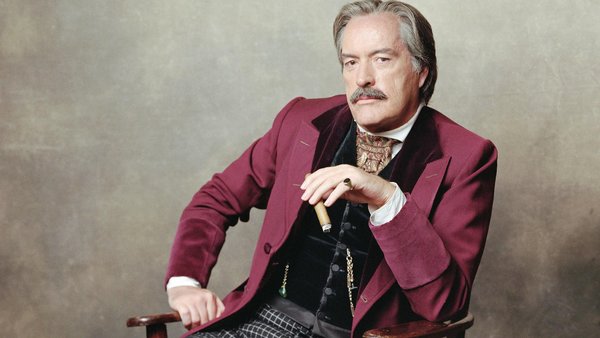
Hancock invites them all to join him for dinner, then says he’ll take Charles to the convention himself.
Mary stays behind with John. She gives him his Christmas present, and they hug (unconvincingly).
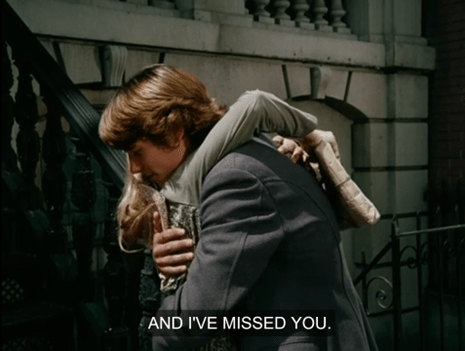
(Come to think of it, why didn’t he come home for Christmas?)
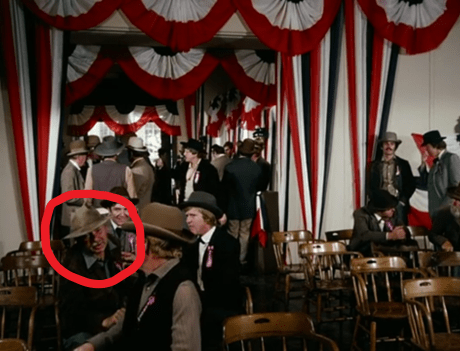
Then we see the Grange convention center, which is all decorated with red-white-and-blue bunting.
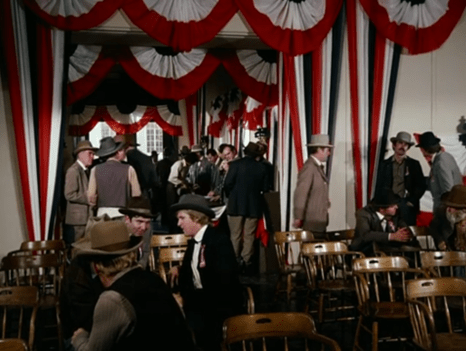
A bunch of men are milling about, including, strangely, the Rather Attractive Male Nurse from the train. What’s he doing there? I suppose he could have quit the Mayes Clinic and bought a farm in North Dakota or something. Or maybe his dad died and he had to go home to take over the operation?
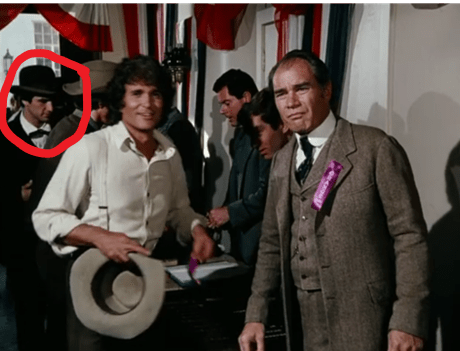
But he appeared to have just boarded in Springfield, unless he had stepped off the train for a smoke or something. Either way, why didn’t he get the deluxe Grangester treatment on the train?
Oh, the Alamo Tourist from Pee-Wee’s Big Adventure is also there.

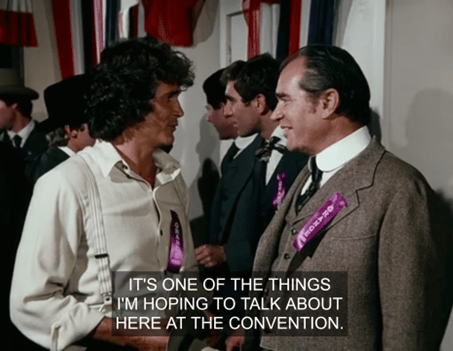
Charles checks in and chit-chats with a man in a wool suit who introduces himself as Ennis O’Connell, delegate from Bloomington, Illinois.
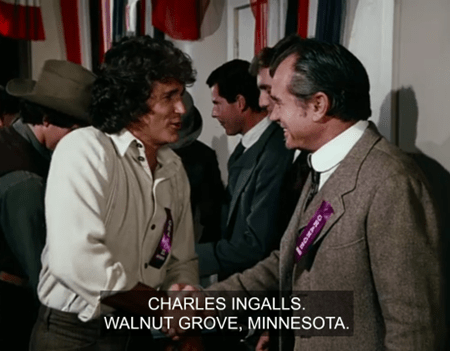
Oh my God, these people were in so many things, I just can’t take it. This one is John Milford, who was in everything from The Ten Commandments to Melrose Place, which I don’t have to tell you covers a lot of ground.
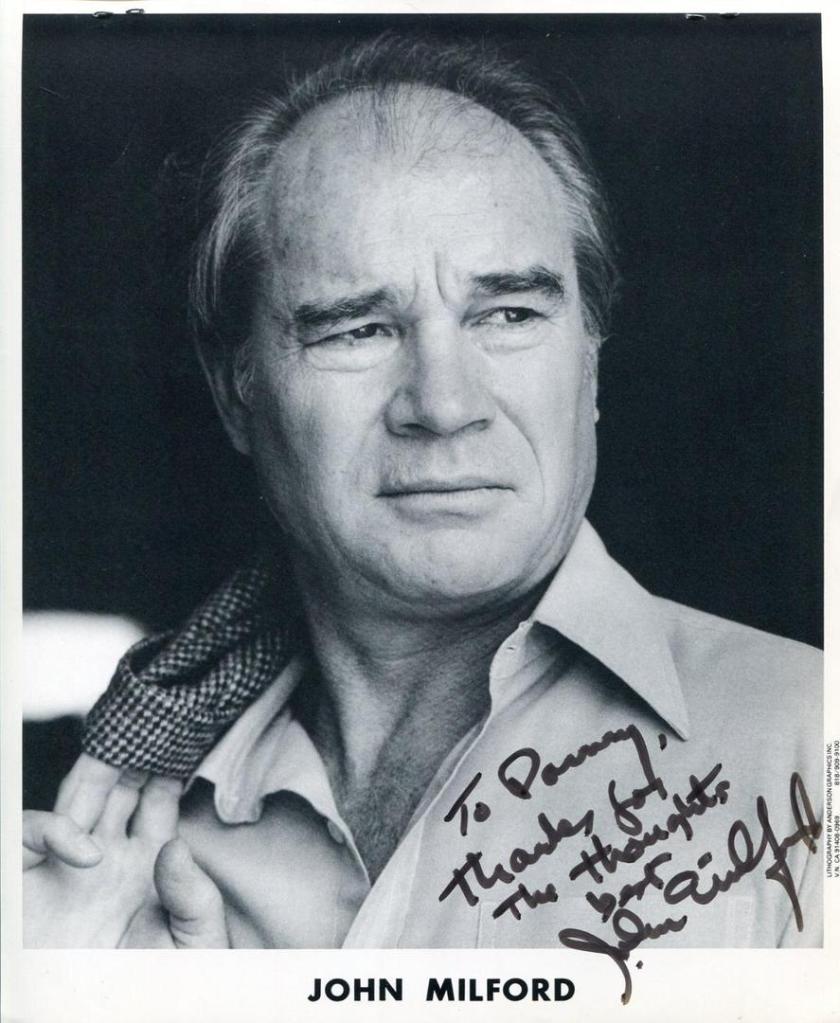
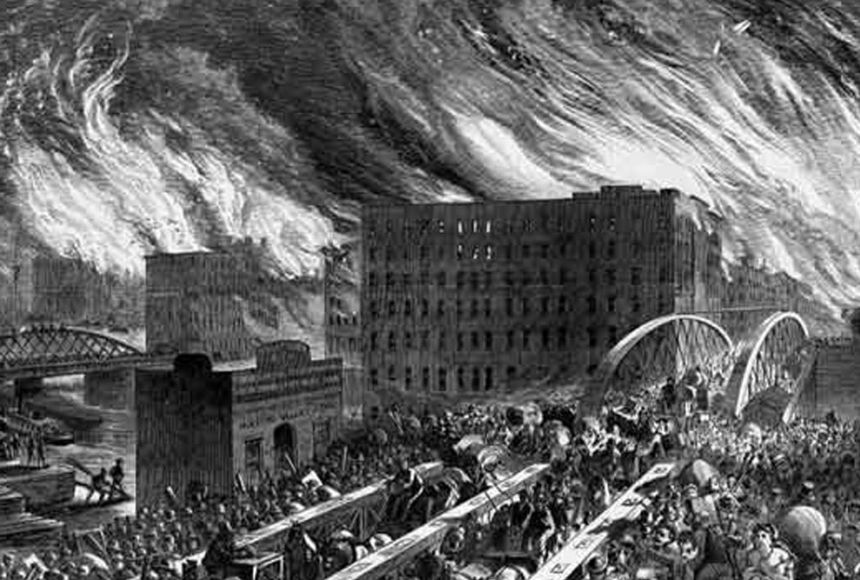
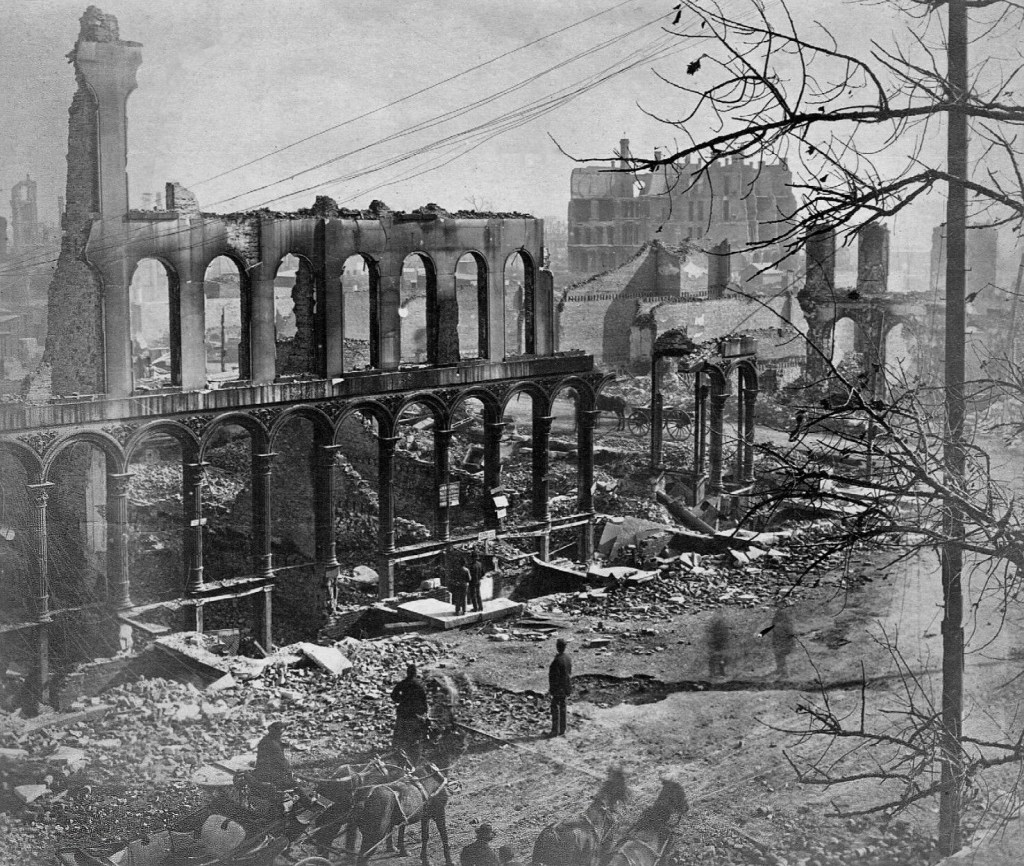
O’Connell says Chicago seems nicely rebuilt since the Great Fire in 1871.
Charles says Walnut Grove is near Mankato and Springfield and starts to talk about all his big agricultural ideas. But this guy, while nice, is barely listening.
WILL: I hate convention smalltalk.
PEGGY: Yeah. Especially when you get stuck next to somebody like Charles Ingalls who actually cares about being there.
Then the Chairman calls the session to order. Most of the delegates are better dressed than Charles, but there are a couple guys who on this occasion would actually best Charles in a who’s-exposing-more-chest contest. A rare thing, on this show.
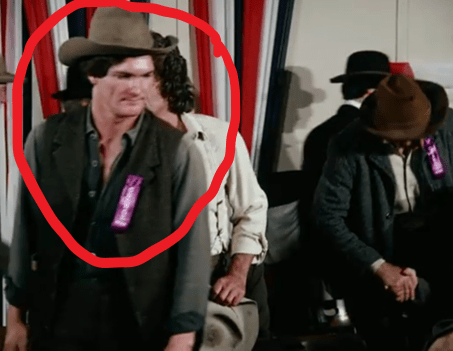
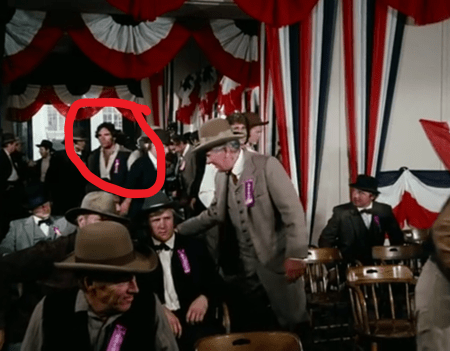
A brusque man in a dirty hat comes in and sits down next to Charles, introducing himself as Blake Simmons of the Register.
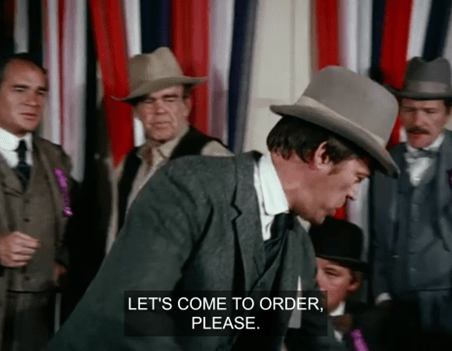
Hey, Garrison Keillor’s Great-Great-Grandfather is there too!

The Chair asks the delegates “How do you feel about the Grange?” and everybody stands up and screams their approval.
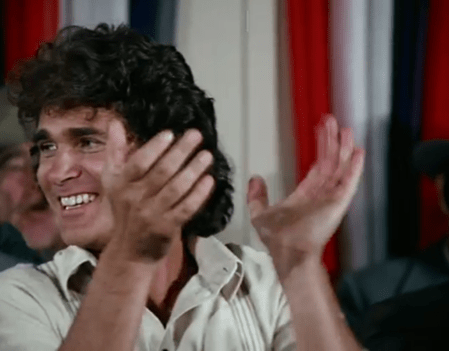
Whew, commercial.
When we return, Charles, Mary and John are dining with Hancock.
PEGGY: I had a top like that when we were kids. It was pinker.
WILL: I remember it, I think.
It would be funny if in this scene John was wearing the shirt Mary made him, and it was identical to Pa’s Christmas shirt.
But he isn’t. He seems to have abandoned his Joker getups for a sober gray suit and tie combo.


Hancock asks if John is going to show Mary the university, but he quite quickly says that would be LAME. (Paraphrase.)
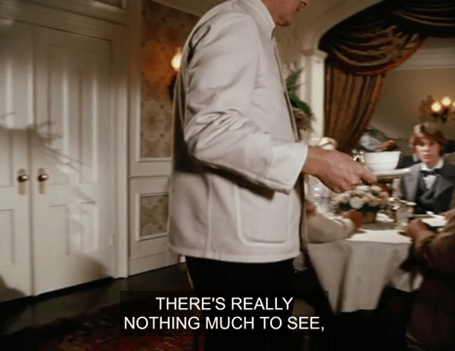
Mary then says this afternoon, John let her write part of his article. Would she really say that in front of the publisher?
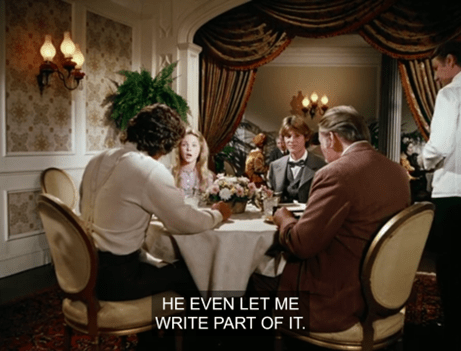
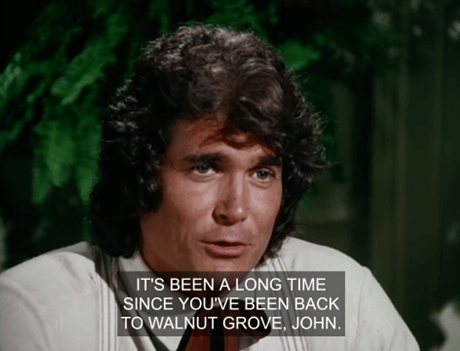
Then Pa says, “It’s been a long time since you’ve been to Walnut Grove, John. You gonna come see us this summer or go out to California and see your folks?”
I’m not sure if there were riots in the streets at this indication Mr. Edwards and Grace are gone for good when this first aired; but I’m sure it raised some fans’ eyebrows.
Wow, California, huh? That seems improbable. What for? More gold-hunting? Can’t be, after they left Dakota Territory because that was such an evil business.

John says his work commitments mean he probably won’t be coming home at all.
Hancock seems surprised at this, and suggests he’d be happy to give John some time off to visit home.
Mary points out John didn’t come home at Christmas, and John tersely says he had exams. (At Christmas?)
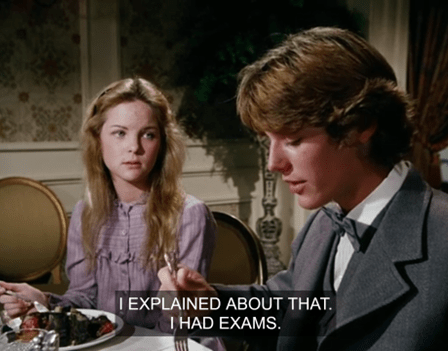
You know, they’re a complete mismatch, but in this episode it actually works. MSA is playing Mary as very naïve, almost childlike.
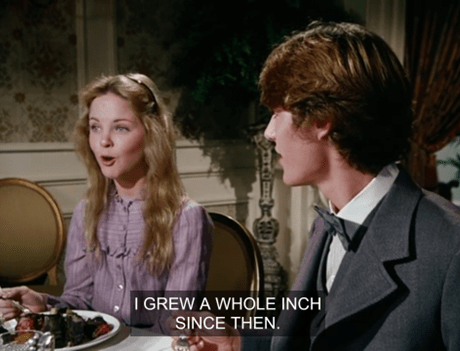
Whereas Radames’s acting has a mature, aloof edge to it John didn’t have in the earlier stories.
Mary brings up the dance, and John quickly looks down.

Charles thanks Hancock for the dinner, which I expect was very expensive. I know they were impressed by the hotel and all, but Pa and Mary don’t seem staggered by the scale of things the way I think they really would be. The way I was when I first visited Chicago as a country lad from Wisconsin!
Charles has never been to a restaurant like this in his life – I’m sure the dinner before Abandoned Daughters in Mankato was like pig-slop compared to a ritzy Chicago steakhouse. And yet he’s acting like he eats like this every week.
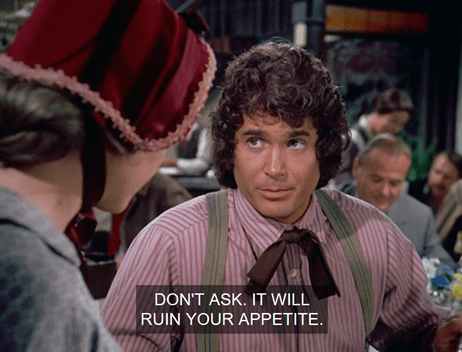
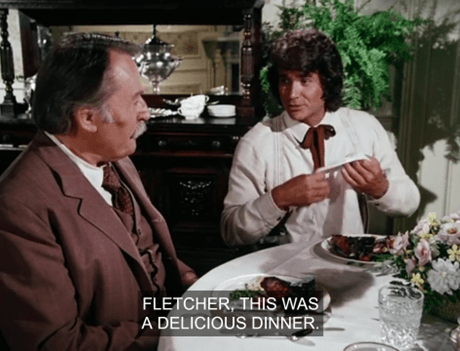
And in case you’re wondering, there doesn’t appear to be any wine on the table.
The dessert cart comes out, and Hancock recommends the pecan pie, made with nuts shipped from Georgia.
The pie appears to excite Mary.
DAGNY: Did you see that? She licked her TEETH, not her lips! Who does that?
PEGGY: Yeah, she looks like she’s from The Exorcist.
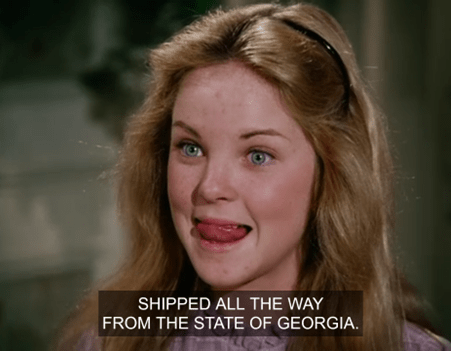
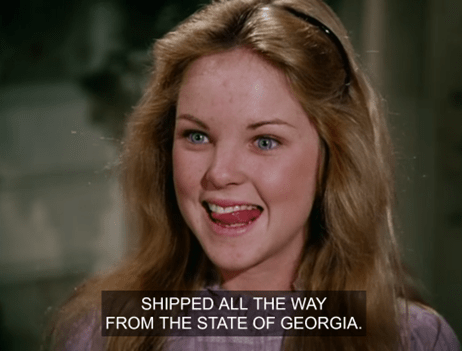
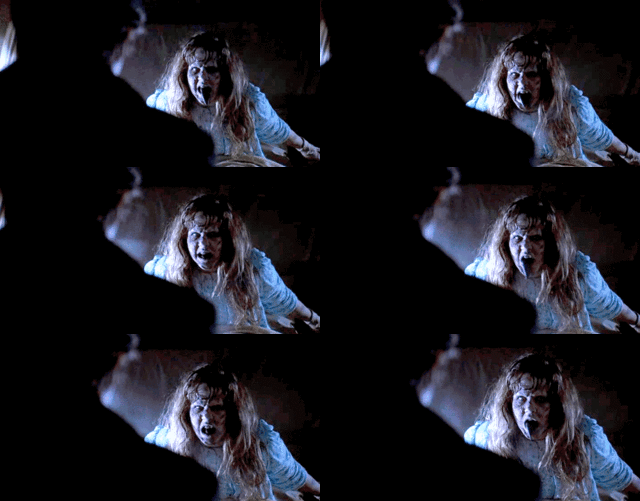
Pecan pie in 1877 is probably an anachronism; apparently there was never a published recipe for pecan pie before 1929, and it really took off in the 1930s.
The next day, we see Mary and John walking through the city, and I swear to God, John is wearing the same Christmas shirt as Pa’s, practically.

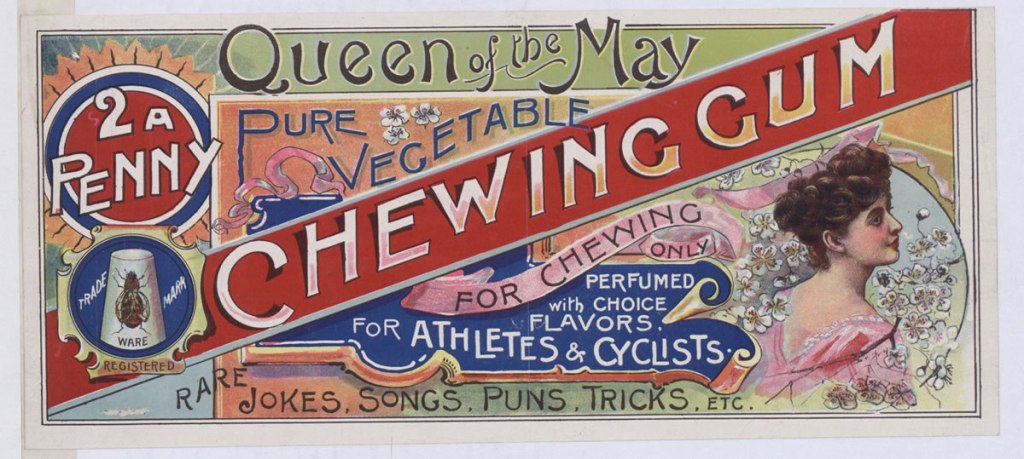
John gives Mary a piece of chewing gum, which baffles her, and which he says was just invented “a couple years ago.” Actually, commercial chewing gum had existed in the U.S. since the 1840s, but it’s true it wasn’t patented until 1869.
Then they run into one of John’s fellow students, another longhair with a big bow tie.
John introduces him as Wesley Cox. (Played by Richard Stanley, who was on Remington Steele once.)
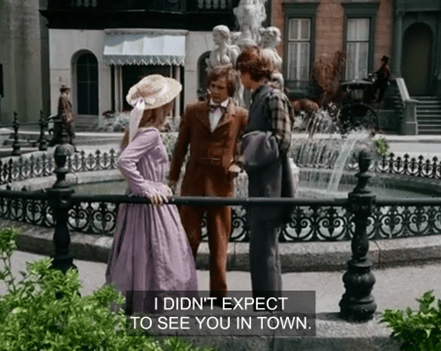
Wesley clearly thinks Mary is some new conquest of John’s until John tells him she’s from Walnut Grove.
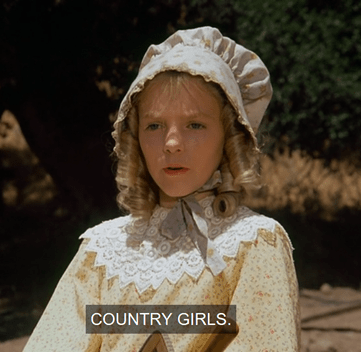
“Oh, the country girl!” Wesley says, unaware there’s baggage around that term.

Then, strangely, Wesley says, “John, don’t you have an appointment at 11:30 with Miss Lawrence?”
WILL: Oh, is John dating Vicki Lawrence in this one?
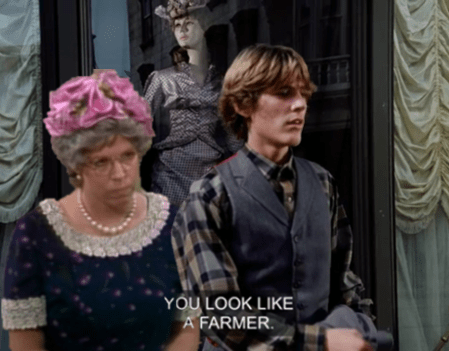
John explains Miss L is one of his professors and says yes, he does indeed have an appointment with her today.

The first part of that statement is obviously a lie, but if you think it’s unlikely John would have had a woman professor in the 1870s, you’re wrong.
Well, no, you’re not wrong, it is unlikely. But not impossible! Women began teaching at universities in the U.S. in the 1860s.
Well, Wesley, who’s obviously as sleazy as John if not worse, says he’ll be happy to escort Mary back to her hotel. (Of course, he doesn’t know she’s staying with her dad.)
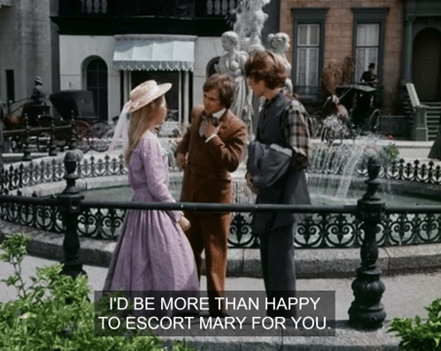
This whole scene is playing out in front of the Three Graces again, and we see one of them is pretty stacked for a marble goddess. (This is presumably the “nudity.”)
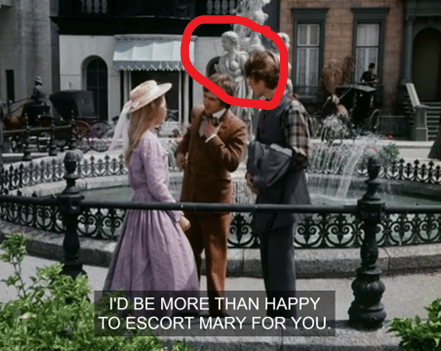
Then John thanks “Wes” and literally runs away.
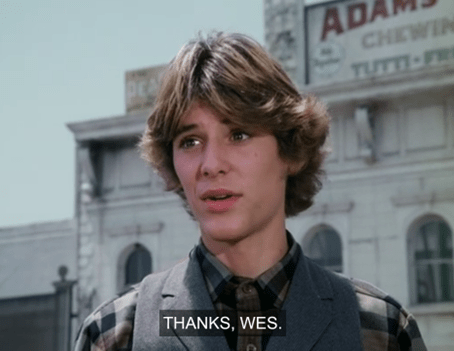
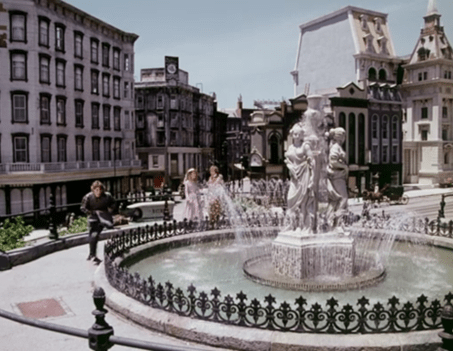
I don’t understand, why does “Wes” know or care about John’s plans at 11:30 in the morning on a Saturday? Did “Miss Lawrence” send him to find John and summon him to her presence? That doesn’t seem right, because they encounter each other in this scene by chance.
In fact, “Wes” says he’s surprised John’s “in town,” as opposed to being cloistered on campus I presume.
It’s possible, I suppose, the two of them belong to a fraternity where “Don’t you have an appointment with Miss Lawrence?” is everyone’s “get out of an unpleasant situation” catchphrase.
But why would “Wes” say it now? Is it just how desperate and wormy John looks in Mary’s company? It can’t be, since he always looks like that.


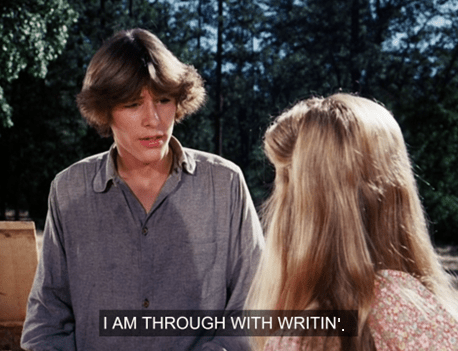
Well, I guess we’ll find out.
Incidentally, throughout this scene there’s a big billboard advertising “Adams Chewing Gum” right behind John. This is a pretty blatant suggestion John is easily influenced.
Then we cut to a beautiful sort of Reese-Witherspoon-ish-looking young woman in a lacey yellow dress.

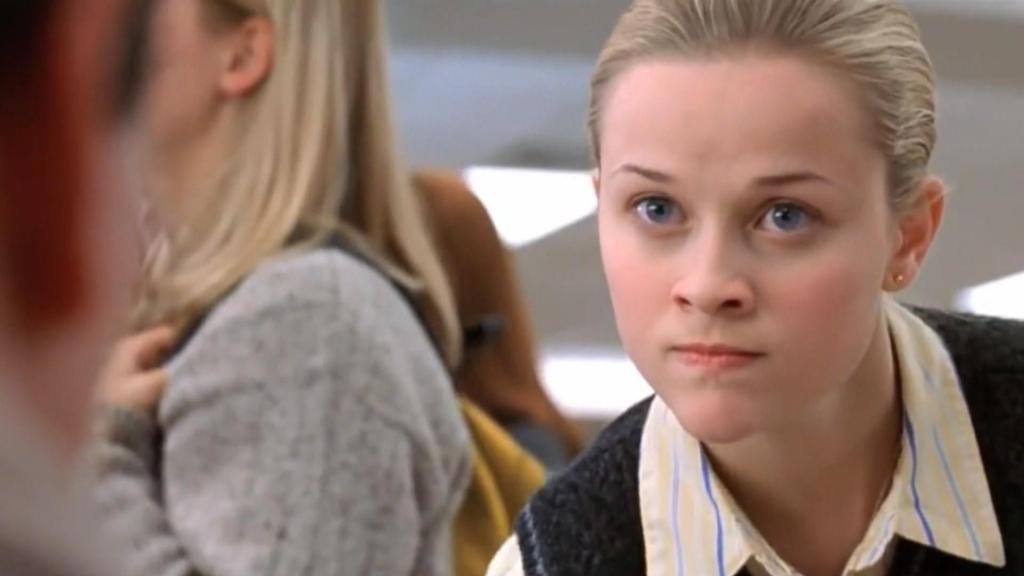
John comes running up, and she scolds him for being late. He lies to her too, saying he’s been busy at the Register.
Then the woman (later identified as Claire Lawrence) says she got a new dress “for the Cotillion tomorrow night.” So it’s Friday the Thirteenth today, I guess. It seems odd that Pa’s convention should start on a Friday morning, but I suppose it’s not impossible.
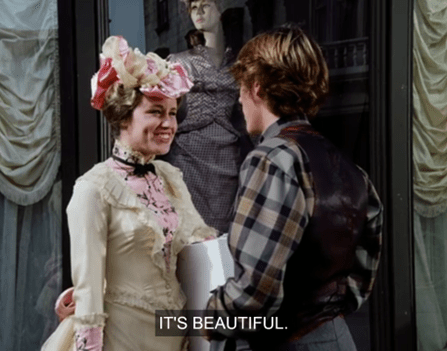
Then this person mocks the shirt Mary made for him.
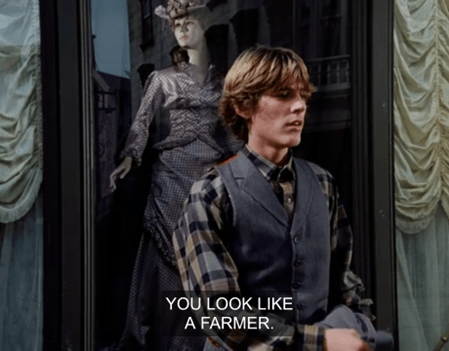
David, who’s so far been fairly low-key in this story, gives us some “quiet but disturbing” chords in the orchestra as the camera zooms in on a (plastic?) mannequin in a store window.

Okay. So I’ll say at this point I don’t like this story, even though I think it’s very well done dramatically and aesthetically, and is quite smart in its views on politics and corruption too.
Actually, the cynicism is part of the problem. It feels off for a Little House.
(Of course, these writers are new. I wonder how Carole and Michael Raschella became such misanthropes?)
The other part is John’s character arc. You may remember I identify with John in some ways; at least, he reminds me of my larval self.
To have this established character shift away from his established values and priorities, especially after the whole point of “‘I’ll Ride the Wind'” was that he should follow his dreams . . . well, it just kind of sucks.

It’s not that it isn’t believable. It’s totally believable. Actually, it’s more believable than most Little House stories!
And that’s it exactly. In the Little House Universe, quite unbelievably, our beloved recurring characters typically do not change. Terrible things happen to them, but they don’t really change.
Or at least, if they do, it’s for the better. Even outside of the recurring Grovesters, this show believes in redemption. The majority of villains on this show are reformed by the end.
John is the first major character on the show to change for the worse and more or less stay that way. (Unless you count that Ebenezer Sprague, who treated the friendships he developed in Walnut Grove like trash when he slipped away in the night like an eel!)

John’s decline just seems unfair to the character, somehow. Like, the grace or beneficence of Little House on the Prairie shines on literally everybody but him.
(But to be fully honest, part of my reaction is based in shame, too. I turned my back on some people and sneered at my rural origins when I went away to school too. I regret it, and this story reminds me of it.)
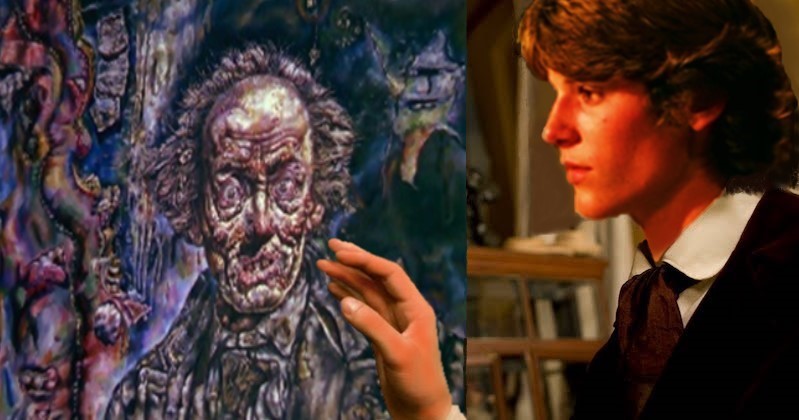
Oh well, TS for John and moving on. Back at the hotel, Pa is getting dressed for another convention event whilst Mary lounges in her PJs reading a pamphlet on Chicago history John gave her.
DAGNY [as MARY:] “It’s written in his own poetry. It’s very boring.”
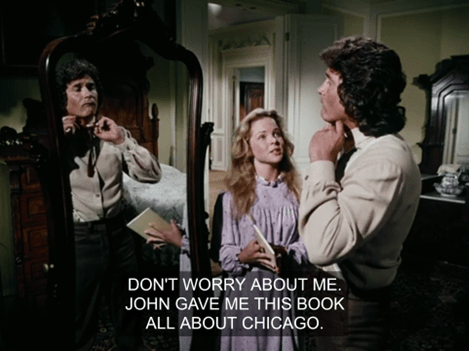
Then there’s a knock at the door, and hang on to your butts, here we go.

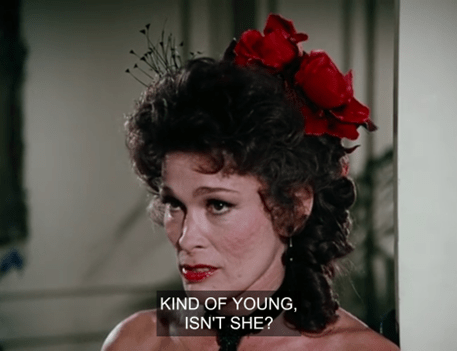
Pa opens the door, and there stands a woman who’s clearly meant to be a prostitute. “Mr. Ingalls?” she says in a come-hither voice.
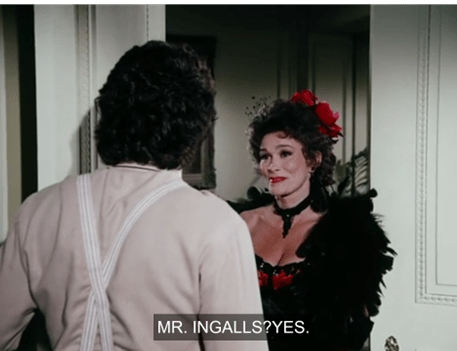
She has what’s surely the deepest decolletage we’ve seen on the show so far. (Not much competition, of course.)

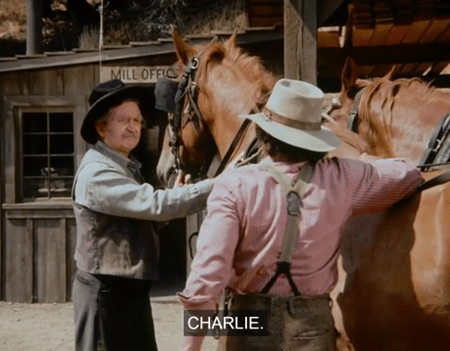
The woman introduces herself as “Angela” and says she was sent by the Grange to entertain a Mr. “Charlie Ingalls.” Ha! Nobody ever calls him that, except Mr. Hanson that one time.

Mary stands gawking. Angela gives Pa a wry look and says, “Kinda young, isn’t she.” Not necessarily, for the Nineteenth Century, but point taken.
Angela says she was sent by someone called Stanley Hollister – a representative of the rail industry.
More embarrassed than annoyed or disgusted, Charles says that was a mistake.
Angela accepts this, then hilariously gives Charles an up-down and says, “Shame, though.”
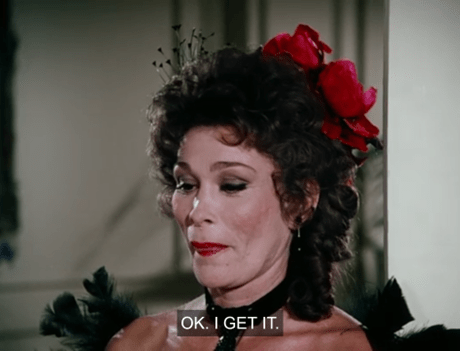
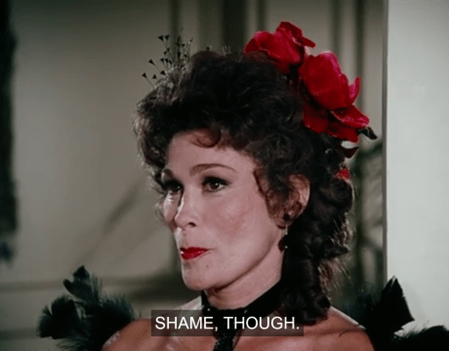
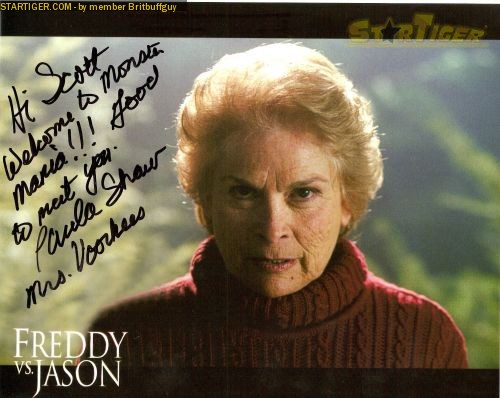
The actor making this memorable contribution is Paula Shaw – still alive, and still acting as of last year. She was a ton of things, both classic (Insomnia) and crap (a lot of Hallmark Channel movies and cheap horror stuff).
After she leaves, Mary stares at Pa, but unfortunately we don’t get to find out what they said next.
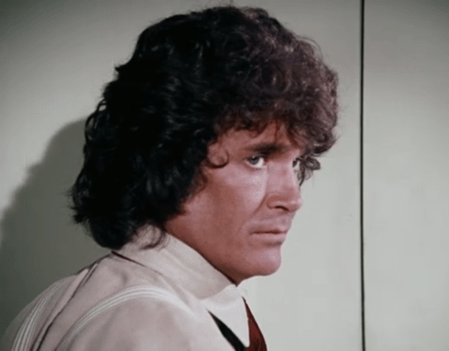
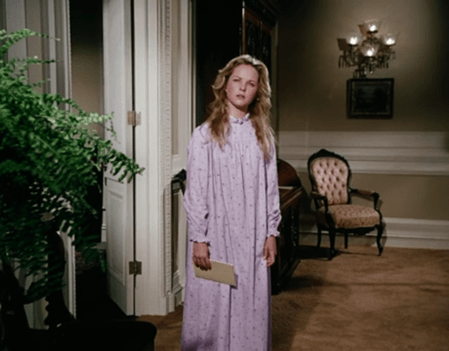
Because the next thing we see is Charles back at the convention hall, where the delegates are all drinking, smoking and talking. Ennis O’Connell flags him down from across the room and tries to hand him a glass of whiskey.
DAGNY: Watch out, Charles! They’re probably gonna roofie him.
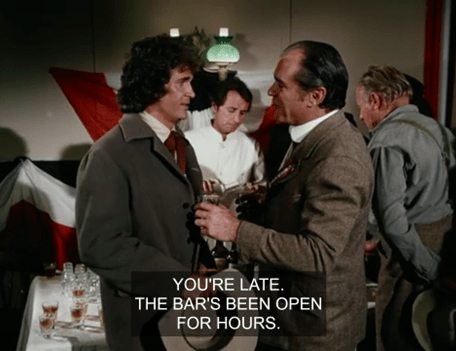
Charles refuses it politely.
O’Connell smirks and asks how he liked the “message” from Hollister. Charles is very confused, but O’Connell takes him aside and tells him he thinks he can help Walnut Grove get a new grain elevator. (Invented in the 1840s.)
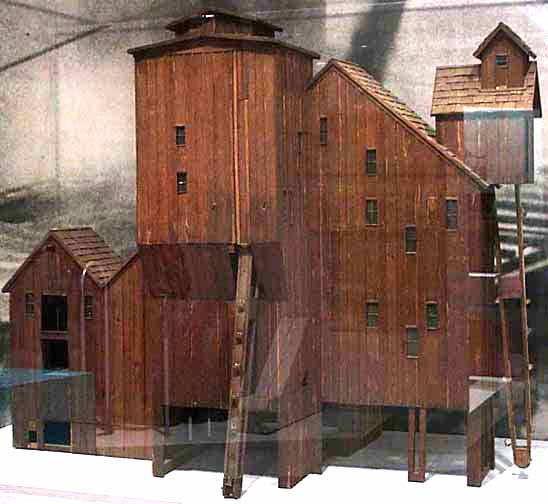
Forgetting Angela, Charles gets very excited at the prospect, but stops short when O’Connell says in order to get it, he’s got to vote against supporting new proposed regulations under consideration.
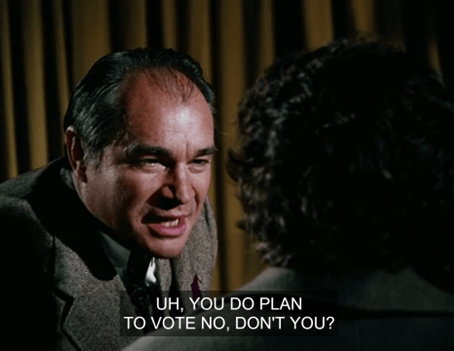
Interestingly, John Milford seems to be attempting a Chicago accent.
DAGNY: We didn’t have the Grange. We did have the Canadian Wheat Board, though.

Charles asks who’s behind this request, and O’Connell names Hollister as well as a “Virgil Bradley” and a “Philip DeWitt.” (Both fictional, it seems.)
Apparently the rail barons are the real sponsors behind the deluxe treatment they’ve been getting.
Well, all I can say is thank goodness J.W. Diamond isn’t implicated in this. He seemed so nice in “The Runaway Caboose.”
The conversation is interrupted by hoots and hollers, as a bunch of saloon girls enter the hall.
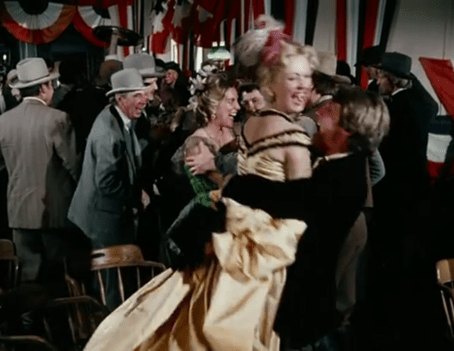
The Alamo Tourist from Pee-Wee’s Big Adventure seems the most excited of all.
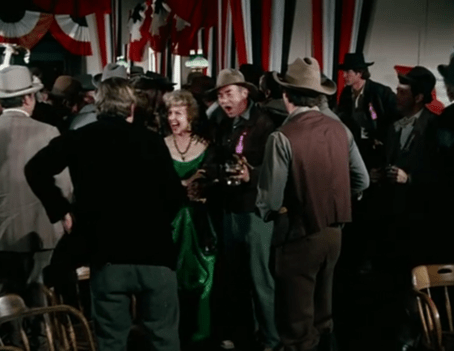
(This depiction of the Grange as a gross sexist institution is kinda doubtful. In fact, according to the Minnesota Historical Society the Grange is notable for being “the first national organization to require leadership roles for women,” so surely there would have been women delegates as well as men, even in those days.)
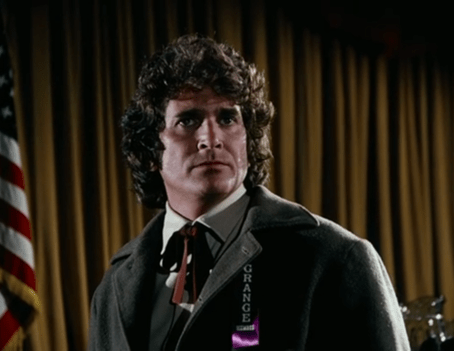
Disgusted, Charles storms out.
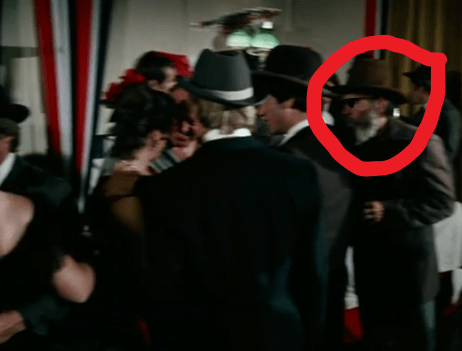
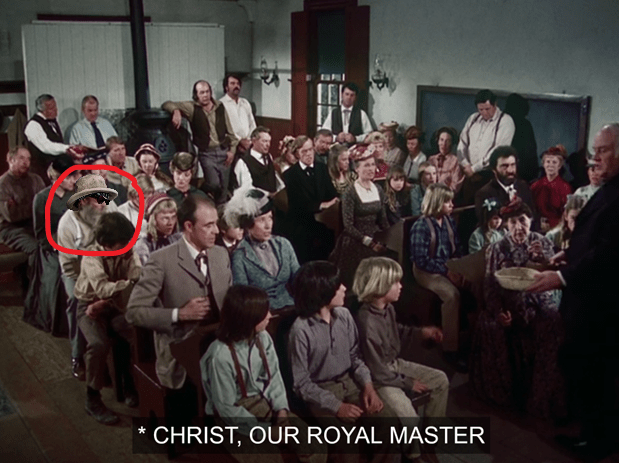
We see the ZZ Top guy is there, too.
The next morning, Charles buys a copy of the Register. (For 2 cents – about 60 cents today. Pretty cheap, actually.)
He glances at it, then goes straight back to the Register office and marches into Fletcher Hancock’s office.
DAGNY: That’s a mission door. Did they have those then?
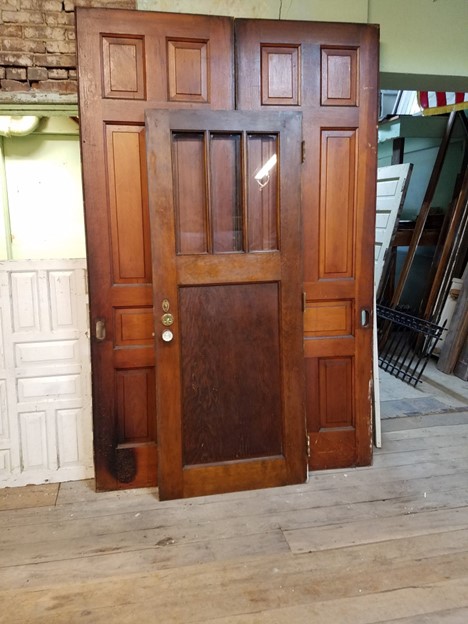
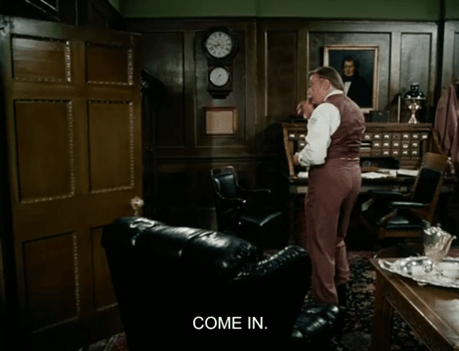
Charles complains that the Register’s article on the Grange convention didn’t mention all the decadence and corruption he witnessed. (He was there for all of two seconds, but okay.)
PEGGY: Fake news, huh.
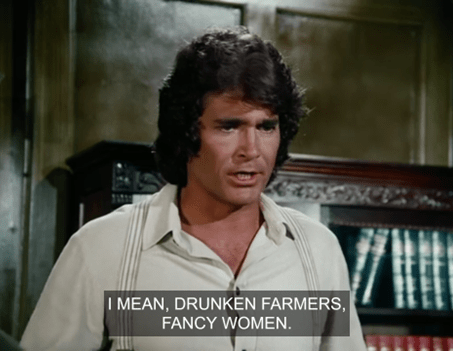
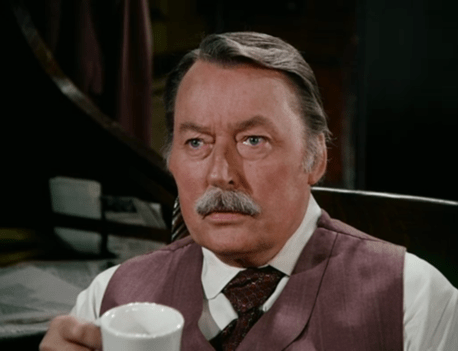
Hancock, looking not unfriendly, offers Charles some coffee.
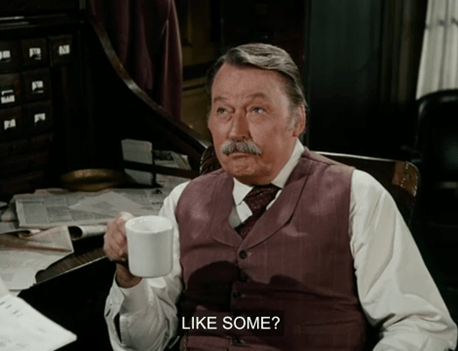
PEGGY: What’s on his face?
DAGNY: He could do with a visit to Dr. Pimple Popper.
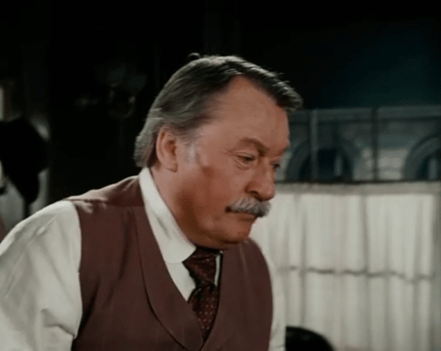

Hancock explains that he leaves out all the bad stuff from coverage like this because it keeps both Grange and readers happy.
He adds that furthermore, he doesn’t want to piss off his commercial advertisers, like the railroads, either.
Hancock says he understands the system could be distressing for a country person who hasn’t experienced it before.
Seizing the opportunity for a zinger, Charles says, “Yeah, you’re right, that is hard for me to understand, Fletcher. See, where I come from, we tell the truth.” Then he stomps out.
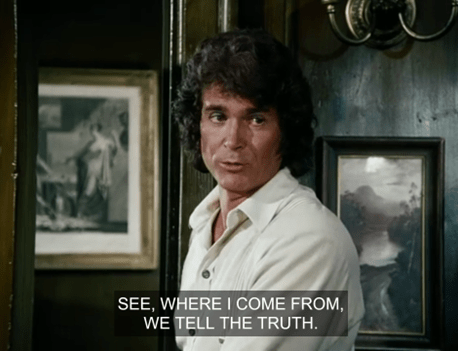
Hancock looks unhappy, but that’s about it for his characterization, and with that, he disappears from our tale.
Outside, Charles continues performing the Unworldly Chuck Stomp.
PEGGY: That buggy with the yellow wheels looks nice.
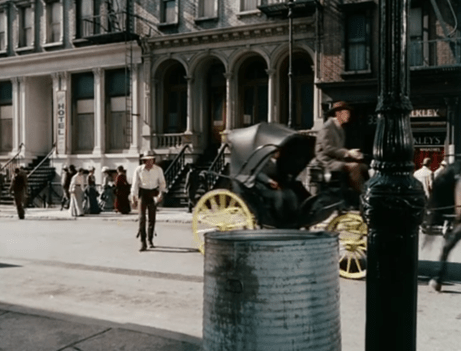
PEGGY: Whoa! There it goes again! Did it make a U-turn?
After a commercial break, we see Charles pouting on his hotel balcony.
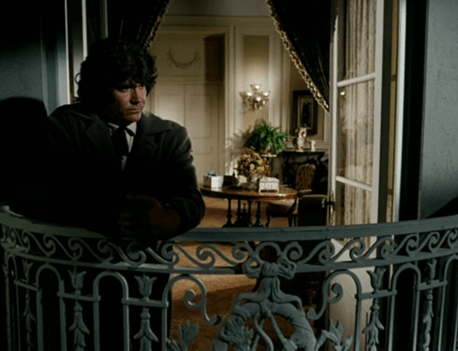
Mary makes things worse by saying John can’t pick her up because he has to work late, then adding, “I guess I better get used to it, though, if I’m going to be the wife of a newspaper man!”
PEGGY: Wow. Pa’s really sickened.
WILL: This is what Dad was like when you moved to Chicago. His daughter in the evil city. . . .
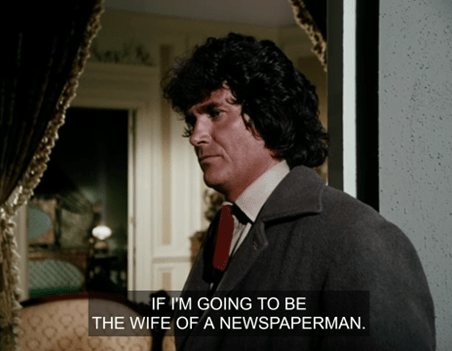
But Pa mellows out when he comes back inside and sees Mary is wearing the famous dress. Or is she?
PEGGY: That is NOT the same dress Ma was holding!
WILL: Are you sure?
PEGGY: It isn’t even the same color!
WILL: Could it have been because at the house it was in the gleam of the firelight?
PEGGY: No, it couldn’t have been because at the house it was in the gleam of the firelight.

Despite being in a horrible mood, Charles manages to switch off his personal frustrations, and instead interest himself in his child’s happiness. I wish all dads could do that as easily, myself included.
It’s actually quite a nice scene. Pa and Mary don’t get a ton of moments together, since Laura as far surpasseth Mary in his heart as great’st does least.

Mr. Edwards has had more meaningful exchanges with her, truth be told.

Then hey presto, here we are the dance! David gives us a Viennese waltz, and we see the ballroom is full of dancing couples.
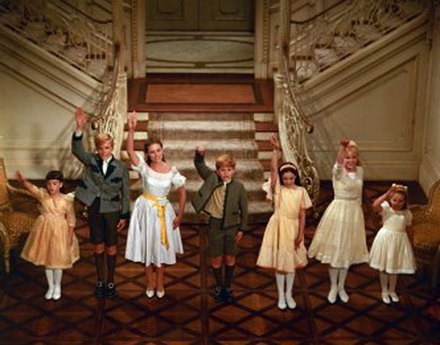
PEGGY: Are the Von Trapps gonna come down and say goodnight?
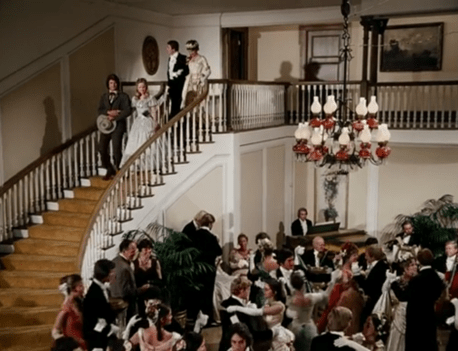
All the men at the party are in white tie and tails, though my understanding is that didn’t become the standardized ultraformal look for men until a little later.
John appears and greets Mary.
WILL: How can John afford these clothes? A junior reporter’s salary is nothing. He’s probably an unpaid intern, in fact.
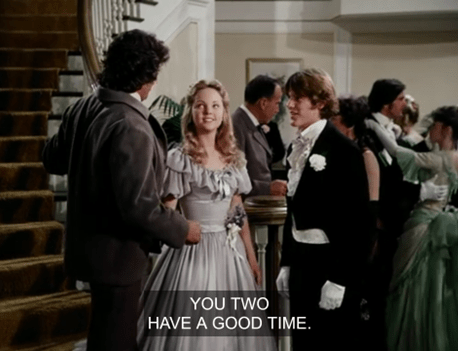
John immediately (and disgustingly) says he has to leave the dance early so he can write an article about the Cotillion for the morning paper.

Then he takes Mary out onto the dance floor, while Pa watches for a little while.
Whilst dancing, Mary says, “I love you, John,” and John just gives her a constipated look in return.
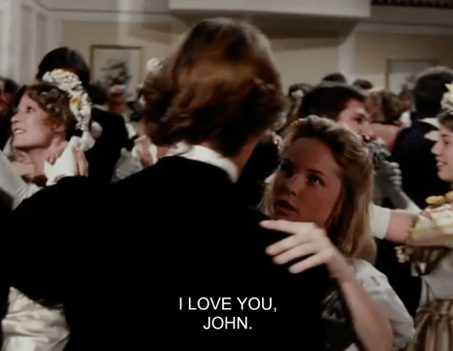
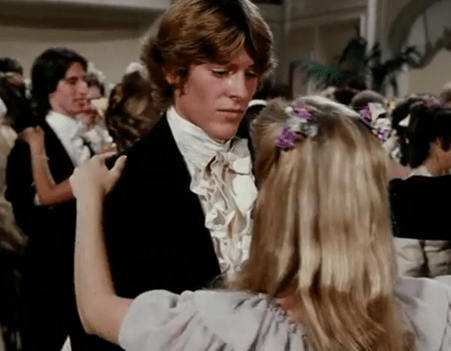
DAGNY: This camerawork is really weird.
ROMAN: Yeah, it’s like a hallucination in a Roman Polanski movie.
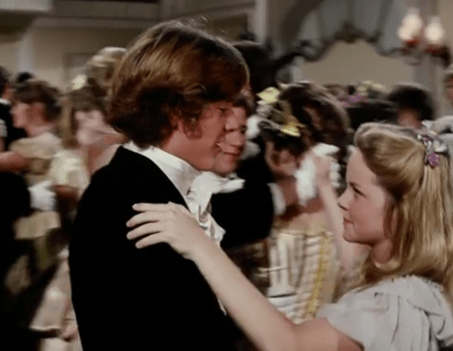
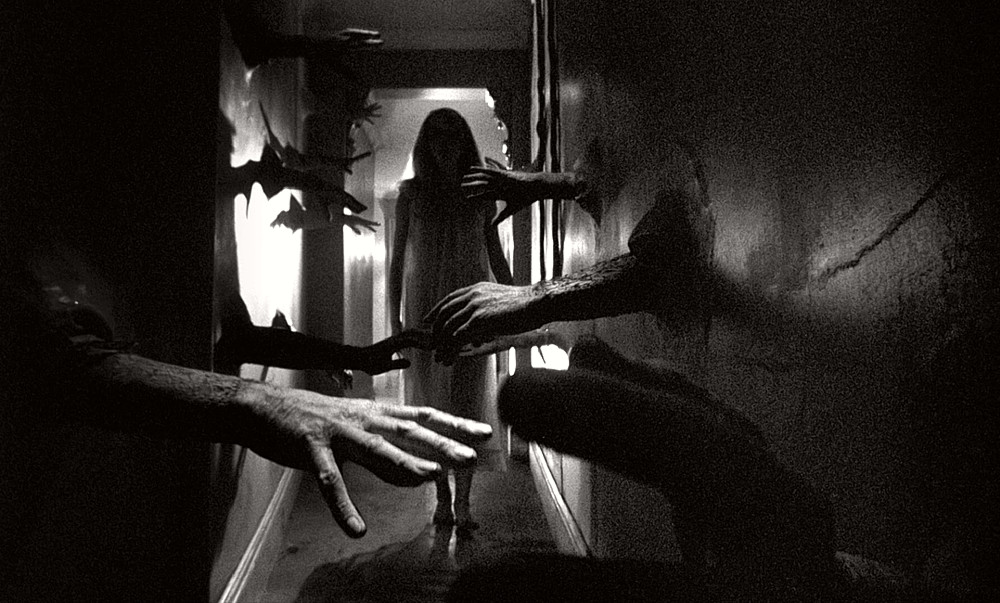
Then John’s wingman “Wes” appears and asks if he can cut in.
Freed, John goes running into the lobby and takes the arm of Miss Lawrence.
John pushes Miss Lawrence into an alcove full of plants to dance with her.
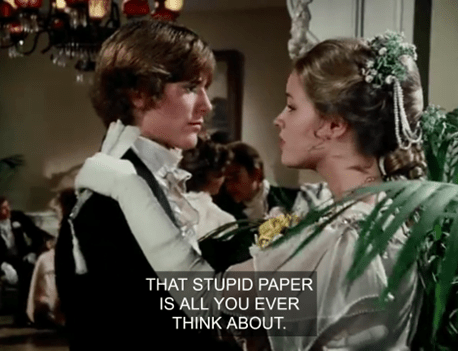
He gives her the same line of bullshit about having to step out now and then to write his article.
But Lawrence calls him on it, adds “I’d rather not dance in the shrubbery” for good measure, and leaves.
PEGGY: See, city girls are smart. She’s on to him.
DAGNY: Yeah. Not like Mary, who’s dumb as an ox.
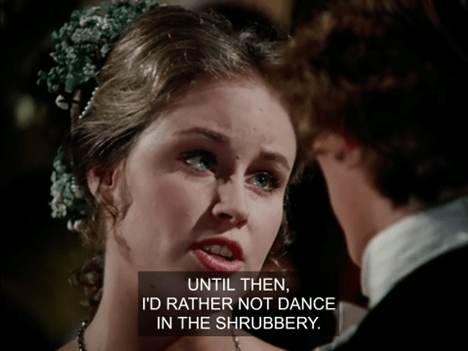
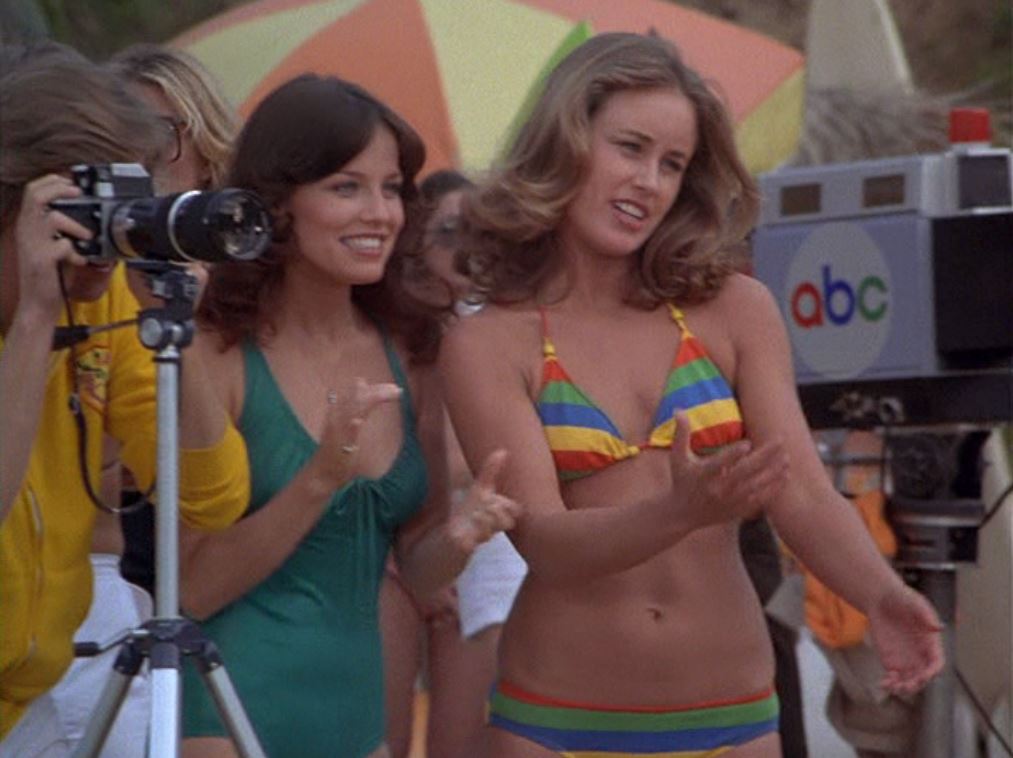
Miss Lawrence is played by Lisa Reeves, who was on The Hardy Boys/Nancy Drew Mysteries.
But John doesn’t seem to mind being abandoned, and he races back to Mary.
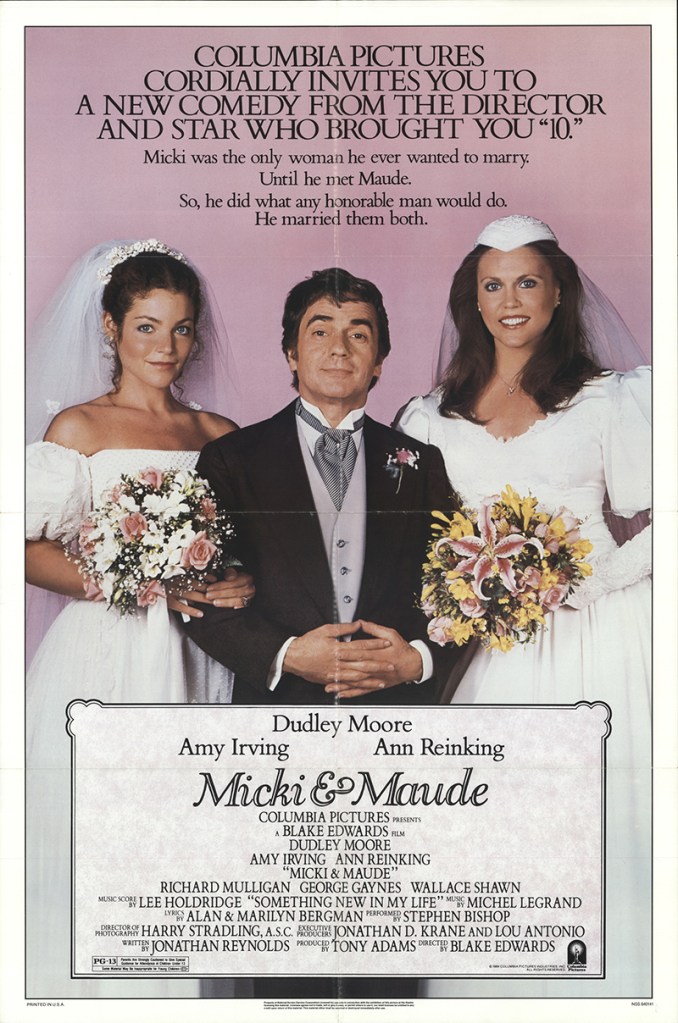
WILL: This story could be funny if it wasn’t Mary he’s cheating on. It’s the exact same plot as Micki & Maude!
Cut to another session at the convention, where Ennis O’Connell rises to persuade the delegates not to support additional state regulations on the railroads.
The Alamo Tourist is sitting right behind Charles, and so, I believe, is Mustache Man.
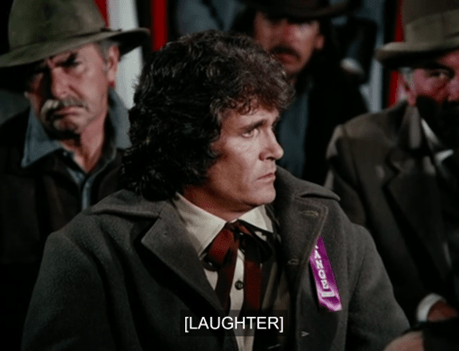
Then Charles interrupts O’Connell’s speech and actually accuses him of taking bribes from the rail barons.
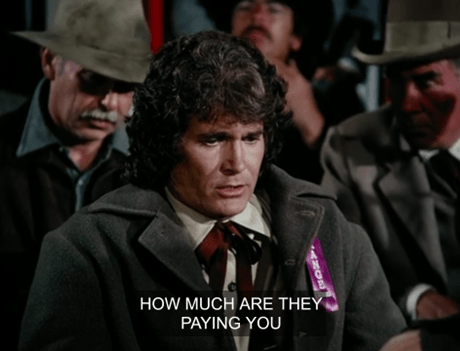
Then we get a marvelous Landon acting scene when the Chairman says, “Sir, you are out of order!”
Charles shouts back “No, sir, I am not!” and goes on to make a scorching speech against the corruption of the Grange.
ROMAN: Mr. Smith Goes to Washington?
WILL: Very good, laddie.
It is pretty clearly a ripoff.
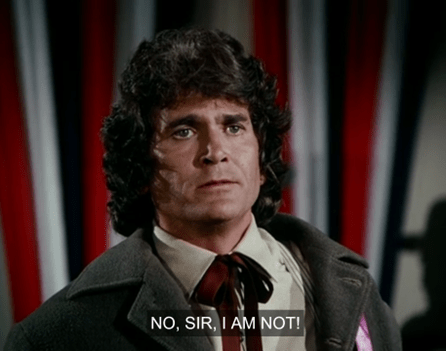
But that doesn’t matter, the appeal is in watching Landon throw himself into the moment in a way he often reserves for the actors he’s directing.
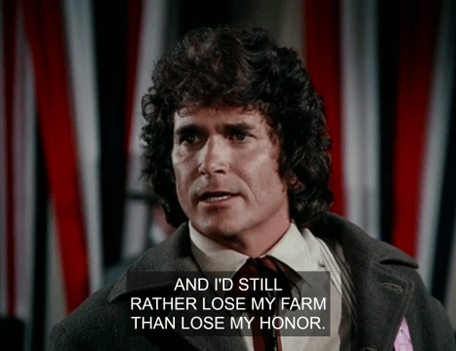
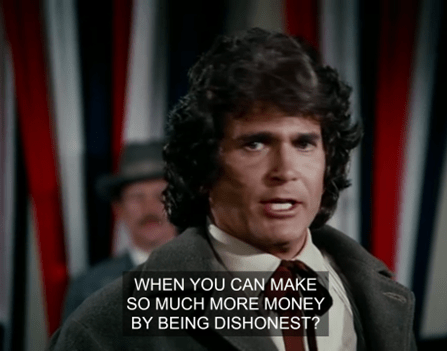
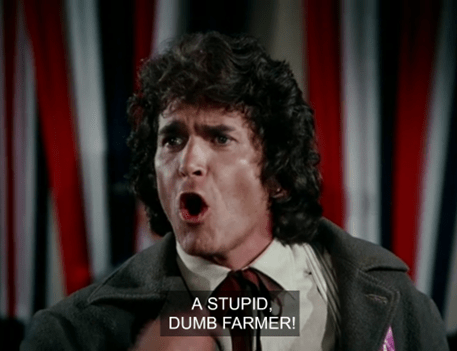
Then he’s like, “Vote Yes!” and storms out.
WILL: Try THAT in a small town!
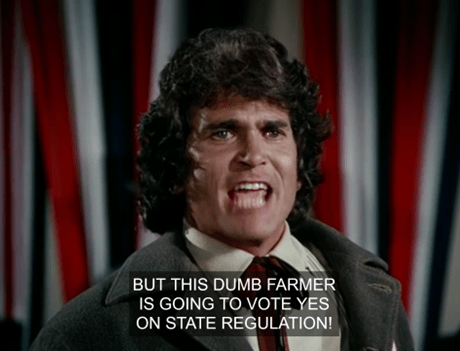
Back at the dance, John is getting Mary some punch when Miss Lawrence returns.
“Won’t your friends be wondering where you are?” he asks idiotically.
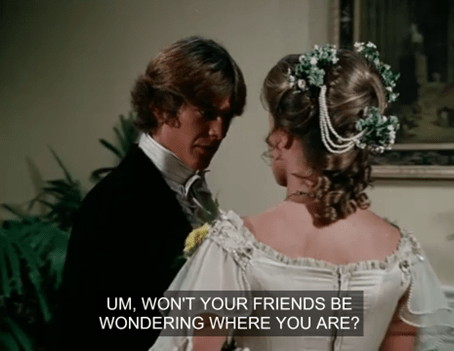
Miss Lawrence drapes her luxuriously gloved arms over his shoulders and he hustles her out onto the terrace.
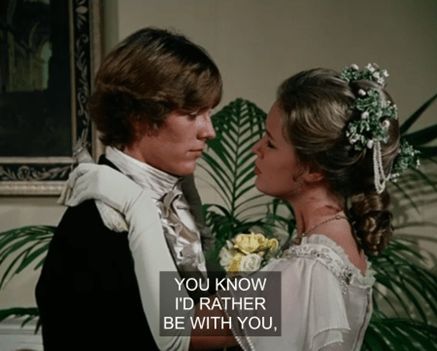
WILL: How did he think he was going to get away with this?
DAGNY: He’s from Walnut Grove, he’s as stupid as the rest of them.

John tells her he’ll bring her some punch too.
Meanwhile, the orchestra strikes up again, and “Wes” takes Mary out for a dance again.
Meanwhile, Pa arrives back at the ball.
PEGGY: Oh no! Oh my God, no!
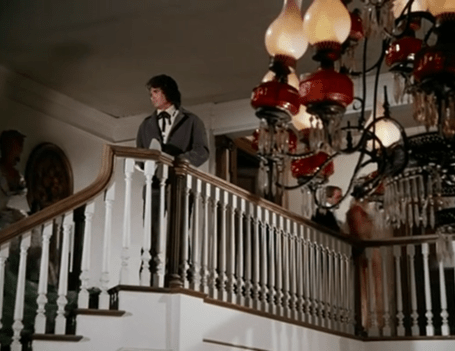
I’ll point out that over the next few minutes of this story, everyone in our viewing room began screaming.
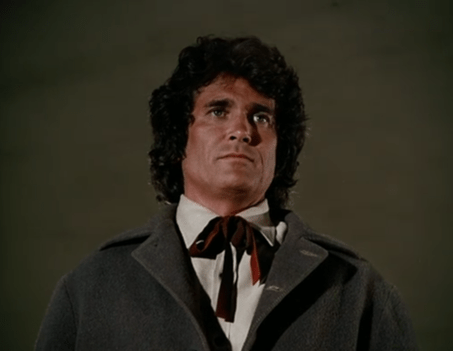
Pa spots John carrying a cup of punch across the room, and follows him.
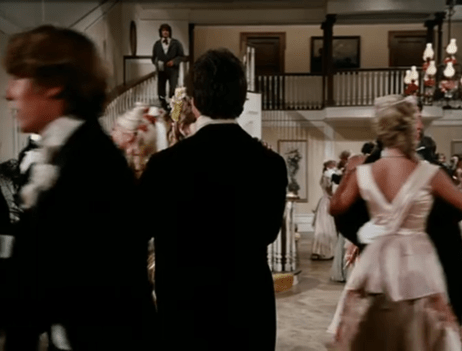
He steps out onto the terrace just in time to see John and Miss Lawrence kissing passionately.
WILL/DAGNY/ROMAN/PEGGY: [screaming intensifies]

(To be fair, it is more of a kiss than he ever got off Mary Ingalls.)

John sees Pa and starts stammering, which makes Miss Lawrence storm off in exasperation. A lot of storming off in this one.

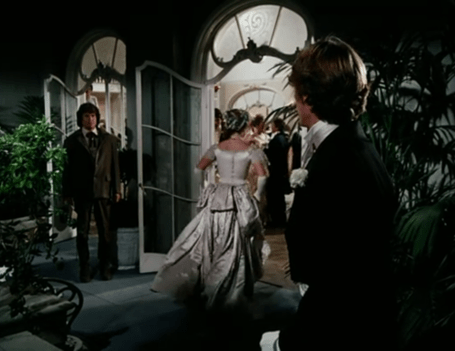
Very, VERY slowly, Pa walks over to John.
WILL/DAGNY/ROMAN/PEGGY: [screaming reaches a fever pitch]
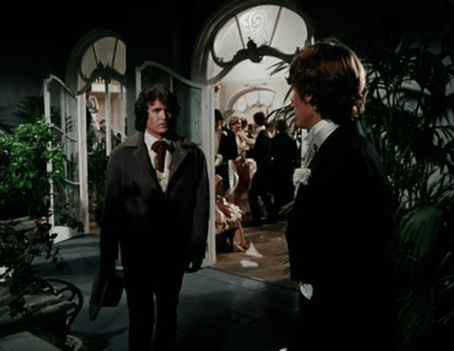
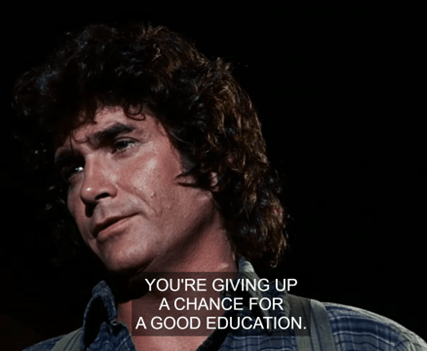
Finally, Pa says, “I’ve had a bad evening, young man; and right now I’m about as angry as I’ve ever been in my life.”
WILL: Is John gonna jump off the balcony? I would.
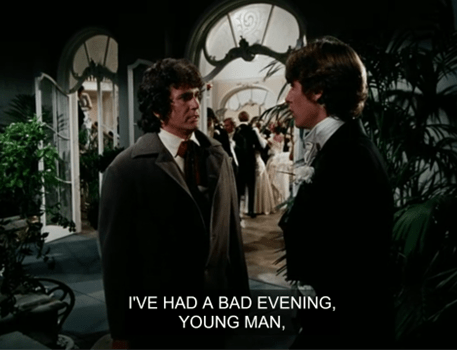
Pa demands that John explain himself.
DAGNY: Come on. He’s hit people for way less than this.
PEGGY: Totally. They’re ENGAGED, it’s not like they’re just courting.
WILL: “Cotillion Shock: Register Reporter Murdered by Crazed Rube!”
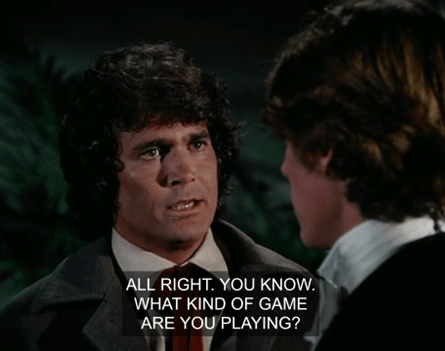
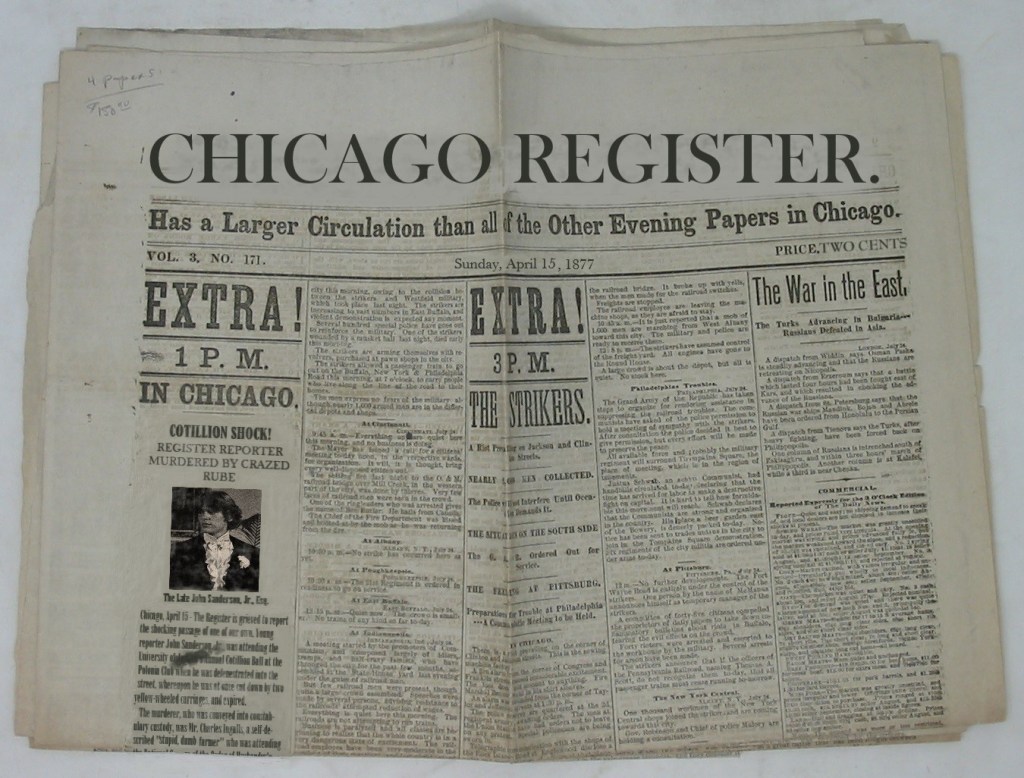
After some homina-homina-homina-ing, John confesses he’s no longer in love with Mary. He says he planned to dump her in a letter after she got back.
Probably now is a good time to point out that Radames Pera was very unhappy with the change in trajectory for his character, as were many of the cast members. Of course, the story goes that Melissa Sue Anderson didn’t like Radames – she herself says she was uncomfortable with the storyline because of her age – and this meant when Mr. Edwards was written off, it was an easy choice to get rid of him.
(Alison Arngrim has hinted that the Mary Goes Blind Saga, while originating from the life of the real Mary Ingalls, was Landon’s way of punishing MSA for her difficulty working with Radames. According to her, Landon had not explored having Mary go blind on the show to this point.)
Pa tells John a letter isn’t acceptable. John agrees, apologizes, and goes back in to break the news to Mare.
WILL: How is this going to affect their relationship with the Edwardses?
DAGNY: That’s a very good question.
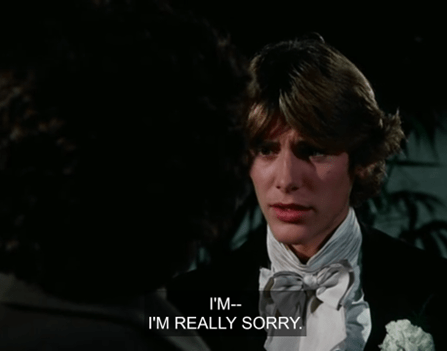
The camera pulls back, leaving Charles staring into the night as David Rose’s cheerful waltz goes on and on – an unusual bit of irony that suits this story quite well.
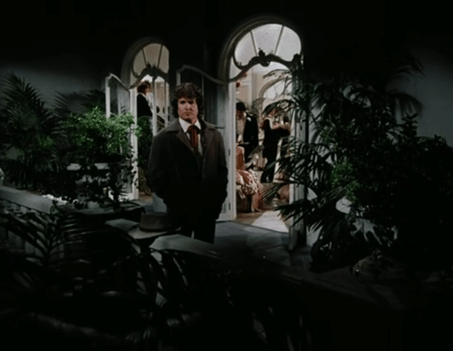
I hate to be a stickler, but I would point out Dumb Chuck is the one who talked John into leaving Mary behind to go to college in the first place.
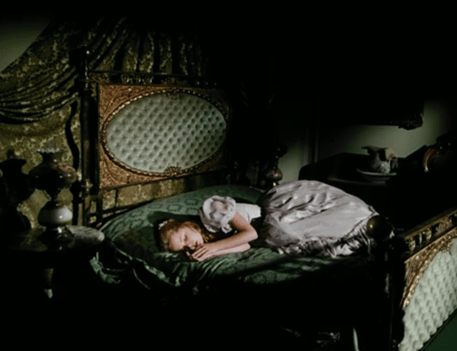
We don’t get to see Mary and John’s conversation – truth be told, the script isn’t all that interested in her, which is kind of odd.
All we see is the aftermath, with Mary near-comatose in her princess bedroom.
DAGNY: It could be worse, Mary. It’s not like your baby died in a broken window or something.

Pa comes in to comfort her.
DAGNY: If you had a bad breakup, who better to console you than Michael Landon? It’s every teenage girl’s dream.
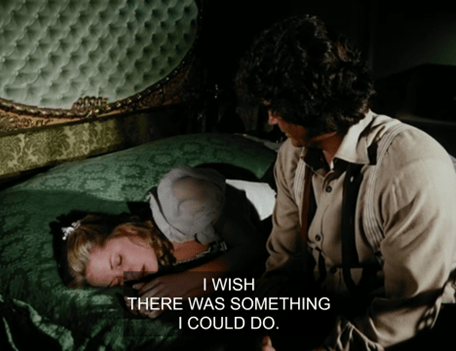
Charles, who seems to have let go of his anger altogether, tells Mary long-distance relationships are often too hard to work out in the end. I had a really bad long-distance breakup once, as an adult; it does hurt, and is sort of baffling to the participants in a way it isn’t when an “in-person” relationship fails. Of course, back then we didn’t have the communications tools we do today, either.
Anyways, it’s worth noting such arrangements were common in the Nineteenth Century, with husbands and lovers frequently going out to sea or off to war or the like, sometimes for years. Hell, on this show we’ve seen Charles go away for months at a time.
Pa makes some schmoopy comments about being yourself, and Mary breaks down sobbing. She is a good crier.
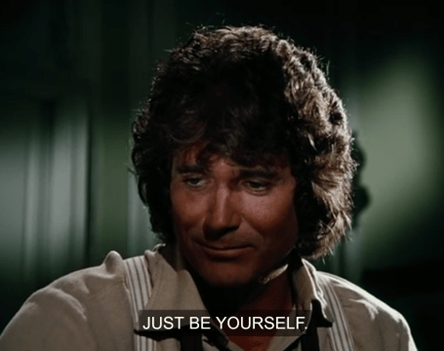

Then Pa says, “Why don’t you and I go home? I just don’t think you and I belong here.” I don’t understand that. How long were they planning to stay? Will Charles be expelled from the Grange if he leaves early, or for his outburst during the evening session? And what on earth is Luther Douglas going to say when he hears about what happened?
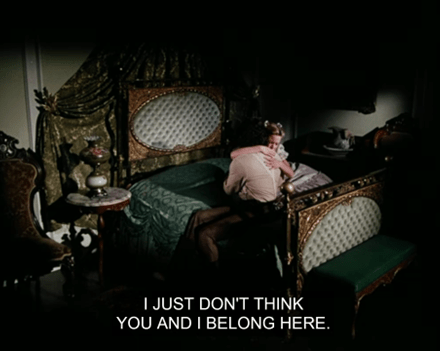
Then we see Pa and Mary boarding the train for home – coach this time.
As soon as they take off, a gawky curly-haired teenager sits down across from Mary and offers her a sandwich made by his “Aunt Polly.”

It’s hard to recognize him since he looks quite different, but this is actually Bobby Brady himself, Mike Lookinland.
One reason he looks so different is his curly brown hair. On The Brady Bunch, his hair was colored and straightened so it would better match that of his TV brothers.
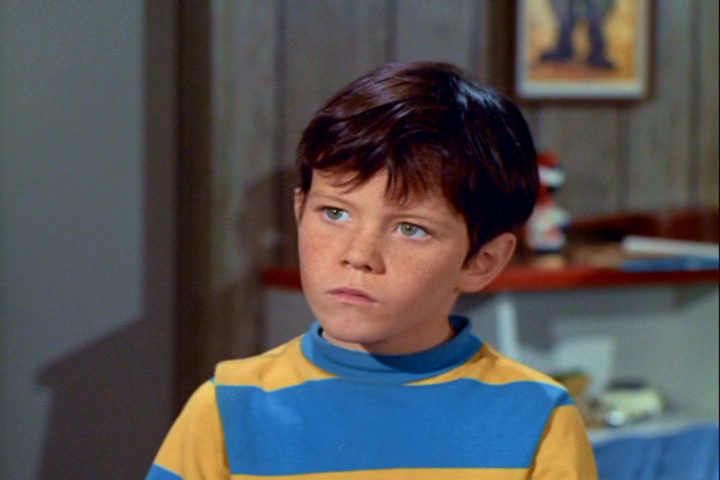
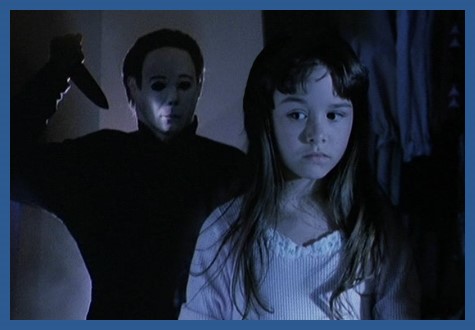
Lookinland acted in The Towering Inferno, and later worked behind the scenes on Halloween 4 and Halloween 5! (Halloween 4 is unusual amongst Halloween sequels in being worth watching.)
I bet Barbara Morrison and Bill Mullikin were thrilled when they learned he would be in this one!

[UPDATE: I love you, Walnut Groovy readers. Have I said that before? It’s so true, and you put me to shame with your knowledge of and enthusiasm for our topic. I wouldn’t have it any other way, though. One named ElizaHamilton writes that Melissa Sue Anderson actually guest-starred on The Brady Bunch, and that she also played Bobby’s love interest in that story! What a tangled thicket was 1970s television, huh? Thank you, EH – I’ll have to check the episode out. – WK]

Anyways, introducing himself as “Patrick,” Bobby says he’s going “Poplar Point.”
There is a Poplar Point in the Upper Peninsula of Michigan, not all that far from where I grew up, actually. I suppose maybe you could have gotten there by train from Chicago, with a transfer in Milwaukee.

But Mary confuses things by saying she knows Poplar Point, which is “only about half an hour from my house.” Set aside the coincidence; for God’s sake, Walnut Grove is farther away from their house than that on foot!
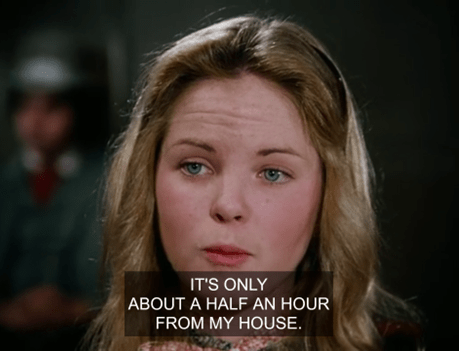
And when Mary says she lives in the Grove, Bobby says he’ll be enrolling in school there himself when they arrive! We never see him again, though, so presumably he’s killed in a horrific unseen accident as he disembarks the train.
[UPDATE: Actually, we do see him again, though he’s played by a different actor. Stay tuned to find out who.]
They continue chatting merrily as Pa smiles.
PEGGY: That was a pretty hollow happy ending.
She’s right, it is. Bum-Bum-Ba-Dum!

STYLE WATCH: Charles wears a tie to the restaurant, which is always nice.
He appears to go commando again, too.
THE VERDICT: For all my hang-ups about it, this really is a knockout of a story. Mary gets curiously little to do in it, though.
Big thanks to Peggy and Bruce, and see ya next time.
UP NEXT: “My Ellen” (!!!)


Love the Brady bunch references!! I knew they dyed ML’s hair for Brady Bunch but I did not know They also straightened it. He is a redhead. Although in this episode, it looks kind of sandy blonde. And I know it be a lot easier for you to use AI to write this but it’s much better when you write it. There’s nothing like the human touch. I also like that screenshot of Charles & Caroline when they’re laughing. And by the way, did you use a different font this time? It’s nice. 🤔💁🏻♀️👒
LikeLiked by 1 person
Thanks Maryann! I swear, I never would recognize him as Bobby from how he looks here in a million years. My brother-in-law flatly rejected my argument that it was really him. No, no new font! Your device must have delivered you some miraculous update.
LikeLike
Radames Pera said that they rented the Hello, Dolly set for this episode…he claimed that made it the most expensive episode yet. I’m not positive, but I always thought that “Patrick” at the end of the episode is supposed to be the same “Patrick” who later turns up in Meet Me at the Fair, but he’s not played by Bobby Brady second time around. Maybe Mike Lookinland couldn’t go to Old Tucson when they filmed that episode?
LikeLiked by 1 person
Yes, there’s a trivia bit on the TV Tropes page for this episode stating Mike Lookinland was supposed to reappear in “Meet Me At the Fair” as Patrick, but was busy filming the Brady Bunch Variety Hour, hence, Michael Morgan played Patrick there instead.
I think Lookinland strongly resembles Eric Shea, aka Jason R. from “The Talking Machine”; one could mistake Patrick and Jason for brothers.
LikeLiked by 1 person
I’ll keep that in mind when we get to that one! Is Patrick the cocky one, or the one who gets jealous and unties the balloon? And yes, there are similarities between Lookinland and Eric Shea. Shea is kind of like Lookinland doing a Goofy impression.
LikeLike
Patrick is the one who gets jealous of his cocky boss fwinning Mary’s attention and cuts the balloon loose.
About this episode, it’s as heartbreaking as it sounds. I understand the circunstances behind the course taken for John’s story (the romance couldn’t go forward, the Edwards family was wirtten out), but his fall from grace (no pun intended) is no less painful. I didn’t realize why, until now when I revisited his trajectory as of this point, and realized just how his actions here affect not just his character but all of his previous appearances:
In other episodes, John Jr. was shown to be more sensitive, nothing out-of-place in this show, ut it was lampshaded as him having a particularly sensitive and vulnerable personality compared to most boys. He was the only one who cried when his mother revealed she was dying, he lacks stomach to hunt, and finally, he was split between following his dreams or staying with his family and farming. Then, we look how he was absorbed by city corruption, dating a snotty girl while engaged and willingly working for a newspaper in the Grange’s pocket, those moments suddenly are signs of being weak-willed. And it’s a shame, because John is a terrific character who could have been so much more had the romance scenes between Radames and Melissa Sue worked. Now his “unmanliness” and unconventional personality become weakness for the sake of real-life writing the plot.
It reminds me of what happened to Mary’s other love interest, Adam Kendall. Visiting the subreddit for this show, I saw a lot of anti-Adam rhetoric, but an equal amount of praise, yet where they seem to converge is that his attitude after (SPOILER for Seasons 7 and 8) recovering his sight on a frek accident really soured his character. He suddenly ignores Mary’s situation before she calls him out, decides to pursue a law career without ever considering how needed he was for the Blind school, takes Mary out of the school after becoming a lawyer and finally moves far away with her. Although the narrative protrayed Adam sympathetically, he seemed so inconsiderate, and suddenly, previous times he showed a smug or pompous attitude felt much worse.
Interestingly, the next time John Jr is mentioned again when he’s killed, the episode where they investigate makes a point of enhancing his positive qualities, implying he wasn’t all corrupted by the city. Still, when you ask fans disappointed on him, they seem to think he was a shameless womanizer who cheated on Mary with who knows how many women despite only being show with one other woman. I guess this episode really left a nasty mark on him.
Now, I’ve been searching LHOTP fanfiction lately and one fanfic that stood out was “What If Jon Jr. And Mary Married”, which, well, is exactly what is says on the title. The author made a darn good job of exploring what it could have been if not for the decision to assasinate his character and put and end to his romance with Mary, including showing how they handled her getting blind. If anyone is into fanfiction, it’s worth a try.
LikeLiked by 1 person
EXACTLY!!! I’m so glad I’m not the only person who had this reaction.
LikeLiked by 1 person
Also, “fall from grace” – very witty, Vinícius. 🙂
LikeLiked by 1 person
Thanks for this comment, Vinícius. I’ve read the romance with John was axed because Melissa Sue didn’t like the idea of it, and I get that, but the way they handled the boy who had previously been depicted as sympathetic because of his unusual gentle and sensitive nature left a bad taste in my mouth. He deserved better.
LikeLiked by 2 people
Thank you, Mary. Sorry it took me forever to reply (I thought it’d be too late by now), but it’s always a treat when other readers reply. I think John Jr’s downfall was partially unintentional, in an attempt at worling over an unexpected turn of events after the planned romance (and the Edwards family’s permanence) didn’t work out, so they had to put and end to their romance and all, but it is frustrating that, in hindsight, it puts most of John’s previous scenes in a negative light: in moments he was meant to come off as vulnerable and struggling, now it turns out that he’s spineless; his inability to hunt, same, heck, his being unfit to farm, it was meant to be that he just needed to go live a different life and deserved to be reslected for that, but thanks to this episode’s storyline, not only does make him clme off as “weak-willed”, but it frames his choices as being corruptible, courtesy of this story’s anti-city undertone. It’s tragic in hindsoght, though at the very least, the episode involving his fate makes collateral damage by revealing John went off to try and investigate corruption in the city, indicating that he wasn’t all gone after all.
LikeLiked by 1 person
Like I said, I agree with both of you. I like and identify with pre-adulterous John (even though I do love this story), but it occurs to me the real reason they had his character change is simply so the viewers wouldn’t object too much to him leaving the show. I think John to this point is quite likeable, if what we in high school called “a total wuss” (I was one myself), but they had to have him do something hugely wrong to justify breaking the engagement. There really was no easy way out; in real life, probably John’s letters might just have trickled away to nothing, breaking poor Mary’s heart in slow motion over a longer period of time, with no contrived visit to Chicago for her either. But for the purposes of an hourlong TV show, it had to be more sudden, and both Mary and Pa would have to agree their troth is irredeemably broken. And Landon, true to form, decided to go balls to the wall with the idea and make a crackerjack story out of it.
Well, at least Mary wound up with somebody good in the end (unlike Laura? just kidding?).
LikeLike
I admit to having missed the chewing gum metaphor about John being influenciable by the city. Given that Adam Kendall is introduced at the end of this season, and presumably his romance with Mary was already on the plans when they came up with the events here, I wonder if the brand’s name “Adam’s Chewing Gum” is foreshadowing to John stepping aside as Mary’s love interest and being replaced by a guy named Adam.
I think this is the first episode to display the show’s portrayal of big cities as associated with vices and corruption in contrast with the purer life of Walnut Grove. Not that it idealizes small towns or even WG, since it shows these places as having disadvantages of their own, but the show almost always uses episodes set on cities and bigger towns to focus on the vices that proliferate on urban environment: Noise, hedonism encouraged by saloons and brothels, generalized corruption, none of which you usually associate with a small, dry town like Walnut Grove, where life is comparatively quieter and people have a much greater sense of community. Even towns like Sleepy Eye are shown to fall prey of such vices. I think that’s why the Grange suffers a Historical Villain Upgrade, portrayed as a corrupted organization lost on bribe and hedonism, and they left out the female leaderships so as to focus on a negative portrayal, or maybe the writers concluded that female members would be seen as unrealistic by the audience used to leaderships in period pieces as always male-dominated.
LikeLiked by 1 person
HA! I love your theory about “Adam’s” Chewing Gum. I think this episode actually has more examples of symbolism than any other so far. The nude Graces, which represent both what John is chasing in other women AND what he doesn’t realize he already has in perfect Mary. And don’t forget, an actual prostitute, offered to Charles as a gift in a story where he’s expected to sell himself. Symbolism’s not really used much on Little House, though I’ll admit I’m not very good at spotting such things and often feel like an idiot when others point them out for me.
As for the “country good, city bad” trope, I’m sometimes annoyed by such things in entertainment, being a living example of somebody who left to escape the “wonderful community” of rural people. But certainly there are bad things about both places. I always continued to feel a kinship with country people until about ten years ago, when they started to lose their minds (and hearts) as a body. But truthfully, the internet is destroying us all, not just them. It’s blurred the line between real life and entertainment, with disastrous results for government, for family, for business, for art, for religion. The list goes on and on.
Well, happy holidays! 😀
LikeLike
I’m realizing what a dismal bummer I sounded like in that last comment. I regret that! Forgive my Scrooge-iness, please. After all, if it weren’t for the internet I wouldn’t have connected with any of the neat people nice enough to read this big jumbled mess of a blog!
LikeLike
hi will, you’ll probably never see this but just wanted to mention that MSA was in an episode of The Brady Bunch and shared a kiss with Mike Lookinland!
LikeLiked by 1 person
Hi! I see everything. 😉 I didn’t know that! I like The Brady Bunch but don’t know it all that well. Thank you – I’ll add an update to the recap!
LikeLike
Updated! Thank you again – and thanks so much for reading. 🙂
LikeLike
“Cotillion Shock: Register Reporter Murdered by Crazed Rube!” I am laughing uproariously at this headline and that you called Charles a rube. Will Kaiser, that’s so damn funny! He is such a rube, isn’t he? It would have been a laugh riot if Charles had thrown John if the balcony and embraced his murderous ways. Hahahah!
LikeLiked by 1 person
I am quite proud of that article myself! 😆 Thank you!
LikeLiked by 1 person
I am pleased to have read the actual text finally and celebrate its triumph of cutting edge reporting and comedy. “The Register is grieved to report the shocking passage of one of our own. Young reporter John Sanderson Jr. was attending the University (unintelligible) Annual Cotillion Ball at the Polonia Club when he was defenestrated into the street, whereupon he was at once cut down by two yellow-wheeled carriages, and expired.
The murderer, who was conveyed into constabulary custody, was Mr. Charles Ingalls, a self-described “stupid, dumb farmer” (HAHAHA) who was attending…” Whoever this reporter was captured the old timey writing style mixed with faux-objectivity, belied by phrases like “one of our own.” This piece is prize-worthy for incorporating the word “defenestrated” into it.
LikeLiked by 2 people
Like I said, I’m proud of that one! 😀
LikeLiked by 1 person