
The Fire Next Time; or
To the Moon, Alice!
(a recap by Will Kaiser)
Title: The High Cost of Being Right
Airdate: November 14, 1977
Written by Don Balluck
Directed by Michael Landon
SUMMARY IN A NUTSHELL: Jonathan and Alice Garvey are on the verge of splitting up until a laughing-gas leak (or something) saves the day.
RECAP: First things first: For anyone who would complain about the length of these recaps, generative AI has provided me a great counterpoint:

Ha! I love that. And since, dear readers, I trust you all have your cookies and jelly sandwiches in hand, let’s get cracking.
If there’s a theme to Season Four so far, it’s Garvey. As we’ve discussed, Michael Landon slipped the Garveys onto the show to replace the banished Sanderson-Edwardses without fanfare. It was more like he was changing batteries than making a deliberate addition to our saga.
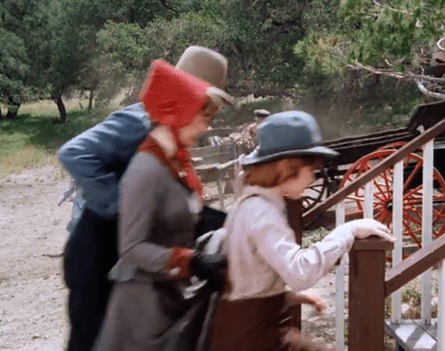
Previous seasons were always peppered with Edwards stories, but this season they’ve been using the Garveys a LOT. They’ve played key roles in five of the eight episodes we’ve had this time around – a pretty high ratio.
Considering he was just a hasty replacement, Jonathan Garvey was quickly established as a unique and complex character. The writers really took to him, and Merlin Olsen’s “gentle giant” affect couldn’t be further from Victor French’s . . . well, whatever Victor French’s affect was.

So far, Garvey has shown up to be an open-minded man of kindness and inclusivity, with a soft spot for kooky old crones.
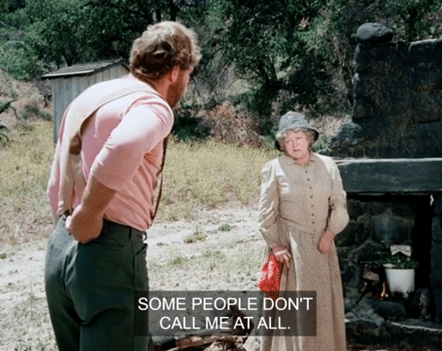

While not an educated person, he’s an experienced and brilliant country naturalist.


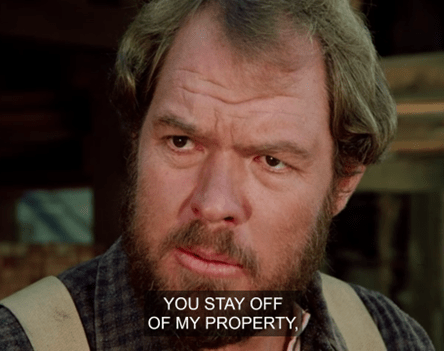
He has the courage and charisma to stand up to bullies – even to command their help in an emergency.

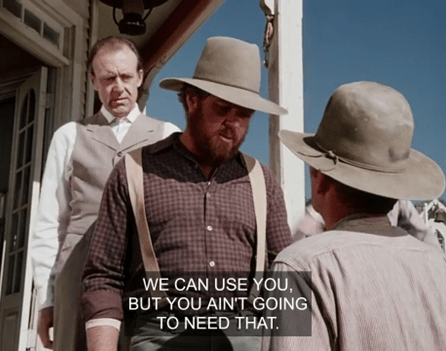
When Laura disappeared, he briefly took over for Charles as town leader, showing good administrative skills, and probably preventing at least one murder.

He single-handedly concocted the diversion that a) allowed for the rescue of Mary Ingalls and b) let Frank and Jesse James escape justice (both equally good things in the Little House TV universe).


He smokes his own meat – always something to respect anyone for.
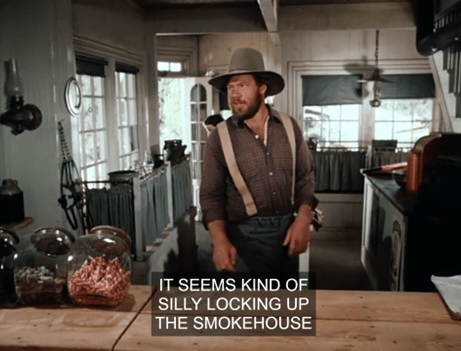
And of course, he scores high on the LHBI (Little House Beefcake Index).

The other Garveys haven’t left quite as strong an impression, yet, but Andrew is holding his own after being highlighted in two good stories – at least, he’s holding his own after Patrick Labyorteaux replaced whatsisface.

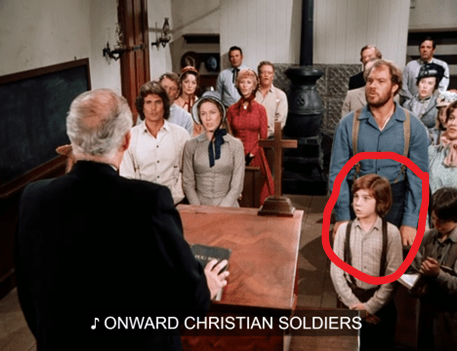
DAGNY: I like Andrew. I think he’s a better playmate for Laura than Carl was.
I like him too. Despite being a little over-sentimental about animals and not realizing it’s “Oh! Susanna” not “Old Susanna,” Andrew Garvey is a pleasant and imaginative kid who likes to read (and sing!) and is a good friend to Laura.

As much as I was fond of Carl, he could be a bit of a blockhead, and he had a serious addiction to apples that often clouded his judgment.

It’s clear already that Andrew thinks things through a little better, and has a higher moral code.

As for Alice Garvey, apart from being able to roll around in the dirt with the best of them, and obviously being extremely fine to look at, we haven’t learned much about her yet.

That will change today, however. This episode’s a complete Garvey-ganza.
WILL: You know, like extravaganza – “Garvey-ganza.” Does that work?
DAGNY/OLIVE: No.
We open on Jonathan Garvey at prayer.
WILL: Yes it does.
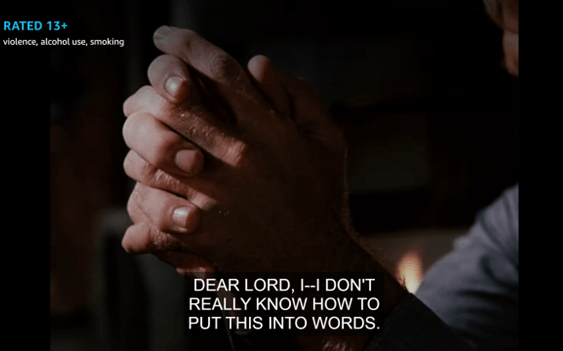
The music is serious and intimate, and we sense we’re witnessing an intense private conversation between Garvey and God.
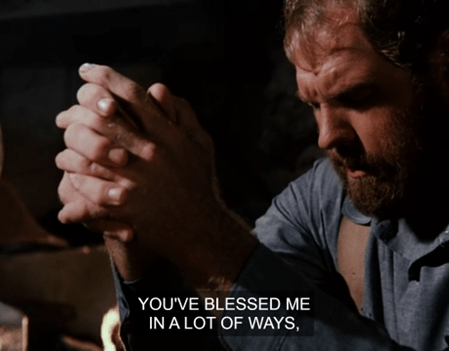
But as the camera pulls back, we see he’s just saying grace at the dinner table.
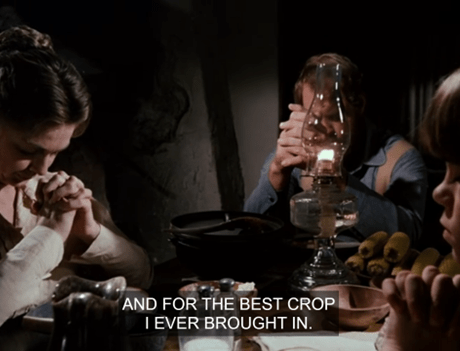
This script, by Don Balluck again, was apparently one of the last ones written with the Edwardses in mind rather than the Garveys, and it’s interesting to compare Olsen’s performance with what French’s might have been.
Garvey’s speech is a simple one – Jonathan apologizes for his lack of eloquence, then thanks God for his wonderful family and a good harvest. He starts digressing about how much or little God knows about farming, but Alice Garvey gets him back on track.
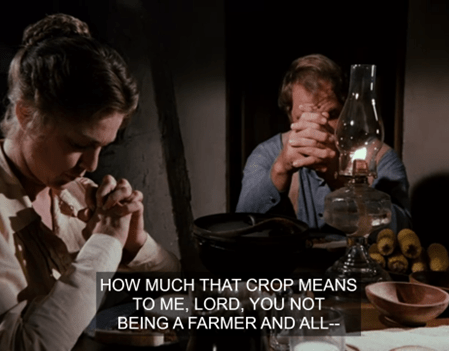
It is easy enough to imagine Victor French emphasizing the “fumbling” nature of the writing, and the comic possibilities of Edwards challenging God on His agriculture knowledge. (Mr. Ed is the most agnostic of Grovesters, remember.)
Olsen’s reading is very different. It’s quiet and serious and personal, a genuine conversation between Garvey and his higher power.
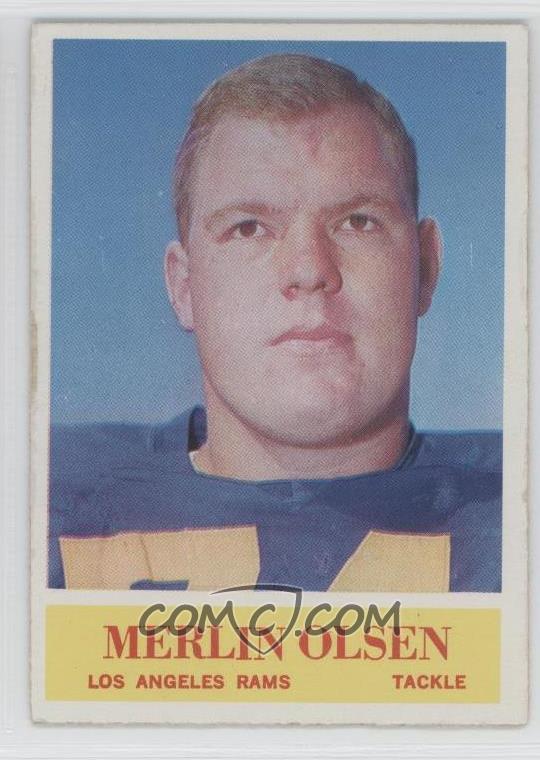
As I mentioned before, Olsen was a pro football player who retired from the NFL in 1976. Though he’d only done a handful of acting parts before Little House, I find him the real deal as an actor, and I’m sure I’m not alone among fans in enjoying his portrayal of Garvey very much.
Anyways, Garvey even concludes his prayer with a possible little reference to “Old Dan Tucker.”
GARVEY: Supper’s gettin’ cold, Lord –
WILL [as MR. EDWARDS, singing]: “Supper’s cold, and breakfast cookin’!/Old Dan Tucker just stand there lookin’!”

Alice laughs that the good harvest has inspired this highfalutin address from her husband. (Let’s assume this means we’re still in September of 1876-F, picking up right where we left off last time.)
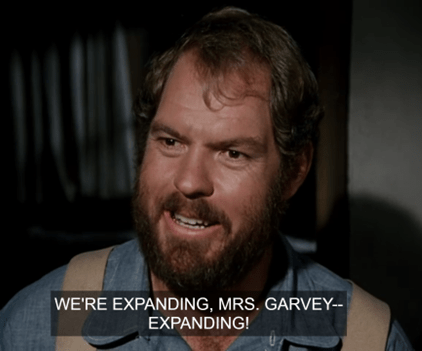
Garvey tells the audience his corn crop was so successful, he’ll have to build a new barn next year to accommodate his expanding field.
I won’t tell you who the director is yet, but his sick sense of humor should give him away. Because now he chooses to turn the camera away from these characters and their positivity . . . and instead points it into the fireplace, where a log is crumbling into ashes!
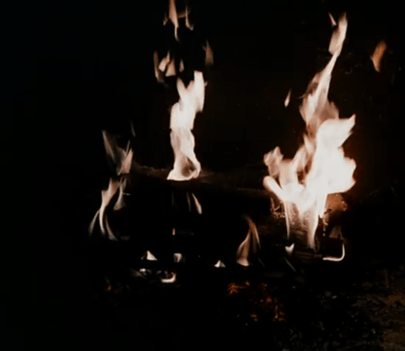


As David Rose’s score becomes more and more anxious, we see hot cinders blowing out of the top of the chimney. (We have a fireplace ourselves, and my opinion is this is a maintenance issue. Since the Garveys have probably been residing at the Old Sanderson Place for about four years now in Little House Universal Time, I think what happens next is on them, not Mr. Edwards.)


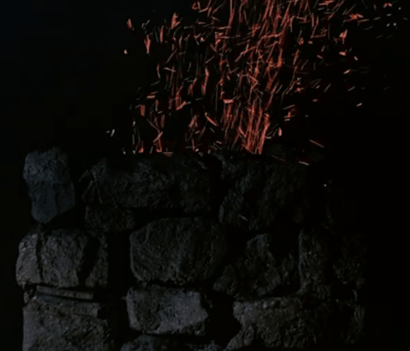
In a nice piece of TV magic, the chimney cinders blow directly onto some hay on the floor of the Barn of Garve, which ignites.


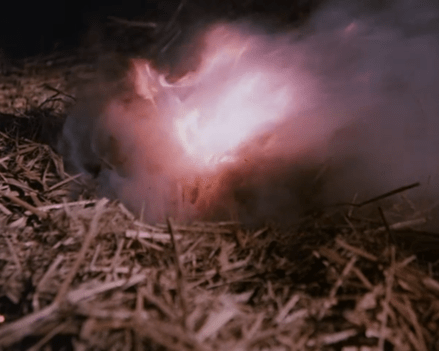
David Rose whips his musicians into an appropriate frenzy.

Back inside, the Garveys are enjoying the remains of their meal. Garvey politely declines another helping, saying when he said their fortunes were “expanding,” he didn’t mean their waistlines should as well.
OLIVE: Yeah, you can tell that was a Mr. Edwards line. Can’t you imagine it? [as VICTOR FRENCH] “I said my crop was expandin’, woman, not m’middle, ha ha ha!”
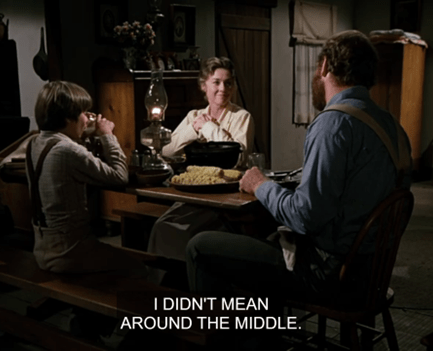

Andrew Garvey asks if they can have popcorn afterward.
WILL [as JONATHAN GARVEY]: “No, son. You know popcorn’s for grownups.”


Jonathan sends Andy out for firewood, but the poor kid comes back screaming the barn’s on fire.
Jonathan runs out and frees a horse (Bunny?) from the barn. It seems to be okay.

Alice and Andy pump water from a sink in the kitchen. (Indoor plumbing is very fashionable in the Grove this season.)


In case you’ve forgotten what show you’re watching, we then get to see Jonathan Garvey, arguably the nicest guy in town (and that’s saying something), with his shirt on fire in several places, screaming and snarling in agony as he gets another horse out.

If you look closely, you can see that “fire Garvey” is in reality good old Mustache Man, Jack Lilley.
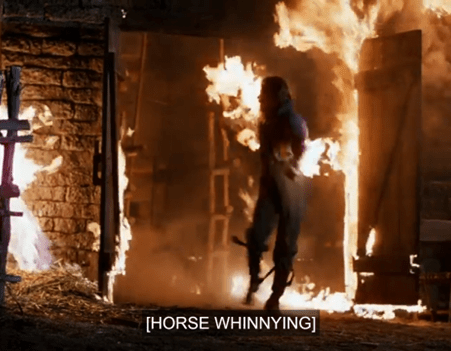
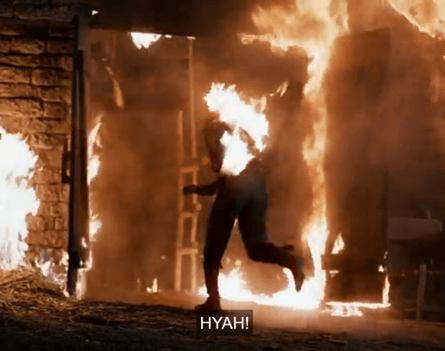
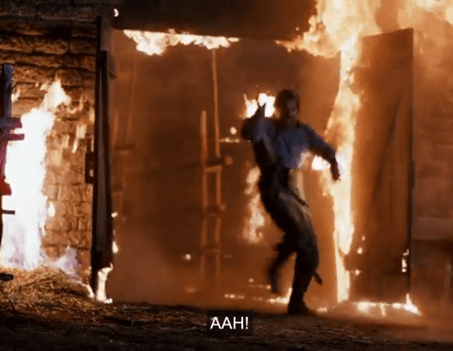


Alice sees Jonathan and screams “Oh my God!”
OLIVE: Do something! Don’t pause to scream!
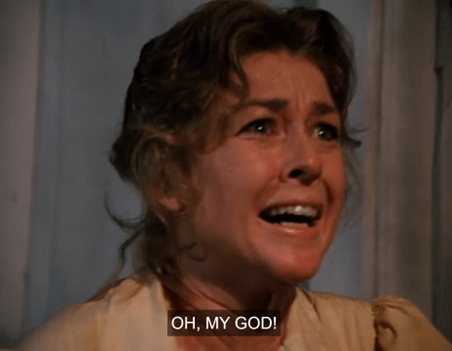
Alice does do something, then, running forward to extinguish her burning husband with a bucket of water and her apron.
DAGNY: She’s ripping off her clothes?
WILL: Yeah. It was sweeps week.
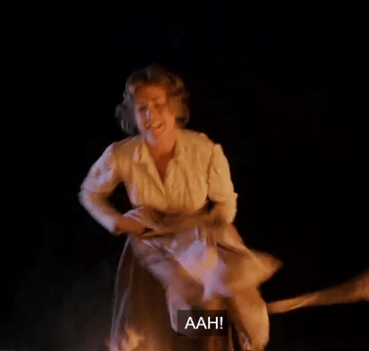
Face down in the dirt, Garvey clearly is more worried about his crop than his injuries.
WILL: They should have corn popping on the soundtrack. That was a missed opportunity.

The next morning, Jonathan and Alice survey the damage. (So Garvey must not be burned too badly?)
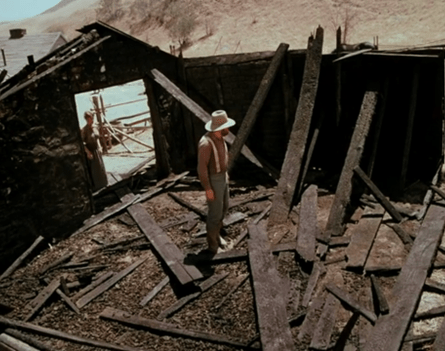
Then we see Charles loading up goods at the Mercantile. Garvey appears, and Charles laughs that he feels rich, the corn harvest has been so great this year.
WILL: I guess the Cobb-Fudge plan finally paid off.


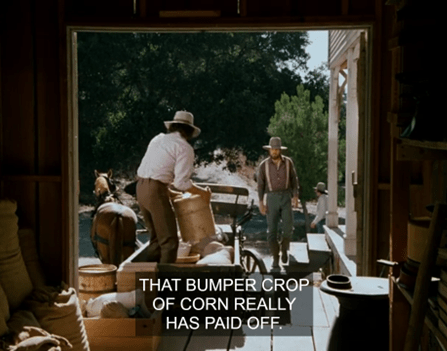
Charles goes on and on, saying he’s selling locally to somebody called Lambert as well as to buyers in Mankato.
WILL: Garvey should scream and attack him.

But Garvey just glumly tells him the news. As if dazed, he says he’s asked Mr. Hanson for “some work,” but “he ain’t gettin’ started for another three or four months.”
(The Mill’s operations, as always, are opaque. Why wouldn’t there be work available? It’s the harvest season, by all accounts a hugely successful one. Surely there’d be feed to deliver, flour to grind, etc. Three or four months? Walnut Grove should be a boom town! People would be building and investing based on this bumper crop; why, Garvey himself was about to order a new barn in the opening scene, and just a minute ago Charles was buying out the Mercantile like a poet on payday.)

The substance of their discourse concluded, Garvey tries making smalltalk with Charles, but his voice starts breaking and he suddenly leaves.
Then we cut to the Garveys’ dinner table again.
DAGNY: That’s a weird shot. His wedding-ring hand is highlighted, even though he isn’t wearing a wedding ring. Is this a Landon one?
WILL: Yes.
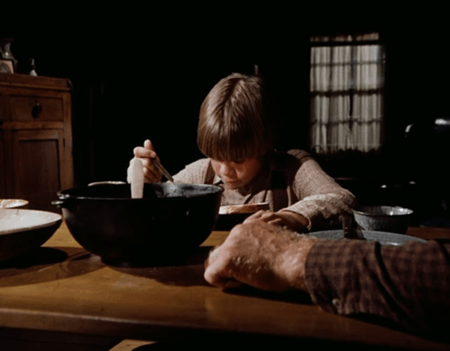
Jonathan is bitching about how they “ain’t even got enough left to put a decent meal on the table.”
OLIVE: Isn’t this just the day after the fire? Why wouldn’t they have food?
I mean, there were corn cobs on the table in the opening scene, but surely the lost crop is field corn, a far more valuable commodity. Plus, you shouldn’t eat too much corn anyways.

Unhelpfully, but sweetly, Andrew says he could contribute 50 cents ($15) to the family emergency fund.
Alice dismisses Andy from the table, and though he stops to comfort his pa, Jonathan doesn’t even look up at him.

Garvey doesn’t get good dad points here. He should take a leaf from Charles’s book – you’ll remember when Chuck was ready to murder the corrupt members of the Grange in Chicago, he set those frustrations aside to participate in Mary’s excitement about the spring cotillion.

(Which turned out to be an absolute motherfucking disaster, but that’s neither here nor there.)

Alice makes some smalltalk about the weather.
DAGNY: Oh, now she has to play The Lady Game.
WILL: What do you mean?
DAGNY: Making smalltalk when your man is mad about nothing.
WILL: Oh, did that used to happen with your first husband?
DAGNY: . . .

Alice then reminds Jonathan he can still clear the field for next year’s crop, but he snaps at her.
Very bitterly, he says, “I guess you’d be less ashamed of your worthless husband if folks saw him out there doing a mule’s work.”
OLIVE: Wow, that’s quite the leap.
WILL: Yeah. I don’t find his attitude very believable in this one. Why would he think Alice is judging him? She knows he had nothing to do with the accident. I don’t think I’d buy it from Mr. Edwards, either.
DAGNY: Oh, I completely buy it. It’s all ego and depression, and he can’t think what to do next. He doesn’t think he has any options, so it’s HIS view of his own worth and value that’s been destroyed. And then he projects it on her.

As Andrew listens from his bedroom, unhappily chewing on his lip, Alice suggests they buy some seed on credit, and Garvey snarls, “I ain’t no beggar!”
OLIVE: You should make a new tag on the site, “Head-Up-His-Ass Man Refuses Charity.”
WILL: Done.

That night at the Little House, Charles is losing sleep over his friend’s problems.
OLIVE: Do you think your friends lose sleep at night over your problems?
WILL: No. If anything, they shake their heads sadly and say, “Well, it was only a matter of time before he screwed that up.”
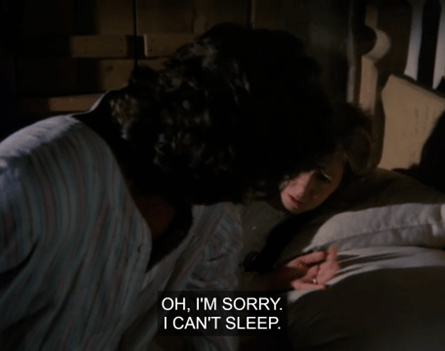
Charles says he knows how Garvey feels.
DAGNY: He does know.
WILL: Yeah. Thank goodness he doesn’t list all the monsoons and tornadoes that threatened his livelihood over the years.
DAGNY. Hailstorms, falls from trees . . .
OLIVE: Cave-ins, horse-kicked children . . .


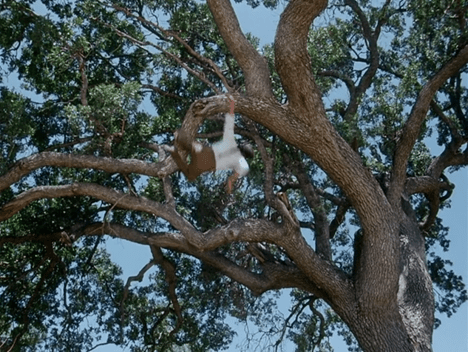


ALEXANDER: Plus getting shot.

The next day, at the Garveys, shirtless Jonathan is having his burns tended to by his wife.
DAGNY: Ow. Those burns look pretty good.
OLIVE: His BACK looks pretty good.
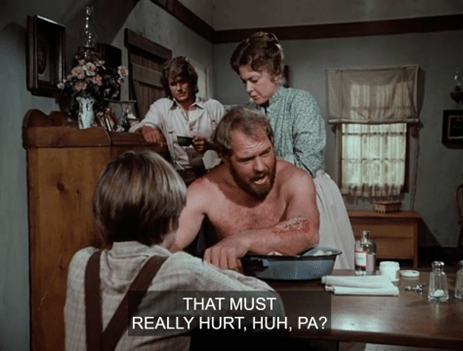

Charles, who’s come over to shoot the shit, helps himself to more coffee (without asking – nice, Chuck) and says Garvey should get medical treatment. But Garvey says a doctor would charge too much.
DAGNY: Not this town’s doctor! You can get a full consult AND fill your prescription for a dollar’s worth of apples.


Charles actually points this out, but Garvey starts barking about charity again, so he shuts up.
DAGNY: I think Merlin Olsen’s “burned” acting is good. He’s being very protective of his wounds.
Garvey then says his next plan is to rebuild the Barn of Garve, saying he’s “still got a little credit at the Mercantile,” which should help. (The Mercantile? Wouldn’t rebuilding a barn be a Hanson operation?)
Interestingly, Merlin Olsen pronounces mercantile “mercan-TEEL.” That’s also how I say it, but unless I missed it, it’s the first time a Little House character has said it that way.

Well, I’m sorry to report that Alice then makes the mistake of assuming she has a say in how her own household is run, noting with winter coming they should probably use the Mercantile credit for food rather than build a barn they won’t need till next fall.

Shockingly, Jonathan Garvey says, “Is that some kinda remark? You gotta remind me in front of company that I can’t put food on this table?”

Charles looks very embarrassed, but says nothing.
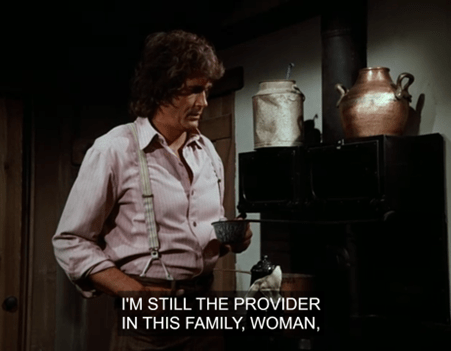
Alice and Andrew then leave for school, so I guess it’s early morning. (Why does she have to take him? He’s, like, fourteen.)
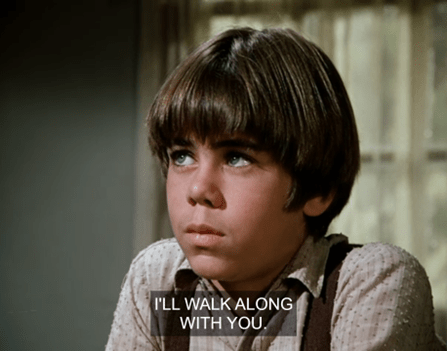
Garvey apologizes to Charles, I suppose for Alice’s outburst. Rather surprisingly, Charles lets him off the hook, only pointing out it’s ridiculous Garvey seems to think Alice views him as less of a man because of what happened. (Which it is.)
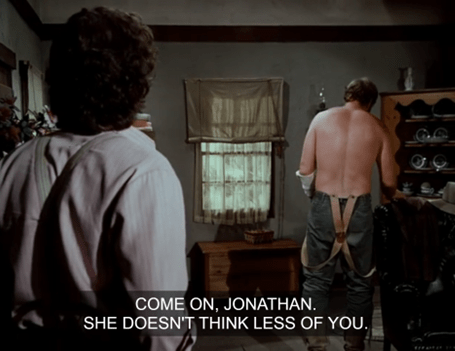
I’m surprised Charles isn’t more critical, because in the history of this show he’s never treated Caroline this way, about anything. We’ve always seen him solicit her advice on all manner of things, and usually he takes it.

He certainly would never “make some remark in front of company” the way Jonathan himself, not Alice, has just done. Garvey’s treatment of his wife in this scene deserves one of Charles’s famous vicious cutdowns.
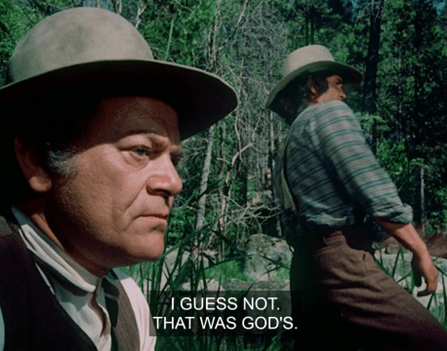
But instead, Charles offers to share a job he has delivering grain to Mankato. Garvey just takes this as another insult, though.
OLIVE: Does he act like this through the whole episode? I’ll go absolutely insane if he does.
WILL: Pretty much, yeah.
OLIVE: Grr.
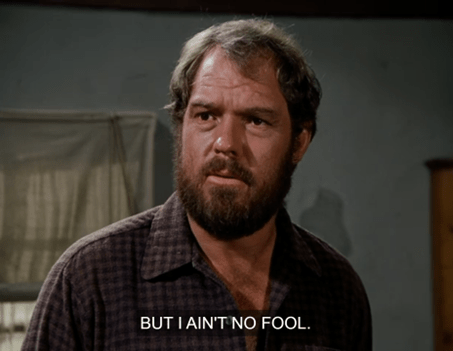
Garvey then excuses himself to run errands.
OLIVE: Wait . . . isn’t this his house?

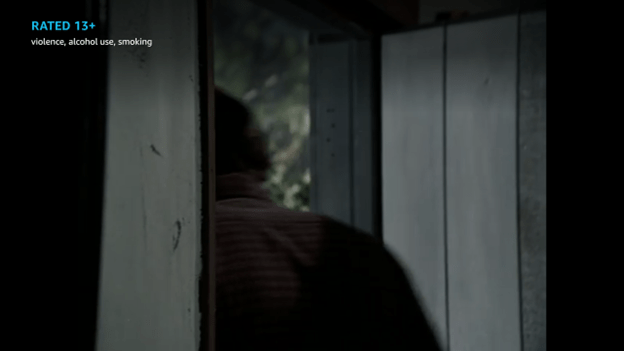
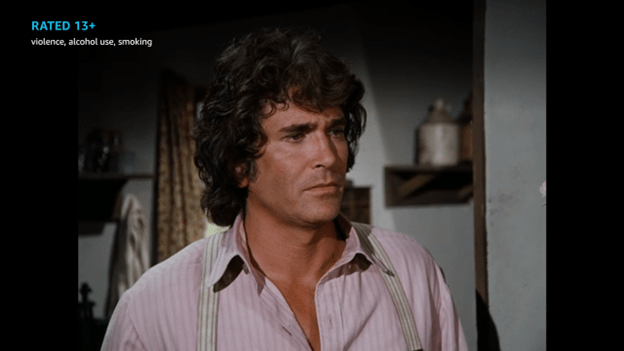
In town, Garvey bumps into his wife.
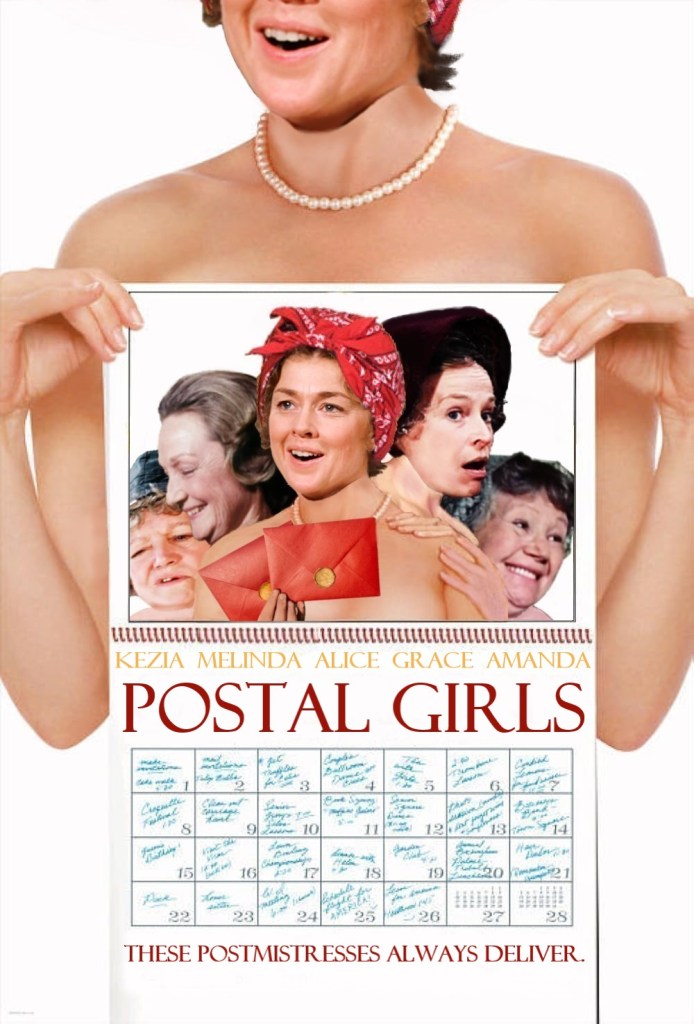
Alice says she’s been to the Post Office, where Mrs. Whipple confirmed our theory that she, Mrs. Foster, and Kezia have been sharing part-time duties since Grace Snider left.
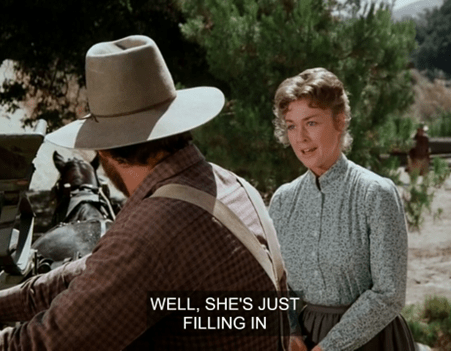
Alice happily tells Jonathan she can pick up a shift there.
But Garvey is a complete ass again, rolling his eyes in disgust and says, “Figurin’ on startin’ supportin’ me now, huh?”
Using a considerably gentler tone than I would in response to such a comment, Alice says, “Not you – us.”
You’d think unnecessarily, she adds, “Jonathan, we’re a family.”
Not looking at her, Garvey says, “Y’ain’t takin’ no job.”
Surprised by this response, Alice tries again, but Garvey cuts her down.
OLIVE: Don’t we get this same plot again later with Laura and Manly?
WILL: Oh my God, yes, don’t remind me.

Alice’s surprise quickly turns to anger, but she turns and leaves rather than saying anything.

Next we see Ma and Laura (will she speak???) trooping out to the Old Sanderson Place.
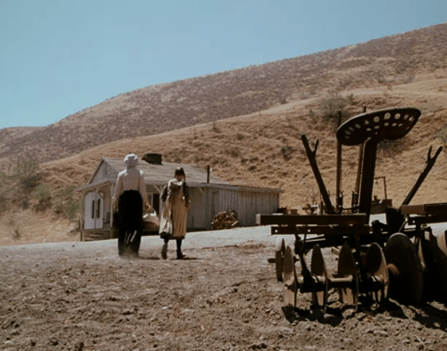
Ma is wearing Boo Berry.

They’ve brought baskets of foodstuffs so the Garveys will be able to stay alive.
Not sharing her husband’s attitudes about the welfare state, Alice graciously accepts the gift.
DAGNY: Oh no! He’s not gonna like this either! Every scene in this one is a nightmare scenario.
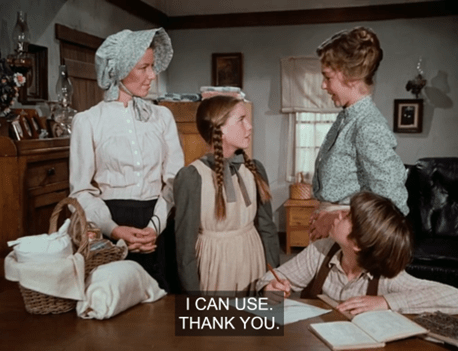
But in fact, when Jonathan comes home, he’s in a very good mood. He’s carrying a bunch of boxes that include candy for the kids.
OLIVE: I’m not sure Melissa Gilbert took the week off to fix her teeth after all.
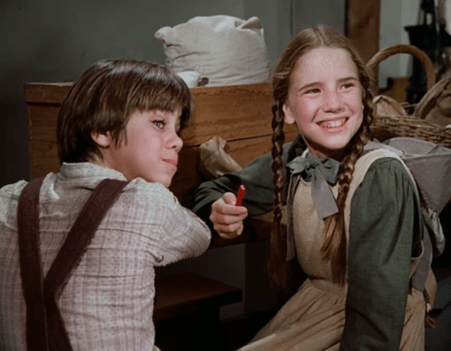
Things get weird when we see Garvey’s bought Alice an expensive hat.
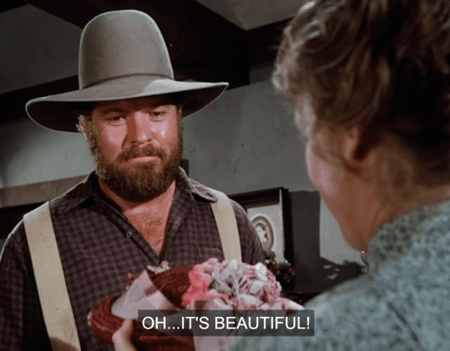
When she asks how he was able to buy these things, he says, “I sold the team.”
(According to the Center for the Study of the Pacific Northwest’s helpful price list, which we’ve had call to refer to again and again, a pair of work horses in 1876 could probably bring $7,000-$8,000 in today’s money.)

Jonathan laughs about how shocked Mrs. Oleson was to see him buy all this shit in cash.
But Alice is horrified. After goggling at him a minute, she finally and very much understandably snaps and says, “How could you? How could you do such a foolish thing?”

She points out he won’t be able to plant or plow or deliver shit without horses, and says if he’d let her take the Post Office job they’d have been just fine through the winter.
“I ain’t takin’ charity from my wife!” says Jonathan, and Alice lets him have it then, saying, “Oh, you fool! It’s not charity!”
DAGNY: He isn’t gonna hit her, is he?
WILL: No. Landon wouldn’t have that from a good character on his show.
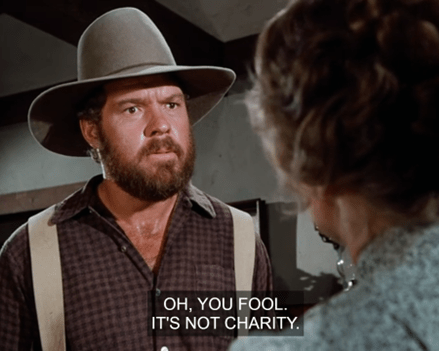
Instead, with a look of shock, Garvey shouts, “Don’t call me that! I worked as hard as I can, and maybe I failed, but I ain’t gonna be called names for that! And I ain’t gonna be looked down on anymore!”
DAGNY: See, he’s accusing Alice of seeing him that way because that’s how he sees himself, and he can’t imagine anybody thinking otherwise.
WILL: Well, you’re very insightful.
DAGNY: I’m a mental-health professional.
Finally, Garvey adds, “I’m through, Alice!”
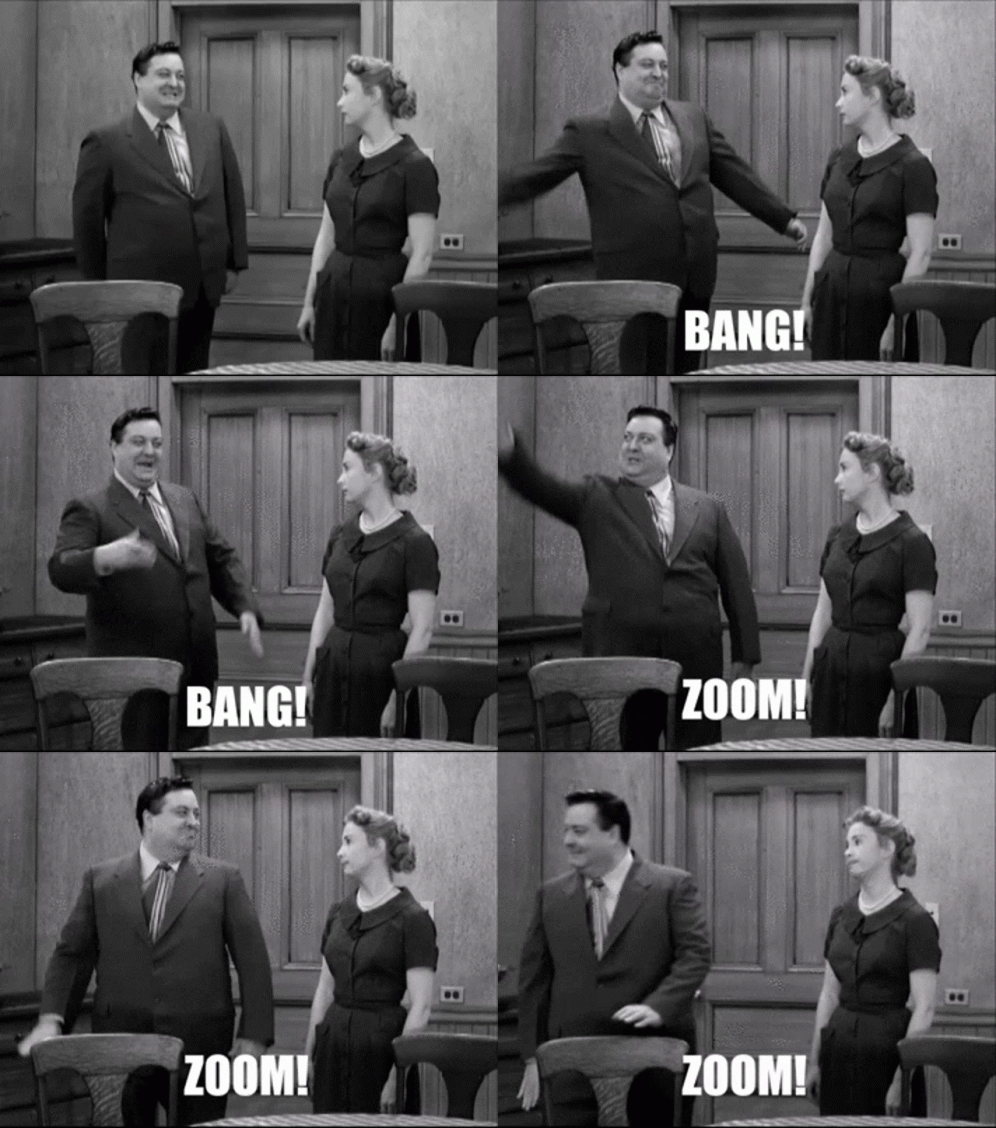
WILL [as RALPH KRAMDEN]: “To the moon, Alice!”
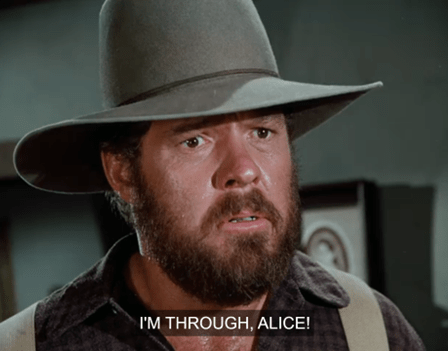
During this speech, Landon gives us an agonized close-up of Andrew’s face, listening. Possibly because of his own home life, he’s great at capturing the suffering of children on this show.
WILL: This is probably my favorite Patrick Labyorteaux performance, even if all he does is look sad.
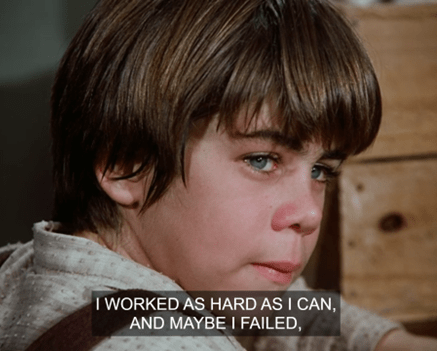
Anyways, it is a blistering scene . . . though even more blistering ones are still to come.
WILL: Spoiler alert – they turn out fine at the end of this.
OLIVE: I know.
WILL: And then she burns to death.
OLIVE: I know that too.

After a commercial break, we see Ma pumping water in her own kitchen. (See?)

Pa comes in and jokes that he’s got so much corn to haul to Mankato, he’ll have to put some in his pockets.
WILL [as MICHAEL LANDON]: “This isn’t a corncob in my pocket, I’m just happy to see you.”

Laura asks if it’s true Mr. Garvey is going to move to Mankato. Pa says it is, then she asks him why people get divorced.
OLIVE: They’re getting DIVORCED? And he’s moving away? Like, after just a couple arguments?
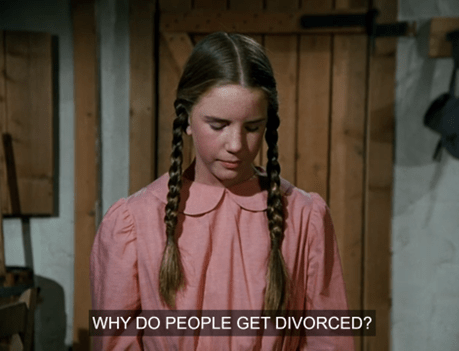
WILL: Yeah, like I said, I don’t find it too believable.
DAGNY: Well, supposedly there’s no work to be had closer. I’m not sure how believable his leaving is, though. I think this part of the story would work better with Mr. Edwards, but it would be different too. I think Edwards would leave not because he was angry at Grace, but because he would be aware his depression was too awful to subject his family to. And I think because his kids were adopted, he’d have an easier time going. Not because he didn’t love them, but he’d feel like, “I hurt everybody I touch, they’re better off without me.”
ALEXANDER: Plus Grace already had a job.
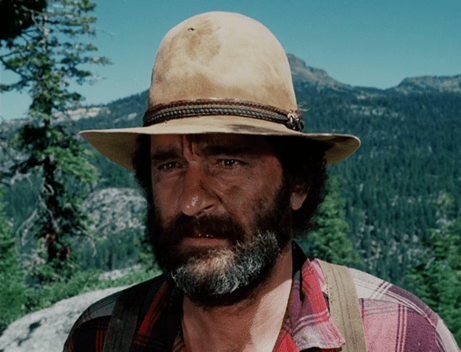
Now, speaking of divorce, Michael Landon was famously both a family man and a ladies’ man. By this point in the series, he was already divorced from his first wife – but that was fairly ancient history by 1977.
His first wife was Dodie Levy-Fraser, whom he married in 1956 – before Little House, before Bonanza, even before I Was a Teenage Werewolf.

But they divorced in 1962, after Landon was allegedly unfaithful with women including Marjorie Lynn Noe, who would become his second wife in 1963.

There were stories about Landon’s ongoing womanizing whilst married to Noe (Charlotte Stewart wrote in her memoir that he once made a pass at her), but at this point in the eyes of most of the cast, he was a happy husband and father. Or played the part, anyways.
In fact, many of the actors, including Melissa Gilbert and Karen Grassle, were close with Noe, and with the five kids she had with Landon.
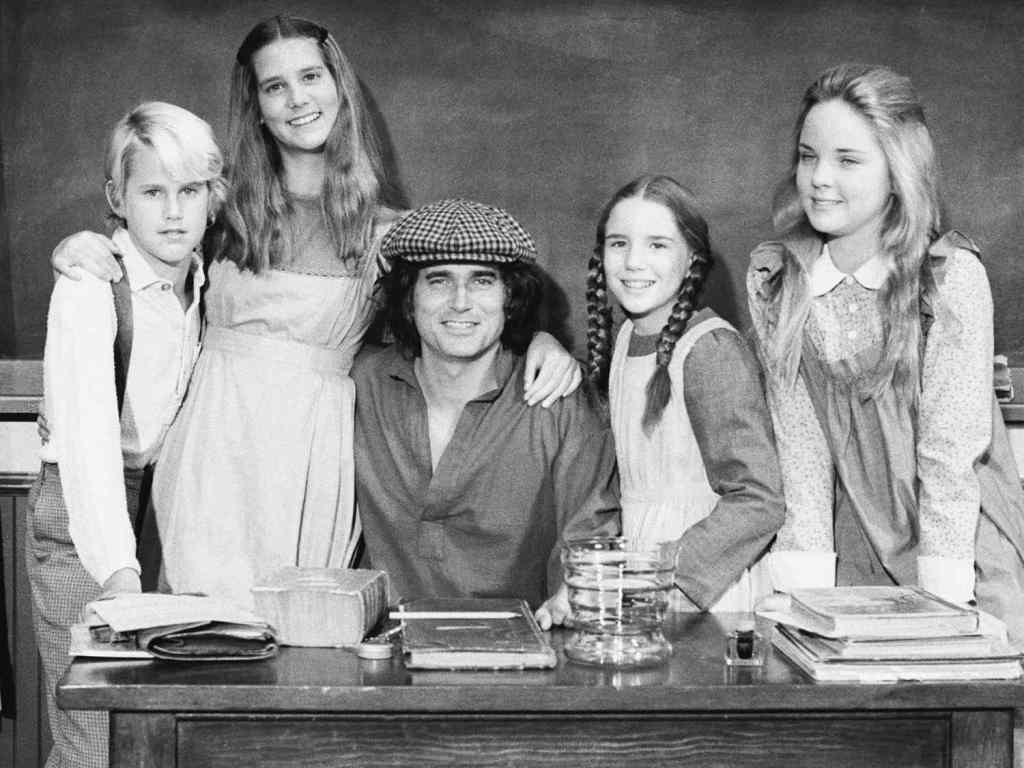
That’s just background for people (like me) who enjoy “reading” Little House as a sort of autobiography of The Man Himself.
Anyways, Pa tells Laura he doesn’t know much about divorce, and that he doesn’t even think they know anybody who’s been divorced. (And as far as we know they don’t, though the Olesons came close that one time.)

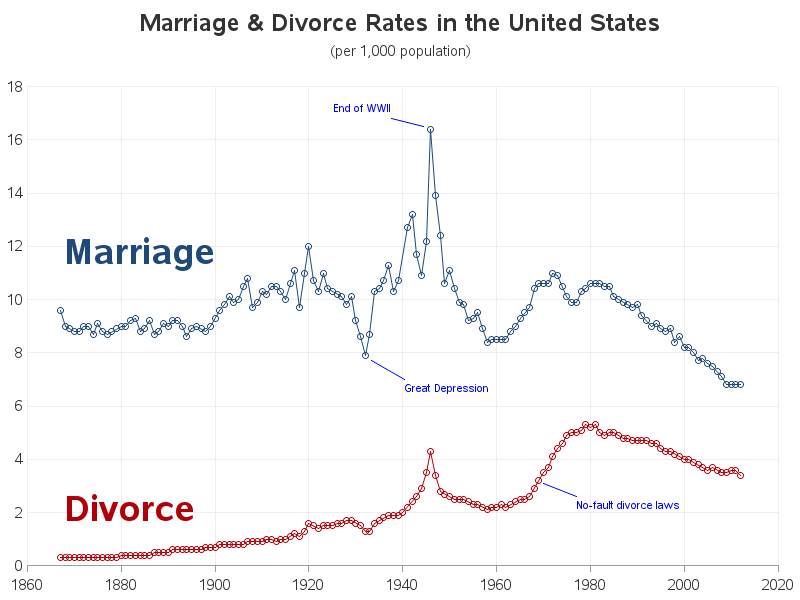
The way divorce rates are calculated gives me a headache, but according to the CDC, in 1876 approximately .3 out of every 1,000 people in the U.S. were divorced. Today, 2.5 people out of every 1,000 are divorced. So, to put it another way, divorce today is more than 8 times more common now than it was in 1876.
As anybody familiar with married people knows, staying married does not necessarily equal being happy, stable, or safe. From the late Nineteenth Century, the divorce rate gradually grew until 1969, when the first “no-fault” divorce laws removed much of the stigma, since petitioners no longer had to prove they weren’t to blame for the failure of the marriage in order to get a favorable ruling.
The divorce rate spiked then, peaking at 5.3 per 1,000 in 1979-1981 – an interesting stat from the point of view of a Little House fan.
It stayed pretty high through the eighties and nineties, but has actually declined significantly over the past 20 years. (The rate of marriages has dropped too.)
Anyways, Laura and Pa are bummed about the Garvey developments, and Ma is downright pissed.
DAGNY: Her lipstick looks great.

She says she’s going to go talk to Alice.
WILL [as CHARLES]: “What, are you takin’ her side, woman?”
Actually, Pa does NOT make any suggestions about what she should say or whose side she should take. As I’ve suggested elsewhere, they have a lot of trust in each other.

Out at the Old Sanderson Place, Jonathan has apparently vacated the premises, since we see Alice telling Andrew he’ll be spending a couple days with his pa before his departure for Mankato.
“Maybe he’ll decide to stay, soon as he sees how nice that ol’ cabin’s gonna look,” Andy says. I have no idea what this is supposed to mean.
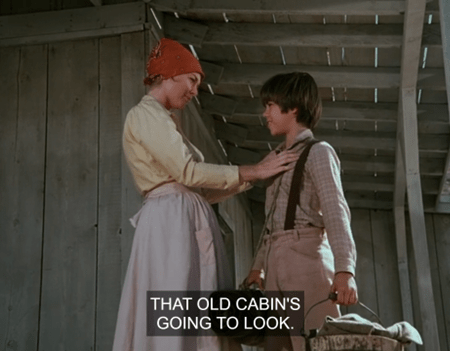
He departs, leaving Alice lonesome and gloomy. David gives us what sounds like variations on the Young and the Restless theme on the soundtrack.
Then we see Jonathan and Andrew in some ramshackle dwelling.
OLIVE: Where are they? In another barn?
WILL: No, they’re at Kezia’s house. She’s built it up a little.

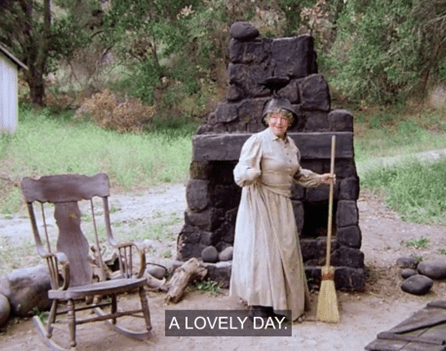
Andy is cleaning the place, which he says hasn’t been lived in in some time. He says he expects it to be his pa’s permanent abode when he returns from Mankato.
Jonathan Garvey implies he’ll never return, but says they’ll be able to visit each other frequently. (This is extremely doubtful, right? I mean, given Nineteenth-Century plus poor plus eighty miles away is not a recipe for easy custody switch-offs.)
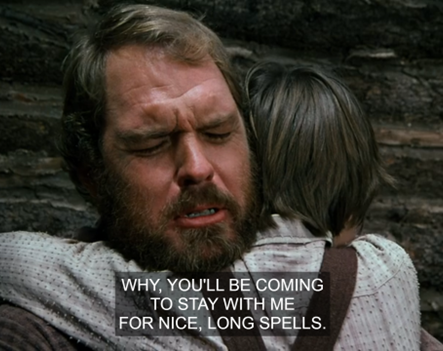
That night at the Old Sanderson Place, Caroline and Alice talk things over.
WILL: They should be drinking rum.
OLIVE: Yeah, ladies’ night!

Caroline’s brilliant advice is for Alice to throw herself on her sword and beg her husband to stay.
DAGNY: This is a beautiful shot.
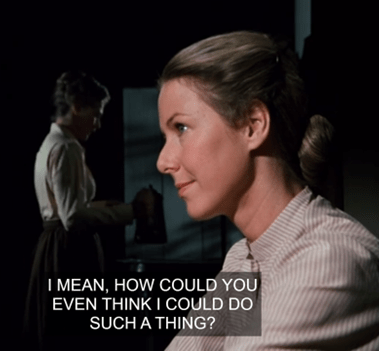
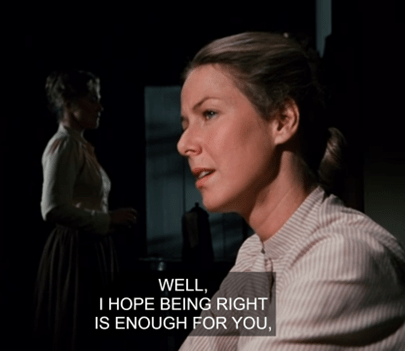
Alice reminds her friend that it’s Jonathan’s reactions to her suggestions that are extreme and irrational. Caroline says it’s just “pride” that’s making her view it that way, snidely adding, “I hope being right is enough for you.”
OLIVE: She’s blaming Alice for trying to help the family? That is a strange take on this situation.
WILL: Her tone is nasty, too.
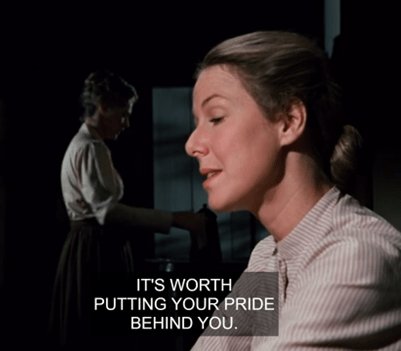
DAGNY: Oh, I think it’s actually fair advice. As much as the man was in charge in this time period, Alice is acting like she’s powerless, and she isn’t. If she approached the situation from the psychological angle, she could have her way AND get him to stay.
Then we see the exterior of a familiar falling-down dump of a house.
DAGNY: Is that where Bixby lived?
WILL: Busby. No, it’s Mr. Edwards’s old house. How did they wind up owning both Edwards properties? They would have no need for this one.
OLIVE: Yeah. And actually, now that they need money, why don’t they sell it?

There are a lot of mysteries about Mr. Ed’s first house, actually. For instance, in “The Bully Boys,” we learned Edwards had sold the place to the Brothers Galender.

And yet, in “Quarantine,” set after the Galenders had been driven from town, the property appeared to have reverted back to Mr. Ed’s ownership, seeing as he was using it for a private infirmary during the mountain fever/poison ivy pandemic of 1881-C.

Anyways, Jonathan and Andrew come out. Jonathan says Andy needs to head to school now, but he’ll be coming back in a couple weeks so he and Alice can meet with the judge.
“Can’t I wait until after Mr. Ingall [sic] comes?” says Andy. But Garvey says no.
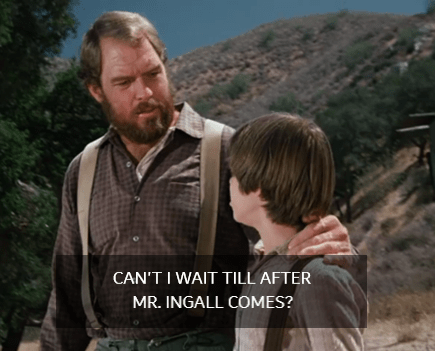
DAGNY: Holy hell, the gun! Better take THAT away from him.

DAGNY: Isn’t that Caroline’s carpetbag?


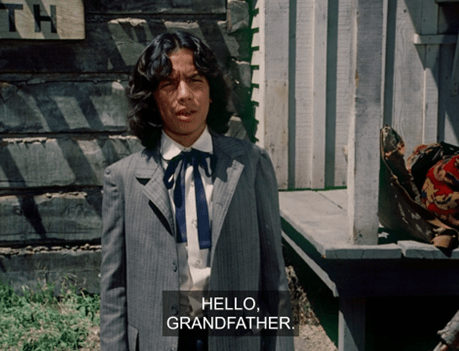

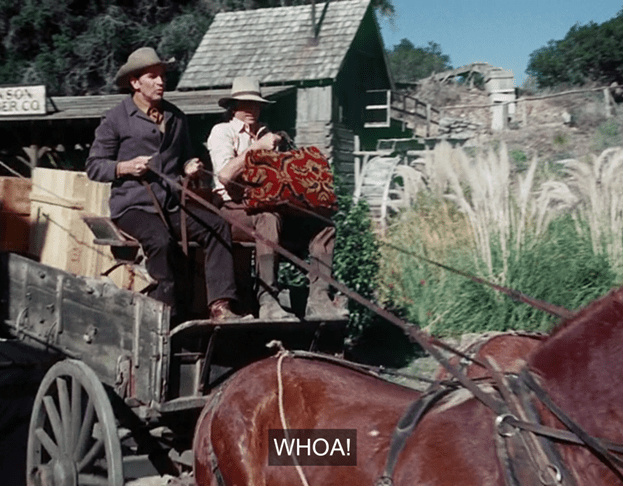
Charles arrives to pick him up, and Garvey says he’s leaving most of his belongings behind. Charles offers to let him store his stuff in their barn.
WILL [as GARVEY]: “What is that, some kinda remark, because I don’t have a barn???”

Suddenly Alice appears, bounding up a hill.
WILL: She’s more bosomy than Caroline.
DAGNY: Oh yeah. Much.
OLIVE: Oh my God.
WILL: Well, she is, child. Truth is just truth.
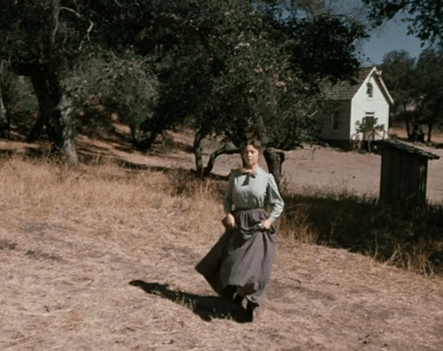
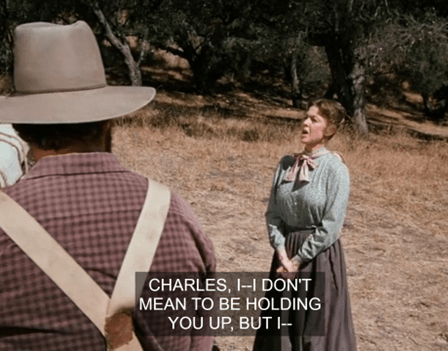
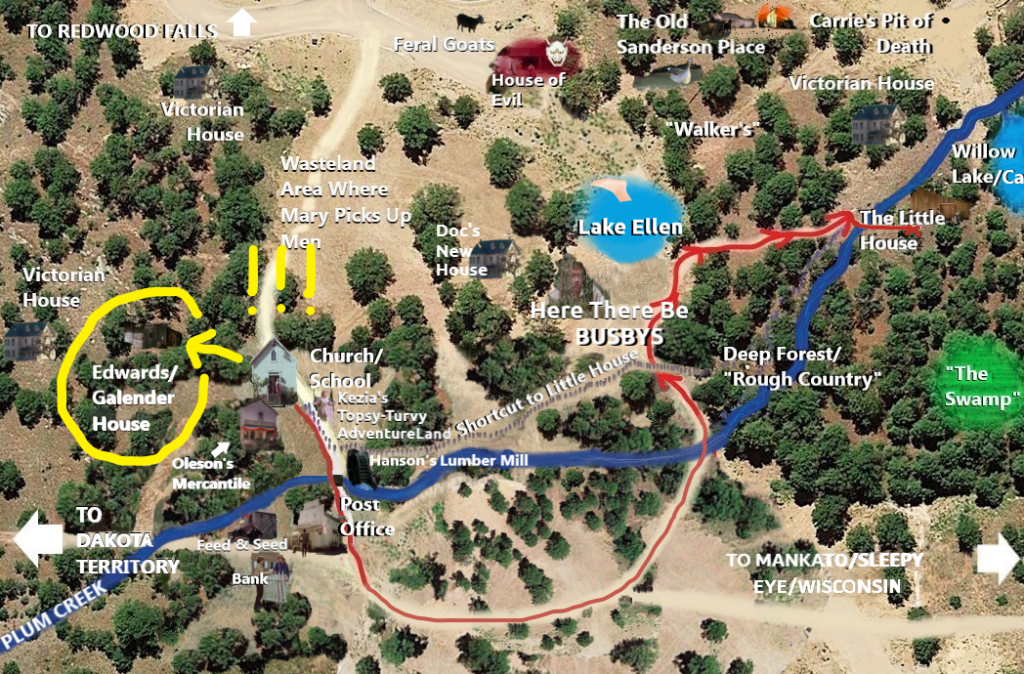
Also of interest is Mr. Ed’s old cabin is revealed to be just over the hill to the west of the church – more or less exactly where we had it on our map.
Alice says she’s sorry to delay their departure, but Charles says that’s fine.
DAGNY: Charles, maybe leave.

Alice essentially does beg Jonathan to stay, and it seems he’s decided to. But then he spoils it by reminding her she’ll have to quit her job, and she furiously tells him to fuck off (paraphrase) and leaves.


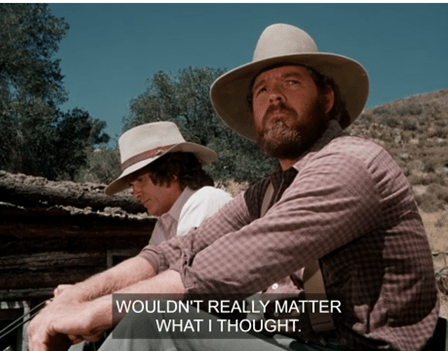
Garvey climbs into the wagon, and says he supposes Charles thinks he’s wrong. Charles dryly replies, “Wouldn’t really matter what I thought” – a credibly Minnesotan response.
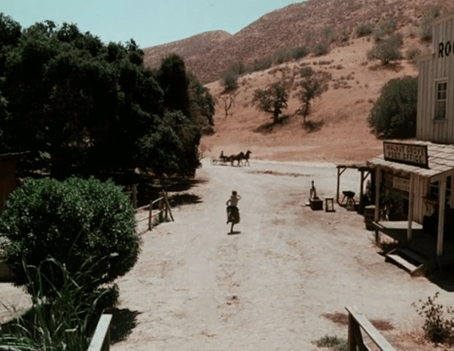
Meanwhile, voluptuous Alice flails wildly through the thoroughfare.
WILL: Is she going to be forced into prostitution?
DAGNY: Yeah, she’ll open a kitty-cat club. Walnut Grove could use one.
OLIVE: No, he is. With that butt.

Alice flails her way out of town to the south – the opposite direction from her home, but maybe she just needs a little breathing space.
DAGNY: I love this one. It might be my top for the season.

After a commercial break, we arrive in Mankato.
The first thing we see is the French maitre d’-lookin’ guy driving through the city.

He drives past the First National Bank (part of a franchise with the one in Northfield?).

Then we see Charles selling corn to an older but sinewy bearded man.
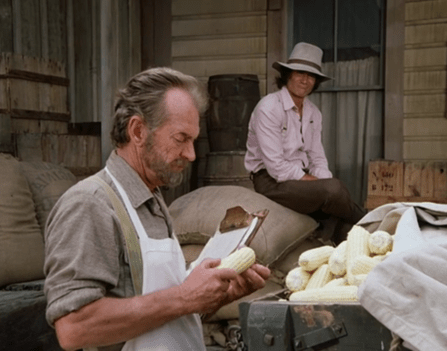
Others have rightly ridiculed that Charles apparently husked every single ear of corn before transporting it.
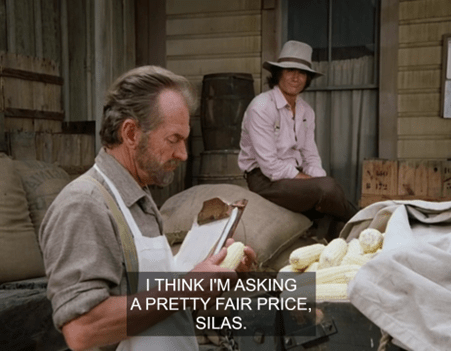
The older but sinewy bearded corn chandler is a stickler, insisting that every ear must be counted before he can make his price.
WILL: Hey, that’s Carl the Flunky.
DAGNY: You’re kidding. His hair looks great.
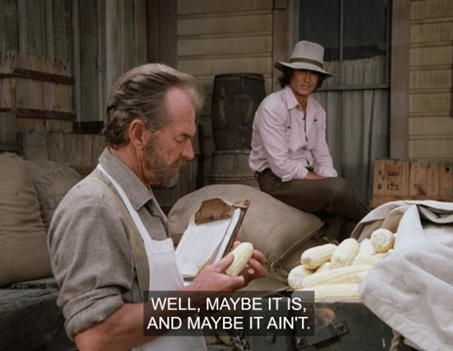
Charles, who’s apparently had some dealings with this person before, shakes his head in annoyance and says “Good old Silas!”
Jonathan Garvey, who’s been standing on the porch or boardwalk or whatever, says he’s thirsty and is going to stop in a saloon.
OLIVE: He IS thirsty.
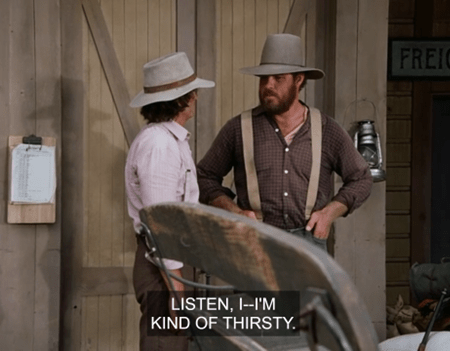
Then Charles steps back to help Good Old Silas count the corn, giving him a hilarious dirty look.

Cut to the saloon interior. Although the layout is roughly the same as that of the Silver Slipper (the saloon Mr. Edwards visited in both “Mr. Edward’s [sic] Homecoming” and “To See the World”), the decor is much simpler.


Could this be Muldoon’s, a tavern we saw from the outside in “Castoffs” but didn’t get a glimpse into?

Among the customers, we notice Not-Richard Libertini, the French Maitre D’, Garrison Keillor’s Great-Great-Grandfather (last encountered at the Grange Convention in Chicago), Ben Slick (?), and, interestingly, a Black man.


This last character is smiling and drinking beer – he’s obviously a customer – so apparently Mankato is without segregation in the Little House TV universe.
Jonathan Garvey has quickly settled into a card game.
OLIVE: I’m surprised he’s gambling. He seems so clean and straight.
WILL: Yeah, other people have commented on that too. It’s more Edwards residue, I’m sure.
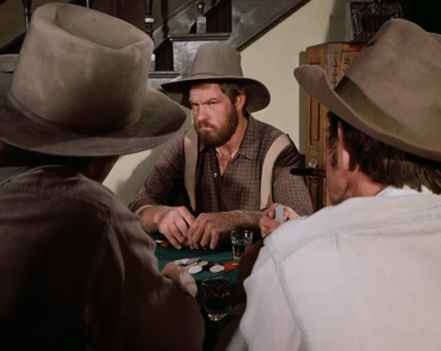
Garvey is playing with a man called “Sloan” who’s played by an actor named Alex Sharp.
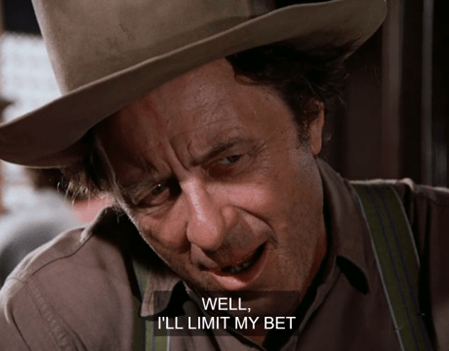
You’ll remember Sharp as the hygiene-obsessed Elmsville Goon #2 in “Quarantine,” and he also apparently played one of the Sleepy Eye Green Stockings in “In the Big Inning.” I see no reason to think they’re not all the same character, since presumably no-account gamblers moved around a lot in those days.

Another card player is Dick Durock, a longtime Hollywood stuntman who looks a bit like a poor man’s Mark Ruffalo.
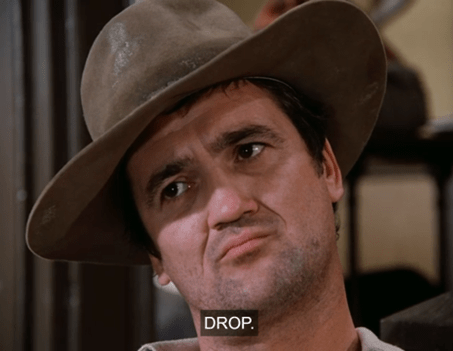

He was on the original Star Trek once and was in the notable Eric Shea vehicle The Poseidon Adventure.

But he’s probably best known for playing the title role in Swamp Thing and its sequel.

He also was the first “victim” in the famous pie-eating scene (remember that?) in Stand By Me.
Well, Garvey catches the other players cheating and overturns the table, as easily as you or I might flip a pancake.
OLIVE: Whoa, Jonathan! He’s not even drunk!


A man runs out into the street screaming about the fight. We see this saloon is actually called “The Shamrock.”
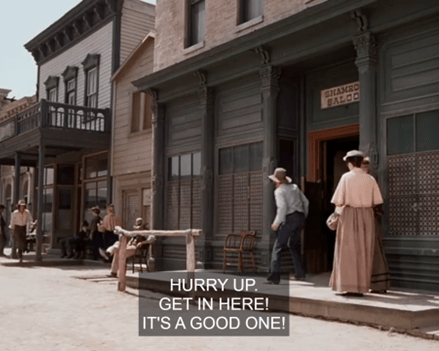
Charles runs in to save his friend.
WILL: How many best friends is he going to rescue from this exact same situation?

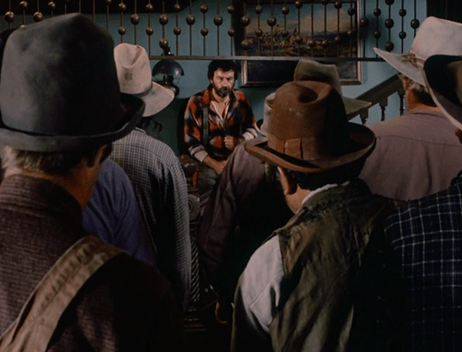
Oddly, Not-Richard Libertini and the French Maitre D’, despite being well acquainted with Garvey (they actually took direction from him during the crises of “’My Ellen‘” and “The Wolves”), just . . . well, they just stand there lookin’.


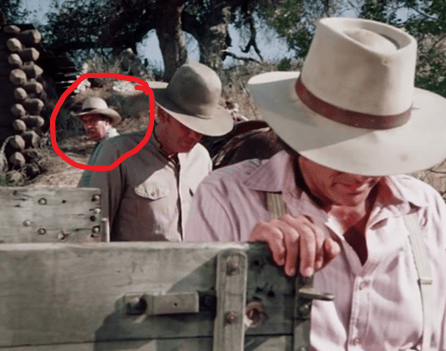
Later, we see Garvey dunking his head in a horse trough.
WILL: Even this is the same!


I’m not sure why he’s doing this. It can’t be to sober himself up, since he isn’t drunk.
DAGNY: Charles’s butt looks great here.
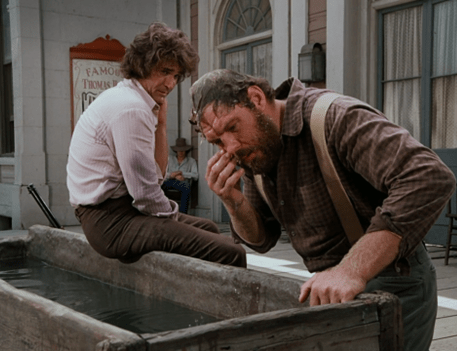
Charles says, “You’re lucky you got out with your life.”
OLIVE: Yeah. On Deadwood, that would have been a death.
WILL: Or three.
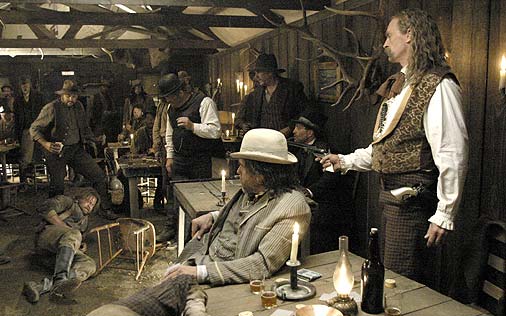
Bizarrely, then, Garvey says he’s changed his mind and wants to go back to Walnut Grove so he can fix up the property and improve its resale value for Alice.
So home they go.
DAGNY: That’s a beautiful shot, too.

Back at the Old Sanderson Place, Alice is telling Andrew to finish his meal.

This scene is actually where one of my favorite Little House bloopers was created. The mistake didn’t make it into the final cut, but you can watch it here (at 38 seconds in).
The other bloopers are funny, too, but be warned: There’s a VERY not-Twenty-First-Century-friendly race joke by Michael Landon at one point.
DAGNY: Why do they have glassware and the Ingallses only have tin cups?
WILL: They must have gotten that from the Edwardses too. Grace had widow money, plus Patricia Neal left them everything. Maybe they put all the Edwards property up as a single lot in an auction? That’s the only explanation, in fact.
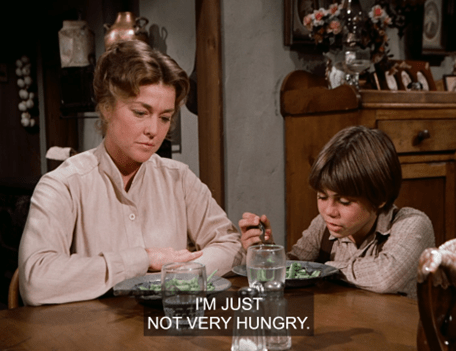
Once dismissed, Andrew opens the door and screams, since he sees Jonathan approaching.
Alice is overwhelmed but thrilled to hear he’s come back.
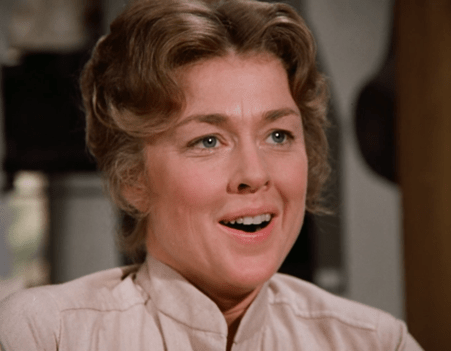
But when she steps outside, Jonathan tells her he’s just come back to work on the property.
DAGNY: He doesn’t mean that. He knows it and she knows it.

Much disappointed, Andy departs, and Alice says in a hard voice, “Just how much do you plan to put that child through.” (It isn’t really a question.)

Exhausted by Jonathan’s bullshit, Alice then says when the judge arrives, that’s it, they’ll be done for good, and that’s just fine with her.
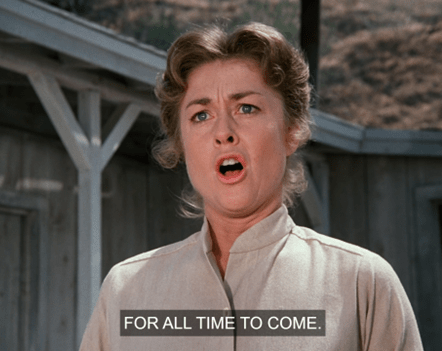
Then she goes inside, leaving Garvey to look miserably after her.
ALEXANDER [as DANIEL PLAINVIEW, screaming]: “I’VE ABANDONED MY CHILD!”


After a break, we see Andrew and Laura hanging out at the creek.
OLIVE: He’s got a lot of hair.
WILL: It was the seventies. When the ozone layer still existed, men’s hair grew thicker.

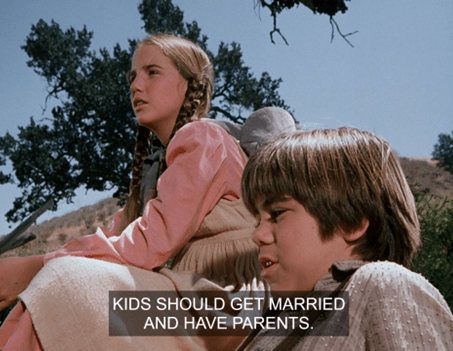
Andy says adults have no sense, adding, “I think God did things backwards. I think kids should get married and have parents.” (Considering how I rely on my kids to explain technology to me these days, I might agree.)
That night, Ma is fitting Pa for a shirt – dark gray with speckles – whilst Laura does homework.
DAGNY: Did tomato pincushions exist in the 1800s?

Pa complains about the tedious process, saying he hates “standing here like a statue.”
WILL [as LITTLE BO PEEP FIGURINE]: “Hey, what’re ya doin’, badmouthin’ statues?”
(The Little Bo Peep Figurine talks kind of like Cyndi Lauper in the Walnut Groovy universe.)


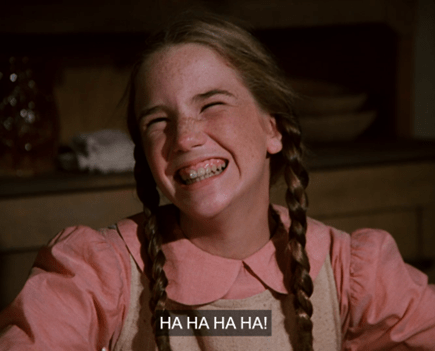
Ma and Pa joke about how he’d rather “go to church in [his] longjohns,” which makes Ol’ Gopher Fangs crack up.
Then Ma produces some blue cloth, and Pa shocks us by saying the material is too “sissy-looking” to wear.
OLIVE: Whoa, since when is Charles a homophobe?
WILL: It doesn’t seem like him.
ALEXANDER: Yeah. He wears pink every day.
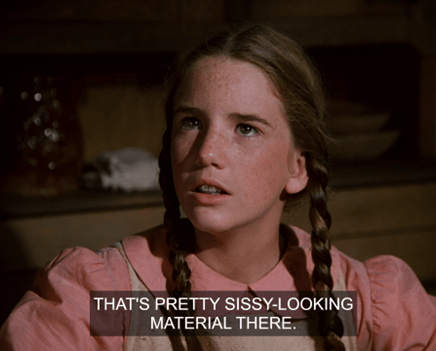
Furthermore the cloth really isn’t sissy-looking at all – it’s just plain blue.

Ma and Pa have a small argument about this, and Laura starts screaming hysterically that they’re going to get divorced. It’s a little much.
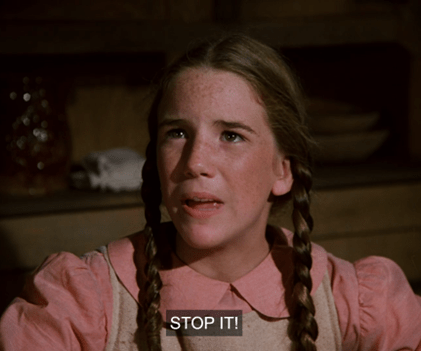
DAGNY: Where are Mary and Carrie?
Yes, Mary and Carrie are missing in this one. It’s like they drew lots every episode this season to see who had the week off.

Ma and Pa reassure Laura they’re not splitting up, and Pa sweetly tells Ma to go ahead and make the shirt, even if he’ll never wear it.
DAGNY: He let Laura have the crazier laugh for once. That’s rare.
WILL: Oh, just wait.

Back at the OSP, Jonathan Garvey arrives again and tells Alice he thought she’d be at the Post Office. Alice replies she only works half-days on Wednesdays, and Jonathan says, “Well, that’s good – it gives you a chance to catch up on the woman’s work.”
WILL [as ALICE, screaming]: “FUUUUUUUCK YOOOOOOOOOOOU!!!!!”
OLIVE: Yeah, I love how he’s saying this while she’s doing a million chores he’s never done. He sucks in this one.
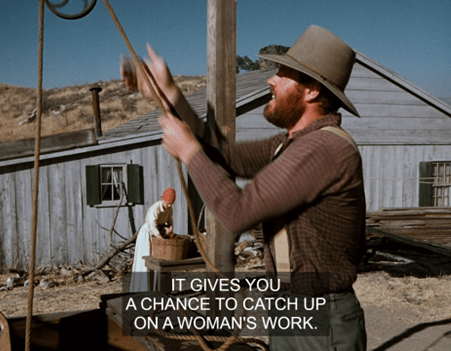
That gets them off on the wrong foot for sure. They bicker a little then, Garvey saying pulling stumps and the like is “man’s work – real man’s work. Glad there’s SOMETHIN’ I can do that you can’t.”
OLIVE: She should go get the gun and shoot him, then they hang her.
WILL: Yep. Bum-Bum-Ba-Dum.

Then Alice says acidly, “If I was clearin’ the field, I’d use the team we used to have!” – a line which got general applause and a couple of whoops from our gallery.

Garvey doesn’t think it’s such hot stuff, though, and he leaves.
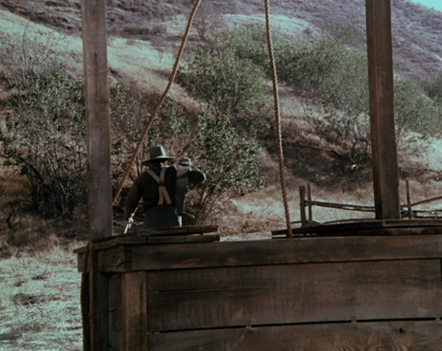
After a commercial break, we see Alice has followed Garvey back to his brushpile, which is in the middle of an enormous, gorgeous, empty landscape.
DAGNY: Was this scene filmed with a green screen? It looks like the fake backdrop in Silo.
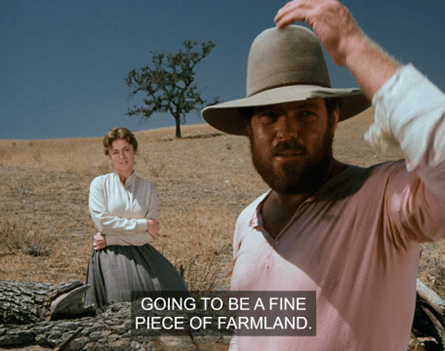
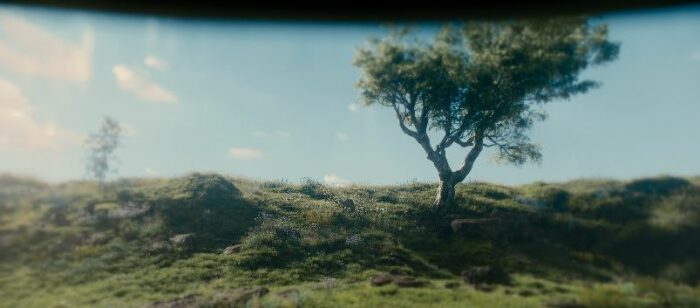
WILL: No, it’s where U2 took the Joshua Tree pictures.

It’s not clear how much time has passed, but the steam seems to have gone out of their arguments. Alice tells Jonathan “Judge Picker” will be arriving the next day (presumably from Redwood Falls, the seat of Redwood County, where Walnut Grove is located).

Alice says the court requires there to be witnesses present – something that isn’t required in divorces today, and I’m not sure ever was. She’s asked Charles and Caroline, of course.
Awkwardly and sadly, they say goodbye.
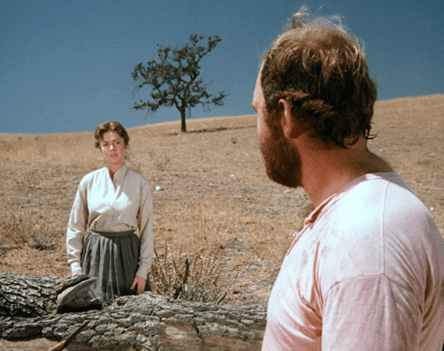
Then, in one of the strangest one-off moments the show’s given us so far, we see a crazy old man sitting on the Mercantile porch, playing an equally crazed quick-tempo version of “Turkey in the Straw” on the harmonica.
DAGNY: Oh my God! Who is this? Do you think Harriet would allow this for one second?

You’d be forgiven for thinking it’s Judge Picker – that’s what I thought the first several times I watched this one. (As we’ll see in a moment, it wouldn’t seem out of character for him.)
It was only this most recent time that I noticed, however, it’s a different person altogether. I’m sorry to say, I haven’t been able to make a conclusive ID of this person. There are a few “mystery characters” listed in the credits.
One is Hal Burton, a celebrated Hollywood stuntman who’s credited as “Harris” (Hangover Helen’s father?).
But Burton was also Michael Landon’s double on the show, and since this guy looks schlubby and older, I don’t think it can be him.

There’s also somebody named Denver Mattson, who’s credited as “Wiggins.” He would have been 40 when this was filmed. I think it’s maybe him, but while the only existing photo of him I could find looks sorta similar to the harmonica dude, it’s quite hard to tell.
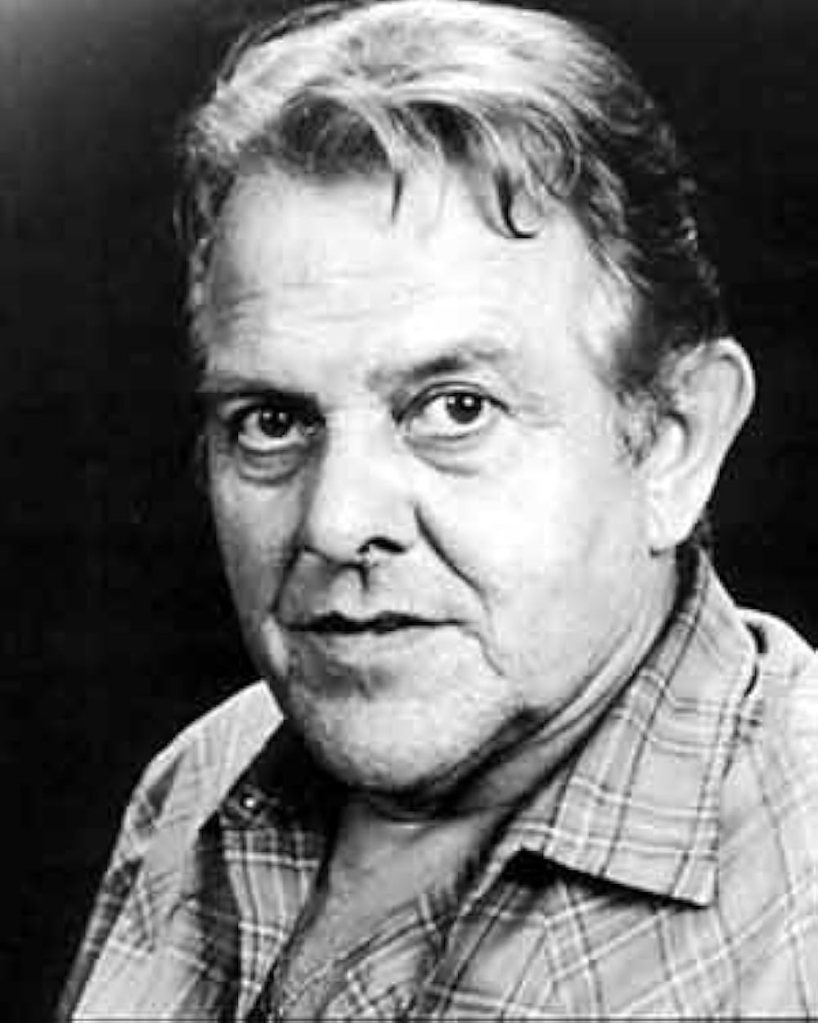
Or it could be Loren Brown, who was 60 in 1977. He’s simply credited as “Townsman.” I couldn’t find a picture of him at all, though.

Oh well, can’t win ’em all. As for “Turkey in the Straw,” it’s a tune that dates to the 1830s. It’s had different lyrics and titles over time – some of them appalling racist – but whether the song had that association in the Nineteenth Century is something that’s still debated.
Anyways, now Wiggins or whoever drops out of our story as quickly as he entered it, as we cut to the Garveys and the Ingallses grimly awaiting the judge inside the schoolhouse.

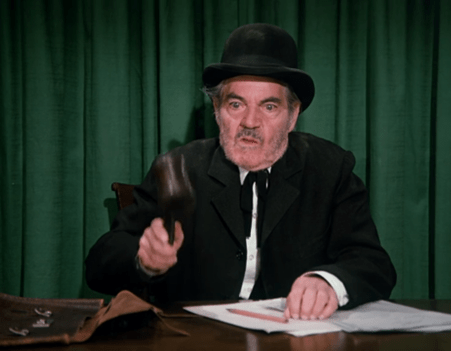
He arrives, and on close inspection, everyone would agree he’s a completely different person than the crazed harmonica player outside.
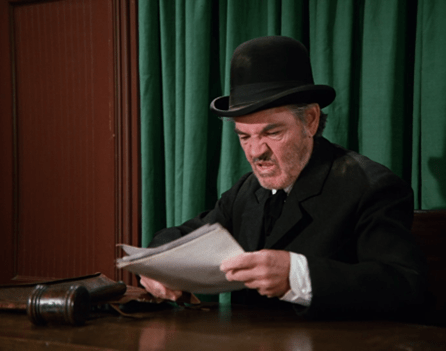
You wouldn’t necessarily agree he’s a completely different person from Jed Haney, the arthritic old-timer from “To Run and Hide,” because he’s played by the same actor, Eddie Quillan.


He is a different character, though.
The judge shuffles up to the Bead’s desk and rummages through a satchel.
DAGNY [“comedy old man” voice]: “Eh, where’s my pen? What’s happenin’?”
WILL: You can already tell what kind of judge he is, huh.

“I am Judge Pigger,” he says, though early Alice pronounced his name “Picker” and in fact that’s how he’s credited too.
DAGNY: He’s kind of like a Munchkin.
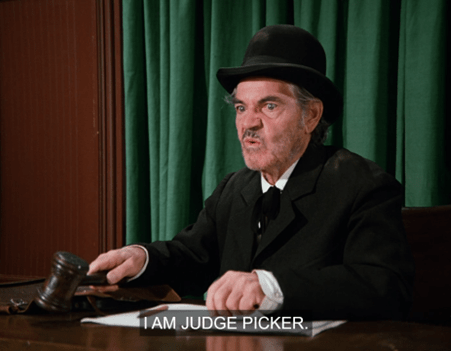
Picker/Pigger says if the divorcing parties can’t come to an agreement here, they’ll have to get attorneys. (I’ll spare you the details from Dags’s and my own divorces, except to say we’re on friendly terms with our exes now.)
He also says if it comes to that, they’ll need to appeal to a higher court in Minneapolis. This makes no sense to me. And even if they did have to appeal to a higher court (why?), the State Court would be in St. Paul, not Minneapolis.

The judge asks no question about what gave rise to the divorce – I’m not sure if that’s accurate or not.
Then Alice makes the shocking statement that she’s going to relinquish custody of Andrew, since he’d rather go with his father.
WILL: She’s ruining his plans for a wild bachelor life in Mankato.
ALEXANDER: Yeah. He was gonna get a man-cave-o.

Alice says she won’t object to giving Jonathan full custody, but he’ll have to stay in Walnut Grove if he wants it.
Andrew makes a manipulative speech – you can probably guess the sort of things he says.
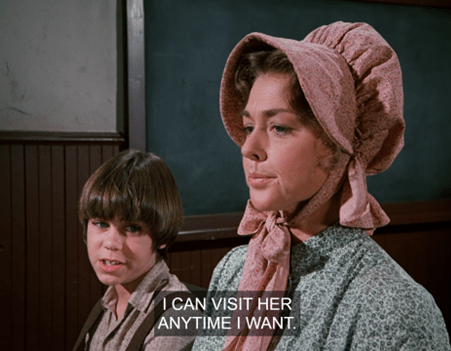
Garvey, who’s still rather nasty in this scene, says the cause of the divorce is how Alice looks down on him.
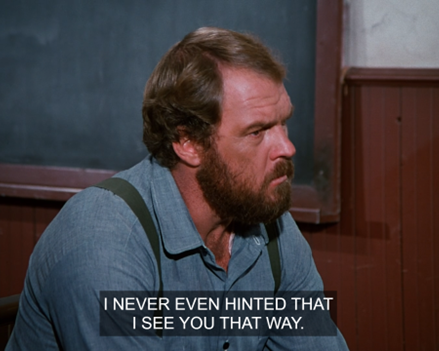
Alice stands up and shouts how that’s crazy.
WILL: See, Patrick’s acting his heart out. He looks like he’s gonna have a seizure, in fact.

Jonathan and Alice argue for a while about who said who’s crazy, only then they’re interrupted by a chilling, almost soul-shattering sound . . .
. . . the mad whinnying laughter of Charles Ingalls.
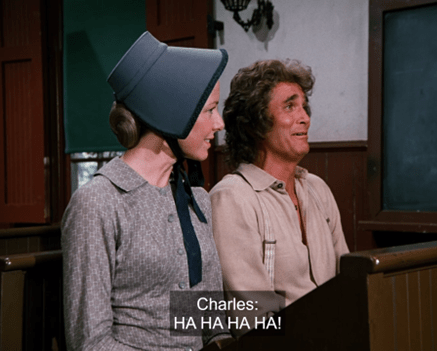
And I’m embarrassed to say, folks, this is basically the end. Charles laughs and laughs and laughs at how stupid their argument is. He laughs so long and hard that Caroline joins in.
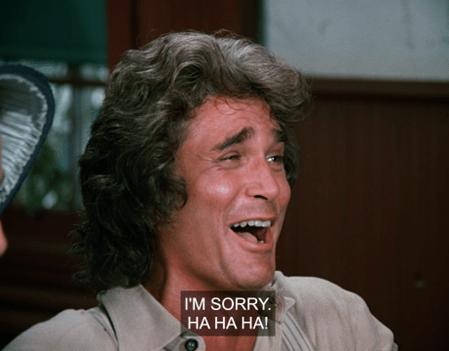
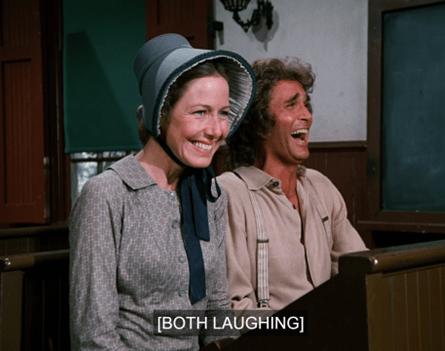
Then Alice starts laughing too.
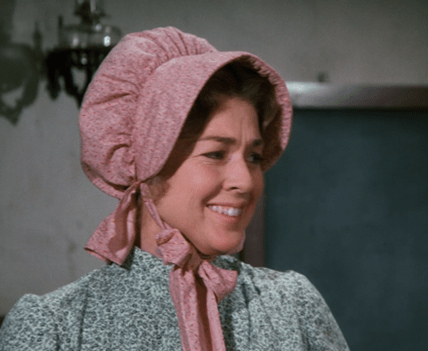
Then Jonathan.

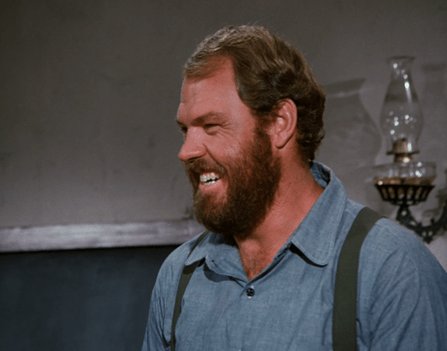
Andrew joins in.
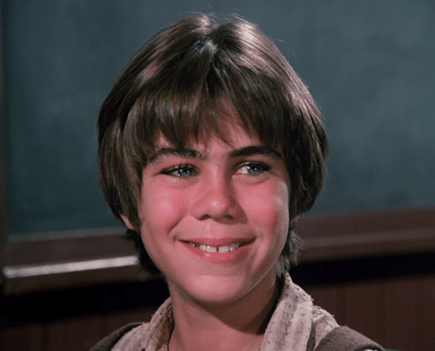
Screams and screams of laughter.

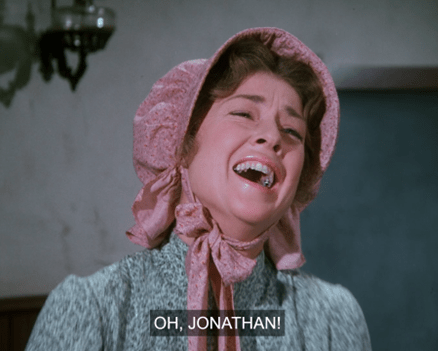
And the next thing you know, Jonathan and Alice are hugging it out.
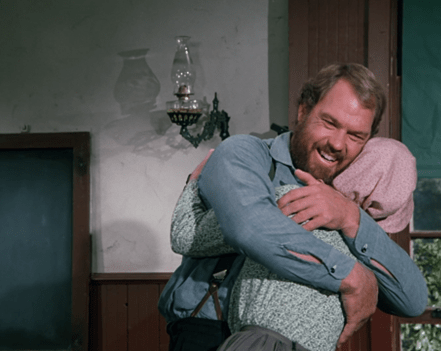
Judge Picker/Pigger tries to stop them, but it’s obvious he doesn’t know this show very well.
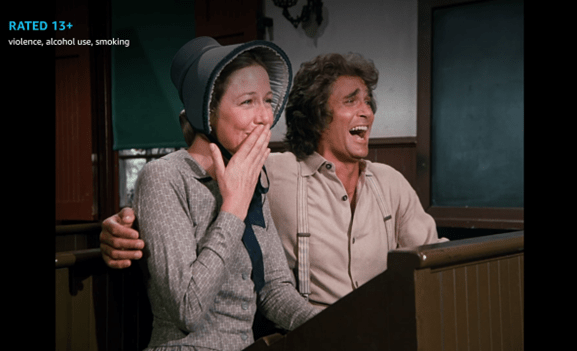


Eventually he declares a mistrial, or whatever.

WILL: Doc should come out at the end and tell the camera he drugged them so they’d have laughing fits and wouldn’t get divorced.
Garvey then invites the Ingallses to join them for dinner that night.
DAGNY [as CAROLINE]: “We’ll have to bring it, since you can’t afford food, ha ha ha!”

Actually, Caroline whoops and screams “I’ll bring a casserole!” (It’s unclear if this is anachronistic – “casseroles” in their modern sense didn’t really take off in the United States until the Twentieth Century, and in the Upper Midwest they quickly became known by the nickname “hotdish.” But I think the jury’s out on this one.)

Garvey then makes a nice comment indicating he’s accepted that Alice will be working at the Post Office from now on.
OLIVE: Charles should be, like, “When are YOU gonna get a job?”

After the Garveys leave, Charles and Caroline continue laughing and laughing. They may even have sex on the floor then, but the camera cuts away first, so we’ll never know.
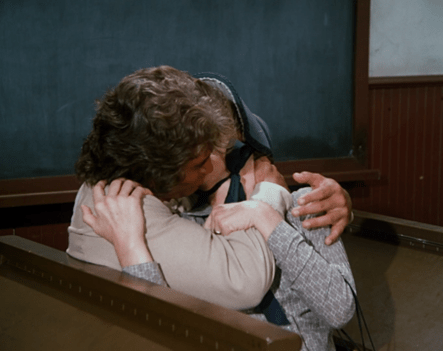
And that’s that. Bum-Bum-Ba-Dum!
STYLE WATCH:
DAGNY: I like Alice’s bandana look.
OLIVE: Me too. And her lil pink apron.
Charles appears to go commando again.
THE VERDICT:
OLIVE: It wasn’t that bad, but the ending. . . .
ALEXANDER: You can tell the laughing was conceived for Mr. Edwards.
DAGNY: Yeah, it was ridiculous. It’s no longer my favorite. It went from an A to a B-.
WILL: Can you believe Garvey burning alive and the laughing-gas trial were part of the same story?
DAGNY: In Little House Land, yes.
My own grade for it would be somewhat lower than B-, but “The High Cost” does feature good performances by all three Garveys.
UP NEXT: The Fighter
 Walnut Groovy
Another great recap, & the pictures were hysterical! Was one of them from that movie “calendar girls”? That AI comment comparing the length of your blogs to PB&J‘s & cookies was strange. those blooper reels were hysterical. I’m going to have to look to see if there’s any more on YouTube. 💁🏻♀️🍪🥪
LikeLiked by 1 person
Thanks, Maryann – yes, the inspiration was ‘Calendar Girls.’ And AI is making the Internet even stranger than it was before.
LikeLike
Oddly enough, Merlin Olsen always claimed he wasn’t much of an actor and more of a football player, but his acting never bothered me in the slightest, in that he disappeared in the role of Jonathan and never seemed behind the other, more experienced actors. I think this is the first episode to show Jonathan in a more negative light, after three appearances where he was nothing short of kind, reasonable and wise. Maybe they decided to let the audience get used to the replacement for Mr. Edwards before exploring him in a flawed portrayal.
From what I could learn about it, pink and blue were fairly neutral as far as gender goes until the 20th century, when there were discussions about which color was more masculine or feminine and the consensus was that… pink was masculine and blue was feminine, on account that pink was a stronger color.
So, I see that you used Mrs. Foster first name Melinda, which I read on Internet profiles such as the wiki and IMDB, but never knew it’s an official name or just a fanon name someone came up with. It’s never mentioned in the show or credits, from what I know.
LikeLiked by 1 person
Well, actually at first when I made the picture I used “Ruth,” but fortunately I caught myself before posting it! I love Mrs. Foster (especially in the first season), but I have no idea if her first name is ever given on the actual show. I can only say for sure it hasn’t been so far. A more interesting mystery re names surrounds Mrs. Whipple’s. In “Soldier’s Return” (which I think you’ll agree is the definitive Whipple story), Granville tells Mary his mother’s name is Amanda. Yet, in “The Collection,” Addie Bjorneson addresses her multiple times as “May” – not to my knowledge a traditional diminutive for Amanda. Does Mrs. B have a touch of dementia – or maybe dyslexia, since “Amy” IS sometimes used as a diminutive? I don’t know, but to me an incongruity like this just gives a richer texture to our beloved LHotP universe. I have several friends whose nicknames have no relationship to their given names, after all, and they’re usually weird and fun people.
LikeLike
Just a small self-correction, pink was seen as a masculine color in the *early* 20th century. I think Charles was referring to sissy in the sense of being unmanly or effeminate rather than gay. Non-heterosexuals are among the groups that don’t seem to exist in the show, due to a combination of 1970’s standards about what could be tackled in family-friendly porgramming and its religious overtone– the show is not exclusively for Christian audiences and it usually makes use of religion to preach fairly universal values, but its main audience is definitely practicing Christians.
Another group that never seems to be tackled for that reason is atheists and nonbelievers in general; we see Native-American and Jewish characters who express their faith when a character is said to no longer be practicing Christianity it’s never that they stopped believing God so much as that they felt He let them down for one reason or another. Though it’s possible that they wanted to imply the characters’ redemption wasn’t to drop atheism but rather to get at peace with the faith they never really abandoned for real. So it’s probably not a matter of excluding nonbelievers but rather not associating them with characters in a pre-redemption state.
The name inconsistence for Mrs. Whipple might also be a continuity error, but I prefer it as either with “May” as a nickname or a middle name Addie likes to use for her friend.
Hey, I just realized that the thumbnail above is probably as close as we’ll ever get to seeing an Edwards and a Garvey in the same picture. I tried to see if there was any pictures of Merlin Olsen and Victor French together but all I got was one of French with a young Olsen lookalike but it wasn’t him. https://encrypted-tbn0.gstatic.com/images?q=tbn:ANd9GcTC9ZCc4tInI0cys0Ywao_0dUsABiCP4aYzLA&usqp=CAU
LikeLiked by 1 person
Yes, I think your insights are right-on. The fact that this is a kids’ show from the 1970s is the primary explanation for omitting queer and atheist characters – Landon’s interest in social themes does kind of make it a 7+ ‘All in the Family’ at times, but he knew there were things he’d never get away with. It’s amazing he got away with what he did, frankly! In-universe, it’s pretty easy to explain too. True atheists (and I think you’re right that “angry at God” characters like Mr. Ed or Eloise Taylor don’t count) would be unlikely in this community. There might be some highly educated doubters, but they’d keep their views to themselves; I’m not sure there’d be as much of correlation between higher ed and religious skepticism in the general public as there is now, and Charles doesn’t have trouble squaring the not-exactly-Christian Emerson with his own traditional faith. Queer people would be in hiding, too, though in Nineteenth-Century Western civilization being gay wasn’t understood as an orientation or identity as much as an aberrant behavior. (The Oscar Wilde trial, a major scandal followed in Europe and America, would begin to change that.) Of course, we have fun playing with the idea of Doc and Mr. Hanson as a “married couple,” but the closest to a proper queer character we get on the show might be Mr. Montague in Season Nine. (Alison Arngrim has suggested as much.) I also like to think of Kezia as sexually ambiguous, though of course she was married to men twice before (as if that proves anything). Anyways, it’s a pity we don’t get an Edwards-Garvey meeting on the series. Would they like each other? I expect they would, though I also can see Mr. Ed being quite jealous of Garvey’s friendship with Charles. . . .
LikeLike
That was longer than a cookie!! Fun comment between Will and Dagny re: “small talk”! Enjoyed Olive’s comments!
LikeLiked by 1 person
How could there have been hotdish without Campbell’s Cream of Mushroom soup?
LikeLiked by 1 person
Good point
LikeLike
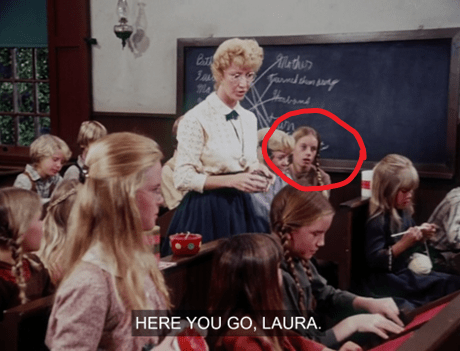
This is hilarious because JUST YESTERDAY I saw a reel on fb of Patrick Labyorteaux talking about his crying scene in the school room and calling it the worst acting of his life! He explained (hilariously) that he couldn’t cry on cue but he’d learned that when he yawned, it would often bring tears to his eyes…so that weird thing he’s doing with his mouth is him yawning and then trying to hide it. I’ll try to see if I can find a link 😂
Excellent recap as always!
LikeLiked by 1 person
😆😆😆 That’s hysterical! I actually think it looks more real than some others on the show – even if he does look like he’s about to have a seizure. Thanks for making my day! 😆
LikeLike
https://www.facebook.com/share/r/1BDhjPYwJV/?mibextid=wwXIfr
LikeLike