No doubt you have all heard by now about the reboot Little House on the Prairie series ordered by Netflix. The announcement got a lot of press coverage last week (as did Melissa Gilbert’s smackdown of Megyn Kelly for her ignorance of the original program).
But one thing absent from the articles was any mention of who we could expect in the cast.
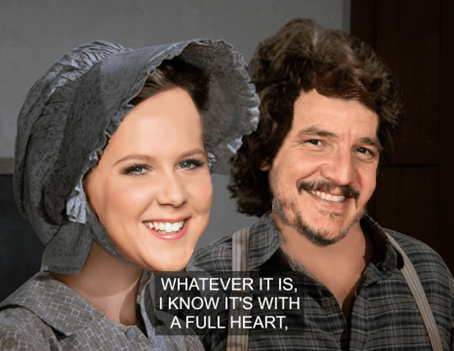
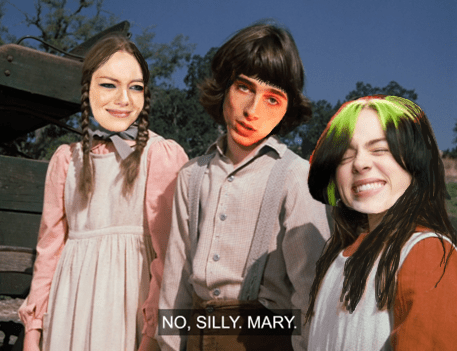
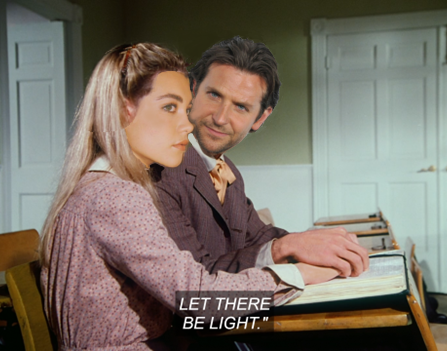
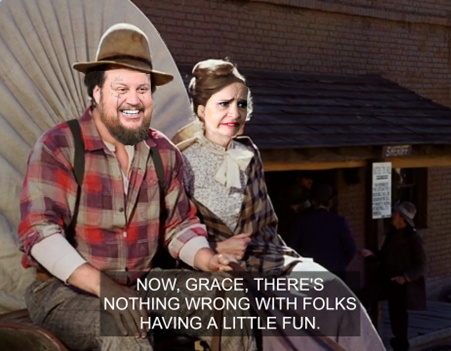
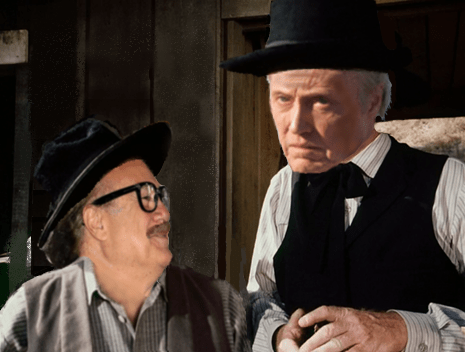
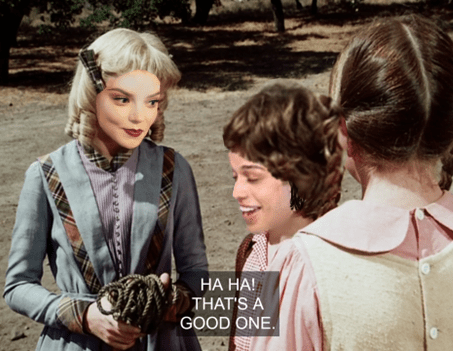
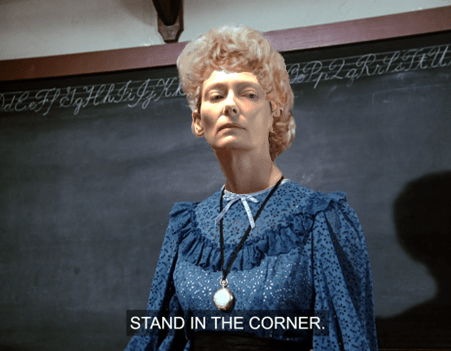
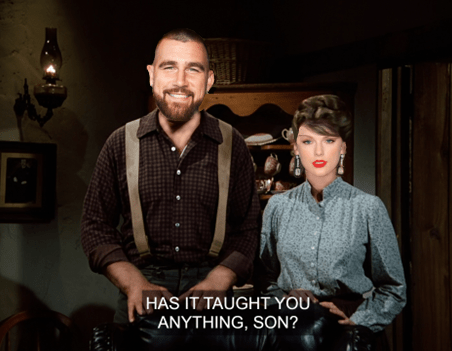
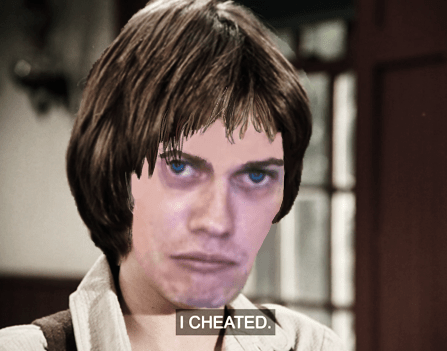
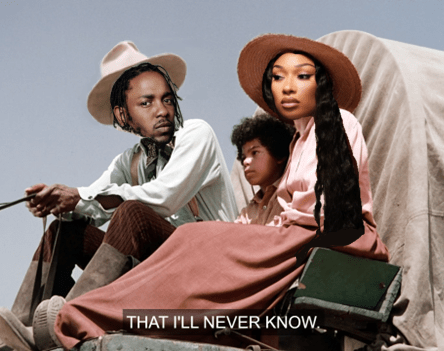
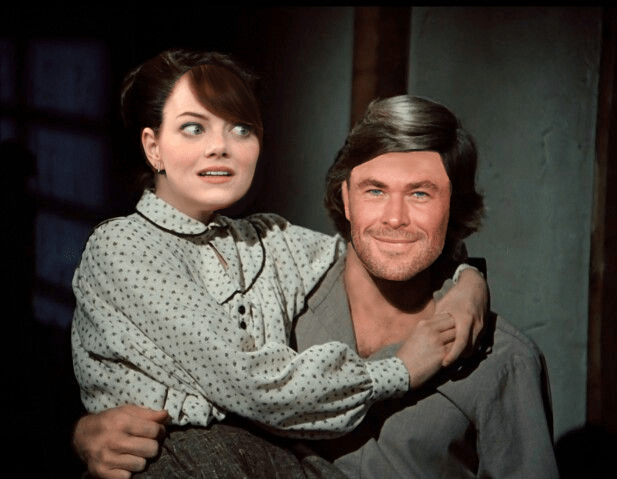
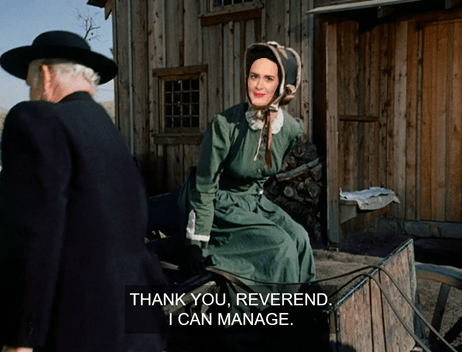
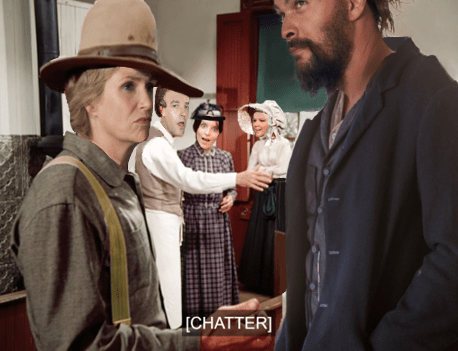
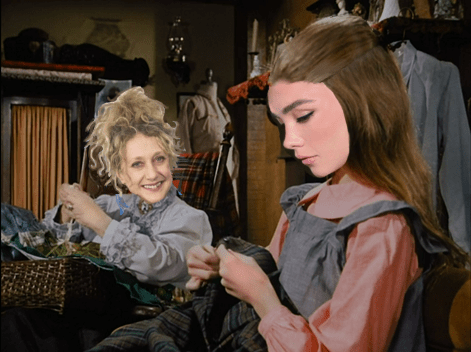
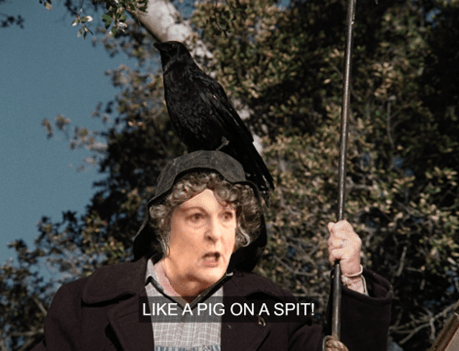
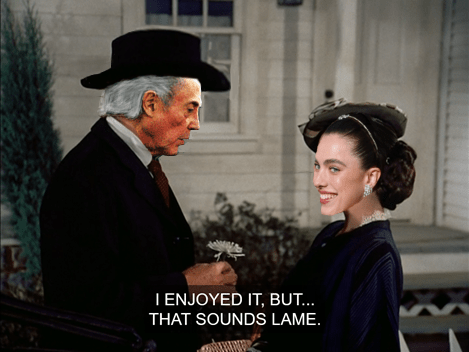
Well, as regular readers know, Walnut Groovy has spies everywhere, and I’m pleased to report that someone with behind-the-scenes knowledge not only shared the complete cast list with us, but the first promotional photos of the new cast as well.
Some good choices! Take a look and see what you think.
And remember, you heard it first at Walnut Groovy. – WK


 Walnut Groovy
Michael Landon was one of a kind. He managed to strike the perfect balance between the conservative and the liberal in a way that wouldn’t be possible in the 2020s.
LikeLiked by 1 person
I like the Tom Hanks/Dabbs Greer switcheroo. 😉
LikeLiked by 1 person
It actually works pretty well, doesn’t it? Maybe they really are the same person after all. . . .
LikeLike
This was the first WG column my husband read in its entirety! I usually just read aloud the choicest parts. He thought Tilda Swinton was the best. They were all pretty good!
LikeLiked by 1 person
Thanks, Ben! That’s high praise. 🙂
LikeLike
Tilda Sweden as Mrs.Bedle!.? Horrifying but hysterical! This was great! I needed this today.
LikeLiked by 1 person
Thank you! 🙂
LikeLike
These pics look much better than the ones from last time. I was almost caught by the one with the hypotetical Mr. and Mrs. Oleson (though it’d be odd if Paul Rudd played Nels instead of his Grovester lookalike)
LikeLiked by 1 person
I’m not sure what you mean by “last time,” but thank you, I think. I finally abandoned Microsoft Paint and am trying a new art app. I like it so far. And Paul Rudd could easily play both parts. 😉
LikeLike
That deafening “whooshing” sound you hear is MG ENTIRELY missing the point.
LikeLike
How’s that?
LikeLike
I wonder if any official source involved in the new production used the term “reboot”, or it’s only used by news outlets and fans. Because from what I can see, it’s going to be a new adaptation of the book series. So I think it’s more comparable to the two adaptations of “Anne of Green Gables”, one made in 1985 (coincidentially the year after “Little House” ‘s final chapter was released) and the Netflix 2017 one, “Anne With an E”; one seems closer to the books, the other has a modernized streak, with topics more akin to our contemporary reality, but still seems to preserve the essence of the source material.
It’d be interesting if they seeked to follow the same approach as AWAE and suceeded like “Anne With…” did, but it seems the path people suggest the most is a closer adaptation to the original LIW books, more faithful to the 1800’s reality and grounded on realism, in other words truer to the source material and by extent the real Ingalls family’s History. The original Little House show preferred taking multiple liberties to the point of making a whole new story and characters, tackling contemporary themes in spite of the time period and balancing hope and idealism with realism and reminders of harsh reality, something not every production succeeds.
the one path nobody wants them to take is try to recreate the elements of the original show; it simply can’t be done in a different reality and without Landon and co. Which is probably why most people are asking for an adaptation closer to the books and real life, because that’d be the more concrete option to take whereas something more loose and trying to be its own thing could go horribly wrong (ironically, that’s exactly what Landon did in the show).
LikeLiked by 1 person
I’m not sure if they said “reboot,” but like so many cultural buzzwords, I think that term started out with a precise meaning (“developing a new creative property out of an old one”) but now has a more generic one (“another thing!”). I love the Megan Follows Anne probably as much as Little House, though sadly I haven’t watched it much recently. (The last time I looked for it I couldn’t find it to stream; Dags said it was because the CBC is so proprietary they’d rather have no one watch it than non-Canadians.) Olive and I watched Anne With an E, which she liked a lot. I prefer the original series, though there’s no question AWaE is more Landonish in its approach. I’ve said this before, and no offense to the Book People, but I’m not a fan of the Wilder books. I wanted all the schlocky melodrama, outright horror, dumb comedy, blind schools and Busbys and leg-cutting and rapist mimes and baby battering rams and circus fat ladies and orangutans of the TV show, because I find them wildly entertaining. But it’s probably for the best that they’re taking a “back to the books” approach (though the showrunners seem like an odd fit for that); as much as I’d love to see new stories with the Sanderson kids, Adam, Hester-Sue et al., it would be hard to pull off. It’s going to be hard enough as it is.
LikeLike
Hi Will- I’ve been stuck at home. I’ve been watching (again) from the start and reading (again) Walnut groovy with it. My sensibilities are very close to yours and you make me guffaw and a regular basis. Today I was skipping around the blog and read the Godsister again. When I got to the part about aunt Helen I belly laughed -when I got to got to Aunt Helen’s twin I laughed so hard that I had to stop reading and catch my breath. I saved the picture for a quick pick me up. I’m a 55 year old gay man who has loved little house one the Prarie since age 5. For a few years now you’ve provided light and hilarious perspective. Lately the world seems bleak, I know look forward to these in a way I hadn’t before. It’s a connection and we all need them. I really appreciate you and your family. Keep up the amazing work! Toby
LikeLiked by 2 people
That means so much to me, Toby. Thanks so much. ☺️
LikeLike
“I’m not sure if they said “reboot,” but like so many cultural buzzwords, I think that term started out with a precise meaning (“developing a new creative property out of an old one”) but now has a more generic one (“another thing!”).”
Speaking of words that lost their original meaning to a generic, amorphous definition, I think that phenomenon explains the Megyn Kelly incident, and might explain the commenter above claiming that Melissa Gilbert (is)” entirely missing the point” in Kelly’s rant against “woke”. The term used to have a broad, but objectively positive meaning, i.e. being “awakened” about social issues and causes, a compliment on one’s self-awareness of the problems of the world around you and your involvement to make the difference in that. But it started being used to just about anything in fiction that inserted progressive, modern trends, much of which started being perceived as a tendency on productions derived from previous IPs (remakes, sequels, reboots, revivals) to insert progressive updates in the newest production and make it more fitting for the current audience. Movies and series have been doing that for ages in efforts to update franchises, but in the last 15 years, there’s been this general backlash against what viewers perceive as half-hearted precedents that don’t seem to improve the quality and are either symptoms or causes to new versions failing and disappointing audiences. Suddenly “woke” was used as a pejorative label to productions that failed, in the detractors’ eyes, specifically for their progressive elements, especially if it was a new version, chapter or spin-off of a beloved franchise, which many fans claim was ruined by a “woke” approach.
So, not to give Kelly too much credit, but I think her rant and MG’s response are symptoms of a phenomenon related to that term, which is, people have vastly distinct definitions of what “woke” means depending on their worldview. For the pejorative use of the word, which for many people is the only one they ever see, it means a gimmicky, preachy approach seeking to appeal to modern viewers by artificially introducing current trendy topics for half-hearted motivations, which eventually spoils the quality of the movie/series/cartoon by delivering a half-baked result. I’m not sure if Kelly ever watched “Little House” or has any memories of the show, but if she does, I think she believes that “back in the day, they knew how to do it and not make it preachy and forced”. There’s this notion that when older productions addressed social issues, they were done more organically and not just to follow what’s popular. The original, complementary use is now mostly reserved for the openly progressive people, who go out of their way to advocate for causes and social justice and usually believe even the less sincere displays of their ideals are steps in the right direction.
I think one major difference now is that the Internet and social media made it easier to get through information and know about the people behind the scenes, the making process and other details about the latest work of art even before it’s released. With that, we make deductions about what’s behind the creative decisions within the story, especially the ones we don’t like and the ones that seem too in your face, and now we have a cynical, skeptic view of writers and producers, seeing their decisions as products of their own bias or agendas in the show, and when they tackle social justice issues, we think they might just be following popular topics to get in touch with us. I perceived that, for example, in the Disney remakes, which to varying degrees made updates aiming for a new audience, from efforts to make the heroines more proactive to plot points to address complaints from fans in the original films, and again, none of this is anything new, but I had a feeling that those updates were being made in a mechanical way, which didn’t always favor the story and that it was an effort to justify a new version, which combined with these remakes often missing the point of much of what worked in the original version, it’s easy to see just why a lot of fans started seeing this approach as a disservice.
Ironically, even that is not new; I remember the case when Marlon Brando had a Native American actress and activist named Sacheen Littlefeather receive his Oscar in his stead to make a speech about the Siege at Wounded Knee, which backfired when it was discovered she was an actress of Native-American ancestry, not one born and raised under the situation she denounced and then her ancestry was contested, hence, “she’s a fake and this whole speech is a hoax!!!”. Not unlike how activists and even whole social movements are accused of not being sincere about what they preach. Of course, there’s a disingenuous side to that criticism when it throws every single aspect of a work of fiction under the bus as insincere and with an ulterior agenda, in a convenient way to denigrate ideas you don’t like without admitting you don’t like them (“only the way they were forced into the story”), but when our bias doesn’t particularly align with that aspect and there’s limitless access to information about the making and people behind that, it’s hard not to make assumptions about it, especially when you wish for an explanation about what’s behind that one element that’s getting on your nerves and there’s so many YouTube channels and other content creators to talk about it.
LikeLiked by 1 person
I think you’re right about all of this. Your observation about themes/messages in old entertainments seeming “organic” whilst new ones seem “forced” is insightful. (Well, your comments are always insightful, but this one is particularly so.)
In fact, I’d go so far as to say I actually agree with people who complain about the “wokeness” they recognize in the arts these days, but not for the same reasons, exactly. I think being “woke” (in, as you say, its original sense) mostly means understanding stuff in context (historical or cultural or whatever), which it won’t surprise anybody I feel is a positive thing and not in the least outrageous. By that I’m talking mostly about woke people, as you suggested, not woke books/movies/TV shows/etc.
But whenever I find myself in agreement with the Anti-Woke Brigade that a series, let’s say, is “too woke,” it isn’t really because of the woke intent, it is because the subject is approached so obviously, in a way that’s so forced. You yourself put it much better: “a gimmicky, preachy approach seeking to appeal to modern viewers by artificially introducing current trendy topics for half-hearted motivations, which eventually spoils the quality of the movie/series/cartoon by delivering a half-baked result.” I might tweak a word or two of that; for instance, I think much of the “gimmicky, preachy approach” doesn’t so much “artificially introduce topics for half-hearted motivations” as it SINCERELY introduces them for full-hearted, embarrassingly earnest ones!
Oscar Wilde said, “All bad poetry springs from genuine feeling. To be natural is to be obvious, and to be obvious is to be inartistic.” I believe this one million percent. I think the only perfect works of art are those whose meanings are to be puzzled over, and which may have themes but never messages. It’s the obviousness of “messaging” in entertainment that makes it tedious. The AWB would call that “virtue-signaling,” as if it’s not genuine, but I think in many cases it is. The artists and the companies DO really believe in what they’re peddling, and that’s part of why their art can turn out so badly.
Now, as regards Little House: TOS, as I suppose we can start calling it, this was a show made largely for kids, and so it never aspired to be challenging like a Fellini or Robert Altman movie. But the fact that so many people, then and now, first fell in love with it when they themselves were children is what I think is at the root of this whole Kelly/Gilbert thing. When a story is good, kids don’t really analyze what it means, and that leads to people either not recognizing there was a message present at all (as Kelly apparently was doing) or saying if it was there, it was so “organic” that it wasn’t offensive like the stuff of today is. But the only reason they see it as organic is because they experienced it through the eyes and brain of a child! As MG said, viewed through the lens of adulthood, the messages are pretty clear.
That said, the melodramatic, almost operatic approach, combined with the period setting, helps to diffuse the preachiness; it’s the spoonful of sugar that helps the medicine go down. There are actually only a few Little House episodes that I find offensively obvious – “Harriet’s Happenings,” one of my least favorite stories from this season, is a rare example. EVERYTHING in that one is obvious – Mrs. O only targets people who are innocent and pure; Cousin Murdock, haw haw haw, explicitly says he only cares about profit; and the whole thing ends with Charles ranting in church and telling everyone in town and in the audience exactly what to think about the story we’ve just seen. It’s what Dagny would say “feels like a parody of Little House” – one of the episodes that makes you understand how people who DON’T like the show see the whole series.
Of course, there are some episodes that are almost parodies that are good. “Mortal Mission,” coming up shortly, is one that qualifies, with its anthrax plague, child deaths, hugging and blubbering over loved ones, and Doc Baker’s grappling with his powerlessness to stop the horror of it all. . . . I can’t wait for that one, in fact! 😀
Anyways, thanks for the thoughtful comment.
LikeLiked by 1 person
I think what Kelly is implying is that if we look at Little House thru a contemporary “Woke” lens, the Ingallses and the entire town of Walnut Grove are nothing more than a bunch of white supremacist, racist colonizers who stole Indigenous People’s land. Therefore, every episode is going to have to begin with a Land Acknowledgment!
LikeLike
What a horrifying thought! At the same time, Michael Landon & Co. made that exact argument several times on the original. Some of us liked that about the show, in fact.
LikeLike
I think you misunderstand me. I totally agree with you. Yes, Landon addressed racism — against Native, Black and Jewish peoples – and other prejudices head on as it existed in the 1870s thru the 1970s and in to the future. And those were fantastic, enlightening episodes. But I never saw the Ingalls engage in struggle sessions or acknowledge that they built their little house on stolen land and regret it or actively try to make the school room more racially diverse, equitable and inclusive. Where were the gay people? The transgender people? The neurodivergent non-binary people? Obviously they existed. Today, there is an argument to be made that tomboy Laura is actually a boy and that she should get gender affirming surgery in Mankato. Manly might actually be Womanly — sorry, I couldn’t help myself. Also, in your re-casting you only include Black actors in the roles that were specifically for Black characters. Why didn’t you make the Garveys Black or Doc’s special lady friend Asian? Maybe because you rightfully didn’t want to mock actors of color? Let’s not forget that Laura Ingalls Wilder herself had her name taken off her own book award because the committee deemed her racist against Native Americans. So why should we watch a show whose main character is based on a known racist unless she apologizes and atones for her evil outlook? And even then, she will forever be a racist. These are all things that today’s Little House will be expected to address. Some will like this. Others, like Kelly, may not.
LikeLiked by 1 person
I’m sorry about that. Such conversations can be powder kegs, and they really shouldn’t be. I shouldn’t be so defensive.
I certainly agree that “woke for woke’s sake” is a recipe for bad art. Little House is kind of an odd creature, though, in that both the books and the show are intended in large part for children, and both have vaguely educational goals – Wilder to make the period accessible for young readers, and Landon to make each story a little moral lesson. I never read the books, so I can’t really say with any certainty whether they’re worthy of criticism (the case against them seems somewhat exaggerated to me), but Landon’s idea of family entertainment clearly went beyond a “you are there” widow into a bygone world. There are little examples of the kind of things you mention in the show – I think the Spotted Eagle and Solomon Henry stories are examples of an improbably DEI approach to the classroom and would have seemed absurd to somebody living in the 1870s U.S. But you’re right that the characters don’t flagellate themselves over the past. Jonathan Garvey mocks the white stationmaster who describes people like himself as the “real Americans,” and Charles lectures the U.S. Marshal who pursues the fugitive Sioux chief about what “people like you” did to the Indians – not “people like us.” And of course, for the most part it’s only the evil Walnut Grovesters who are the racists, the Larrabees and the Harriet Olesons. But there’s no question Landon was pushing things for the time, and when we talked with Melissa Gilbert a while back she said he would have done stories about gay characters if the TV paradigm of the day had allowed it. I think you’re right that audiences today sometimes have ludicrous expectations, and I think that’s too bad, but I’d stop short of saying a quasi-historical quasi-fictional show like Little House should never go there. The question is, could anyone do it as artfully and hugely entertainingly as Landon did? The art-and-entertainment element is what’s most important to me, and it’s certainly true that a lot of people – audiences and creators alike – don’t seem to share that sensibility today.
LikeLiked by 1 person
100%! Though if Mankato had actually had a gender affirming hospital, there would have been no need for Laura to ascend Mount Jonathan and try to unalive herself in order to give Pa a son. 😉
LikeLike
See, it’s not so hard to find an entertaining way to work such things into the stories! 😆
LikeLike