The Good, The Bad and The Boring; or
It’s Season Seven, We’re Running Out of Material
(a recap by Will Kaiser)
Title: A New Beginning
Airdate: October 6, 1980
Written by John T. Dugan
Directed by William F. Claxton
SUMMARY IN A NUTSHELL: Jonathan Garvey moves to Sleepy Eye, becomes a policeman, and solves a who-gives-a-shit mystery. Oh, he manages to cause a death, too.
RECAP:
WILL: I’m glad you boys are home from college . . . cuz this is one for the MEN.
ALEXANDER/ROMAN: Yeah!/Good!/Enough with these pantywaist love stories!/grunting/etc.
We begin this week at the Old Sanderson Place.
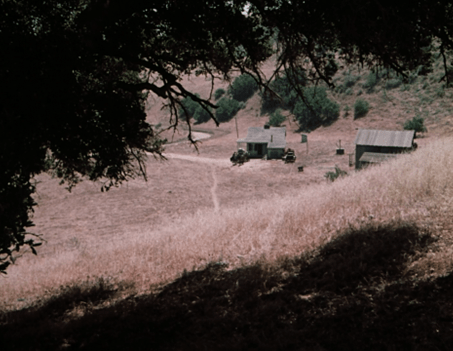
I’d forgive you if you didn’t recognize it, since we’re viewing it from a high angle, and since of course the Barn of Garve isn’t on fire.
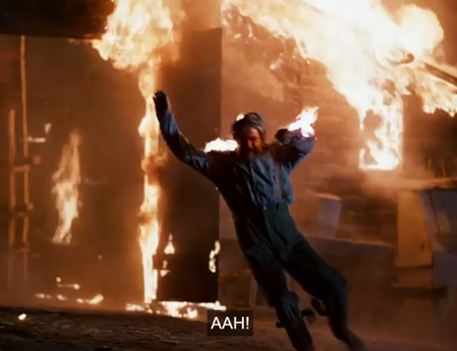

Our title this week is:
It’s the first title since “Sweet Sixteen,” five episodes ago, not to appear in quotation marks. (I rarely comment on it anymore, but the quotes-versus-no-quotes thing hasn’t ever begun making sense to me.)

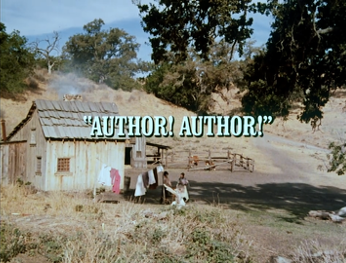
The phrase A New Beginning, of course, is most associated with Season Nine, which will use it as a brand refresh. (I was going to say disastrous brand refresh, but I’ll reserve judgment. I’ve been surprised about other things over the course of this Project.)
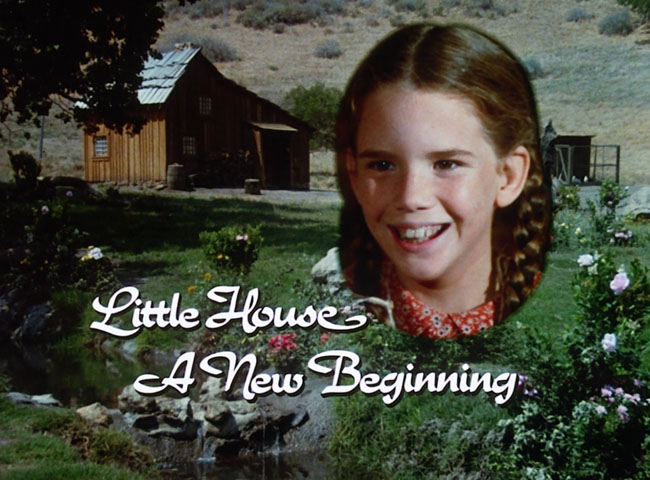
This story has nothing to do with Season Nine, though.
Anyways, Pa and Albert are over, helping Jonathan Garvey pack his wagon.
Andrew Garvey appears.
ROMAN: Whoa! He looks different.
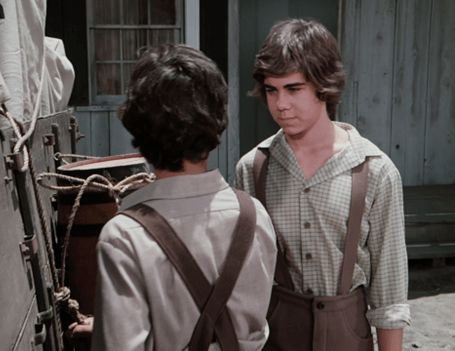
He does. As noted last week, Patrick Labyorteaux aged alarmingly between seasons.
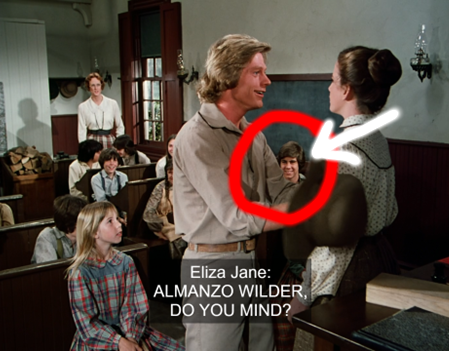
We only caught a fleeting glimpse of him then. But now we get him in high relief.
Albert morphed into a teenager over summer break too, of course; but his transformation is less dramatic than Andy’s. Patrick L was a year and a half older than Matthew L, after all.
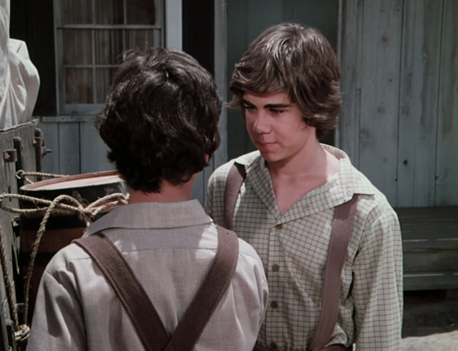
ROMAN: He’s standing pretty close. Are they lovers now?
WILL: You know, I’m not sure what kind of people you’re hanging out with at that college, but you’re getting a very coarse sense of humor.
ROMAN: Sorry, Stepfather.
To be fair, Andy is looming somewhat distressingly over Alb. But I like this height differential; it matches their dads’!
Well, Albert blushes and gives Andy a little punch on the arm, saying, “I’m gonna miss you.”
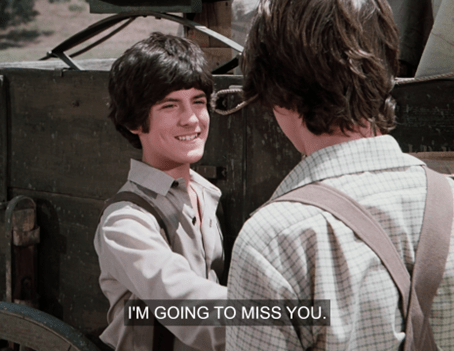
Although Matthew Labyorteaux’s voice has changed, he’s still pitching it kinda high. (As we saw with Laura last season, this show keeps its teen characters in a sort of post-childhood limbo so they can still be kids when necessary.)
“Same here,” Andy says.
Patrick L doesn’t modulate his now-deep voice, probably because he knows he’s leaving and so is off the hook for staying childlike.
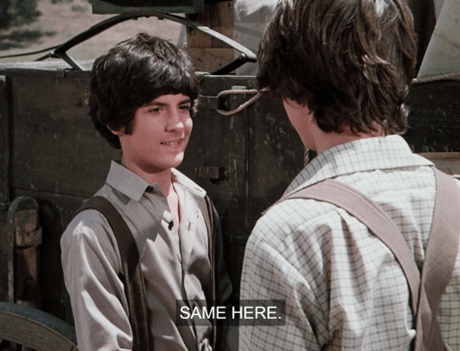
Andy tells Albert (and the audience) that he and his dad are a-movin’ to Sleepy Eye.
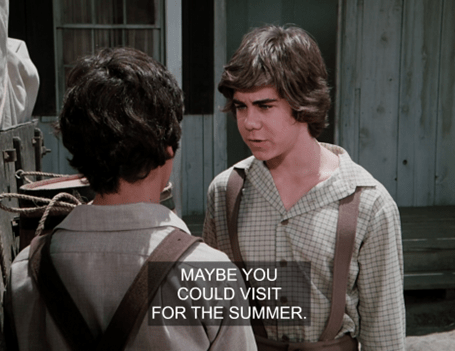
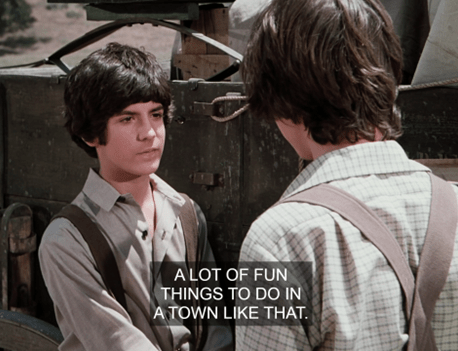
He says the Eye is a rad town and Albert should come visit sometime.
Big Jon comes out of the house and stands face to face with Charles. Speaking of their height differential, we rarely see them together “full length,” as it were. (The difference is greater than usually suggested in closeups.)
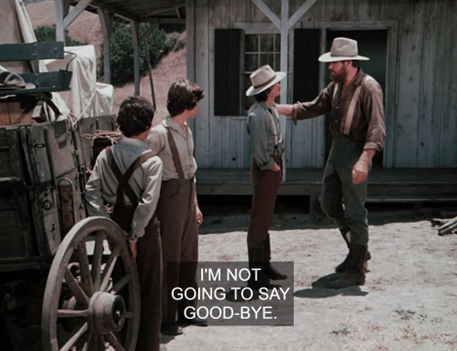
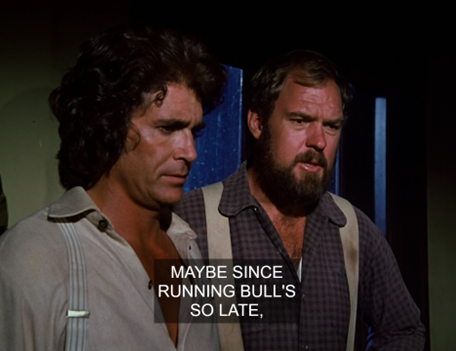
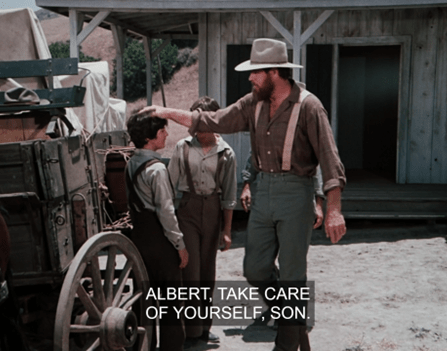
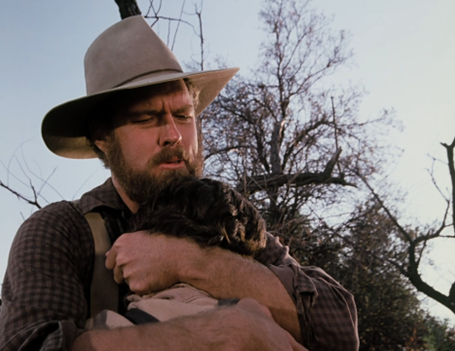
Garvey tousles Albert’s hair, the killing of Alice water under the bridge for a long time now. (It’s at least two years since the fire in Little House Universal Time.)
Charles says he’ll make sure the OSP looks in good shape for “the new owners.” (This property has passed through more hands than any other on the show.)
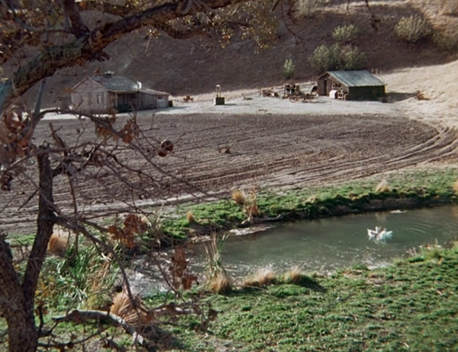
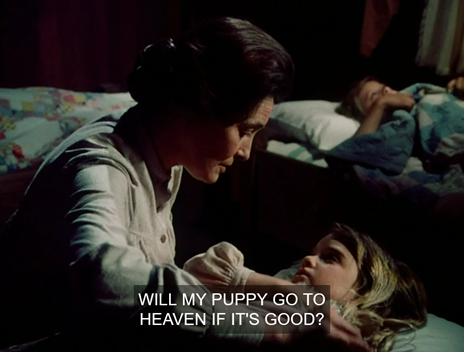
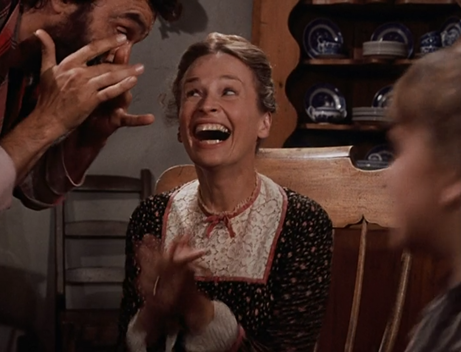
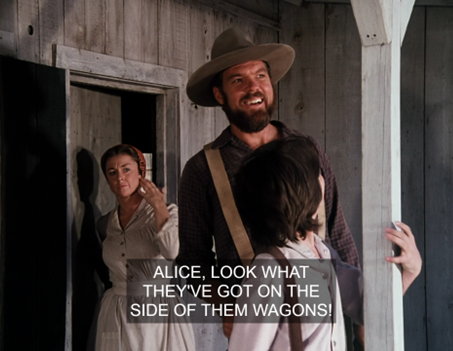
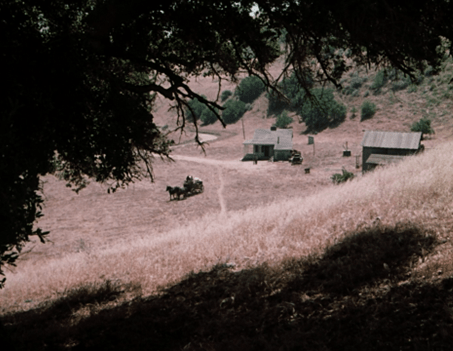
The (surviving) Garveys take off, plowing across the yard rather than taking the conveniently placed road.
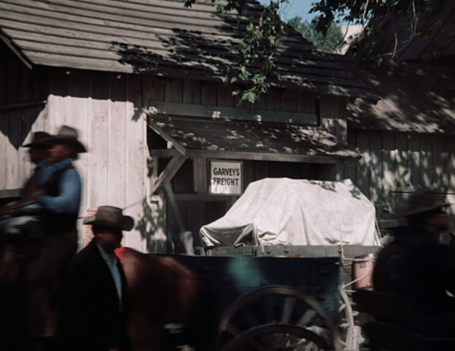
Next, we see a sign advertising Garvey’s Freight above a door.
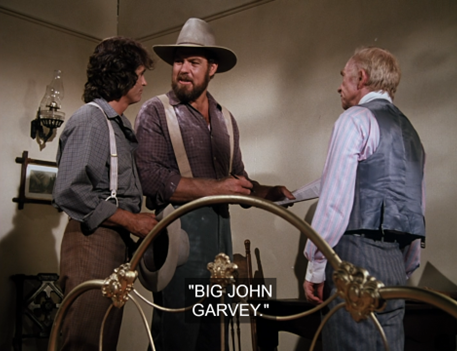
Inside, a man with a shock of drooping hair is handing over the keys to Garvey.
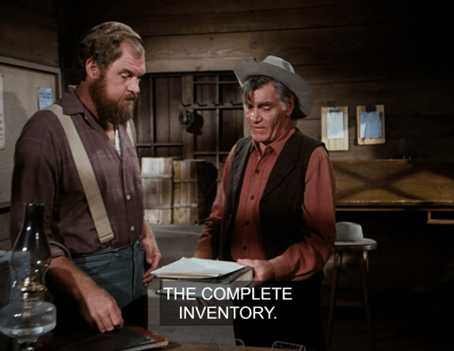
This person is saying, “Incoming shipments, outgoing orders . . . I think you’ll find everything in order.”
WILL: Did you notice that? He just said “order” twice.
ALEXANDER: No.
WILL: That type of repetition is usually drummed out of you in the writers’ academy.
(Doogie Dugan wrote this one – no doubt a writers’ academy alum himself – and Clax is back as director.)
The men discuss the operation, with Shockhair saying, “You’ll soon have enough business from Mankato alone to be as much as you can handle.”
Gesturing at the paperwork, Garvey says, “You gonna miss handlin’ all this?”
WILL: And now they said “handle” twice! Is this pandemonium?
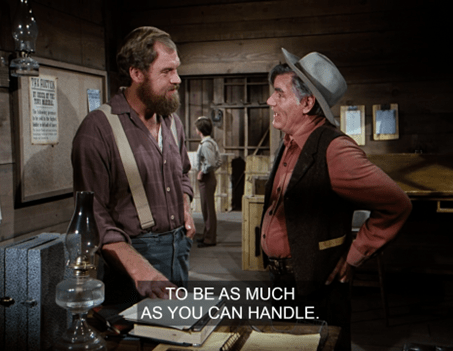
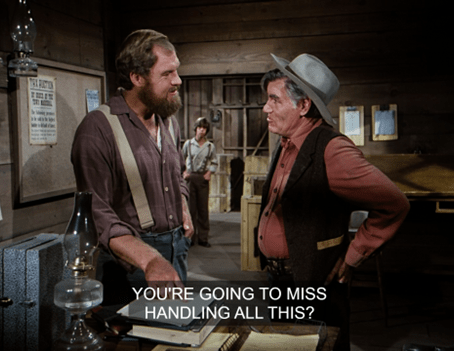
ROMAN: But Stepfather, this repetition is different, because he’s making reference to him saying “as much as you can handle” just now. This one is acceptable.
(Of course he’s right. He is a writing tutor at that college, you know.)
According to the credits, this shock-haired retiring freightster is a Sam Pendergast, played by Paul Larson, who was a regular on Guiding Light and One Life to Live, and who appeared on The Krofft Supershow and Father Murphy and in the movie Pretty Poison (an interesting psychodrama/thriller with Tuesday Weld and Anthony Perkins).
Pendergast and Garvey chortle together in a bluff, manly way.
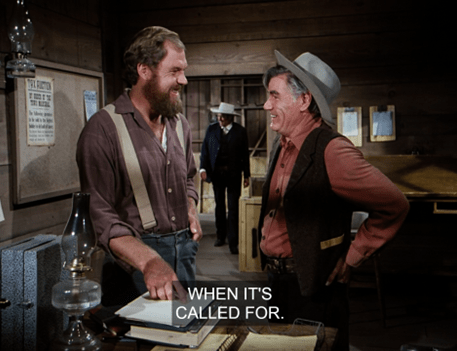
A large, stoop-shouldered man wearing a nice suit and white-ish hat enters, smiling brightly.
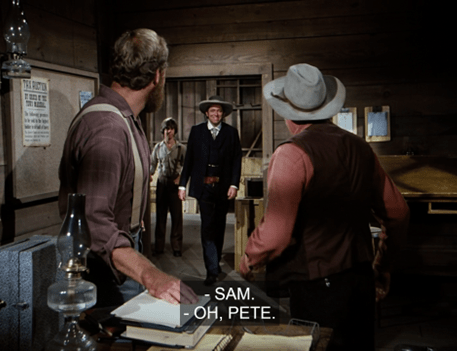
Meanwhile, Andy wanders dopily in the background with his hand in one pocket. (Practicing cool poses to impress the local Sleepy Eye girls – Eye-lasses? – no doubt.)
Mr. Pendergast greets the man and introduces him as “Pete Rawlins, our one-man peacekeeper.”
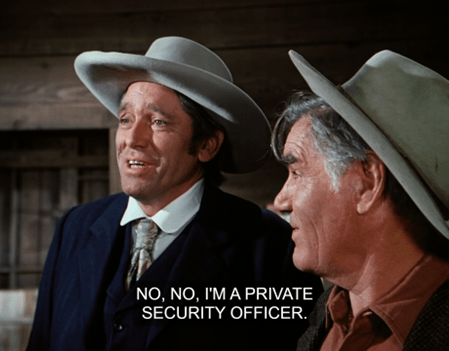
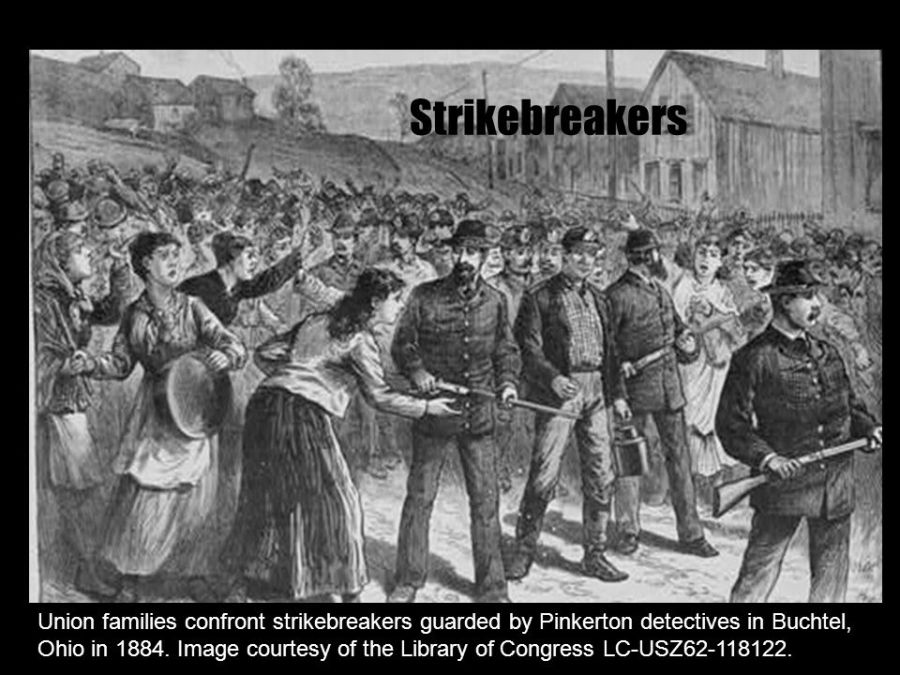
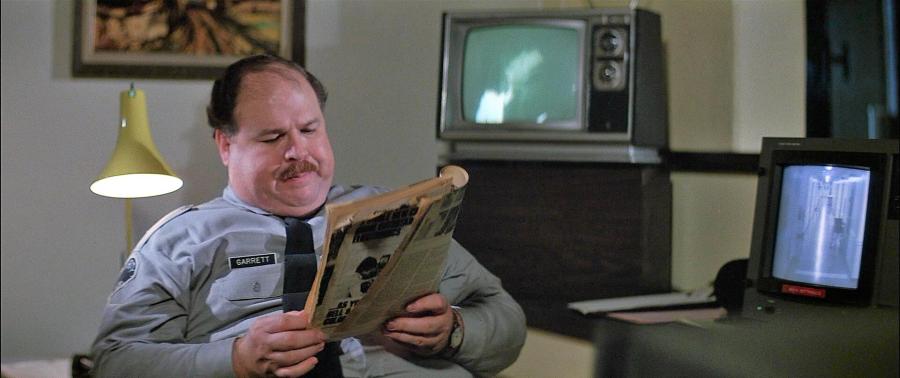
Mr. Rawlins, who’s quite friendly, clarifies he’s not the sheriff, but a “private security officer” (probably more like a Pinkerton than like Mr. Garrett from Halloween II).
The real Sleepy Eye sheriff, Mr. Pendergast reports, is “useless.”
He adds there’s an opening for a deputy, but the pay is shit, so it’ll never be filled.
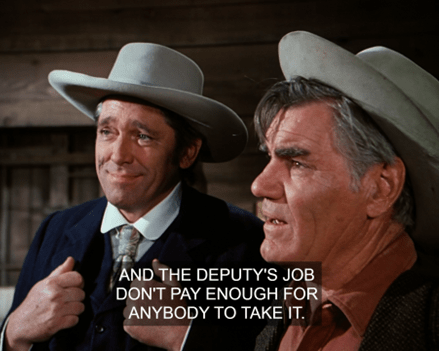
Rawlins says the Eye’s developed a crime problem, but he helps control it – for a small fee from business owners.
ALEXANDER: Is he mafia? Will he firebomb the building if Garvey doesn’t sign up for protection?
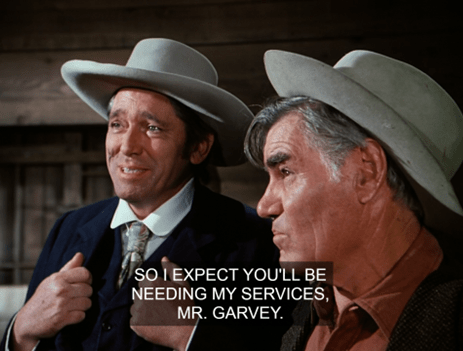
Garvey politely declines, and Rawlins says that’s just fine.
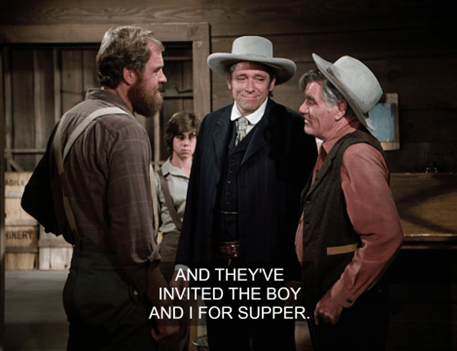
I was positive the actor playing Mr. Rawlins was Philip Carey, who played Commander Kaiser (no relation) in “The Halloween Dream” last season.
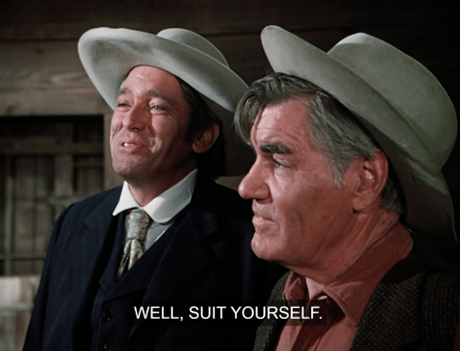
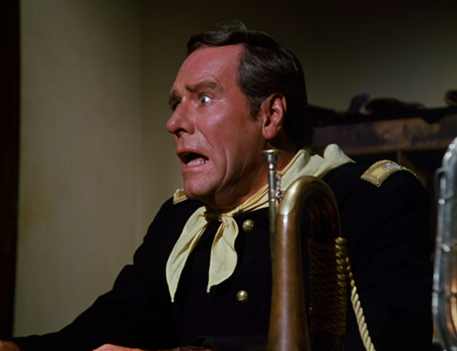
But he isn’t. He’s an actor with improbable name of Med Flory. (Short for Meredith, which is probably why he shortened it.)
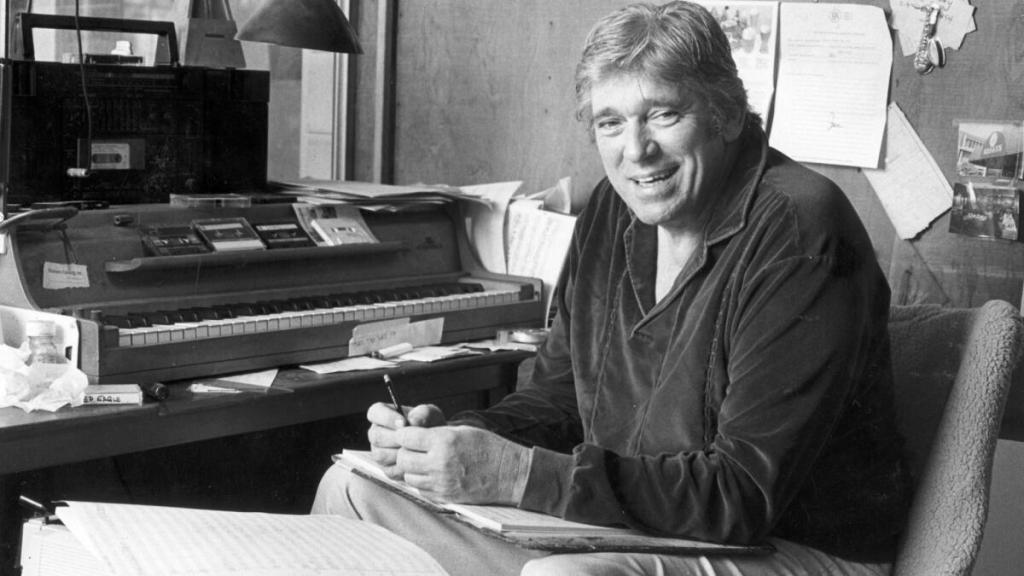
Flory was 6’5”, which would be more apparent to the audience if he wasn’t standing next to Big Jon (also 6’5”).
Somebody called “Joe White” contributed Flory’s bio at the IMDb. It’s got style and vim and is worth quoting verbatim:
Med was a great jazz saxophone player, band leader and big band musician. To say he was only an actor is the equivalent of saying Dwight D. Eisenhower was a military general without mentioning that he was also President of the United States. Flory was primarily a musician, with acting as a sideline.
Trademarks: Dead-on Henry Fonda impersonation [I can see that. – WK]; low-key passive demeanor despite immense size . . . With his towering height contrasting to a slowburn, cool manner, he’d often play gentle giant types.
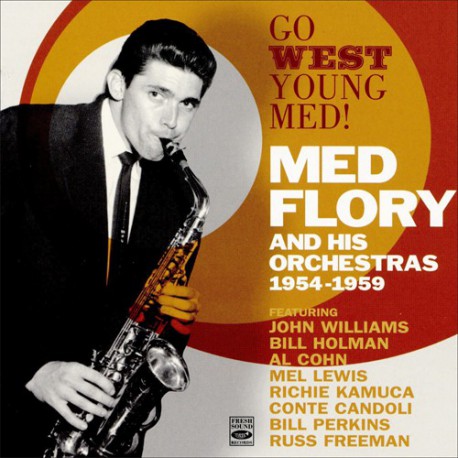
A pilot during World War II, Flory played with Woody Herman’s swing band and later founded a Charlie Parker tribute act called Supersax. You can check them out below – the music starts about three minutes in. They sound pretty good!
For an alleged non-actor, Flory acted a lot, on things like Perry Mason, Rawhide (not Riptide), Gomer Pyle, The Virginian, Daniel Boone, Lassie, Ironside, Bonanza, Gunsmoke, The ABC Afterschool Special, the Victor French vehicle Carter Country, The Dukes of Hazzard, Lou Grant, Magnum, P.I., Riptide (not Rawhide), and Hunter, starring my mom’s crush Fred Dryer.
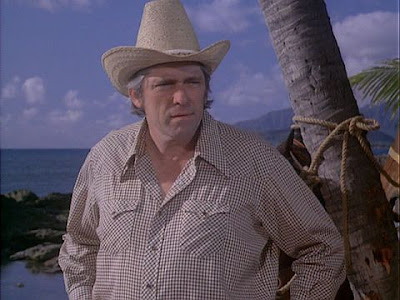
He appeared on a show called Lawman, which possibly inspired our story today. (Friend of Groovy Kris calls this episode “Jonathan Garvey, Lawman.”)
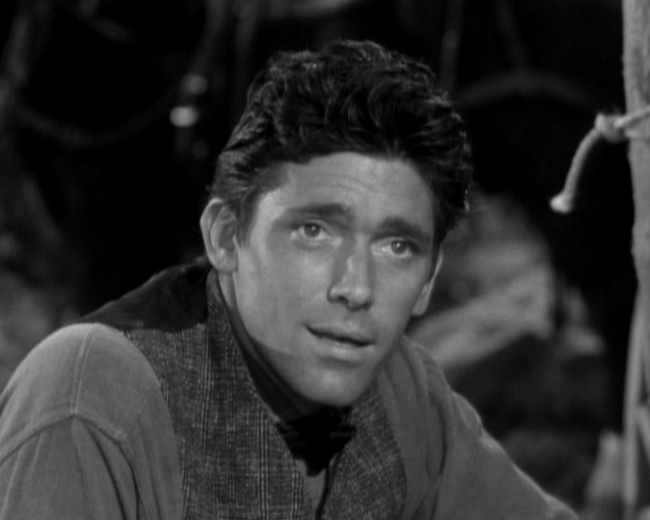
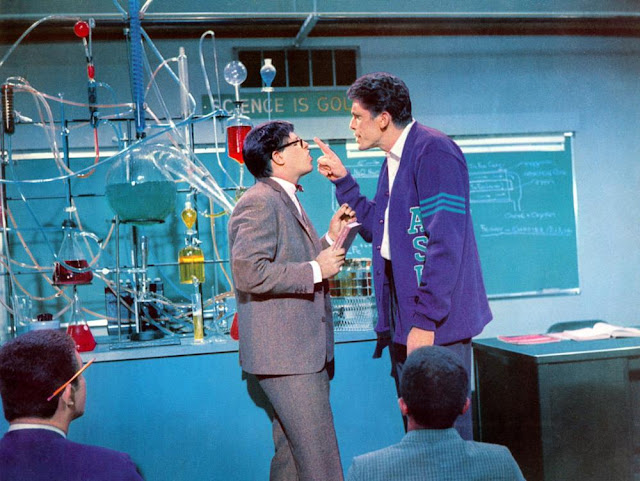
Flory was in Jerry Lewis’s The Nutty Professor and at least one other of his movies. (They’re not my thing.)
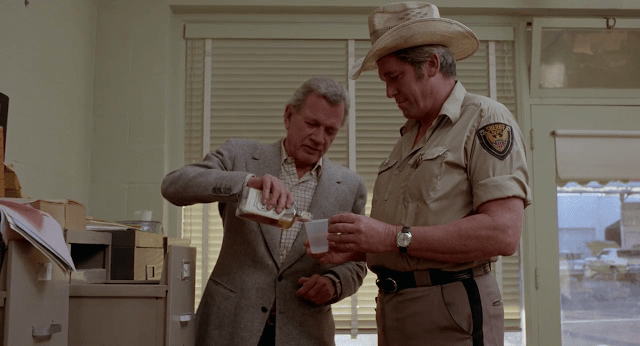
And he was in The Hearse, a horror film that costarred Allison Balson. (Horror movies are my thing, but I’ve never seen that one.)
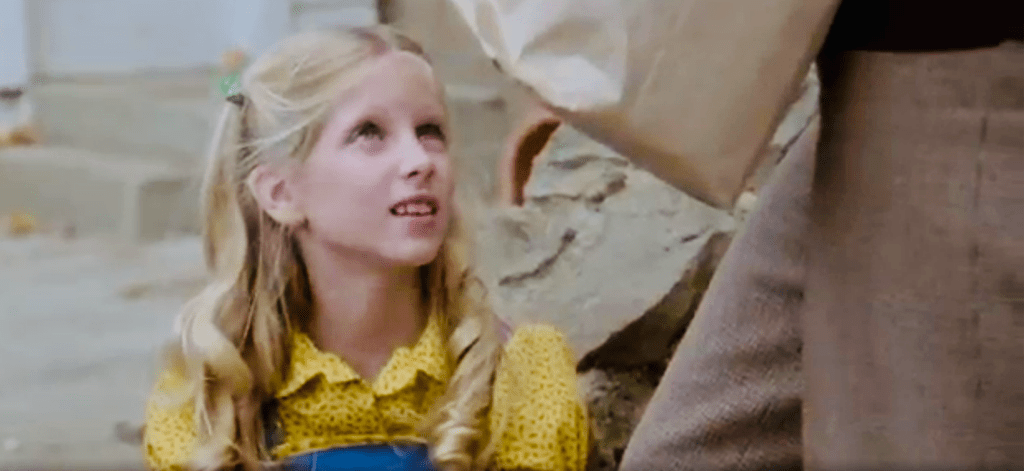
Anyways, Pendergast invites the Garveys for supper, but Garvey says they have plans with this crazy married couple that runs the Garvey Kendall School.
(It’s funny no one in this story asks Garvey if he’s associated with Garvey Kendall, now that I think of it. Isn’t it?)
(But I expect people don’t know the school’s name. For all the endless folderol about that damn plaque, they haven’t even put it up yet.)
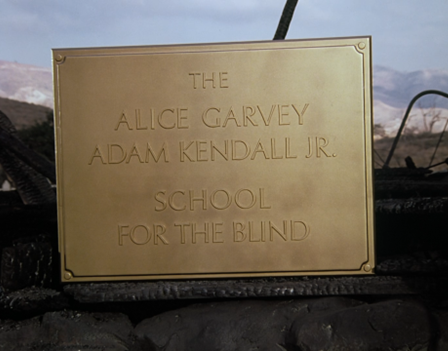
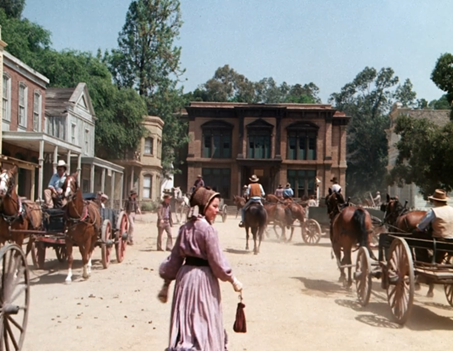
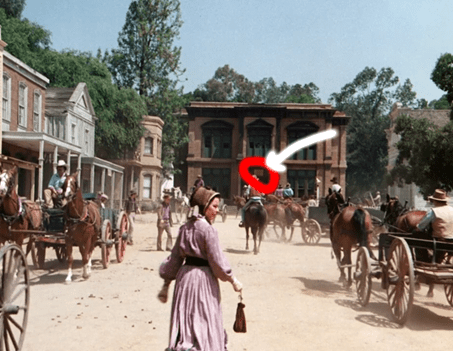
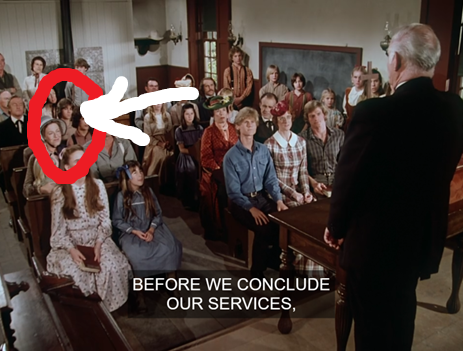
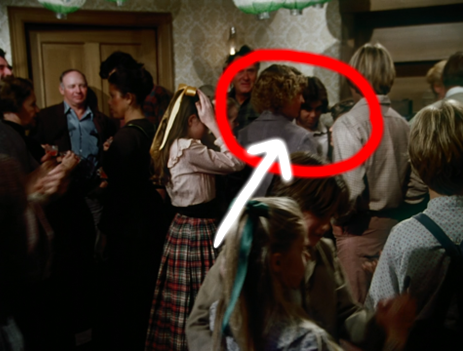
[UPDATE: Reader Ben, who is very helpful in situations like these, writes that he noticed the plaque above the school doorway in “‘Laura Ingalls Wilder,'” and of course he’s right.]
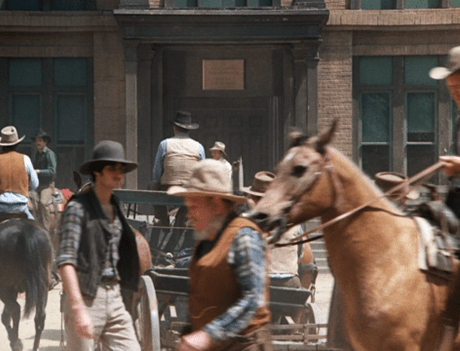
[In fact, I can see it in the picture from today’s episode too! It just looks so tiny, but I guess the scale of the building is greater than that of the old Oleson Institute. My apologies, and thank you, Ben! – WK]
That night, things indeed get rowdy in the street. A group of twentysomething riffraff are playing pickle-in-the-middle with some drunk’s bottle.
WILL: Sleepy Eye has fallen on bad times.
ALEXANDER: BAD times! Looks awesome.
ROMAN: Yeah, this is what we do every night at college, Stepfather.
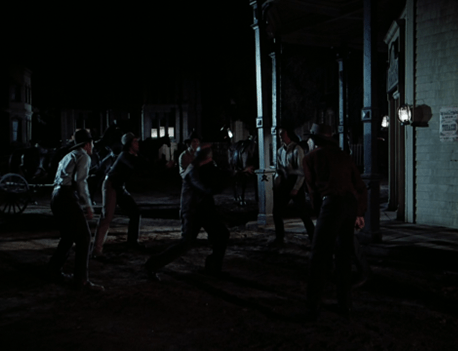
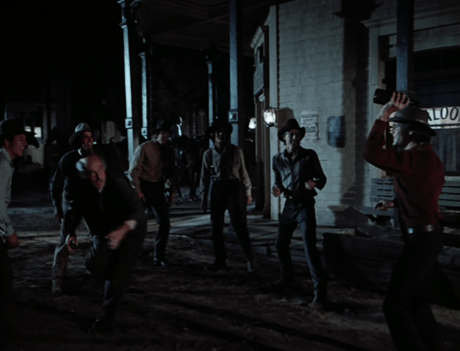
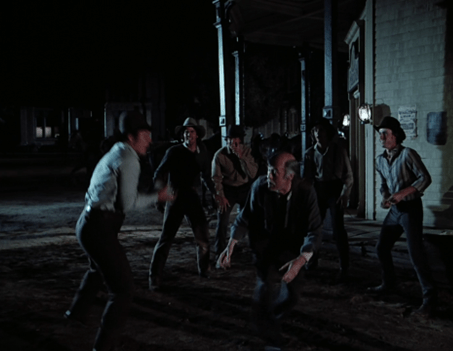
In one smooth move, Garvey plucks the bottle from the air and gives it back to the drunk, who staggers away.
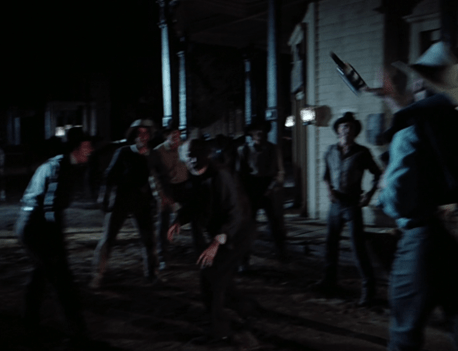
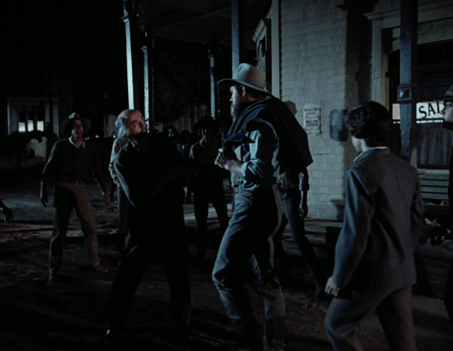
(The drunk, credited as “Drunk,” is Al Hopson, a veteran of You Are There, The Untouchables, Andy Griffith, and Police Woman as well as Adam Sandler’s The Wedding Singer.)
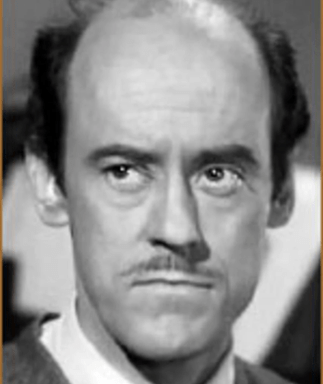
One young man, apparently leader of the pack, challenges Garvey; but he calmly replies “Past your bedtime, isn’t it?” and continues on with Andy in tow.
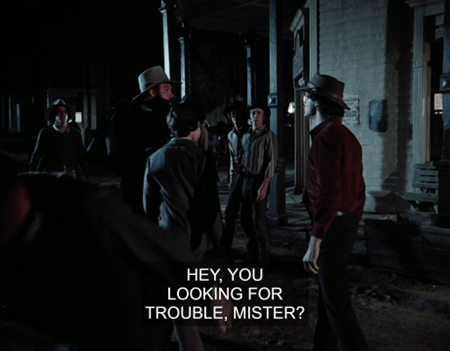
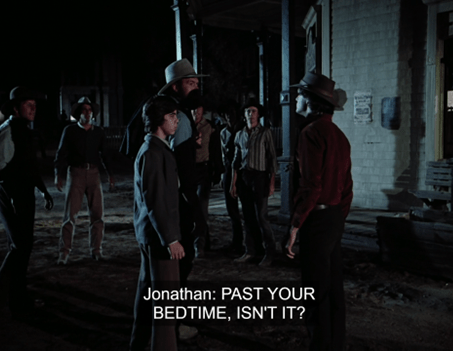
The leader, who resembles the distinguished English countertenor Michael Chance, stares daggers at him.
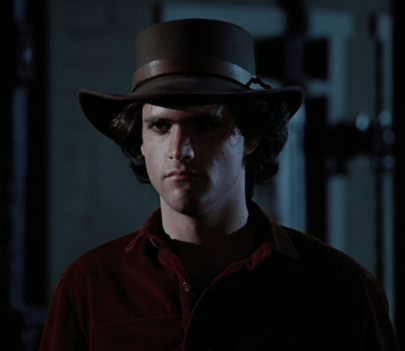
(Michael Chance is really wonderful – my friend Douglas and I once stalked him after a performance of Orfeo ed Euridice, but that’s another story.)
Cut to the dining hall at Garvey Kendall, where Jonathan Garvey is complimenting Mary’s cooking.
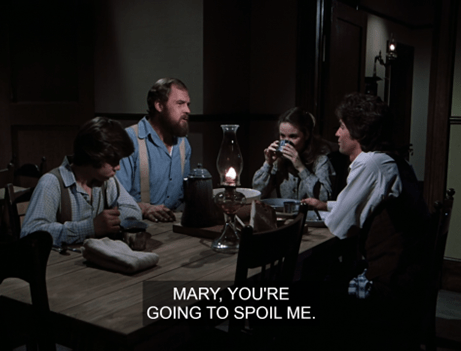
Adam makes a strange joke implying he hates Mary’s leftovers, and says the food will go to waste if it isn’t all eaten tonight. (At a school full of students?)
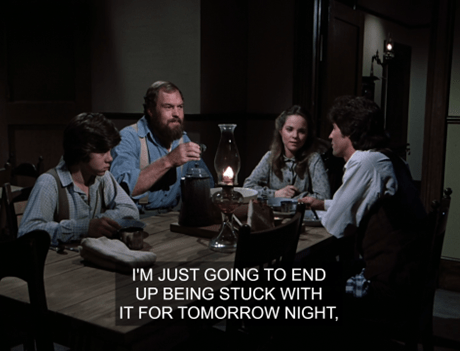
(Speaking of which, none of the blind kids are seen, now or at any point in today’s story.)
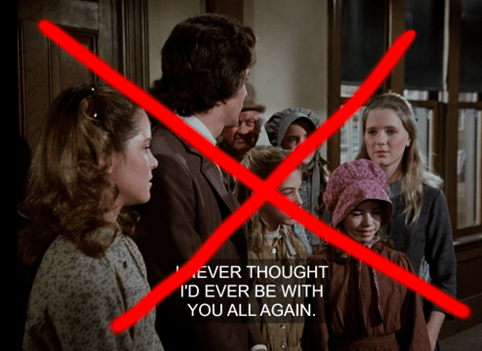
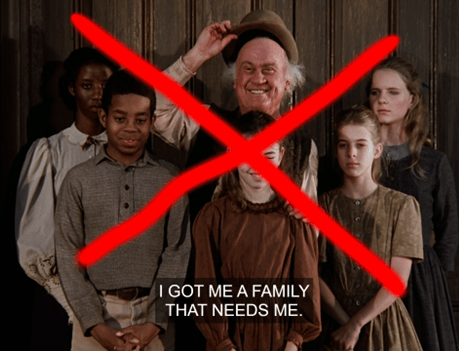
(Neither are Hester-Sue or Houston. I suppose it could be summer break? (Of 1885-M?))
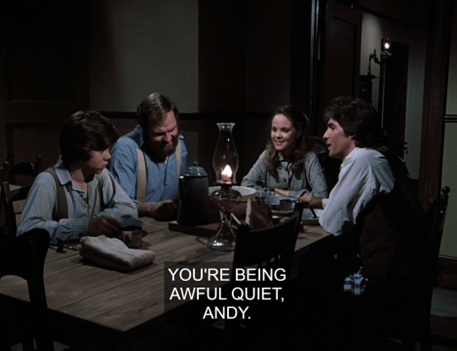
Andy is silent at dinner, a fact that strikes Adam as odd. (Apparently Adam didn’t watch the second half of Season Six.)
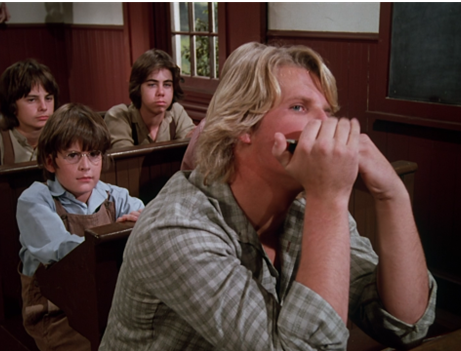
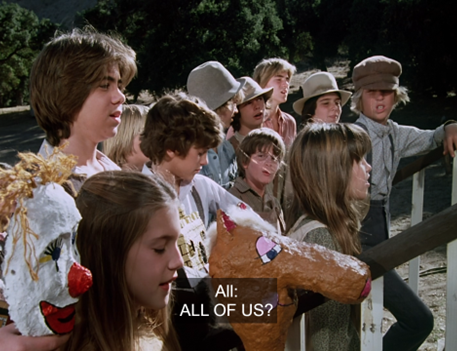
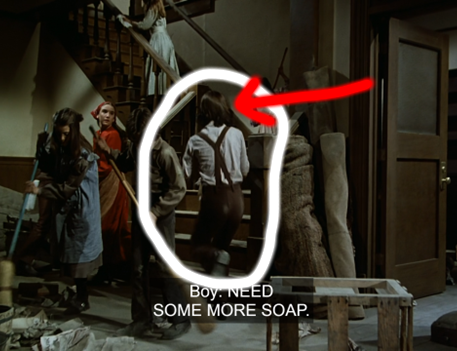
(And he might make the same observation of his wife, of course. Blame the writers, Professor!)
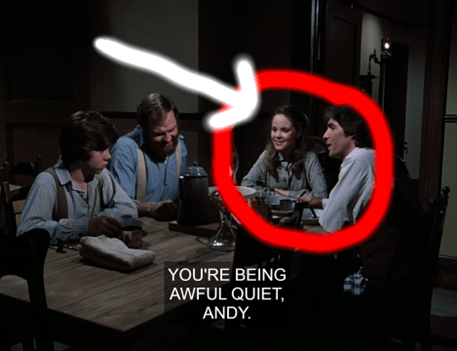
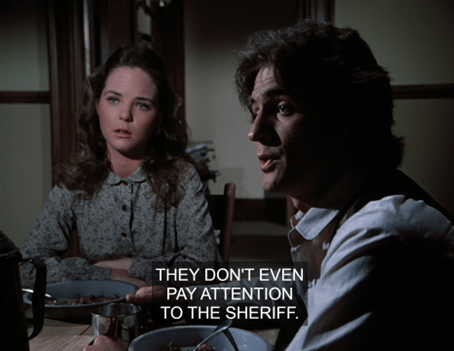
There’s a ruckus outside, and Adam and Mary discuss the worsening social conditions in Eyeland.
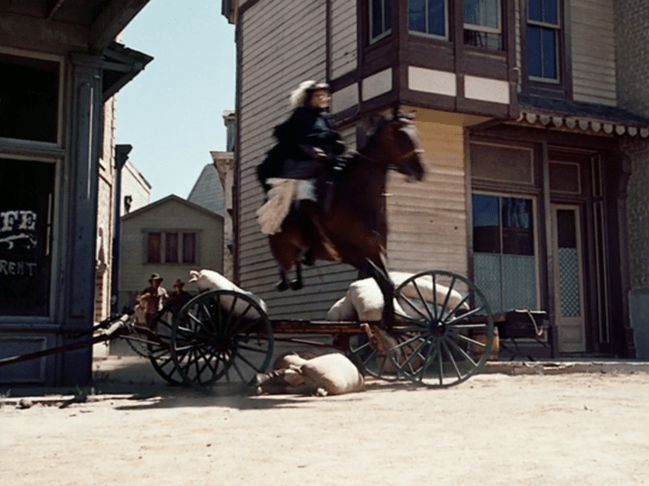
Sleepy Eye, of course, has been depicted many times on this show by now. Notably, it was where Nellie got married (the first time), and where Mrs. Oleson test-drove Sparks the racehorse.
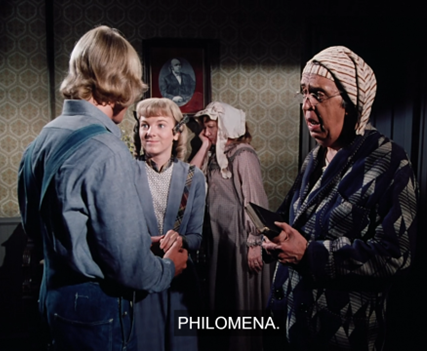
Unlike places like Winoka, Deadwood, and Newton (all in Dakota Territory), though, Sleepy Eye hasn’t been depicted as a particularly dangerous area.
On the contrary, in “Men Will Be Boys,” Charles and Garvey were stopped by a constable for suspicious behavior the minute they arrived in town after dark, suggesting the city is in fact law-and-orderly/shenanigan-intolerant.
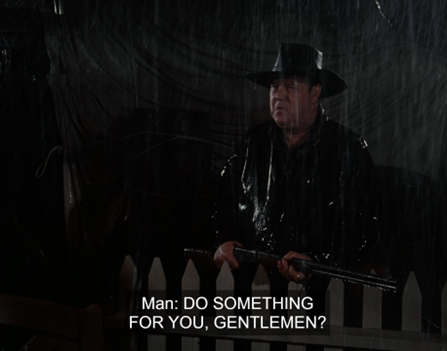
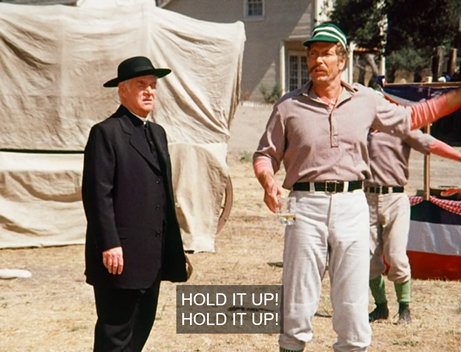
This is not to say all Eyesters are good eggs. We know the local baseball team cheats, for instance.
And in fact, Adam says these days all the local young men are scofflaws – veritable Bart Slaters to the sheriff’s Eliza Jane.
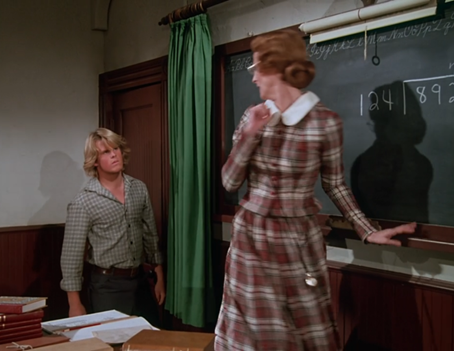
Garvey looks out the window.
WILL: His beard is quite long in this one.
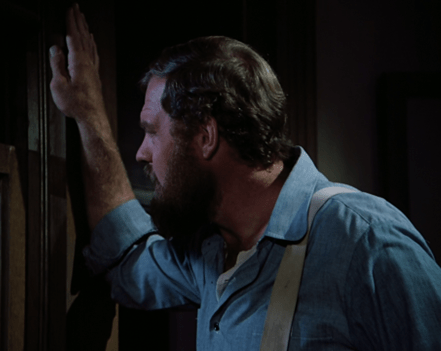
Mary mentions that even Garvey Kendall was broken into. (This shocks Garvey, though I don’t know why it should. The old Oleson Institute, of course, was targeted by purveyors of rotten meat, escaped murderers and rapists, underage smokers, and similar miscreants.)
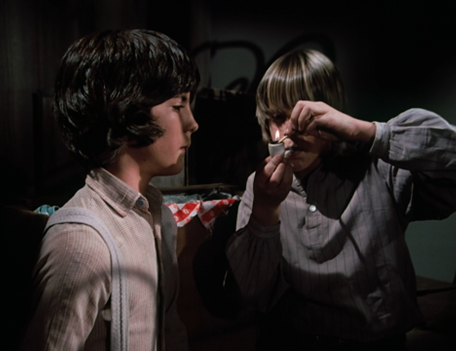
Prof. Kendall sniffs that the gents who harassed the drunk are responsible for the crime wave, but “nobody’s been able to prove it.”
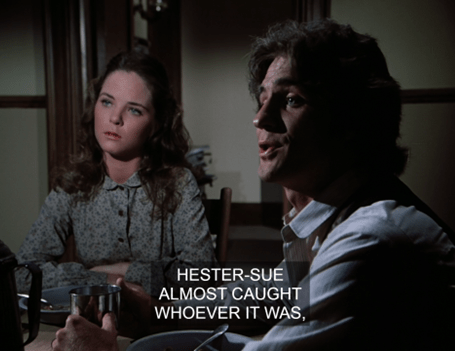
In one of this story’s more/few enjoyable moments, Adam tells them Hester-Sue drove the school intruders off with a hammer. I wish they had shown that!
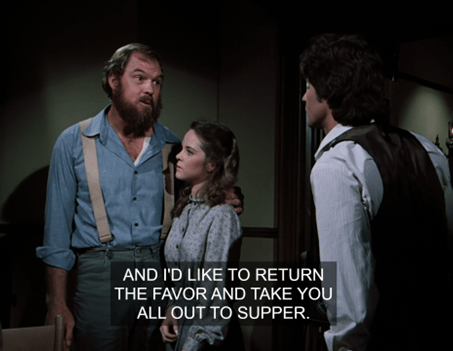
Longbeard Garvey thanks the Kendalls and says when Charles comes to visit he’ll take everyone out for dinner. (I wonder if they’ll go to Chez François! That was in Sleepy Eye too.)
(But actually, Garvey’s probably blacklisted there, since last time he left without paying, the swine.)
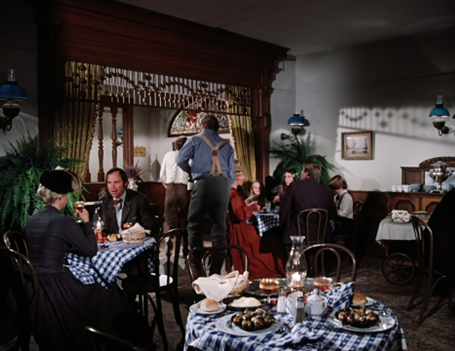
Garvey says goodnight, but Mary takes him by the hand and says, “I can’t tell you what it means to us having you here.”
ROMAN [suggestively]: Oh my!
WILL: Again, I’m not sure what they’re teaching you on that campus, Roman, but you’re developing a really dirty sense of humor. Not everything is an innuendo.
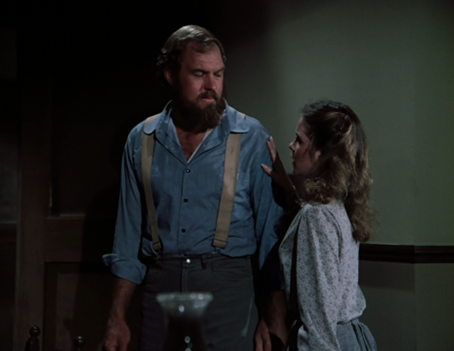
ROMAN: Sorry, Stepfather. I just think it’s unusual for somebody to stroke someone’s arm up and down like that.
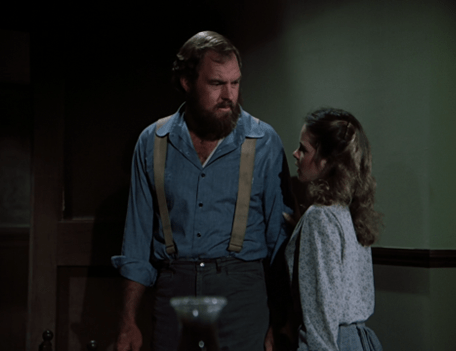
ALEXANDER: Well, she is blind. She probably identifies people by arm length.
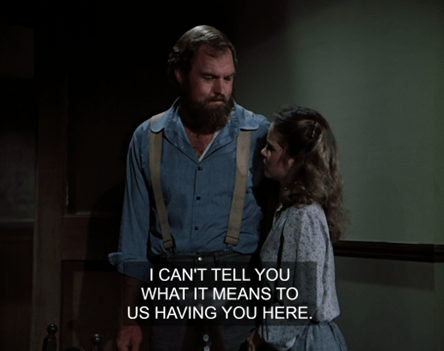
Garvey gives Mary a hug – a fatherly one, mind you – and he and Andy leave.
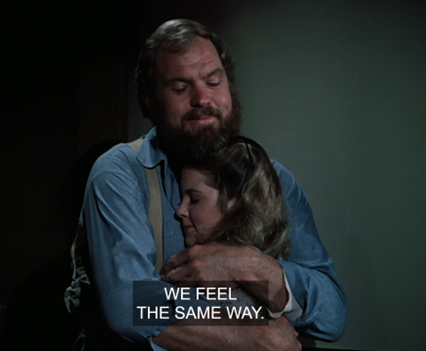
ALEXANDER: Is Mary still alive?
WILL: . . . We just saw her!
ALEXANDER: No, I mean the actress.
Yes, Melissa Anderson is still alive. Anyways, we now get twinkling piano music to take us back to the freight office. This season’s music will get worse because of a strike, but I think that must not have started happened yet, because the tunes here are rather good and seem conceived as a whole score, to my ear, anyways. (As soon as next week, we’ll get stock music and random shoveled-in cues rather than a through-composed score.) [UPDATE: Reader Ben disputes this judgment, and he usually knows what he’s talking about. – WK]
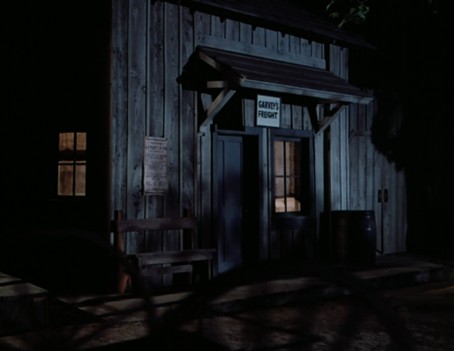
Inside, both Garveys are in their longjohns, with Jonathan writing a list for Santa Claus, or something.
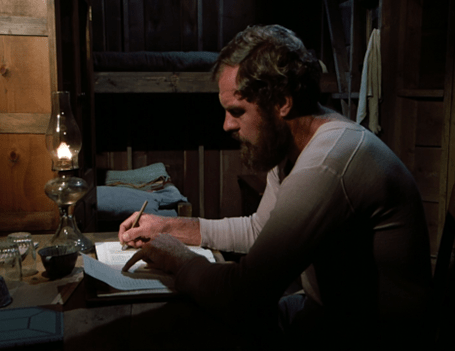
Father and son have a conversation – as did the father and sons in the Kaiser rumpus room.
WILL: Well, the point of that scene, which we’ve now missed the entirety of . . .
ROMAN: You were talking!
ALEXANDER: Tell the truth, you added some of your coarse comments, Roman.
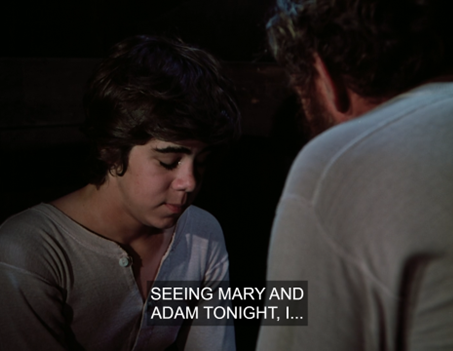
The point of the scene was that Andy found himself traumatized to see Mary and Adam, because he was reminded of Alice’s death.
WILL: Some people think it’s weird that he finds Adam and Mary triggering, when he was fooling around in a love triangle with Albert the day after the fire.
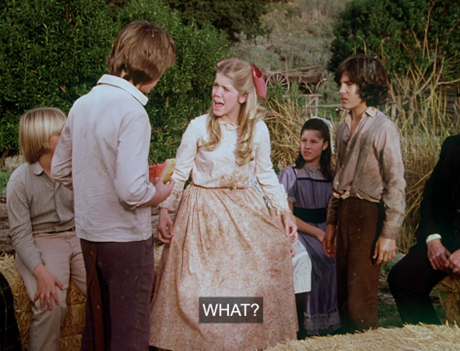
ROMAN: I don’t think it’s weird he finds them triggering, but it is weird he and Albert never dealt with what happened.
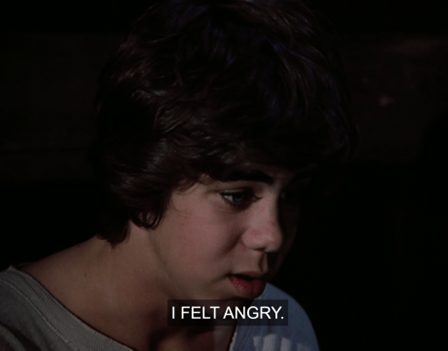
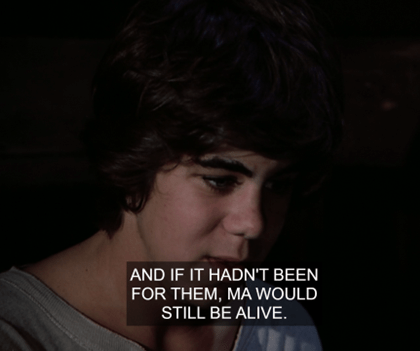
Andy seems to view Mary and Adam as responsible for Alice’s death because they (so, so stupidly) left Baby Adam behind in the bedroom. I wouldn’t disagree, exactly, but I’m not sure why he’d fixate on that rather than on Albert creating the situation that killed her in the first place.
ALEXANDER: Wasn’t there another kid who caused the fire?
WILL: Yeah. He was called Clay Pipe, or something.
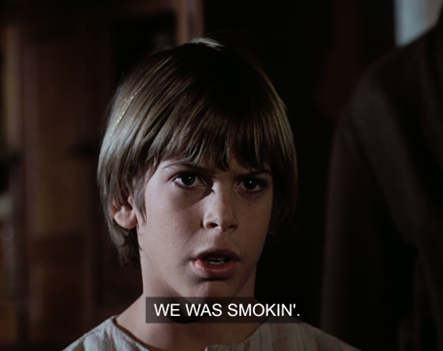
WILL: The whole smoking thing was Clay’s idea, but we never saw him again after that story.
ALEXANDER: Maybe the villagers sacrificed him, and that ritually freed Albert from blame.
ROMAN: That does seem the most likely explanation.
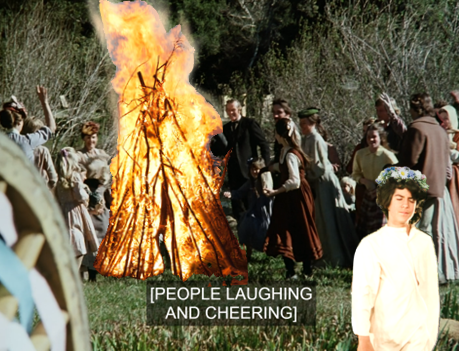
[UPDATE: Friend of Groovy Maryann raises the possibility that everybody who knew about Albert’s involvement in the fire kept it secret from Andy. That is the easiest explanation – Clay Mays and his father certainly wouldn’t have told anyone, and Ma, Pa and Hester-Sue are good at holding their tongues.]
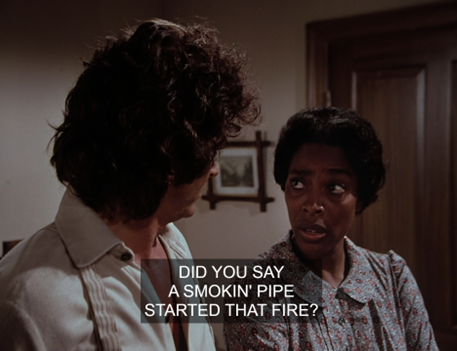
[It seems a huge secret for Jonathan Garvey to keep from his son, but I believe he might have done so to protect him from trauma.]
[On the other hand, it seems impossible that Doc Baker, the Public Health Commissioner and Forensic Examiner who discovered the pipe, would keep his mouth shut, since he’s the biggest blabbermouth in town. But maybe the others, aware of this fact, kept Albert’s responsibility from him, too.]
[That leaves Mary, who you’ll remember revived enough to participate in the discussion about Albert’s role in the tragedy. Mary and Albert have never had a proper conversation on this show, but I can see her forgiving him if she talked to him about it. She is an Ingalls, after all.]
[The one problem with this theory, I think, is that it’s hard to believe Albert wouldn’t have confessed to his friend. At least half of “‘May We Make Them Proud‘” centered around how tortured Albert was by his conscience. I know we’ve observed in the past that Albert operates by a different moral code than the Grovesters, but while he never told his family how he tricked his bio dad into giving up custody, I just can’t see him keeping a secret like this. It’s just too serious a matter. – WK]
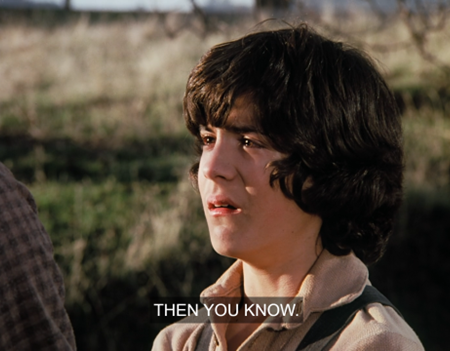
Andy doesn’t get to do much in this episode, but Patrick Labyorteaux knocks it out of the park as usual.
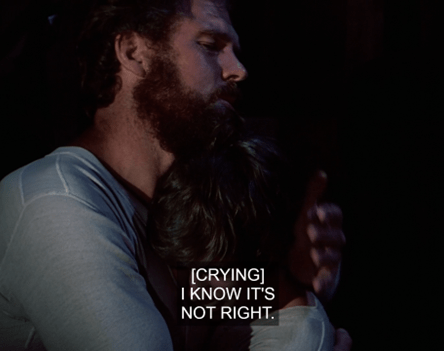
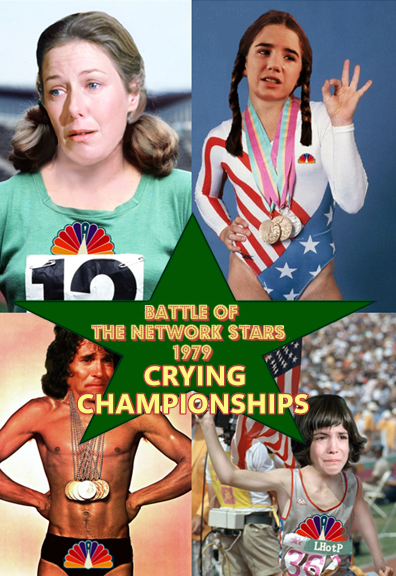
WILL: You know, everyone says how good Matthew Labyorteaux is at crying, and they’re right. But it’s not mentioned as often how good PATRICK is. You have to wonder what their childhood together was like.
ROMAN: Yeah. Probably had crying competitions all the time.
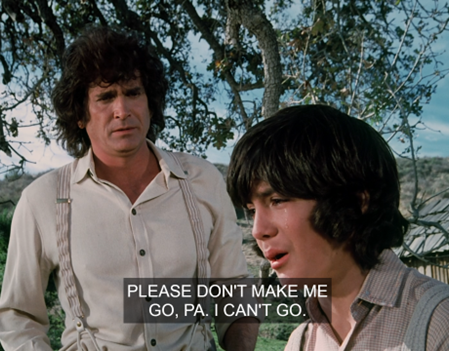
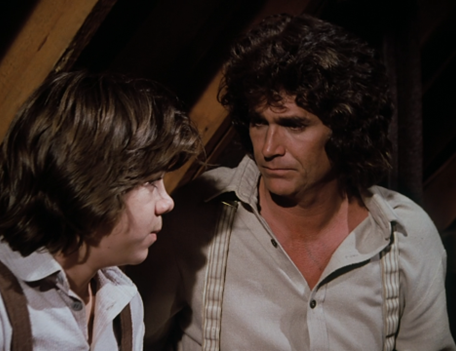
WILL: I think we already did a crying competition joke once.
ROMAN: Well, Season Seven, we’re running out of material.
ALEXANDER: We made it pretty far.
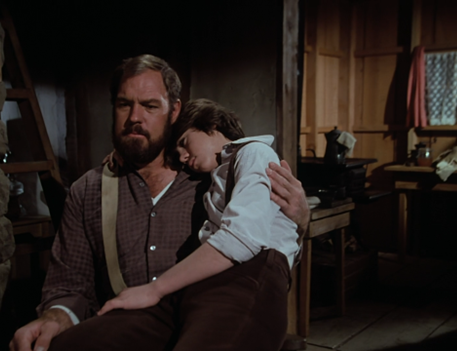
Jonathan comforts his son, and makes this a “teachable moment,” recalling his own anger with God in “‘May We Make Them Proud.’”
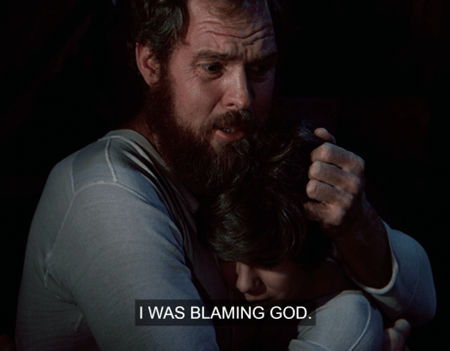
Garvey goes on and on, getting quite emotional himself.
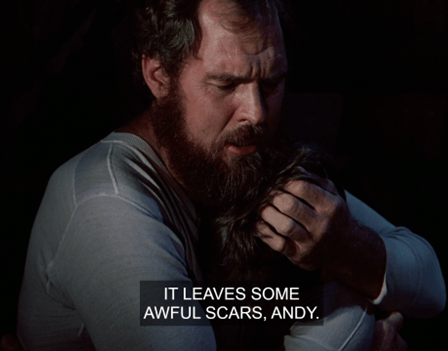
Andy, for his part, whimpers the entire time.
WILL: This is an awfully long scene.
ROMAN: That’s because we had to stop it ten times when you were talking!
ALEXANDER: Yeah. Feels drawn-out.
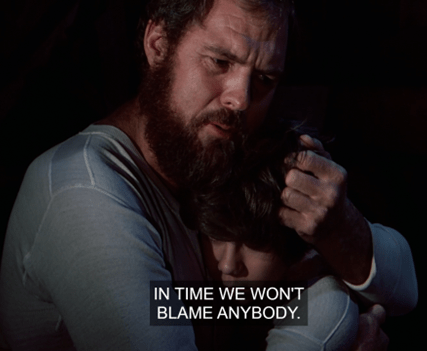
Patrick L is a total pro, though. He raises his face up to the camera just in time for a perfect tear to run down his face.
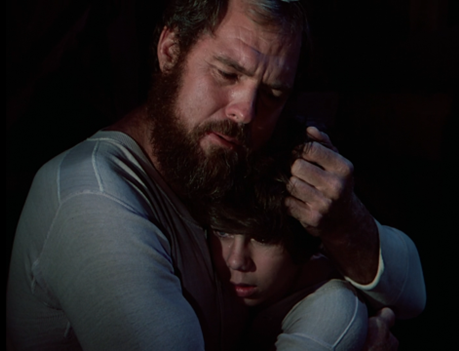
(I can just about picture the look on Landon’s face when he saw that.)
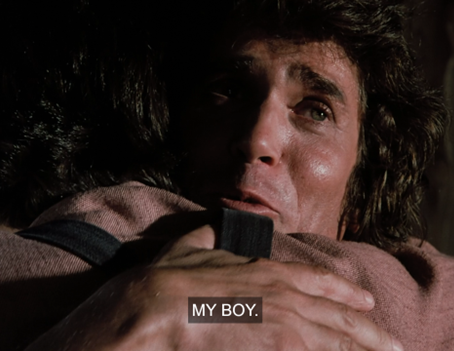
Andy asks Jonathan to sit up with him till he falls asleep, “like you did when I was little and Ma was away?”
ROMAN: That seems like a Landon touch.
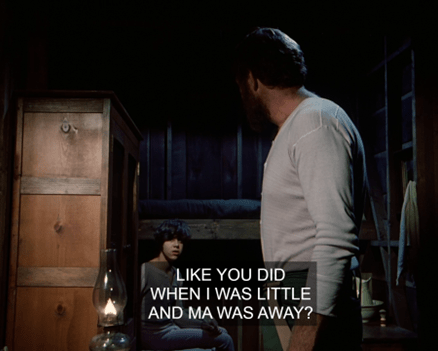
They’re both bunking in the same cozy little room, so I don’t know why Andy would request this – Jonathan would still be there even if he just went to bed – but I suppose it’s pure sentiment.
(I also don’t understand how anyone could fall asleep with someone sitting up and staring at them, but that’s just me.)
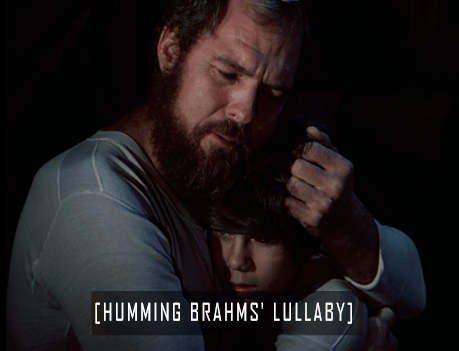
WILL: Garvey should start humming Brahms’ Lullaby.
ROMAN: “My baby, my baby!”
That night, thieves easily break into the freight office.
ROMAN: These are that guy’s Droogs from earlier?
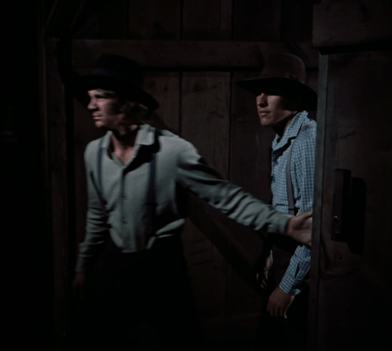
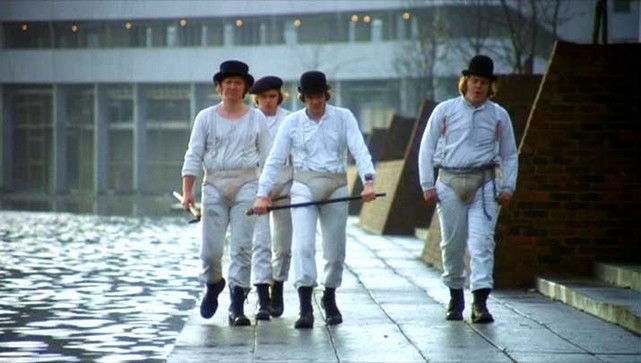
The gang creeps through the dark building.
WILL: I love when David goes into serial-killer mode.
ROMAN: Yeah. Eat your heart out, Goblin.
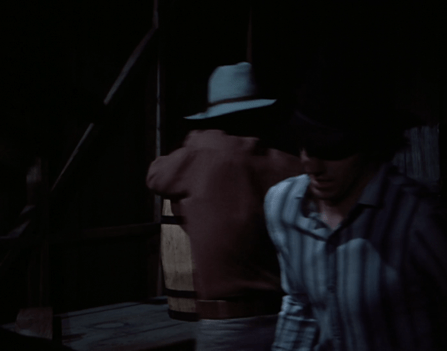
(That would be the first Dario Argento reference of the season – and of course, it will not be the last!)
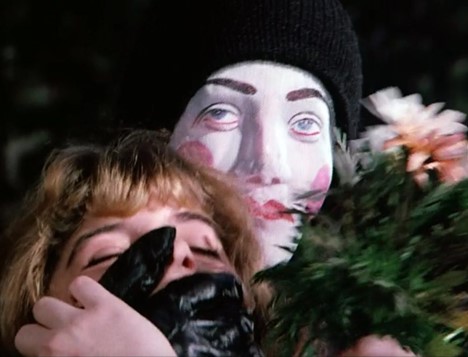
One of the goons drops a crate, and suddenly we get chittering chase/caper music as Garvey leaps out of bed to stop them.
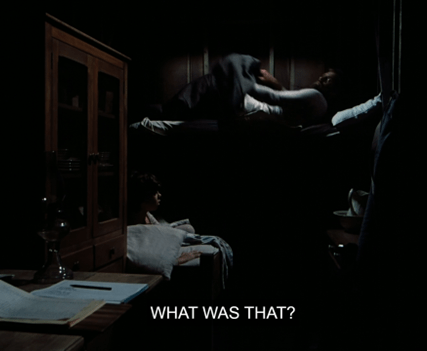
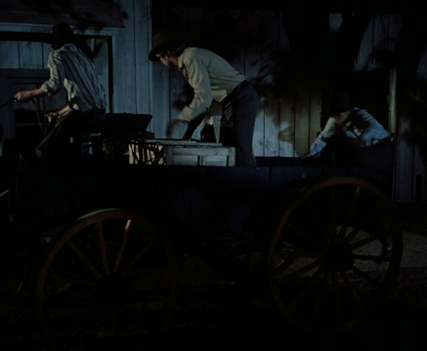
WILL: Now this music is like the scene from “Carnival of Monsters” on the boat.
Well, the gang makes off with some goods.
Andy doesn’t even get to join in the pursuit.
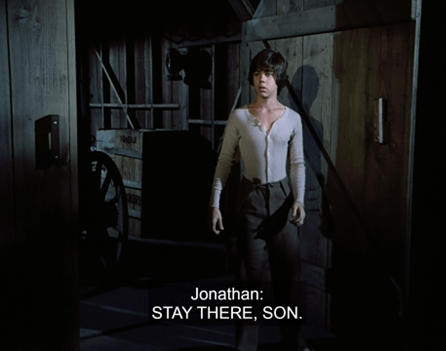
Jonathan Garvey arrives at the jailhouse and wakes the sheriff, who’s sleeping in one of the cells.
The sheriff rolls over and points a big pistol at Garvey.
ALEXANDER: Whoa!
ROMAN: Yeah, that was kind of un-Little House.
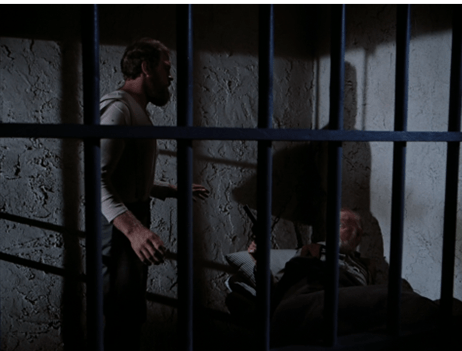
The Sheriff introduces himself as “Pike.” (No evidence for a blood relationship to Amos Pike, Laura’s batshit Old-Man Bestie from “Haunted House.”)
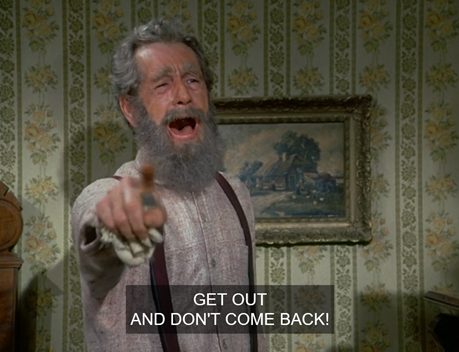
Lowering the weapon, the Sheriff asks who the robbers were, and Garvey says, “That same buncha hooligans that was raisin’ all the ruckus on the street today!”
ROMAN [as THE SHERIFF, nodding]: “Apple Dumplin’ Gang, huh?”
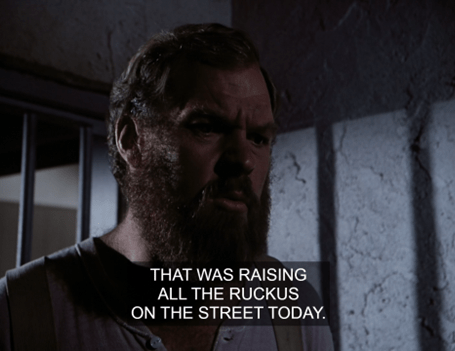
The Sheriff says, “Unless you actually saw them, I can’t do a thing.”
ALEXANDER: What?
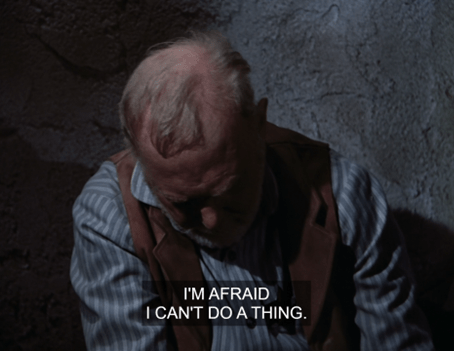
The Sheriff doesn’t explain why it’s impossible to conduct an investigation without a witness to the crime. (Does it not occur to him that maybe he’d find one if he did?)
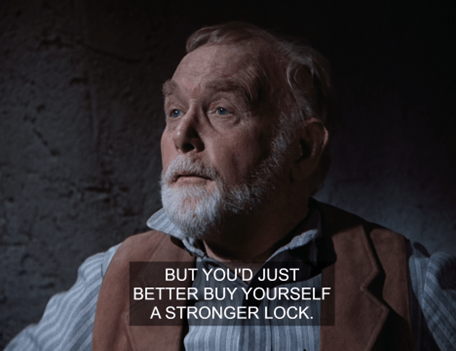
He advises Garvey to invest in a better security system, and Garvey says, “Well, then, ‘Sheriff,’ I’ll be thankin’ you for nothin’!”
ROMAN: Whoa! Cool it down, Garvey!
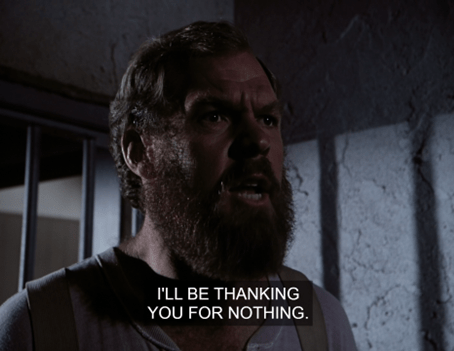
He leaves, and the Sheriff sits down sadly, his motivation as yet unclear.
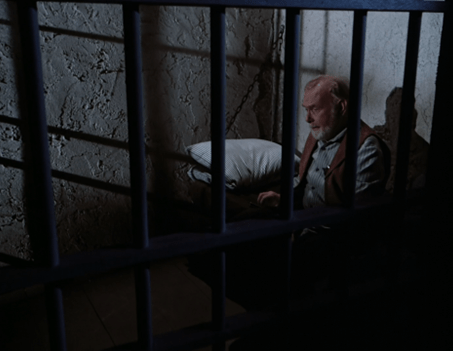
The Sheriff is played by Harry Carey, Jr. – no relation to Harry Caray the baseball announcer.
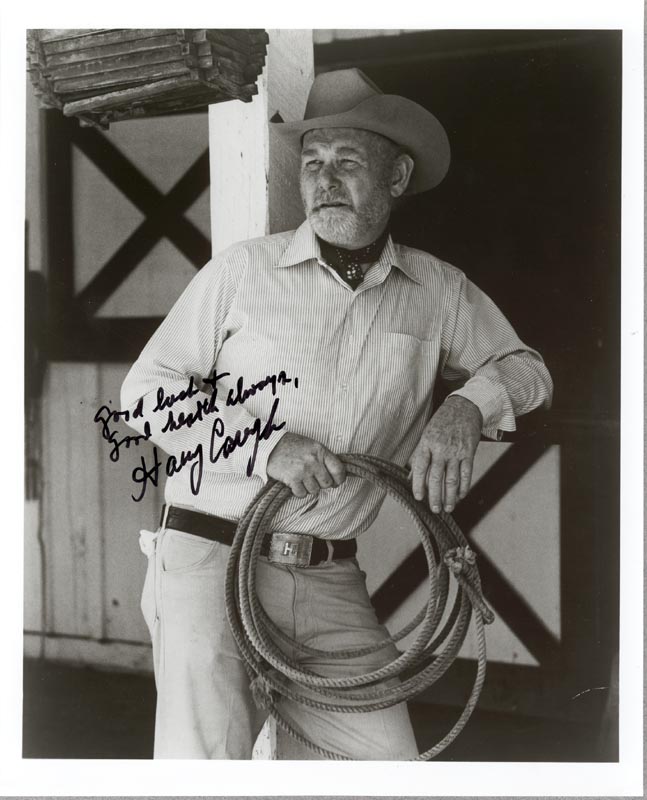
Carey was a fixture in movie Westerns for decades, notably in the films of legendary director John Ford, like She Wore a Yellow Ribbon and The Searchers.
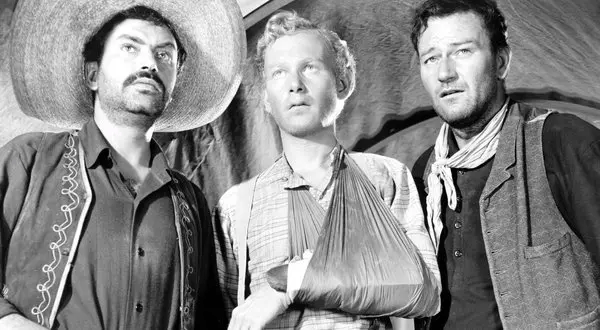
Carey proved reliable for TV Westerns too, including The Lone Ranger, The Rifleman, Have Gun – Will Travel, Wagon Train, Bonanza, Gunsmoke and many others.
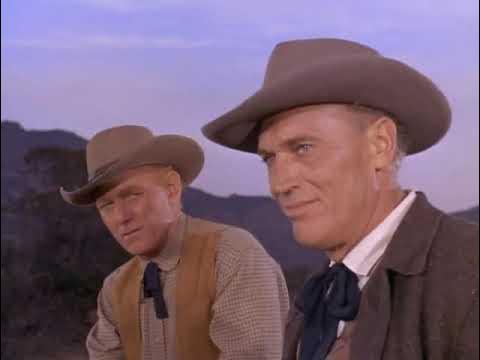
He was on an episode of the aforementioned Lawman playing our own Kevin Hagen’s brother. It sounds like quite the mindfuck: Hagen and Carey are both Civil War vets, with Hagen blaming Carey for turning over some of their comrades to the enemy . . . only there’s a twist ending. I won’t spoil it for you.
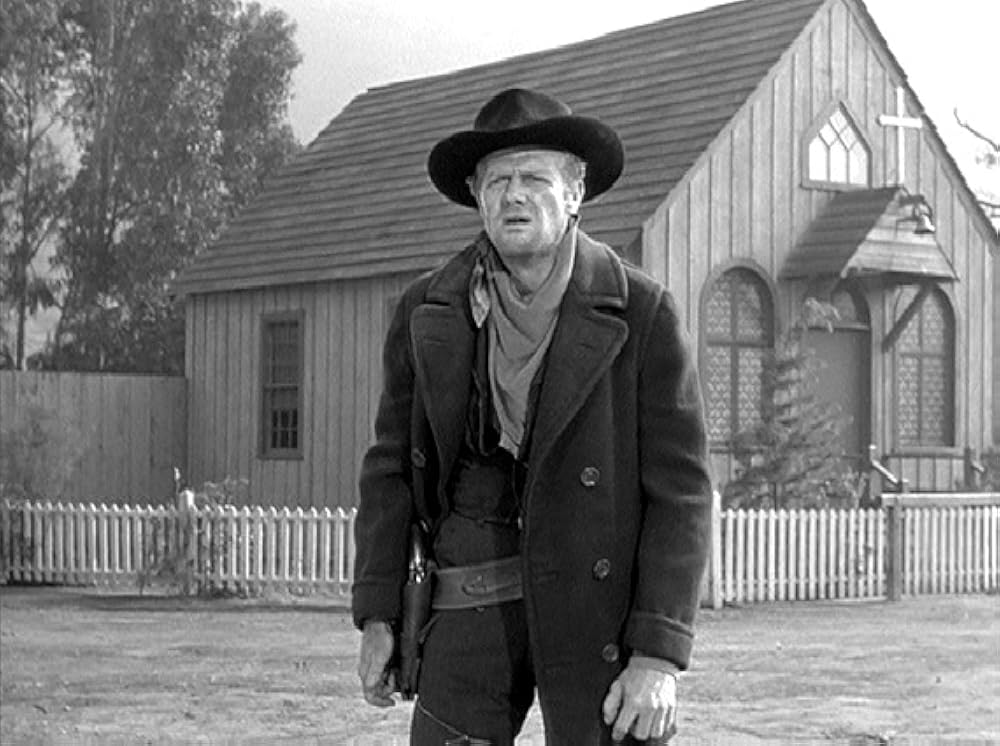
Oh what the hell, none of you are going to look up the Kevin Hagen episode of Lawman. It turns out Hagen is insane from brain fever (or something), and he himself is the one who betrayed their friends!
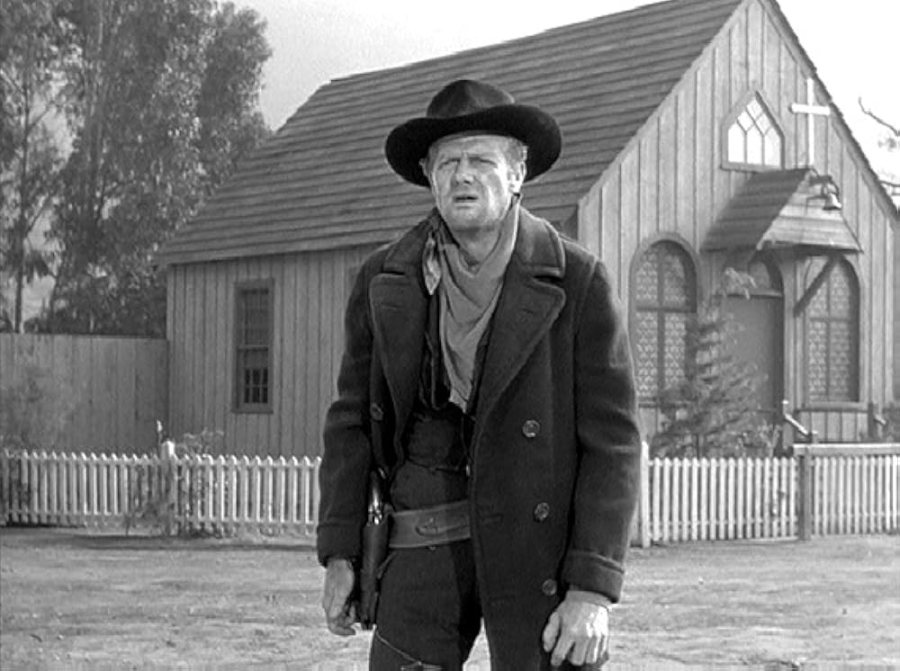
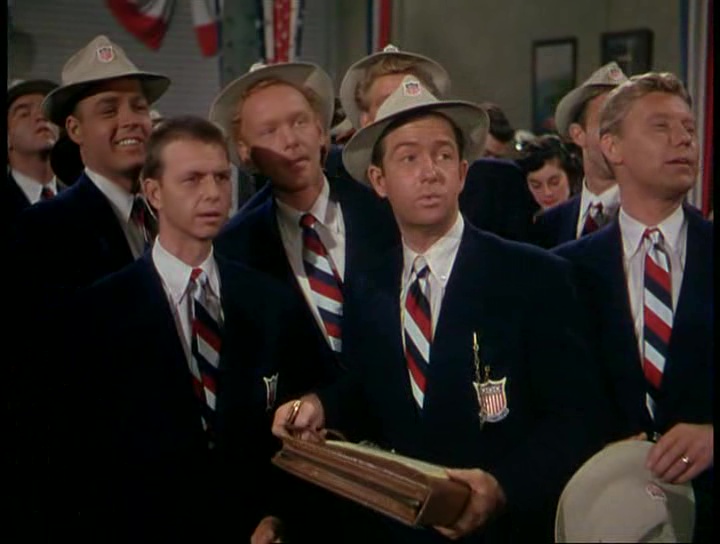
Carey was in a number of other movies of note, including Gentlemen Prefer Blondes, Back to the Future III, and Tombstone.
I recognize him most, however, as a scene-stealing townsperson in Gremlins, deadpanning “That’d do it all right” when Mrs. Deagle says she’ll kill Billy’s dog in a clothes dryer.
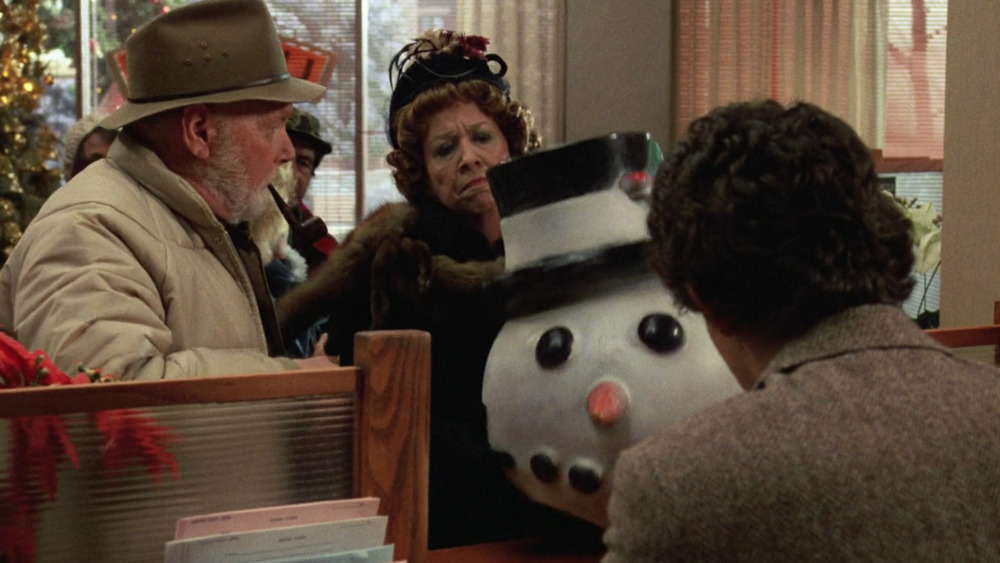
(I love Gremlins.)
Next we find Garvey out on the busy street again.
Mustache Man and Carl are a-drivin’ through, but apparently they’re too busy to stop and say hi.
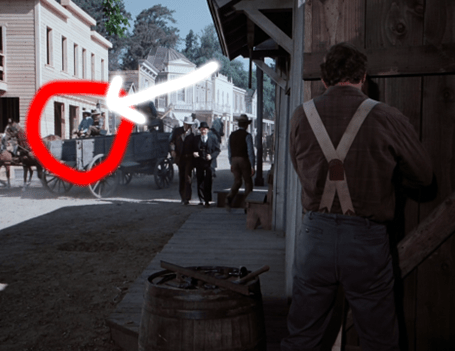
Mr. Rawlins appears, accompanied by a friend.
ALEXANDER: Oh, is this Paulie to the other guy’s Christophah?
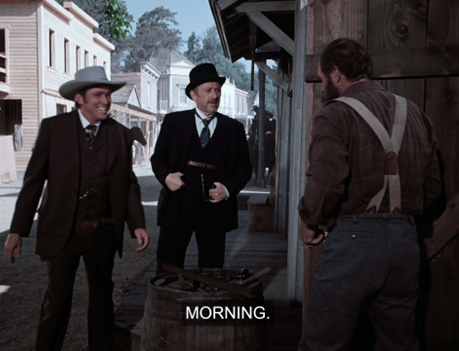
The friend is a little man in a black suit, derby and gold watch chain, and Rawlins introduces him as “our town banker, Elija Pattman.”
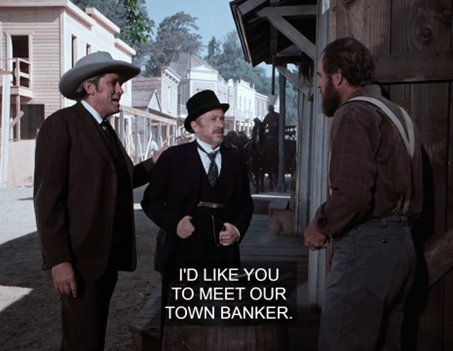
This Mr. Pattman has an East Coast urban accent and is played by Milton Selzer, another busy actor who did many of the previously mentioned shows (we’ll be here all day if I list them again) and who had recurring roles on Get Smart, General Hospital and L.A. Law.
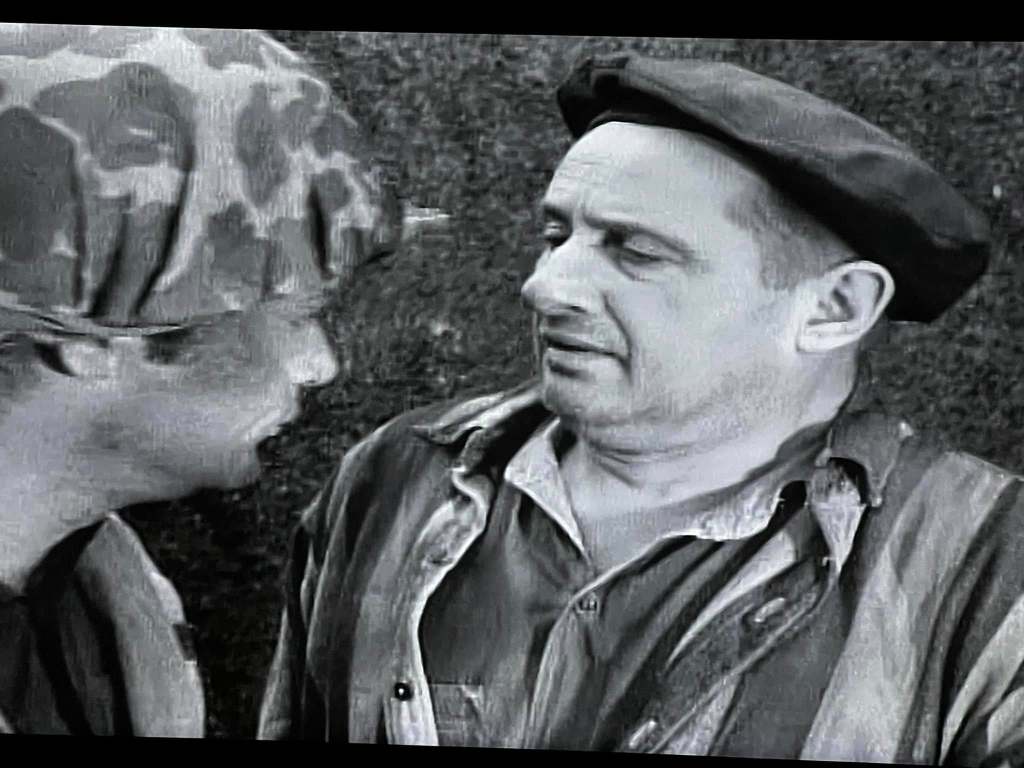
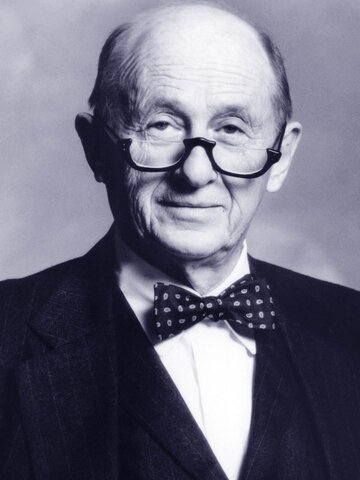
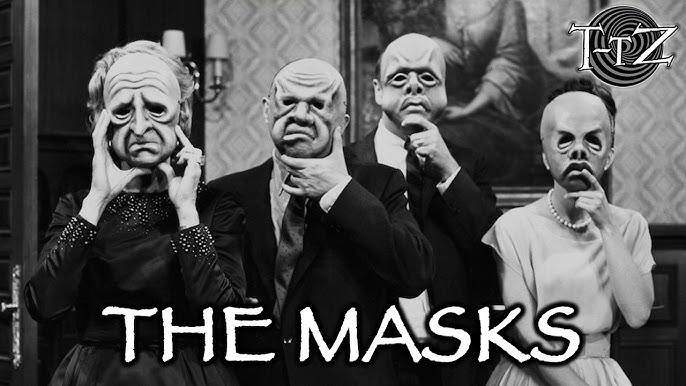
He was on the famous Twilight Zone episode where the greedy relatives’ faces are disfigured by masks.
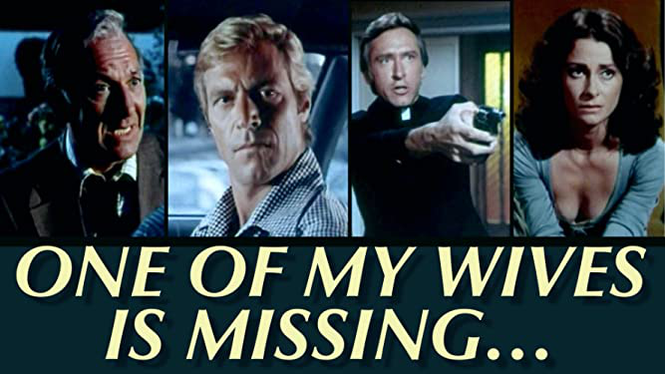
And he was in One of My Wives is Missing, a TV-movie thriller starring Jack Klugman that terrified me as a child, but which I watched again as an adult and found laughably un-scary. (Not everything stands up as well as Little House.)
Garvey says he’s installing new locks, and Rawlins, who we notice has a scar upon his face, says the bank is about the only business in town that’s never been robbed.
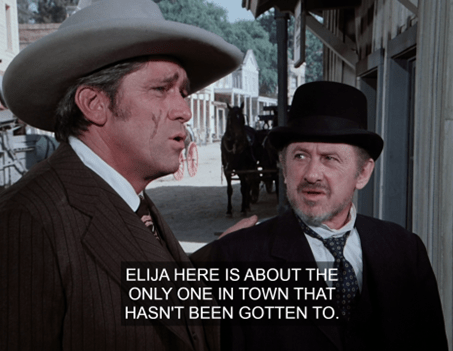
Pattman says that’s because he always carries a large revolver.
Strangely, Garvey says he doesn’t approve of citizens carrying weapons unless they’re government or security professionals.
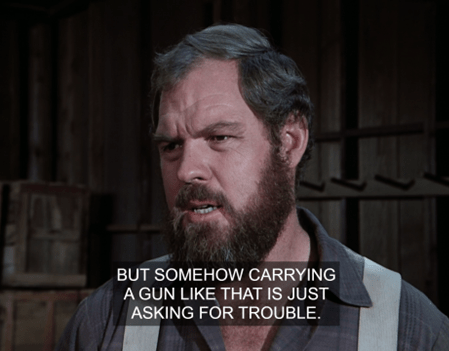
(We’ve seen Garvey join a few armed posses on the show, but this attitude isn’t entirely out of character. In “‘My Ellen,’” he tried to prevent Ellen’s dad from bringing his gun along – and was ignored, with dire consequences.)
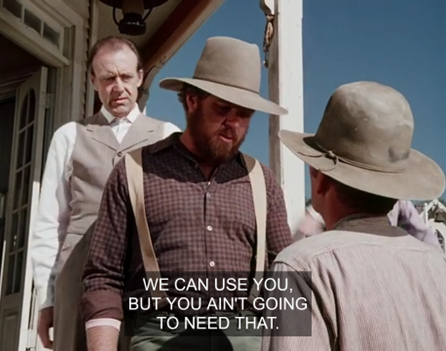

Another weirdly pleasant denizen of this crime-addled burg, Mr. Pattman smiles and says we can agree to disagree.
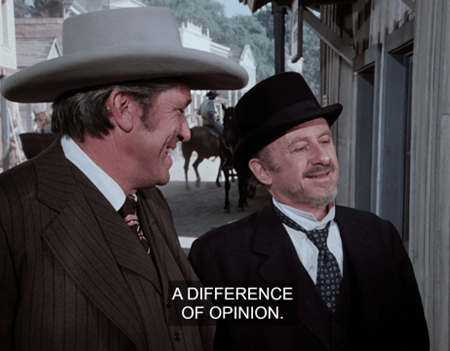
“Nervous little fella, ain’t he?” Garvey says as Pattman walks away. He didn’t seem all that nervous to me.
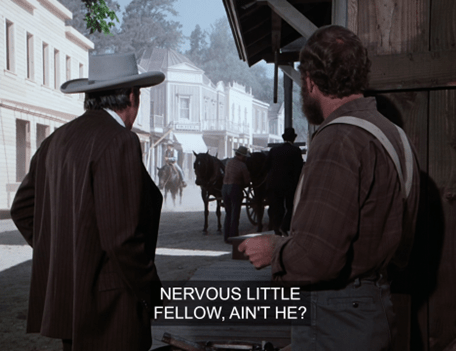
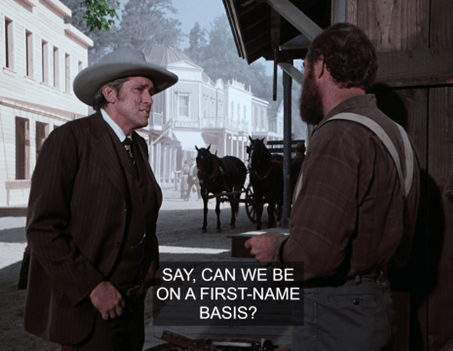
Mr. Rawlins says he agrees with Garvey about gun control, adding, “Listen, can we be on a first-name basis?”
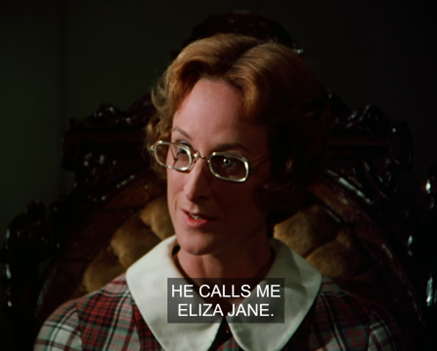
WILL [as GARVEY]: “Sure. Call me Eliza Jane.”
Again, Rawlins suggests hiring him to guard the property.
Garvey complains that no one should need paid security, since their tax dollars fund a sheriff!
Well, Rawlins says finally, he’ll keep an eye on the place even without a contract, and they shake hands.
ROMAN: I don’t trust him.
ALEXANDER: But he’s so nice, Roman.
Next, we see Mustache Man again (he’s dropped Carl off, apparently).
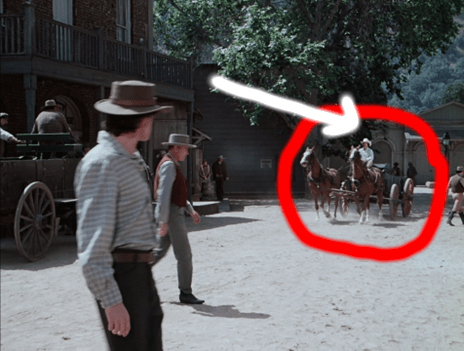
(Actually, maybe Carl dropped him off, since he’s driving a completely different rig altogether.)
Then the young gang leader emerges from somewhere and tells a frowning, unshaven lackey it’s “time to make your delivery.”
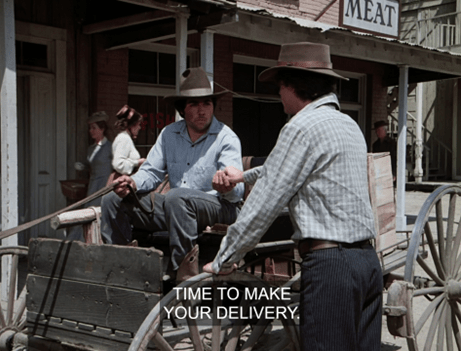
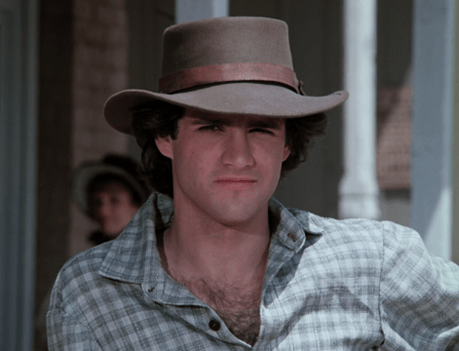
Sleek, reasonably handsome, and very hairy, this Wild West street punk is played by John Dukakis, son of Michael Dukakis, the longtime Massachusetts Governor who ran for President in 1988.
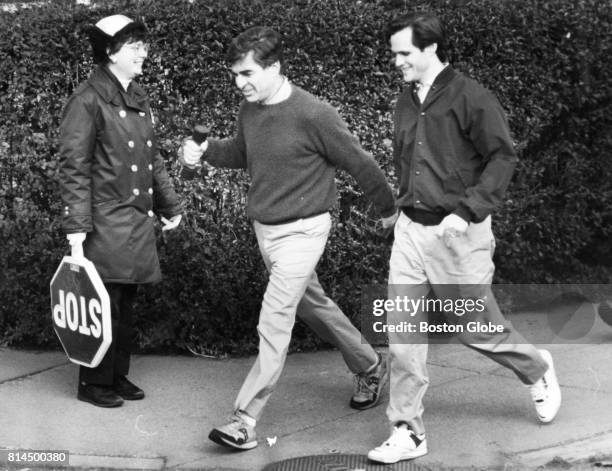
Dukakis the Younger didn’t do much acting – he had a recurring part on Family Ties and was one of the annoying gaggle of teenagers in Jaws 2.
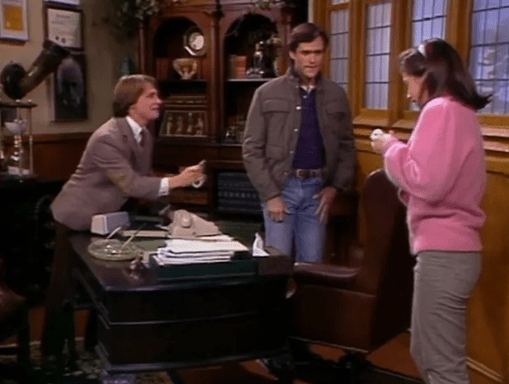
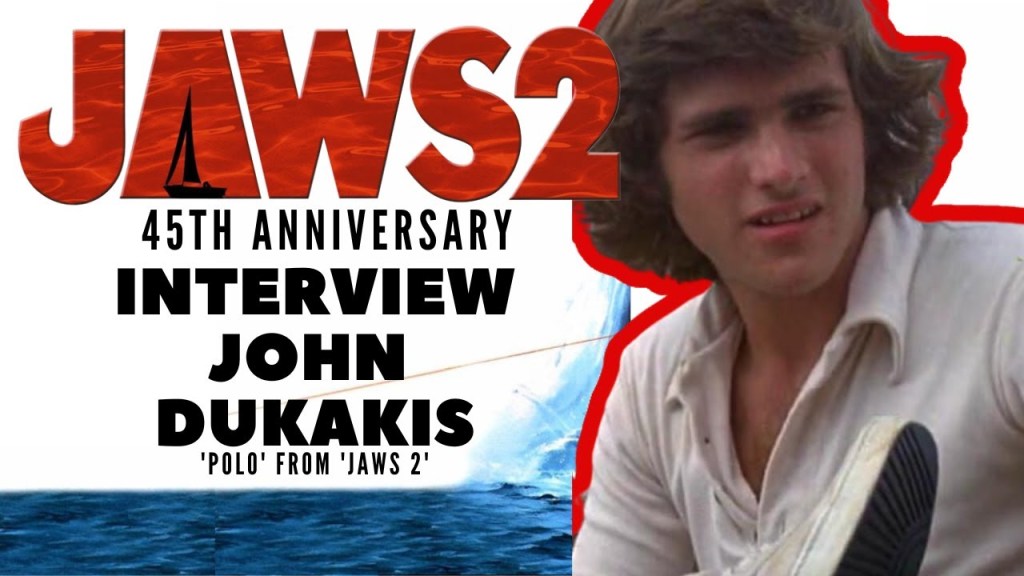
He eventually left acting and worked for a time as a Democratic Party operative.
Then he became a music industry executive, developing the New Kids on the Block and making them stars! (I couldn’t stand them, but my friend John Pima liked them.)
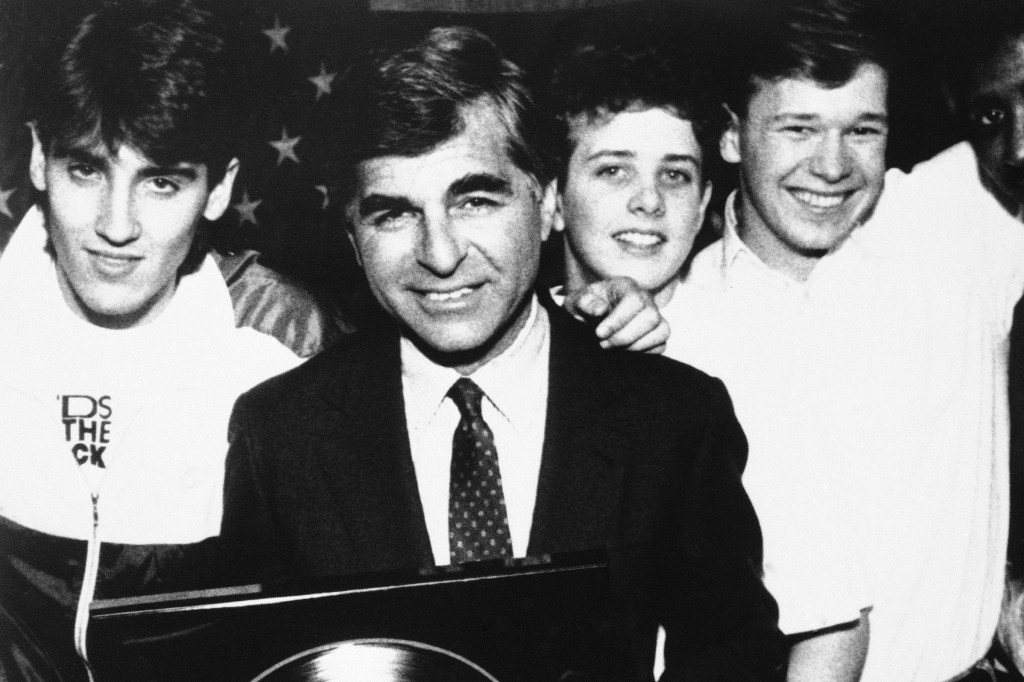
Dukakis worked with other eighties and nineties acts, and managed the Minneapolis-based record company of Prince, who you might know is pretty sacred to us here in Minnesota. (This was during Prince’s “The Artist Formerly Known As” years.)

He seems like a nice guy, and there’s video out there of him talking fondly about Little House. (John Dukakis, that is, not Prince.)
Well, the goon delivers a narrow crate to Garvey.
WILL: Oh, is it Caroline’s mother?
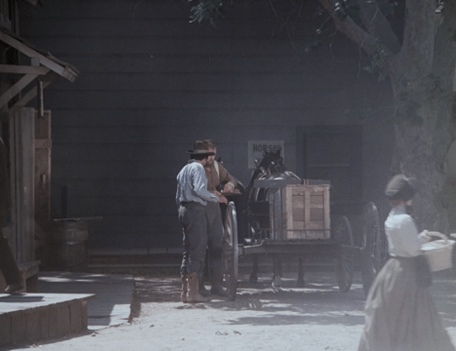


That night in the freighthouse, the coffinlike crate begins to open.
ROMAN: It should be Ingrid Pitt inside.
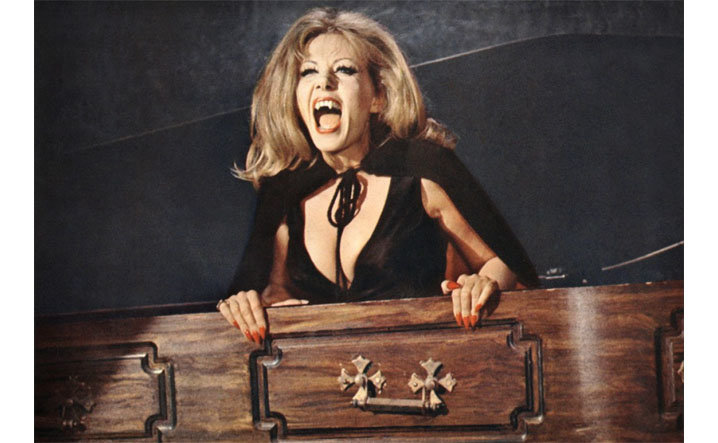
But instead of Ingrid Pitt, it’s . . . someone else.
ALEXANDER: Who was that?
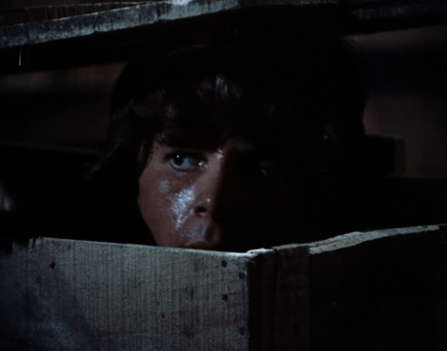
Commercial.
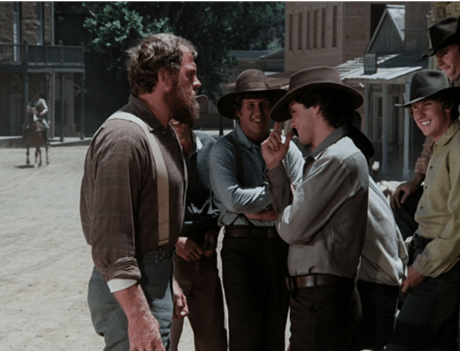
Apparently, the crate-jacking gambit paid off, because the next day Garvey comes ragin’ up the street like a bull elephant.
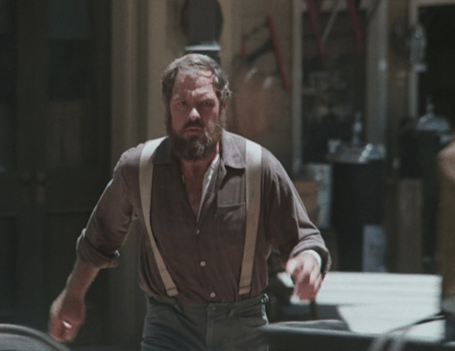
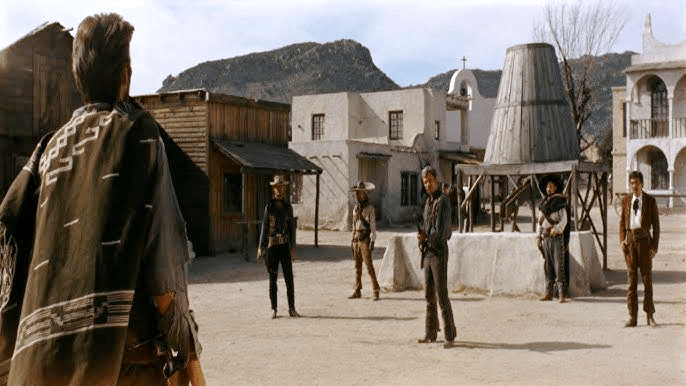
He and John Dukakis stare at each other fiercely.
WILL: This feels more like a Spaghetti Western than a Little House.
Then we get another scene with Sheriff Pike saying, “Without any witnesses, I can’t do a thing.”
Garvey is indignant, saying the punks are literally mocking the law.
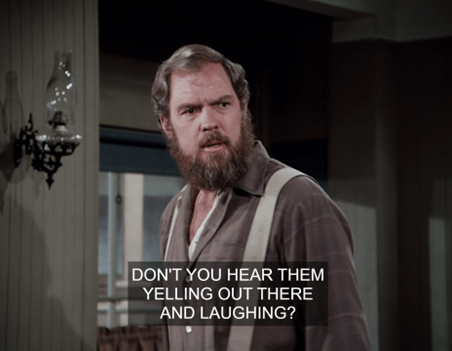
He says they should get out there and search the suspects’ homes.
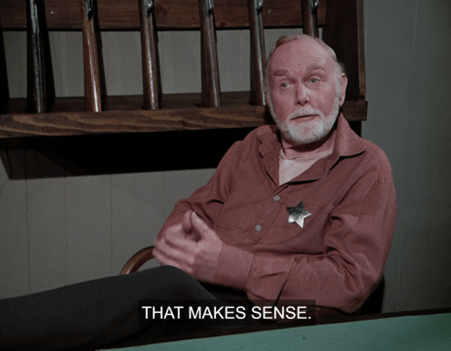
“That makes sense,” the Sheriff agrees.
ROMAN: What the hell is wrong with this sheriff?
ALEXANDER: I told you, he’s in the mafia guy’s pocket.
We get a better look then at some of the posters pinned to the jailhouse wall.
Curt Bukel, last seen in Mankato in 1884-J, is still on the loose.
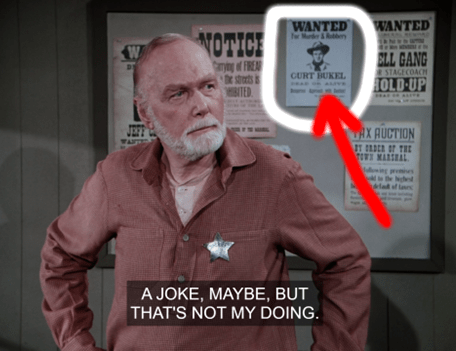
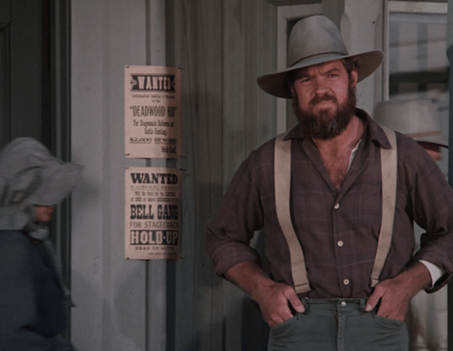
Another wanted poster offers a reward for a Jeff Clanton, and still another for members of the Bell Gang.
(There was a famous Clanton gang that participated in the Gunfight at the O.K. Corral in 1881, but they didn’t have a Jeff.)
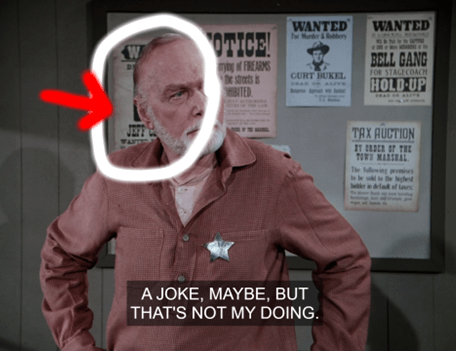
(The Bell Gang was also real, but Tom Bell was killed in 1856, so I don’t know why they’d look for them now.)
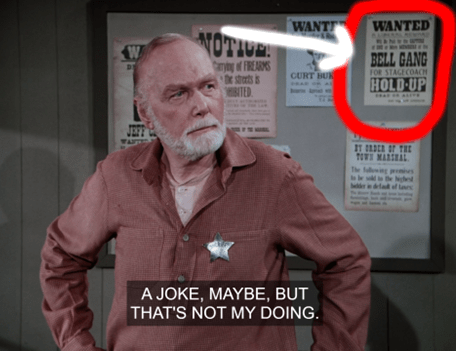
ALEXANDER: Hey, look – “carrying firearms is prohibited in the street.”
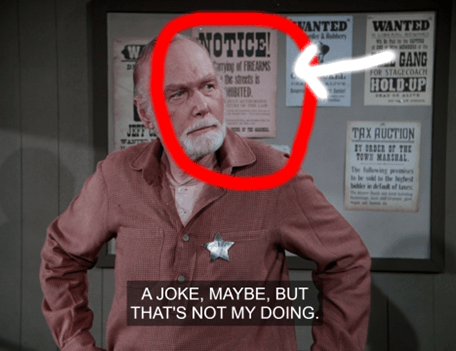
The Sheriff then says his real problem is that he can’t afford a deputy because he can only pay $30 ($1,000) per month. (Which is more than the Grovester teachers got paid.)
Despite protesting that he’s not a coward, the Sheriff says the reason he never investigates anything is he’s afraid of getting killed.
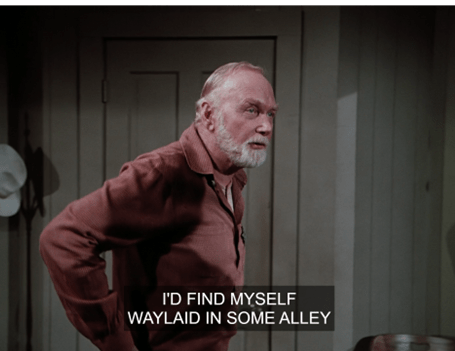
I guess what he’s trying to say is that he’s got the brains, but not the brawn to act as a preventive against violence.
Outside, the gang is yelling taunts at the station, and the Sheriff tells Garvey the leader’s name is Tim Mahoney.
WILL: Mind you, not the beloved Minnesota singer-songwriter.
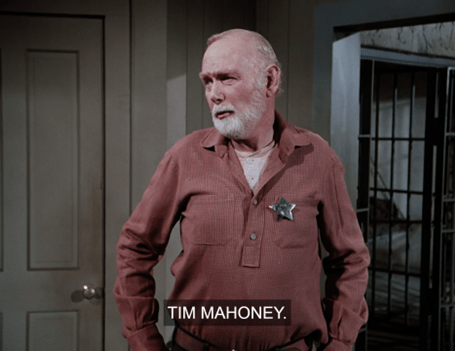

This Tim Mahoney is apparently the son of a wealthy local rancher.
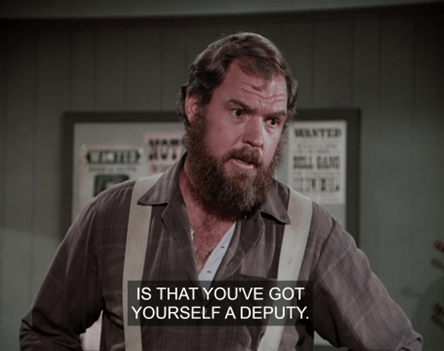
Garvey thinks a moment, and then surprise, surprise, he volunteers for the deputy job.
WILL: His beard is really distracting.
Garvey immediately heads out to the Mahoney ranch.
Big Daddy Mahoney is surprised Tim would be involved in criminal activities.
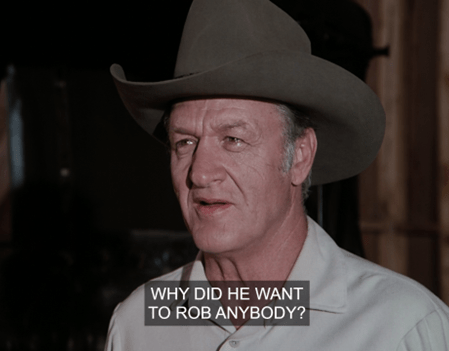
Mr. Mahoney has a very familiar face. He’s John Larch, star of many genre works in the Western, G-man and crime thriller categories.
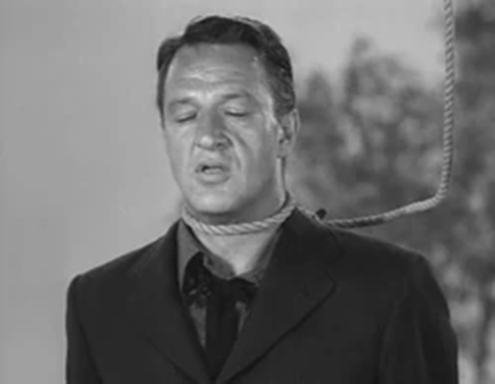
He was good in everything I’ve seen him in. Like Milton Selzer, he also starred in an immortal Twilight Zone: he’s the dad in “It’s a Good Life,” about a family trapped in an alternate universe by their psychokinetic (and psychotic) child.
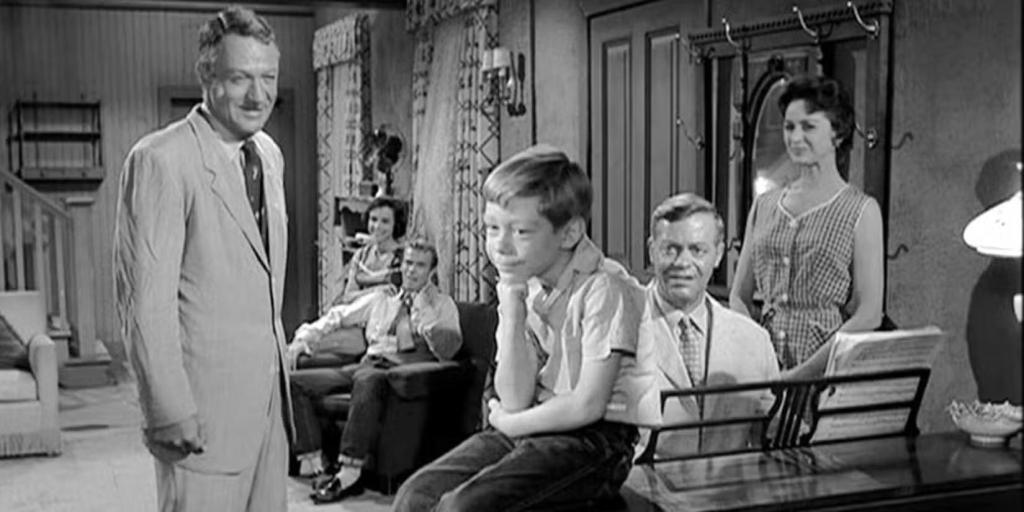
(Man, is that a good one! It’s a family fave of ours – not least because the Walnut Groovy Project is also like being trapped in an alternate universe by a psychotic child.)

In addition to the Zone (and, again, many of the Western shows already listed above), he was on Alfred Hitchcock Presents, Ben Casey, The Fugitive, Mission: Impossible, Charlie’s Angels, Quincy, Hawaii Five-O, Private Benjamin, Dynasty, and Dallas.
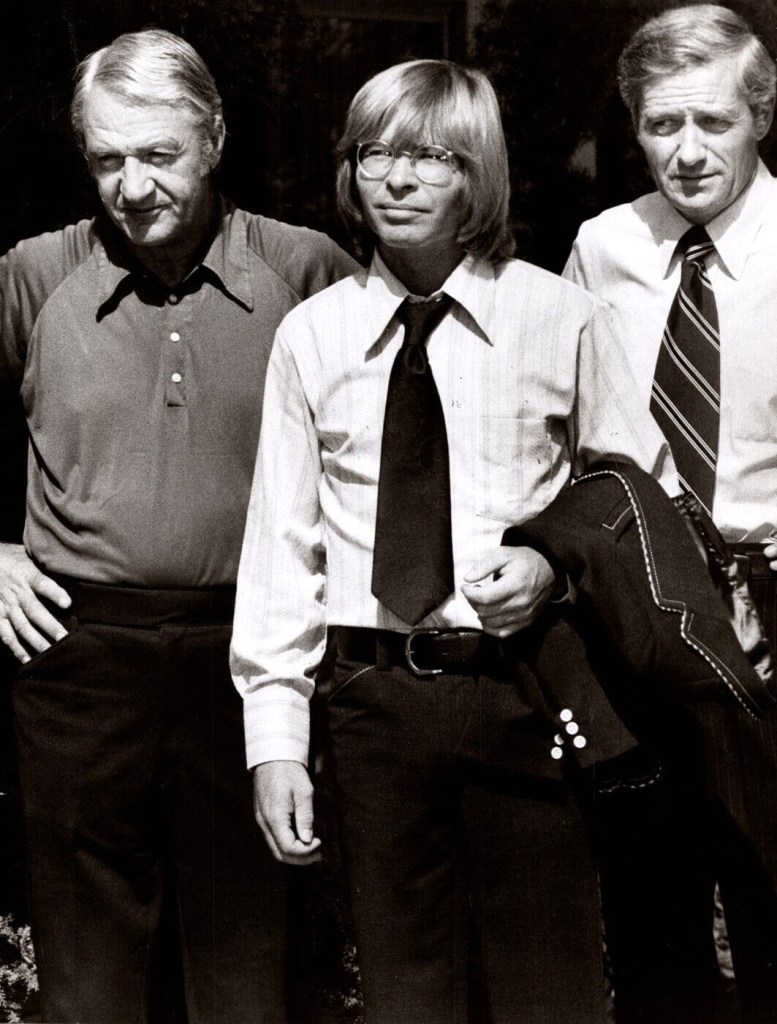
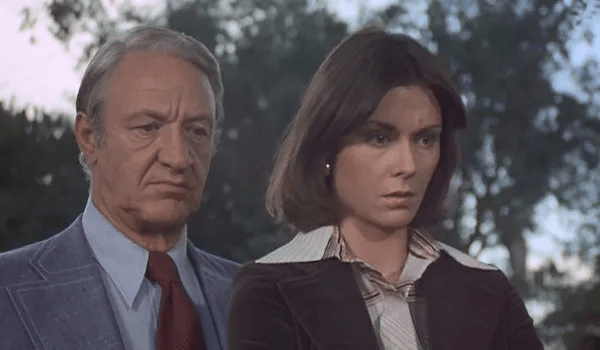
He was in Dirty Harry and in another Clint Eastwood suspense film, Play Misty for Me. (Another favorite of ours – Larch plays a cunning but doomed detective investigating a psychopathic fangirl.)
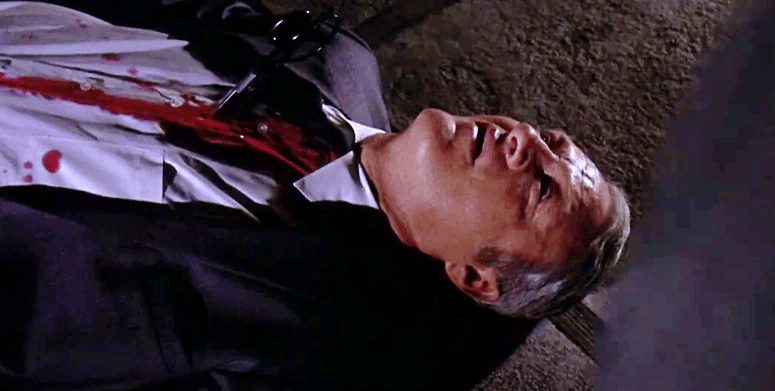
He played a priest in The Amityville Horror.
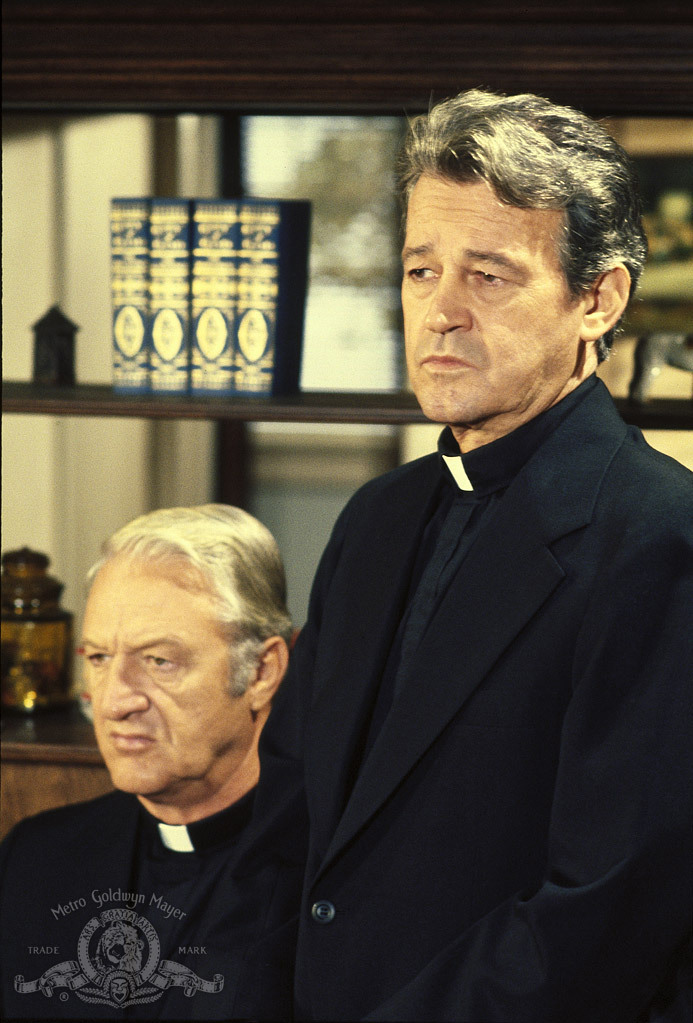
(Amity, of course, means friendship.)
Anyways, surprised or not, Big Daddy lets Deputy Garvey search Tim’s room.
Finding nothing, Garvey decides to search the attic, climbing on a table to do so.
ROMAN: Don’t fall like the fat handyman!
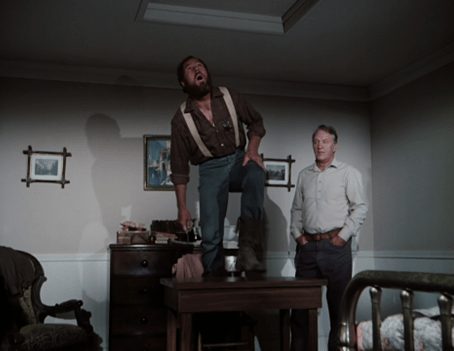
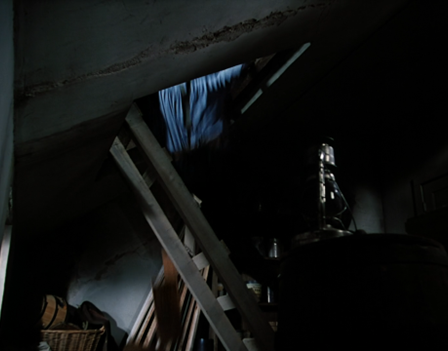
During the search, David Rose gives us queasy, suspenseful music. More queasy and suspenseful than warranted by the situation, actually.
Or to put it another way:
ROMAN: This is pretty intense for opening a box of cutlery, David.
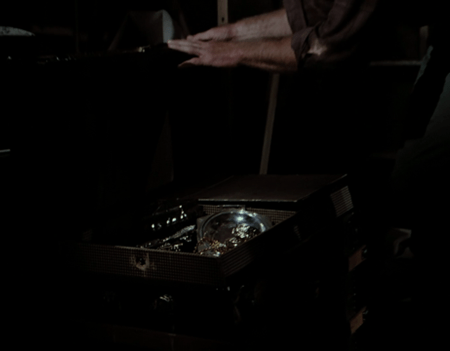
Well, guess what, he finds stolen goods.
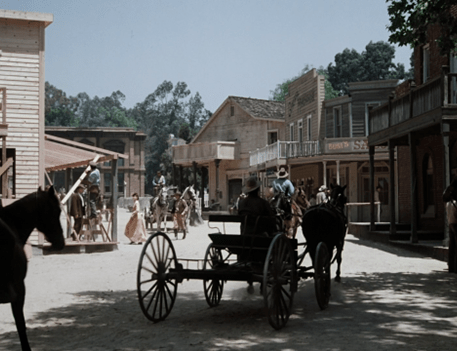
Cut to the street to indicate the passage of time. (We see a sign for a place called “Busi’s Saloon.”)
At the jailhouse, then, we see Garvey going over the recovered goods with the Sheriff, Crowley the shopkeeper . . . and both Mahoneys.
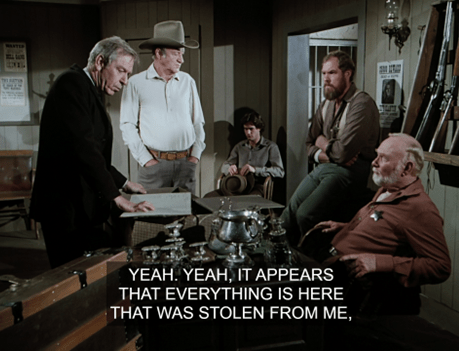
Crowley says yep, everything’s here . . . “except the silver service.”
Big Daddy Mahoney turns and gives his son a look of revulsion.
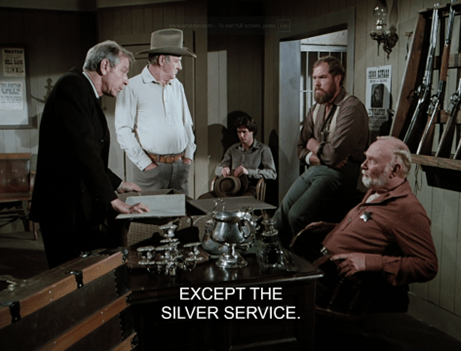
The Sheriff tells them “the District Marshal” will escort Tim “to Mankato for a trial.” (In fact it would seem, if the internet is to be believed, Sheriff Pike is himself more like an 1800s marshal – i.e., an individual lawman connected to a municipality – than a sheriff, an official with authority over large regional counties.)
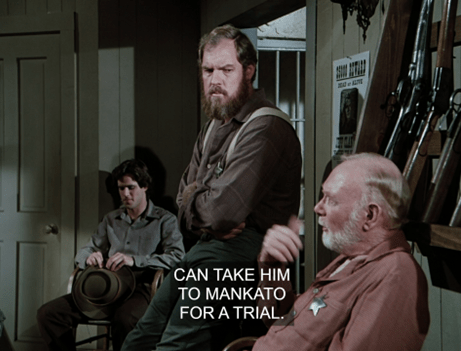
(Also, the county seat in Brown County, Minnesota – Sleepy Eye’s location – is New Ulm, not Mankato.)
Tim Mahoney whines that his father should help him, but Mr. Mahoney is disgusted and ashamed.
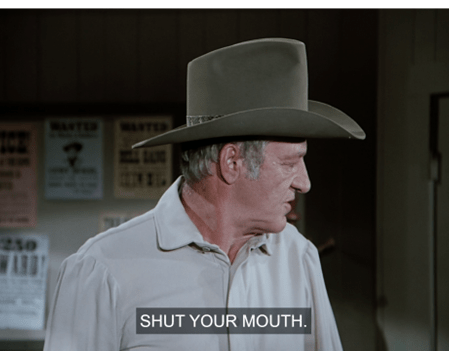
Tim approaches the shopkeeper and not-quite apologizes, addressing him as “Mr. Thorn.” Wait a minute, so this isn’t Alvy Moore?
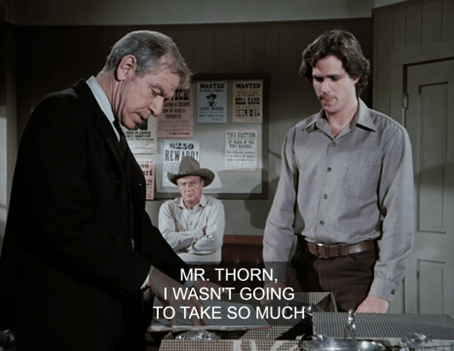
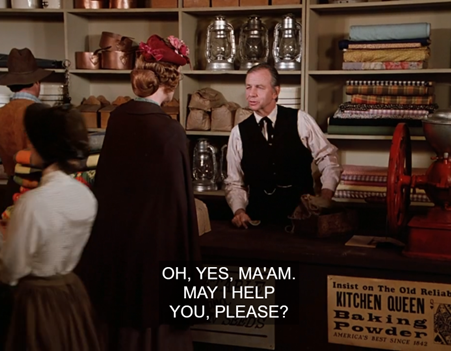
Well, they look similar to me, but no, this is Cal Bowman, who was also on an episode of Sheriff Lobo.
Well, played by Alvy Moore or not, Thorn serves the same function in the story as Crowley did.
Thorn says he’s baffled Tim would steal, coming from such a wealthy family.
Tim says he only stole because he needed an anniversary present for his grandparents.
Again, he begs his father to help, and, not without reluctance, Big Daddy rises.
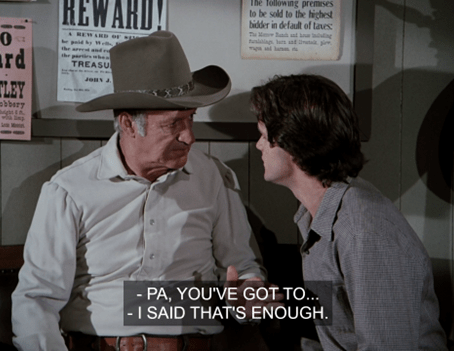
Addressing Mr. Thorn as “Abel,” he says a trial would only be unpleasant for them all.
ALEXANDER: Abel – but not Dumb Abel .
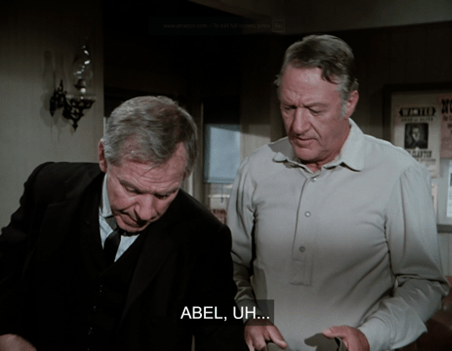
He then asks Thorn to drop the charges, saying he’ll pay for any stolen stuff that wasn’t recovered and personally see to it Tim never reoffends.
Thorn considers this.
ROMAN: Easily Manipulated Abel.
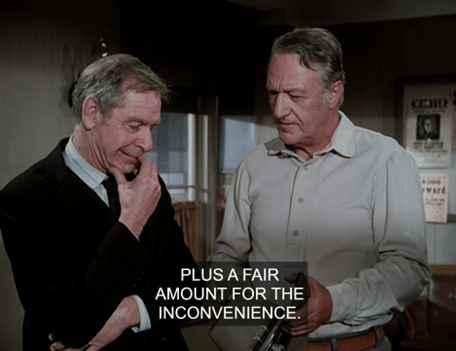
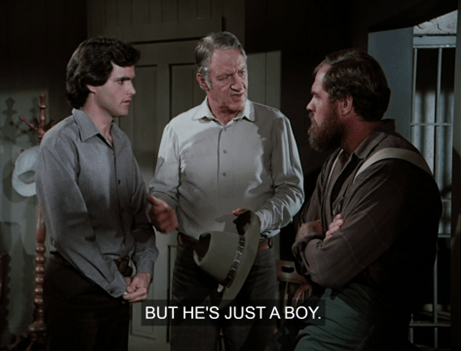
The Sheriff says Sleepy Eye could bring charges on its own. Tim begs Garvey not to pursue any, and Big Daddy appeals to Garvey’s fatherly instincts, saying, “He’s just a boy.”
WILL [as GARVEY]: “Well, I knew a boy once who was ‘just smokin’ a pipe’ . . .”
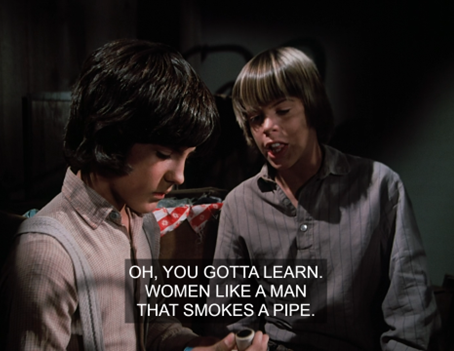
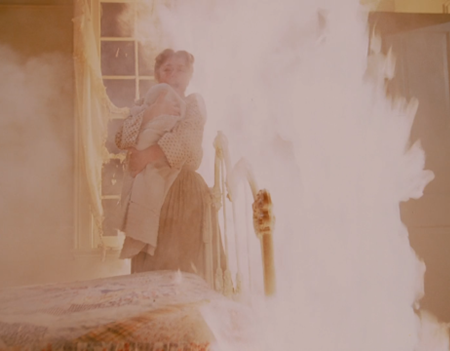
Back at the Mahoney ranch, Tim gets an earful from his father.
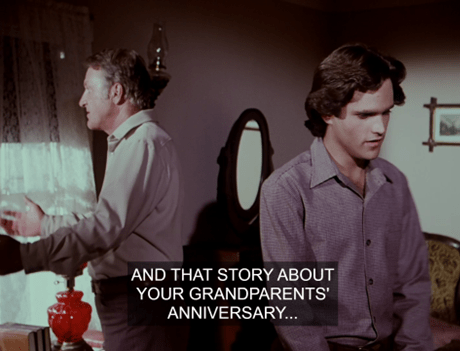
Tim whines that he needs a bigger allowance, and Big Daddy makes a righteous speech about the satisfaction to be found in an honest living.
WILL: Trump was like this with his kids, I’m sure.
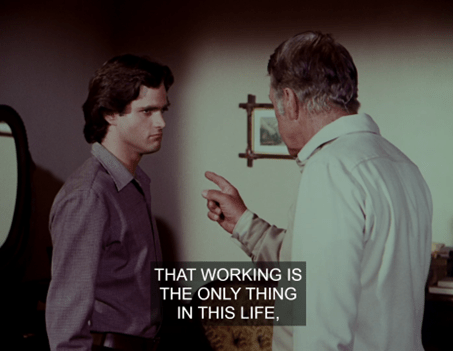
Tim huffs out of the room. I’m not sure John Dukakis is all that great in this one, but to be fair to him, he isn’t given much to work with.
After a break, we follow a buckboard pulled by a tall white horse through town.
ROMAN: Look, The Prancing Pony!
ALEXANDER: Yeah. That’s a happy horse.
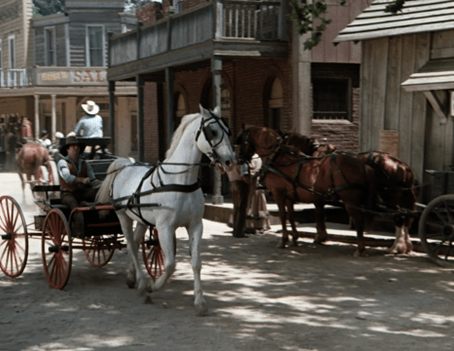
On the other side of the street, Garvey and Charles are loading a crate onto a wagon.
Charles teases Garvey about being a cop.
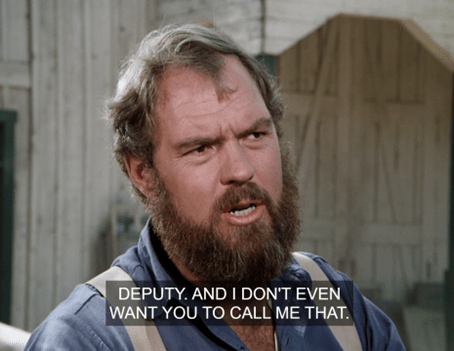
Then Rawlins appears.
ROMAN: Have we seen a single woman in this entire story?
ALEXANDER: Mary.
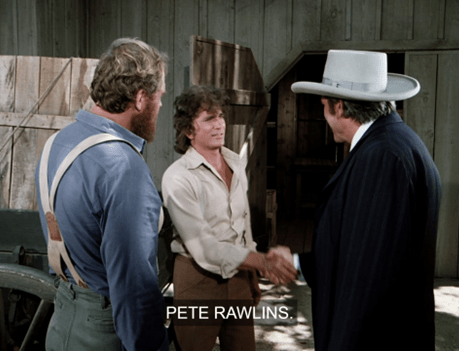
Grinning like The Joker, Rawlins congratulates Garvey on solving the robbery and continues on.
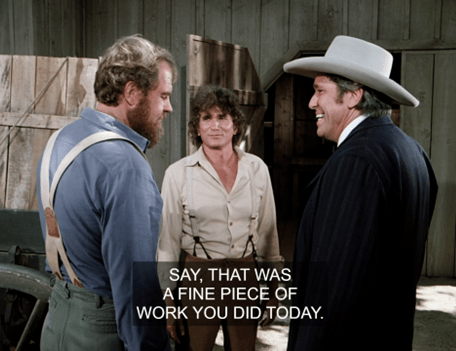

Garvey tells Charles about some of his investigative techniques, like making Santa Claus lists.
WILL: Garvey’s long beard is so distracting. I can’t get used to it.
ROMAN: I’m used to it.
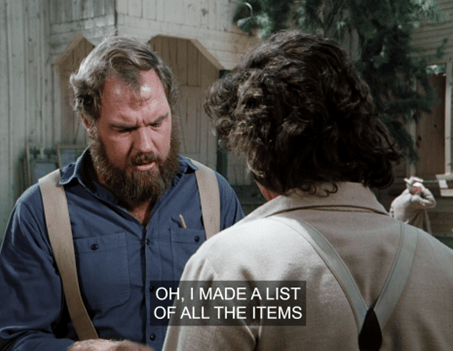
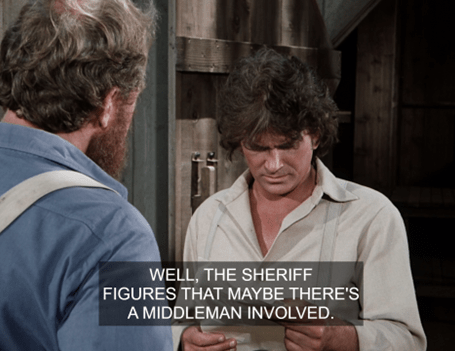
He says he believes the robbers are working with a fence to sell the hot merchandise.
ALEXANDER: I wonder who that is.
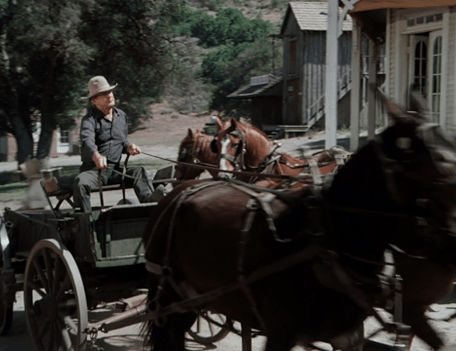
Back in Walnut Grove, Manspreading Carl drives through the thoroughfare. Seems in a hurry.
Nels is helping Charles unload his delivery, and telling him about these newfangled notepads specifically for telephone messages! (I couldn’t make heads or tails of what I found on the internet about this, but looks like such pads probably didn’t exist until the Twentieth Century.)
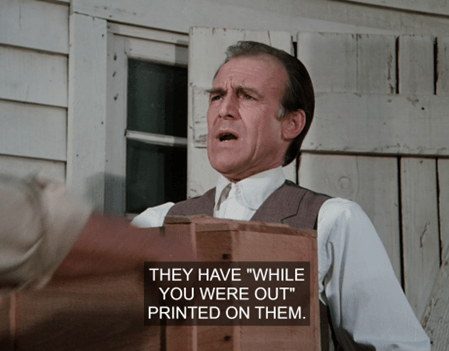
Harriet suddenly appears, and she and Charles greet one another cordially. (I love Nice Harriet.)
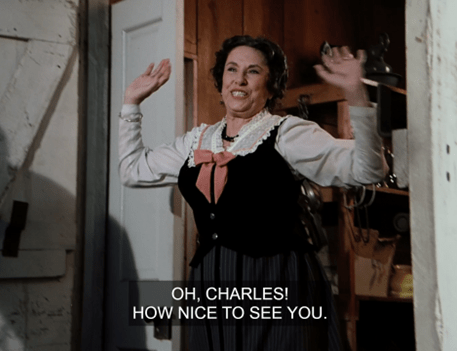
Nels says Harriet’s showing off a fantastic recent purchase to everybody, whether they want to see it or not.
ALEXANDER: Just like Harriet, mogging again.
ROMAN: “Mogging”? Oh my God, Alexander, what are you, Clavicular?
WILL: I thought you were taking more of an interest in your appearance! It all makes sense now.
ALEXANDER: [laughs for a good long while]

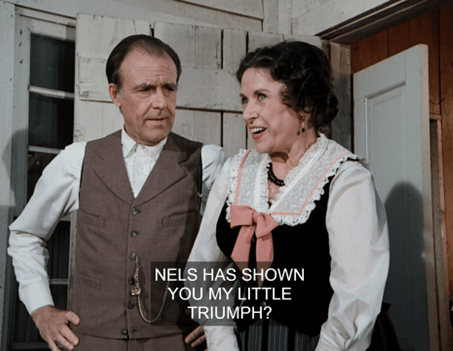
Mrs. O takes Charles inside and shows him her find – a marvelous silver service, bought for a very good price.
But Killjoy Chuck recognizes it from Deputy Garvey’s Santa list of missing items.
WILL: Well, THAT’s certainly a coincidence.
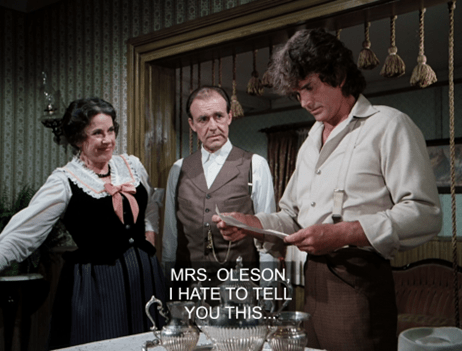
Mrs. Oleson protests that she bought it from a legitimate merchant, Mr. Jenkins, in Lamberton. (We’ve never seen Lamberton, but in a curious piece of continuity, Harriet mentioned in “Harriet’s Happenings” – also Doogie – that the Lamberton Mercantile is a rival of theirs.)
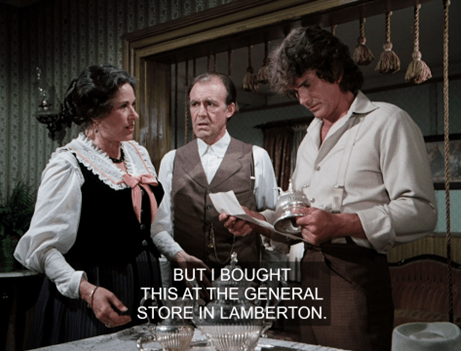
Nels starts yelling at Harriet about how she’ll never get her money back.
ALEXANDER: Well, it’s not her fault, Nels.
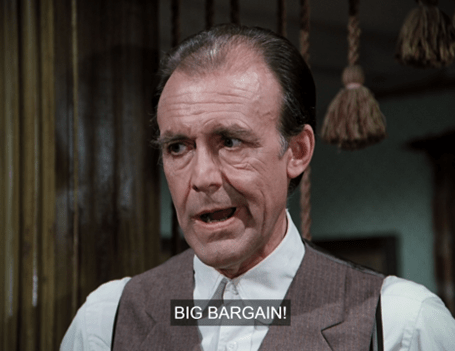
Charles agrees with him, though I’m not sure why. Surely this Jenkins would refund her, or risk facing charges of trafficking in illegal goods. It’s Jenkins, actually, who would probably never see his money again. (I mean, maybe he’d hassle her a little if they’re retail archenemies. . . .)
Well, in a moment we meet the man himself, when Charles goes to Lamberton to investigate.
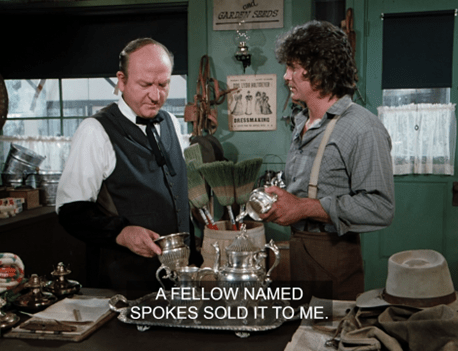
(He’s played by Stuart Nisbet, who was on – deep breath – Dennis the Menace, My Mother the Car, Dr. Kildare, The Man From U.N.C.L.E., Bewitched, Hogan’s Heroes, Mannix, Columbo, The Six Million Dollar Man, Fantasy Island, Father Murphy, H2H, Mama’s Family, The Golden Girls and Baywatch, and in the movies In the Heat of the Night, The Graduate, Yours, Mine & Ours, and in the Dub Taylor/Cliff Emmich vehicle Thunderbolt and Lightfoot.)
(One of these days, I’m gonna go insane from cataloguing all these old TV titles. I try to make a game of it, but someday someone will mention Mannix at a cocktail party and my head will explode.)

(Nisbet was also a casting director and “President of the Nesbitt/Nisbet Society of North America.”)

Mr. Jenkins is bald and perhaps has a hardnosed look about him, but he’s quite helpful, telling Charles he was sold the silver by a respectable-looking man called “Spokes.”
It’s obvious from his description that “Spokes” is Pete Rawlins.
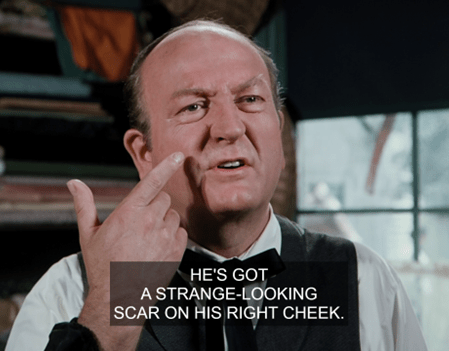
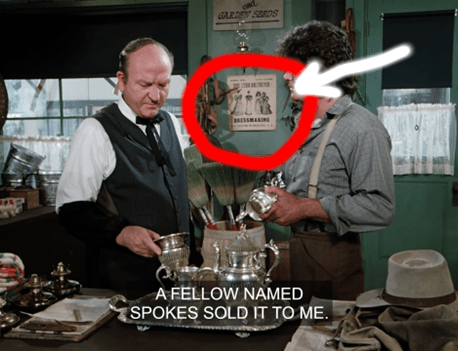
(We see a sign in the background advertising a dressmaker named Mrs. Lydia Holtmeyer.)
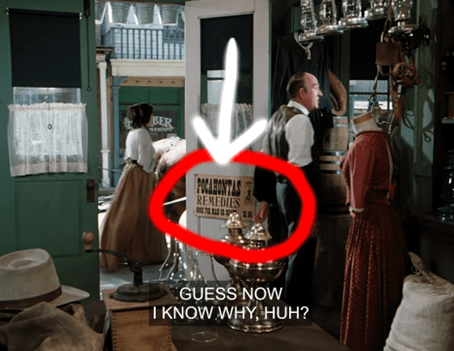
(Pocahontas Remedies also makes another appearance.)
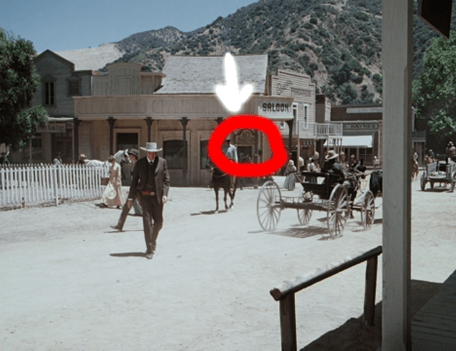
Back in Sleepy Eye, Rawlins crosses the street to the jailhouse. (Behind him we see the Ace Saloon, which was the workplace of the foxy prostitute who tempted Zaldamo when he lived there.)
Interestingly, while the character’s name is spelled Rawlins in the credits, we can see his office behind him with a sign that clearly spells it Rawlings.
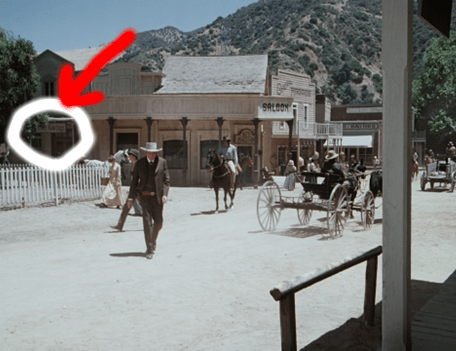
But when he gets there, he’s confronted by Jonathan Garvey, Sheriff Pike, and, you guessed it, Butt-In Chuck.
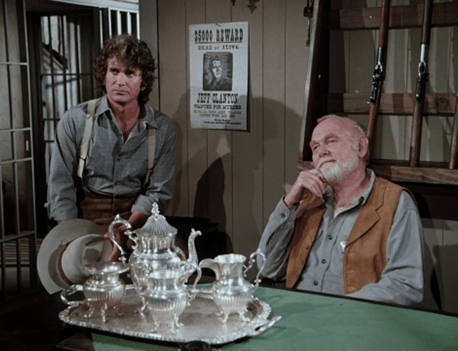
Rawlins gets an unpleasant surprise, then, when Mr. Jenkins himself emerges from a back room.
ALEXANDER: God, who’s minding the store?
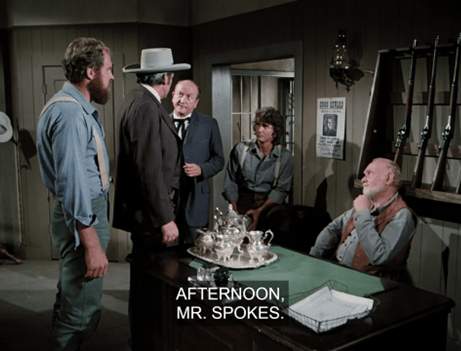
Well, long story short, they put him in the paddywagon in chains.
ROMAN: If it wasn’t for that meddlin’ Garvey!
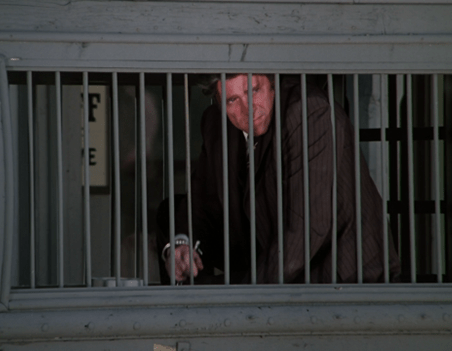
Tim Mahoney and his Droogs watch them take him away.
A secondary Droog says he doubts Rawlins will stand up well under torture. (Paraphrase.)
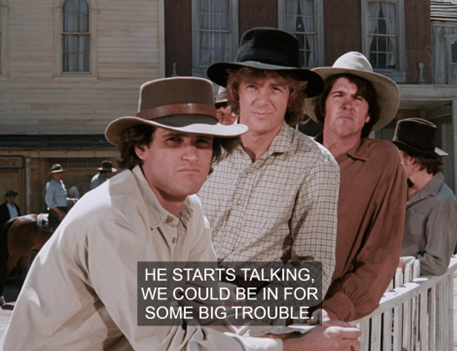
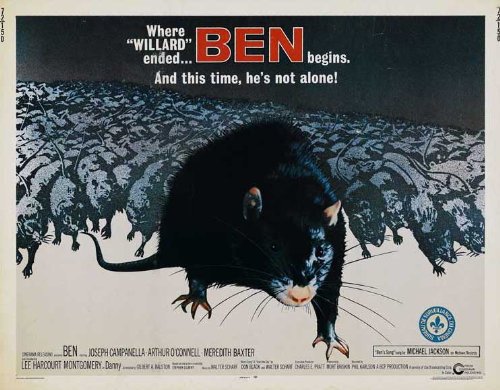
I assumed this guy must be “Punk #1” (so many people get credits in this one), but apparently he’s actually called “Hiram” and is played by Scott Garrett, who went on to work in art direction. (He was in Ben, with the rats!)
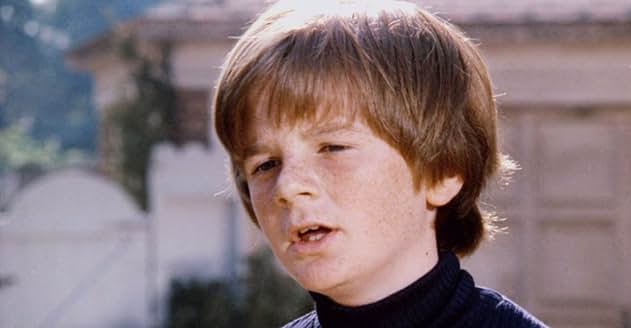
I believe Hiram was also the thief they smuggled into the freighthouse in the crate earlier.
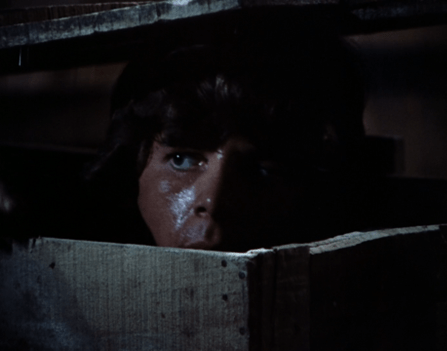
Another goon says it’s all Garvey’s fault. You’d think he’d be Punk #2, but he’s actually #3. And (speaking of Ben), he’s played by Ben Scott, who later become a successful stuntman. (Still at it today, in fact!)
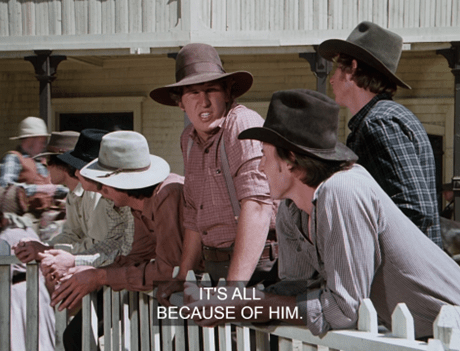
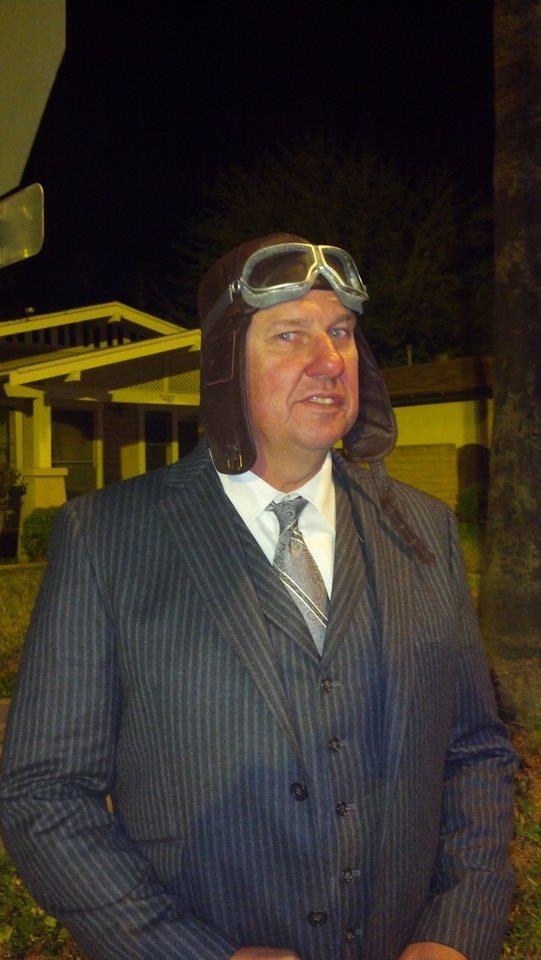
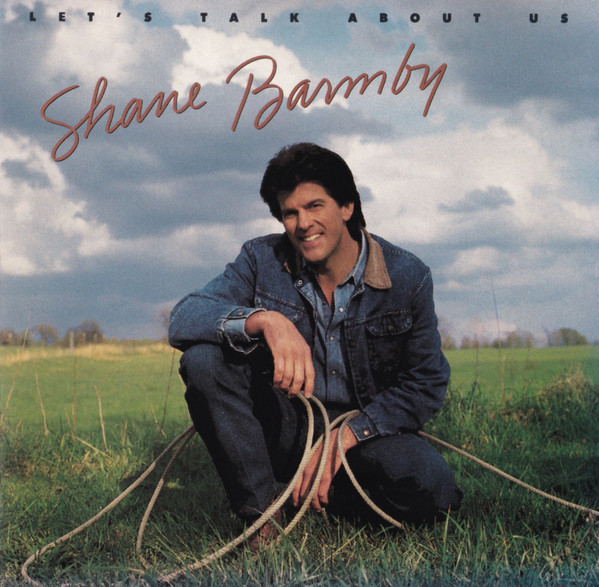
Next to Hiram is Punk #2. He doesn’t speak in this scene, but he’s played by Shane Barmby, who went on to a career in country music.
Garvey and Tim Mahoney stare each other down in the street.
WILL: I’m sorry, I just don’t find that guy a scary villain.
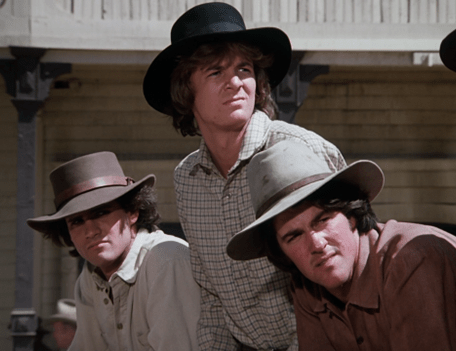
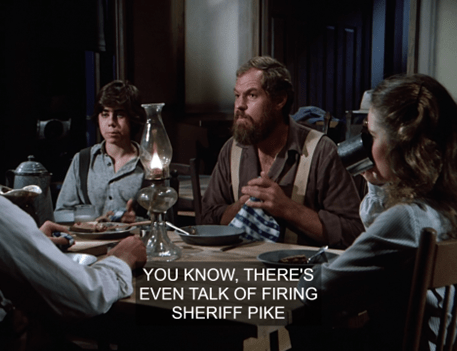
The Garveys join the Kendalls for dinner again, and Adam says there’s a movement in town to make Jonathan sheriff.
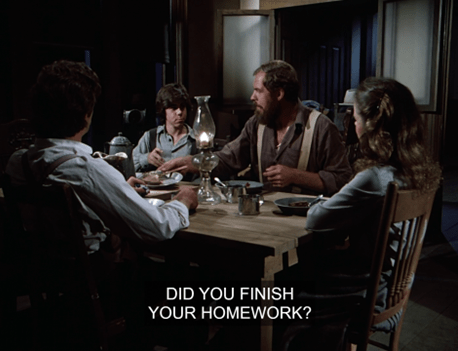
Jonathan asks Andy, who no longer seems upset to be around Adam and Mary, if he finished his homework. (So it isn’t summer? I suppose it’s possible the school year just began.)
Andy hasn’t, so excuses himself.
ALEXANDER: Did Adam say “See you later”?
WILL: Yeah, blind people are constantly saying that on this show.
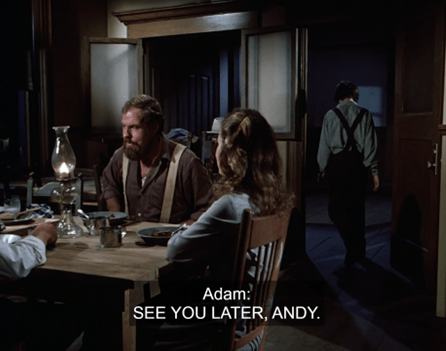
Andy walks home by himself. (We see a sign for a printer called J.T. Gaupley & Company.)
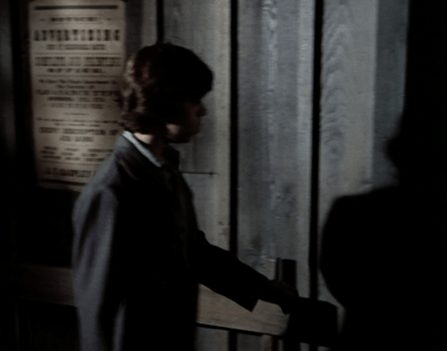
Well, he soon finds himself intercepted by masked gang members.
Commercial.
Well, we don’t get to see the fight, because when we come back, Jonathan Garvey is already confronting Arthur Mahoney about the incident.
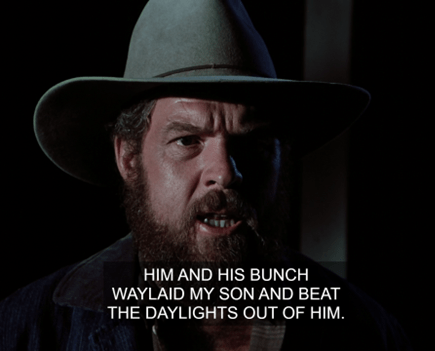
Well, Garvey, Mahoney and the Sheriff find Tim and the gang at the saloon. (Whether it’s Busi’s or the Ace is not specified.)
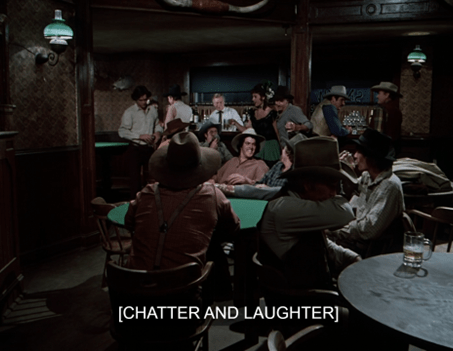
It’s rough and rowdy inside, with Punk #2 throwing a pint glass against the wall for fun.
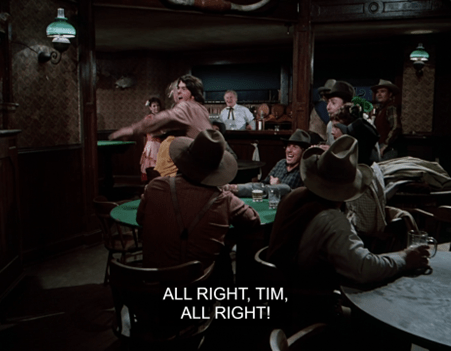
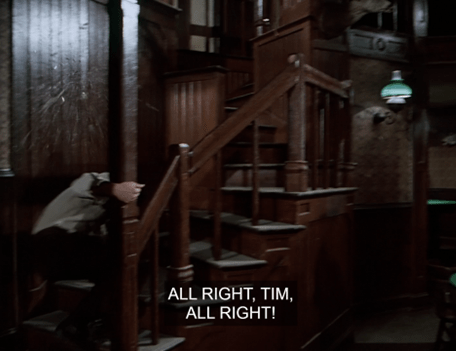
WILL: This is what those people at the State Fair in 2019 were like.

The violence doesn’t stop the ragtime piano, but the entrance of the lawmen and Mr. Mahoney does.
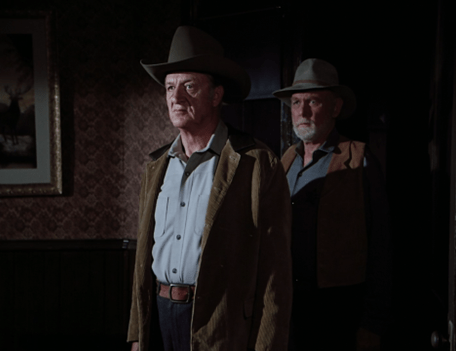
At first Tim denies he attacked Andy, but when Big Daddy screams in his face he starts crying and confesses.
WILL: Christ, what a wimp.
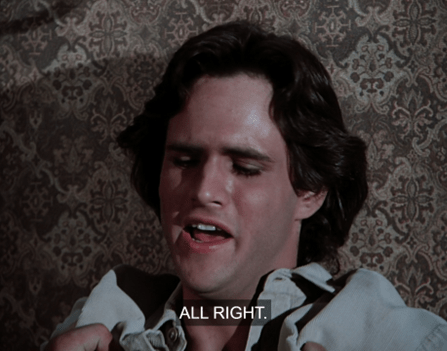
In fact, Mr. Mahoney makes to hit Tim, but is stopped by Garvey.
ROMAN: Jeez, he was gonna hit him hard.
ALEXANDER: Yeah. Balled fist.
WILL: I could see a slap. I probably would have kept it to a finger waggle myself, though.
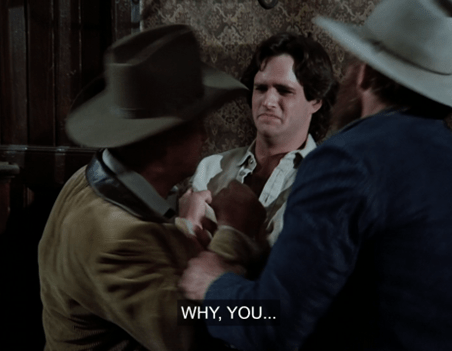
Big Daddy Mahoney, who seems a sentimental type, makes a florid speech about what a terrible thing it is to beat a half-orphan like Andy.
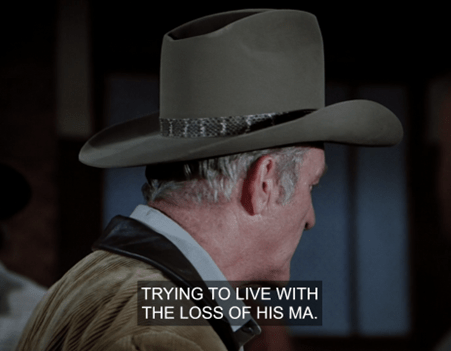
Big Daddy disowns his son, pretty finally, too.
WILL: That’s harsh.
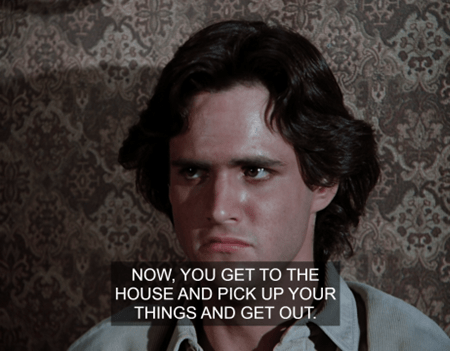
But Tim’s not through yet. Next we see him packing his suitcase; but he pauses thoughtfully when he gets to his gun.
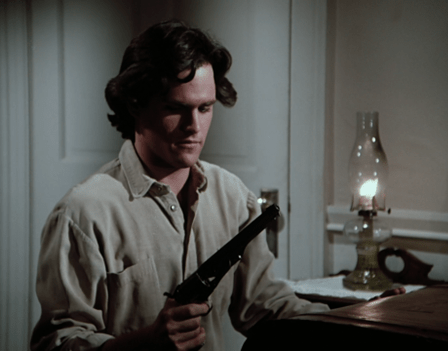
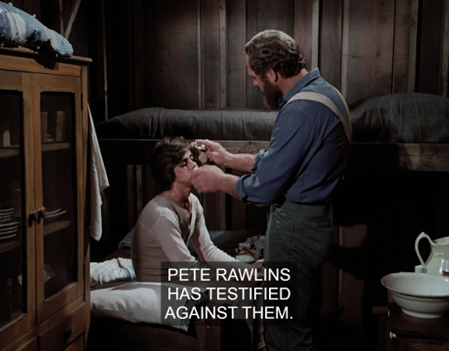
Back at Garvey’s Freight, Jonathan tends to the injured Andy. (Good bruise makeup by Whitey Snyder, as always.)
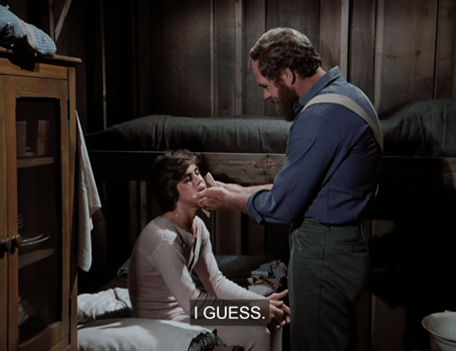
He tells Andy Pete Rawlins has agreed to name names.
ALEXANDER: Just like Godfather II. Does he have an Italian uncle who comes to the trial?
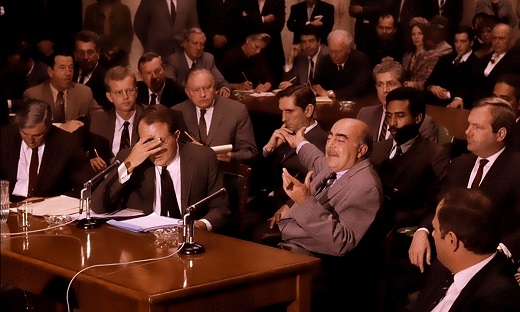
Suddenly, Pattman the banker appears at the door.
ALEXANDER: Isn’t that guy in on it?
WILL: I’m not sure. I don’t think so. There are a lot of red herrings.
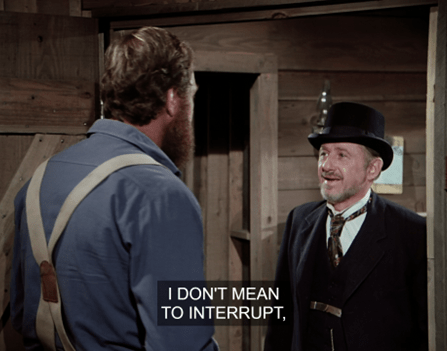
Pattman tells Garvey the town has elected him sheriff. (Him Garvey, not him Pattman.)
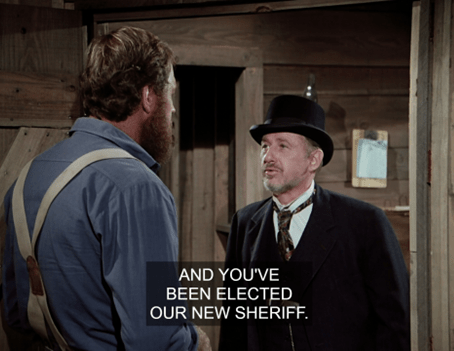
Out in the street, Tim Mahoney tells his Droogs he wants to rob the bank, “just like Jesse James.” (I didn’t sing the song this time, but here it is anyways.)
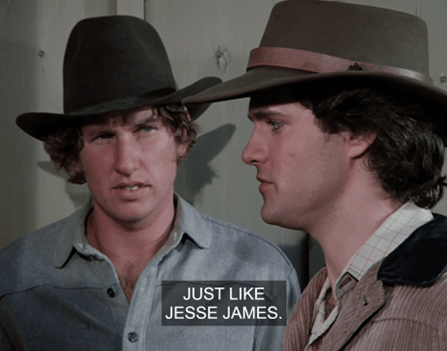
Tim mentions the real purpose of this operation is so he can steal from his rich father.
I notice for the first time that two of the goons are very alike in appearance. I thought they were twins, actually, but they’re just brothers. This guy, credited as “R.J.” (I don’t know why they don’t call him Punk #4), is John-Clay Scott, another Hollywood stuntman like his brother Ben.
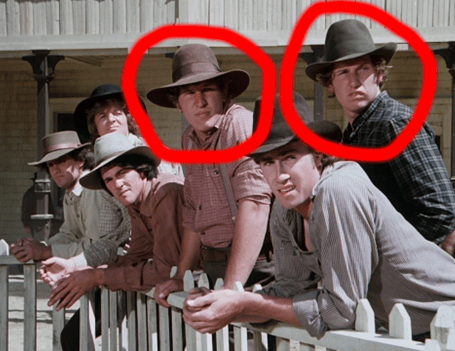
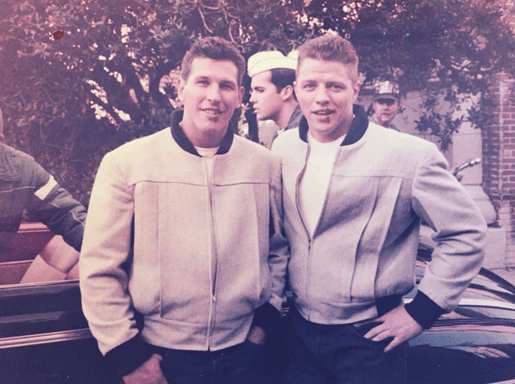
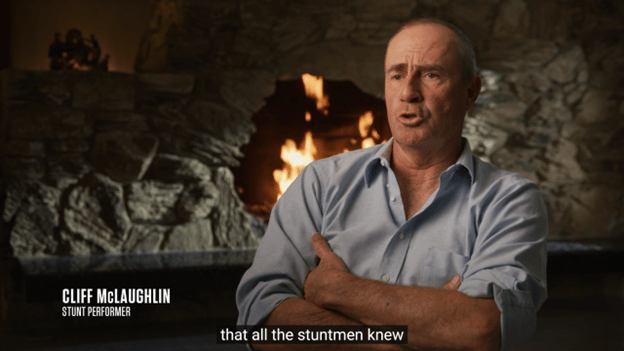
And behind them is (finally!) Punk #1, Cliff McLaughlin, who also became a very successful stuntman and stunt coordinator. He was a longtime stunt double for Patrick Swayze, in fact, and he also still works today.
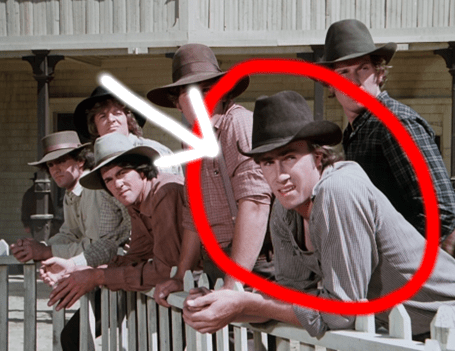
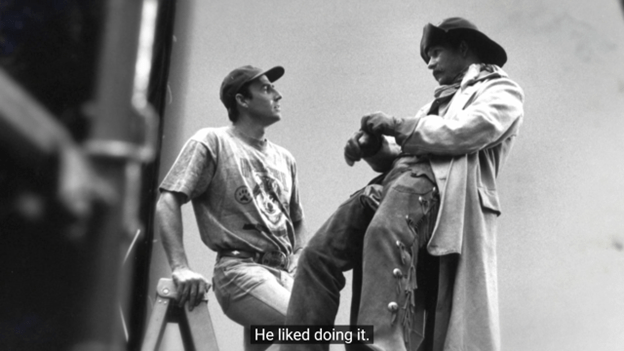
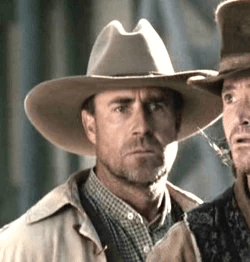
If you think McLaughlin looks familiar from this show, you’re right. While he was only credited in this story, I feel confident in saying McLaughlin has been on this show at least twice before . . . for I believe he is also Benjamin, the youngish whitish Grovester who raised the alarm when Little Crow and his advance party came to Walnut Grove!
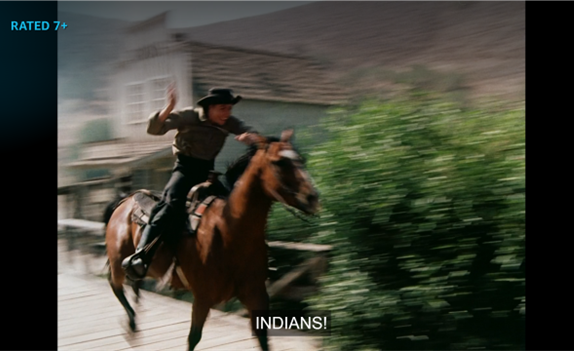

McLaughlin was uncredited in that story, but he was quite memorable, delivering the immortal line “Then what in the heck are THEM?” (He even got the Walnut Groovy Award for Best Featured Townsperson in 1978!)
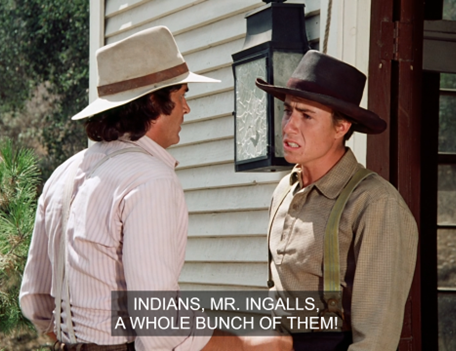
Benjamin was also spotted amongst the crew putting up the telephone poles in “The Godsister.” (We shall assume this is the same character. Sad to think such a promising young man fell in with a bad crowd, but it happens.)
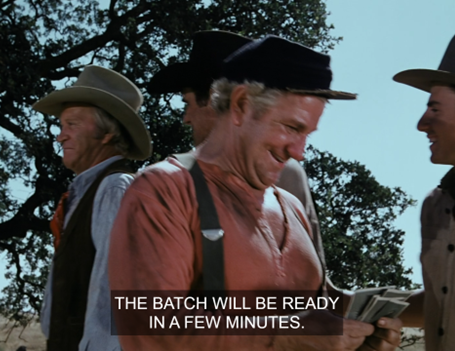
Well, I don’t know about you, but I am pleased as punch by this discovery. It’s fair to say it’s the only thing I’ve enjoyed in the episode so far!
But we must finish it up, mustn’t we. Anyways, one by one all Tim’s Droogs quit the gang.
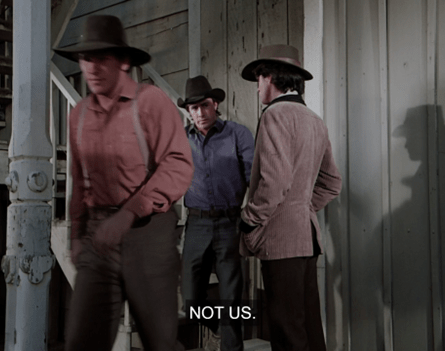
Yet Tim himself remains steadfast.
Over at the jailhouse, un-Sheriff Pike is giving Garvey heck about stealing his job.
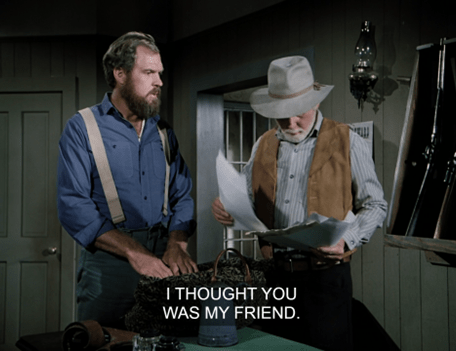
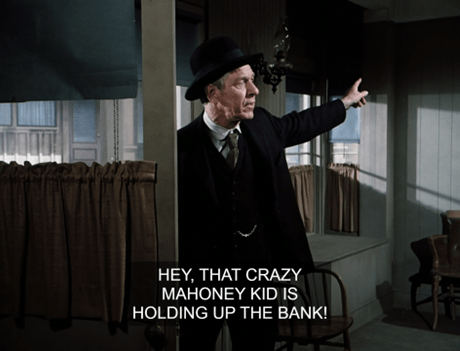
Garvey says he doesn’t want the job, but they’re interrupted when Abel Thorn runs in and shouts, “Hey, that crazy Mahoney kid is holding up the bank!”
At the bank, Tim and Mr. Pattman are essentially dueling with pistols.
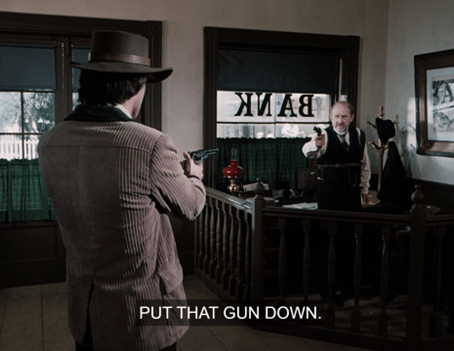
Neither wants to fire, but at that moment Jonathan Garvey bursts through the door, startling the banker, who shoots.
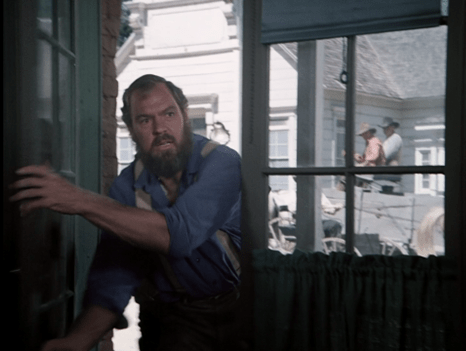
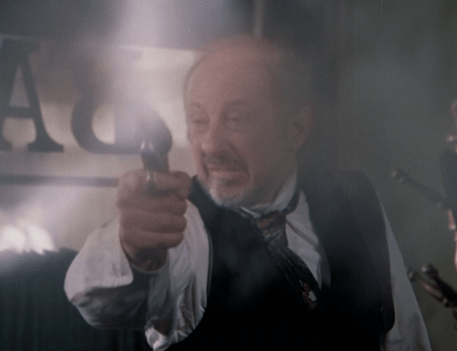
And so it comes to pass just as Jonathan Garvey foretold – proving guns shouldn’t be carried by private citizens. Who knew that Little House has views on gun control? It’s not something I ever expected to see.
We’re immediately whisked to Tim’s funeral.
ROMAN: How much time has passed?
ALEXANDER [shrugging]: Probably ten minutes.
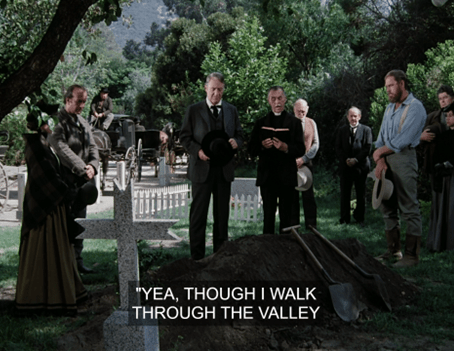
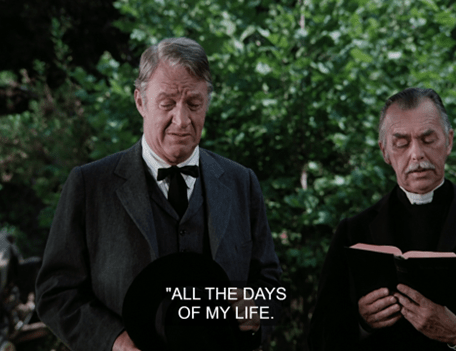
Of course, the Mahoneys are Irish Catholics, so they have a mustached old priest there who reads the Twenty-Third Psalm.
In fact, the priest is the Alamo Tourist from Pee-Wee’s Big Adventure!
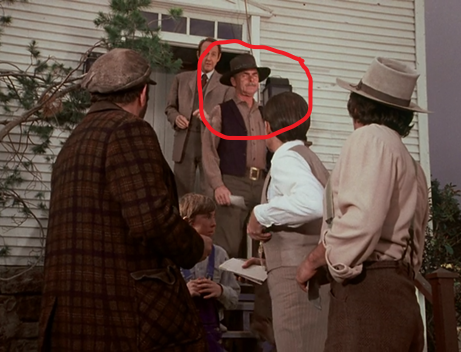
This is the first time we’ve ever heard him speak (I think), and I don’t think I’ve ever seen him without a hat.
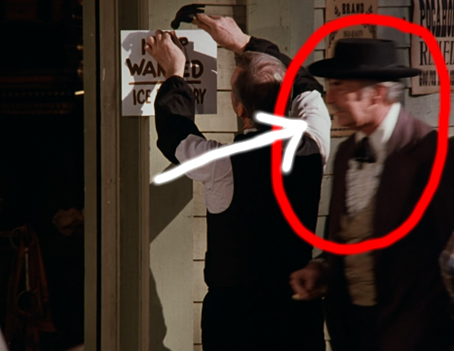
I know we’re almost done here, but given the Alamo Tourist is a very prominent Grovester indeed (having appeared in at least 25 of our stories so far), we’ll do him quickly.
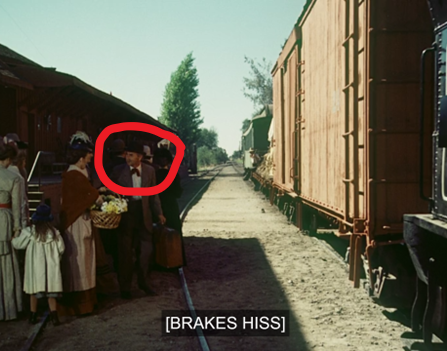
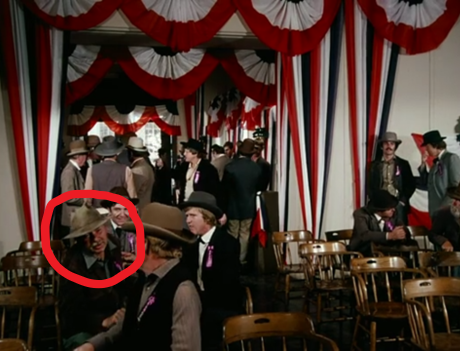
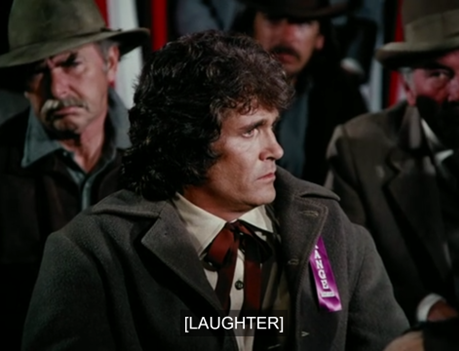
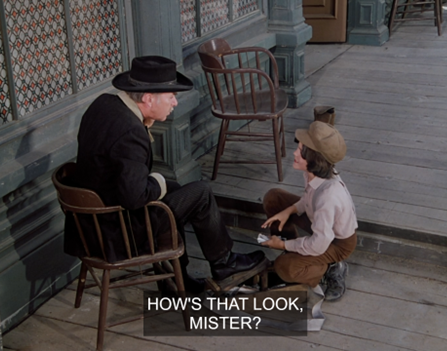
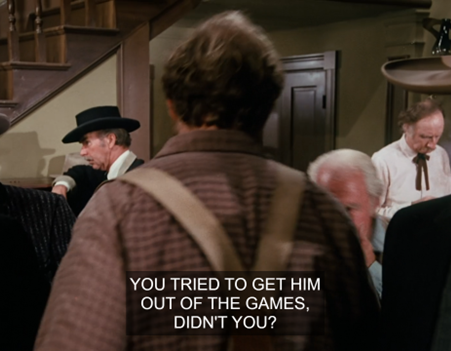
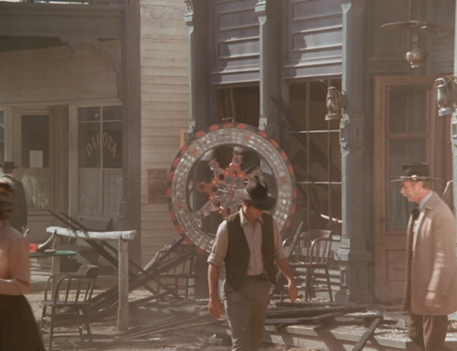
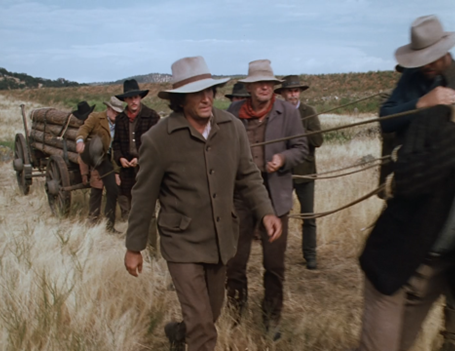
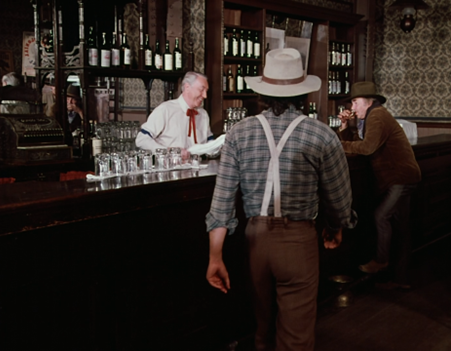
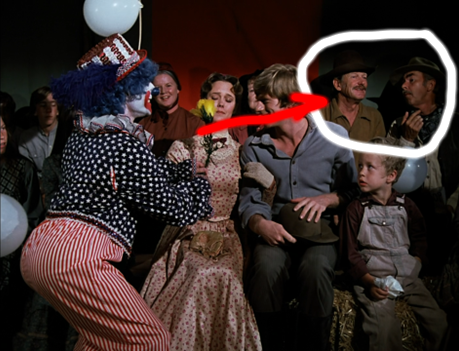
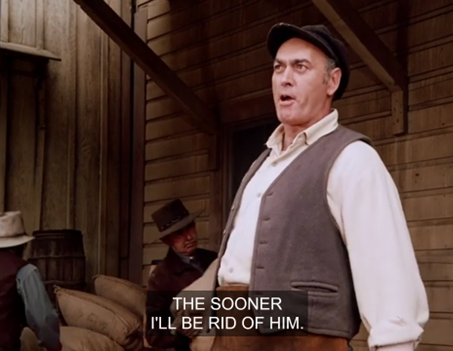
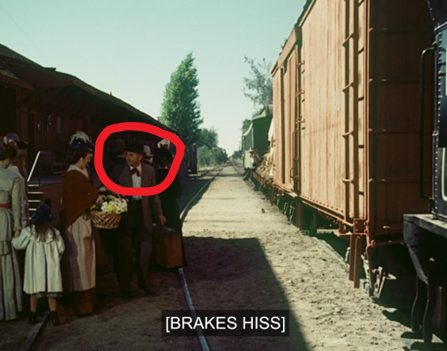

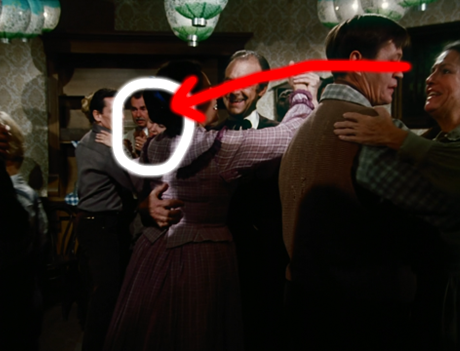
He’s played by Arnold Roberts, most recognizable to me, anyways, as an enthusiastic member of Jan Hooks’s tour group in Pee-Wee’s BA.

Roberts was in some other big movies too: The Birds, Blazing Saddles, The Muppet Movie, 10, American Gigolo, Seems Like Old Times, Scarface, and of course Pee-Wee.
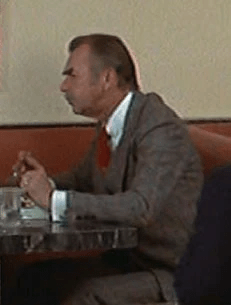
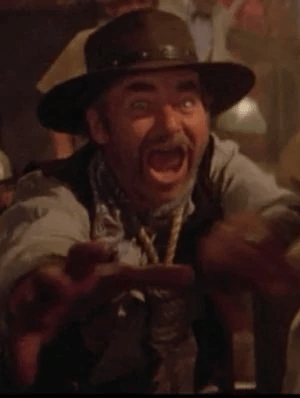
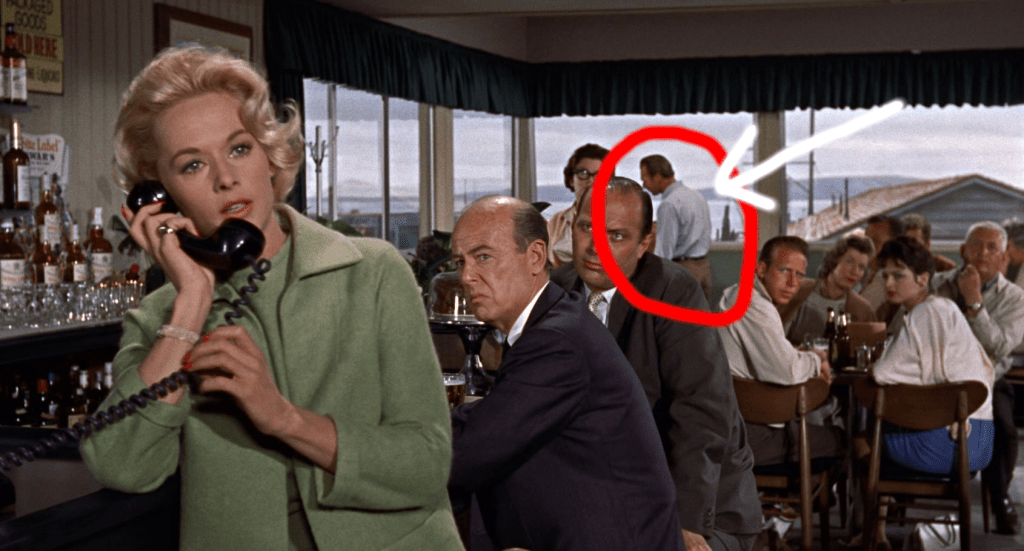
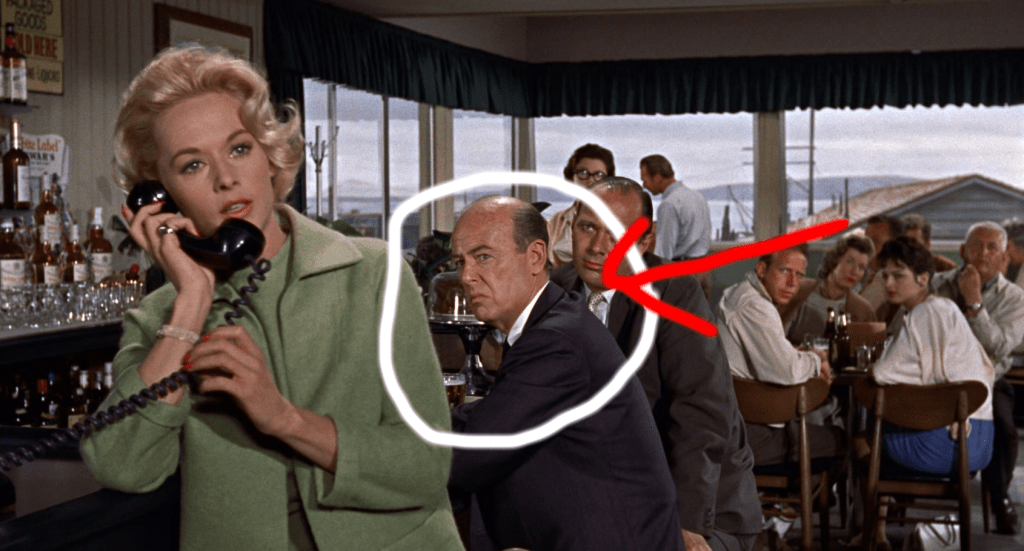
On TV, he was in pretty much every series I’ve listed so far in this recap, as well as Dick Van Dyke, Death Valley Days, Wagon Train, Kung Fu, The Waltons, Kojak, Starsky & Hutch, The Rockford Files, The Love Boat, Hart to Hart, Scarecrow and Mrs. King, H2H, Riptide (not Rawhide), Dynasty, and Hill Street Blues. This merely scratches the surface of what must have been a very fun career.
See, that didn’t take so long. Anyways, Garvey and Pike attend the burial, of course – as does Mr. Pattman.
ALEXANDER: The murderer came to the funeral?
Big Daddy Mahoney cries. He kind of looks like Tony Balluff, the superb jazz clarinetist.
The mourners sadly disperse, or disperse sadly.
WILL: My GOD, Garvey’s beard is long!
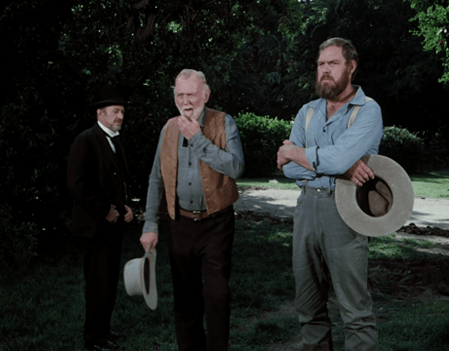
Garvey stops to chitchat with the grieving father. (It may not be much of a story, but John Larch is very good in it, I think.)
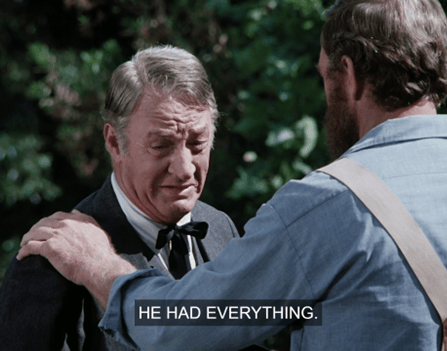
After that, Mr. Pattman approaches Garvey and Pike and says:
You warned me. I swear, I’ll never carry a weapon again. That frightened boy wouldn’t have shot anybody, I know that. If I hadn’t had a gun . . . From now on, I’m going to leave things to the law.
ALEXANDER: I bet people complain about this one at NRA conventions.
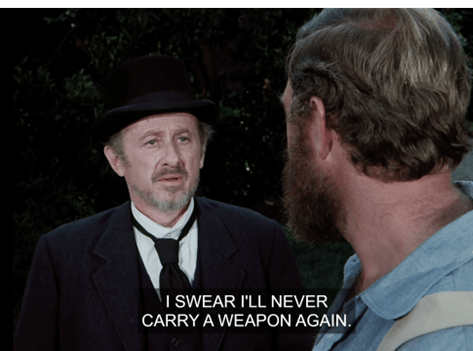
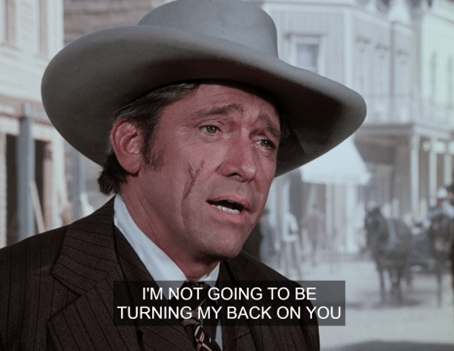
“That’s nice, Mr. Pattman,” Garvey says (not without sanctimony), “but just a little bit late.”
ROMAN: Well, actually it was mostly your fault, Garvey.
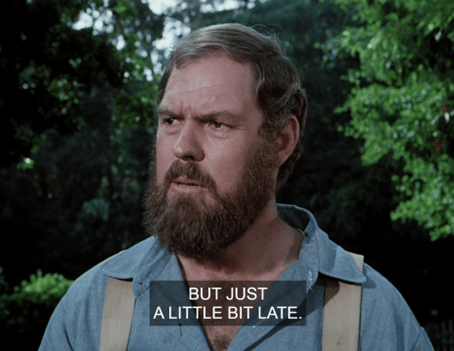
Garvey says he won’t take the police job unless they keep Pike on as co-sheriff. I’m not sure why, since he didn’t actually do anything in this story.
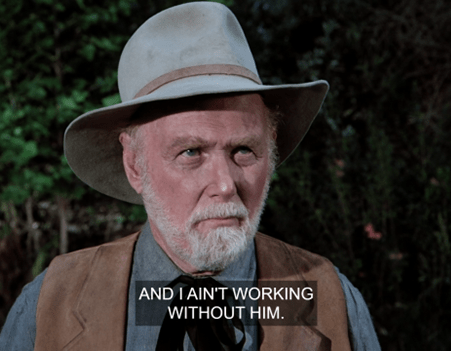
Pattman says to Pike, “With you and Mr. Garvey getting those hooligans hauled off to jail, it’ll be a lot easier now.” I guess he means this will happen in the future, since Pete Rawlins has agreed to inform on his associates. The only “hooligan” to face consequences so far was Tim, and Pattman killed him himself.
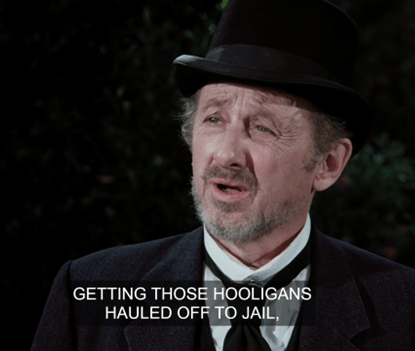
Pike plays coy, and when Pattman leaves, he and Garvey have an “I think this is the beginning of a beautiful friendship”-type conversation. (We’ll see this episode is part of a loose trilogy that was intended as a backdoor pilot for a spinoff, but the idea was scrapped in favor of developing Father Murphy instead.)
Garvey says now that he’s a policeman, Andy thinks he’s a hero.
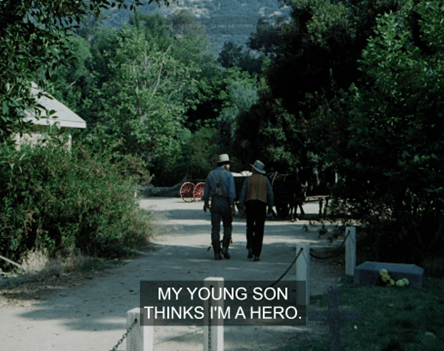
And thank God almighty, that’s the end. Bum-Bum-Ba-Dum!
STYLE WATCH: Mr. Mahoney wears a rattlesnake hat band.
WILL: I think that’s a new outfit for Mrs. Oleson.
ALEXANDER: Yeah, she’s dripped out.
Charles appears to go commando again.
THE VERDICT: It’s pretty early in the season to be pushing out a story this bad. It’s the sort of Little House story that, when it played in syndication in the Twentieth Century, would make a person go “Dammit, not this one!” and change the channel. It’s both pro-gun control and pro-law enforcement, which is interesting, but neither the who-cares detective story nor the relationship between the Mahoneys is compelling enough to sustain our attention. John Larch is good, but Harry Carey, Jr., is wasted as Sheriff Pike.
That’s just my view. Not everyone agrees, though.
ALEXANDER: That was pretty good. I liked it. I would watch Sheriff Garvey.
UP NEXT: “Fight Team Fight!”


Always fun to read no matter how uninspiring the episode is. I have two gentle contradictions to make! First, if you go back and look at the shot of the blind school in Laura Ingalls Wilder right after Almanzo gets Laura off the stage to “pick up Eliza on the way,” you will see the Garvey Kendall plaque in place above the door of the school.
And two, I disagree about this being an original score. I don’t feel like watching this episode again at all, but I know I remember the music during the searching of the attic being from Little Girl Lost–I love Little Girl Lost, and its score!
LikeLiked by 2 people
Well, I’ll be damned! Of course you’re right about the plaque, and now that I look more carefully I can see it even in the screengrab I posted in this recap. (I just got new glasses, too.) It looks so tiny! Given how Mrs. O is always going on about plaque size, I thought it would be larger; but of course the old courthouse must be more substantial than the Old Victorian House, and of course the new plaque was paid for not by the Olesons but by the late Giles Kendall, Esq., who we now know was secretly destitute. I will correct this at once!
As for the Rose score, I know it’s impossible to say for sure, and certainly you could be right. But if the music wasn’t deliberately crafted for this one, it’s VERY skillfully edited together. I’m usually a couple stories ahead when I post these recaps, and I can tell you, in “Fight Team Fight!” (another execrable entry in our Saga), the music is so incompetently handled, it’s actually distracting. It’s basically endless marching band numbers played in their entirety, and complemented by bizarre long stretches of silence. In “A New Beginning,” I was actually listening for tells that the music wasn’t new, but apart from the weird horror music when Garvey opens the box of silver (which is a subjective judgment in the first place), I really couldn’t tell, and in fact as I said I thought the score worked quite well. That, John Larch’s performance, Patrick L’s crying, and the return of Benjamin were really the only things I liked about it. Again, I’m not saying you’re wrong, and you’ve been right so many times before. But I feel there’s a night-and-day difference between this score and next week’s musical chop suey.
LikeLiked by 1 person
It’s easy to agree to disagree when I know I’m right : ) The thing is, they do do a good job when they lay old tracks over season seven episodes. And it’s still David Rose’s scores, so they sound lovely. But it’s still old tracks laid over the episodes (except for when they get creative, like having most of an episode scored by kids singing royalty-free songs). I’ve always wondered who did it; wouldn’t the strike prevent Rose doing it himself? But in one last effort to convince you, I will quote you from above as you say Rose gives us music “more queasy and suspenseful than warranted for the situation”…….. which is because it was music written for a town reacting to the fact that they’ve been digging all day to find a little girl and she’s not there when they “break through,” not music written for a search for stolen goods.
LikeLiked by 1 person
I stand convinced, or at least, I am not unconvinced. 🙂 And my wording was clumsy – when I said “subjective judgment,” I meant my description of the box-opening bit as “weird horror music” was subjective, not that there’s no objective answer to whether it’s the exact same music or not. I guess I didn’t know that such reuse had never happened before; I would assume with a weekly television serial they’d self-cannibalize the existing scores whenever they could, for the sake of speed and economy, kind of like how the Hanna Barbera cartoons used the same four or five music tracks for every episode – but in a more sophisticated way than that, of course! Certainly Landon was known for not wasting time, money, or film; recall the clashes he had with other directors in Season One when they wanted to do additional takes he considered unnecessary. Then again, if they did reuse the exact same recorded tracks multiple times over the years (as opposed to just the same melodies/arrangements), I suppose I would have noticed it by now; or at least I hope I would! I studied music once upon a time, though I’m no expert and I admit my ear is not what it once was. I trust that you are right, and I’ll try to watch “LGL” again soon to compare, since I love that story too. As for who was responsible for recutting the scores during the strike, I guess it must have been a sound editor with the musical talent and knowledge to do so. I confess I don’t know what that process was like, either during the strike or before/after. (How collaborative was it? Did Rose call all the shots, so to speak? How involved was Landon? etc.) One thing’s for sure – it’s easy for us to take TV music for granted, but when one thinks about it, writing and orchestrating twenty-some hour-length suites of classical music a year is a pretty astonishing feat.
LikeLike
So glad you talked about that episode of twilight zone. My theory about LHOTP is all those one~off characters go into the corn field never to be seen again! I also want to address the fact that Andy blames Adam & Mary for his mother’s death, & not Albert. I can’t be certain who told me their theory (maybe Mark from Walnut Grovecast?). The person felt maybe everyone involved chose NOT to tell Andy of Albert’s involvement. Now I don’t know if that would fly. Certainly someone would have eventually slipped (if this had been real life that is). I don’t mind watching this episode, but it’s certainly not one of my all~time favorites. 👒
LikeLiked by 2 people
OH MY GOD OF COURSE! You know, it never once occurred to me that they didn’t TELL Andy. It’s hard to believe in this town where secrets are never kept for long; but after all, who knew about Albert’s involvement? Pa, Jonathan Garvey, Hester-Sue, Ma – they could have kept it quiet for sure. Clay Mays and his dad would have had their own reasons for keeping it a secret too, of course. However, that leaves Mary and Albert. It’s actually just as mysterious that she and Albert never talked about it as it is that Albert and Andy never did (even if she and Albert didn’t really have a close sibling relationship in the first place). If they had, I can imagine her coming to terms with what happened – eventually – so we can probably suppose there’s a deleted scene where they did talk. The only thing that’s TRULY hard to believe is that Albert wouldn’t confess it to Andy. Obviously that whole episode is about him being tortured by his conscience – I don’t know if he’d be able to live with himself if he didn’t tell him, even if everyone else who knew urged him to keep it secret for the sake of Andy’s mental wellbeing.
And YES, “It’s a Good Life” is so weird and scary. 🙂
LikeLike
I often wondered if Andy was aware of Albert’s part in the fire too, and the fact that he admits to resenting Mary and Adam for contributing to his mother’s death but never mentions Albert and even says goodbye to him in good terms does indicate that. If that’s the case though, it’s unfair to Andy, in that as one of the most personally affected affected, they owed him the truth about how it all happened and who caused it. I wonder if Jonathan’s talk about how it was nobody’s fault and and all is preparing to reveal the truth someday, once Andy’s feelings are cooled and he’s unlikely to react too badly.
I’m almost sure Mary knows about Albert though, since she was putting two and two together along with Charles and Hester Sue when after she was recovering and gave information that helped Pa realize why Albert had just run away.
LikeLiked by 1 person
Except for season seven, all episodes of Little House had complete scores recorded for them, so even when a theme is reused, whether it’s an episodic theme that is reused in another episode or the umpteenth iteration of Laura’s or Albert’s theme, it’s being performed and recorded anew for the new episode. I don’t know how common this was on TV; certainly other shows (The Fugitive comes to mind as another show I’m fairly familiar with) used the same recorded cues over and over again. Little House’s scores are a huge part of the show’s appeal and effectiveness in my opinion.
LikeLiked by 1 person
How marvelous! What a lot of work for the Rose. No wonder they say Judy Garland found him a boring workaholic. 😉
LikeLike
I’m a bit in two minds about this one: there seems to be the seed for an exciting episode, where Jonathan and Charles investigate crime in Sleepy Eye, and even if the idea for a spin-off following the Garveys didn’t go forward, this had the potential to be an interesting standalone detective story. But I agree that it isn’t as engaging as it should, I don’t know why, but something appears to be missing in it.
I think the point it seems to be making about trusting law enforcement or carrying weapons and taking safety into your own hands is a bit iffy. The resolution seems to be that carrying guns around is only making things worse, as the delinquents involved weren’t using them and when one of them does, he wasn’t really willing to use it anyway, so having a gun didn’t really solve things; and Tim’s death feels like an avoidable tragedy. But it feels contrived and only works for this specific situation; who’s to say that the next robbers won’t be armed? And while I agree that taking safety into your own hands isn’t ideal, it’s hard to blame the people of Sleepy Eye for not trusting the law when it’s composed by a lazy, clueless sheriff with no help. Maybe the point is that guns won’t always make things safer, especially when the suspects are unarmed or unable to use them, so carrying them around will only attract further trouble, and it’s better to improve the law enforcement than leave it to gunfighters. Still, the episode doesn’t do a particularly good job of making that point, and the sheriff’s “redemption” at the end is just as unconvincing, as it seems they wanted him to be seen as a tired lawmen who got disillusioned after years with no help, his hands tied and unable to do much on his own, but instead, he comes off as negligent and uncaring until he makes a token effort to help Jonathan and Charles, so his second chance to be a proper sheriff with Jonathan by his side feels unearned. As with Almanzo’s last minute change in the previous episode, there should be a bigger effort to redeem him in our eyes.
LikeLiked by 2 people
Yep, I agree 100 percent. Like many a bad Little House, it could have been great. (Think how many of THE BIG CLASSICS are built upon questionable ideas!) As a standalone episode, it’s pretty weak, and as a backdoor pilot it’s a total failure, in my view anyways. And in addition to the Sheriff’s role being a disappointment in the context of the story, it’s also a pity they got a star of big classic Westerns to play him, then gave him nothing whatsoever to do.
LikeLiked by 2 people
I feel the anti-gun stance was in response to the “no violence on kids shows” movemement in 1970s America. “Mister Rogers” and “Sesame Street”had been created in the late 1960s specifically to counter violent children’s programming. Later, to appease the populace, network shows would incorporate “violence is not the way” lessons into their plots – heavy handed, unsubtle and obvious “valuable lessons,” which even kids could sense were disingenuous.
One repeat offender was the cartoon “Battle of the Planets.” Just one example: A boy’s family and city had been destroyed, and he had the opportunity to deploy a weapon against the enemy, but stopped himself. Mark, the G-Force leader, approves and says, “Violence is never the answer.” Thing is, in the original Japanese anime, the boy sets off the weapon and Mark approves, saying something like, “It was your family who died, it should be you who gets revenge.” Haha!
I never saw this Sheriff Garvey episode of LHOTP until maybe a year ago. To my surprise, I kinda liked it, too; it could’ve been developed into a decent spinoff. Alas, the Garveys this season become simple props who [SPOILER ALERT] help Adam when he regains sight, and who set up Charles in a wagon train with the parents of Jason Bateman and his TV sister, with lethal and adoptive results.
LikeLiked by 2 people
Well, it is a story that’s more disappointing than terrible, I agree with that. (Compared to “‘Fight Team Fight!'”, which I’m working on right now, it’s even relatively entertaining!) I’m not familiar with Battle of the Planets, but I do know the phenomenon you describe. It always amused me on G.I. Joe how the COBRA agents and soldiers managed to jump out of their tanks just before they were destroyed by missiles – so as not to encourage violence, you understand! 😀 I don’t know what’s funnier, those examples, or the idea of an ass-kickin’, baby-burnin’, mime-rapin’, Ellen-drownin’ etc show like this arguing “violence is not the way.”
LikeLiked by 1 person
“I feel the anti-gun stance was in response to the ‘no violence on kids shows’ movemement in 1970s America. ‘Mister Rogers’ and ‘Sesame Street’ had been created in the late 1960s specifically to counter violent children’s programming. Later, to appease the populace, network shows would incorporate ‘violence is not the way’ lessons into their plots – heavy handed, unsubtle and obvious “valuable lessons,” which even kids could sense were disingenuous”.
I actually think the anti-violence stance makes sense within the show’s dynamics, even with all the fighting, tragedy and dying. There’s plenty of fighting, especially involving Charles and Jonathan, but while the show doesn’t usually condemns solving things with violence, it always stops there, and sometimes it’s shown to make things worse. And most notably, the show’s stance about killing is always to portray death as tragic and unfulfilling. When villains die, it never brings any kind of catharsis even to the heroes or the audience, even when the deceased absolutely had it coming, dying is always tragic and never solves everything. Even here, Tim had all the ingredients to be a completely unsympathetic character, a spoiled kid who was never denied anything and so thought he could have everything with no effort and never have to answer to the law, brutally assaults Andy Garvey and dies as a result of his own actions; but he’s shown to be almost pitiful in how pathetic he is, and when he dies, nobody is satisfied by his death, and it’s treated as the tragedy it is. And Jonathan himself stops Tim’s father from hitting him even after his own son was brutalized by Tim and his goons, and it also makes sense for him character, who isn’t above violence but usually tries to keep out of using it unnecessarily, and would rather solve criminal situations through the law.
Maybe the problem is that the writing treats the argument against carrying weapons and taking security through one’s own hands as definite and what they all should learn, which in the context of a western show, may sound displaced in a scenario audiences so often associate with being full of guns, where townsmen often organize posses to go after criminals and pretty much everyone has a gun at home. Of course, even most western shows would make episodes against vigilantism and show the arrival of law as civilization of the west as the right thing, and there’s a difference between keeping a gun and carrying it around like an invitation for trouble, which I think is the point of the episode, but again, the story kind os shoots itself in the foot when it’s treated like an obvious decision for the vigilant guy to stop carrying a gun and leave security to the law, when things are more complex than that, and Jonathan, who represents the argument against carrying weapons, is partially responsible for Tim’s death in the first place.
I can’t tell whether the technically anti-violence stance in the show is a product of the “no violence in kids shows entertainment” movement or Michael Landon’s own ideals, or something in-between. Regardless, it can be muddled when shows that often engage in fighting and action try to tell that certain kinds of violence aren’t the answer when the protagonists engage in it and the environment itself favours such actions, even if the good guys try to draw the line at certain types of violence, such as when they’re disproportionate to what ignited them or when they involve killing.
LikeLiked by 1 person
“Shoots itself in the foot,” haw haw. I like very much that you guys are digging into the gun-control subtext – I found it odd and interesting myself. Your comment about whether entertainments can be simultaneously violent and anti-violence is of course an old question. I’ve always thought they can, but I can see the irony of it. Some people make the same criticism of opera – how many of the big classics allege to be sympathetic to a woman’s suffering while wallowing in it artistically. For example, can Madam Butterfly, a story in which a girl is sex-trafficked, raped, deceived, abandoned, and then kills herself really be considered a great “woman’s story”? That’s a more extreme example than “A New Beginning,” of course, but I’m not sure how I feel about the question.
LikeLiked by 1 person
My opinion about how to address violence, or any other topic in a story where you’re trying to criticize whatever you’re showing keeps shifting time and again. I once concluded that there are better and worse ways to address certain things, especially when they’re so controversial and often used for shock value. One of the problems with criticizing violence is that it’s often an entertaining used to draw in audiences, so even when you want it to be seen as wrong, some will just be there to enjoy it, and some forms of fiction are biased to use violence for that: One example was when Paul Verhoeven used satire to criticize the glorification of commercialization of violence in his films, like Robocop and Starship Troopers, but those were blockbuster films made for audiences eager for that kind of thing and uninterested in what the film was criticizing, and just enjoyed the action, fighting and gruesomeness of everything. There are examples where the format and kind of entertainment the audiences are used to really don’t help the message you’re trying to send. Maybe a different kind of sci-fi could help viewers understand the point a little better, but then, a lot of viewers rarely try to see the point and just go there for the exciting elements. Some claim it’s impossible to make an anti-war film because, no matter how much you try to frame the conflict as hellish, tragic and pointless, a lot of people will be attracted by the action, adrenaline and killing.
There are also some cases where even if the story is meant to be criticizing something or not meaning to condone it, it can come off as exploitative for using just for the shock of it. Sexual violence in particular has become a taboo thing to be shown, because a lot of productions have used it to bring in viewers for the wrong reasons, so anytime somehing explicit about is shown, it draws questions about if it even needed to be shown at all. I think it depends on the tone of what story you’re doing and how the story treats what you’re bringing in; I remember a John Travolta film, The General’s Daughter, about the investigation about the death of the title character and what she suffered in the hands of her colleagues and her own father, and was panned for focusing too much on the graphic details of her suffering, lacking of attention towards anything else about her, in what should be a popcorn thriller, undermining its own anti-assault themes.
I’m afraid we’re about to have one such controversy very soon when we make it to the “Sylvia” episodes. This story is often lauded for the heavy themes of CSA and victim-blaming it addresses, in a time those were see as taboo and impossible to be addressed in family entertainment. But a lot of viewers criticize it as “needlessly traumatic” or “not well executed”. I personally have my issues with the lack of long-term consequences afterwards, in that being a standalone episode, its events are never mentioned again, so veryone just seems to forget abot what happened, and to make things worse, the production was careless enough to reuse a plaque with a certain blacksmith as if he were still around in later episodes, and even dressed Albert’s next girlfriend with Sylvia’s dress!! So much for treating that story with the seriousness it deserved in hindsight…
LikeLiked by 1 person